Date
Author
Александр Генис; Соломон Волков
Source

Preserved copy
Translated material
Mirror: West about Russia
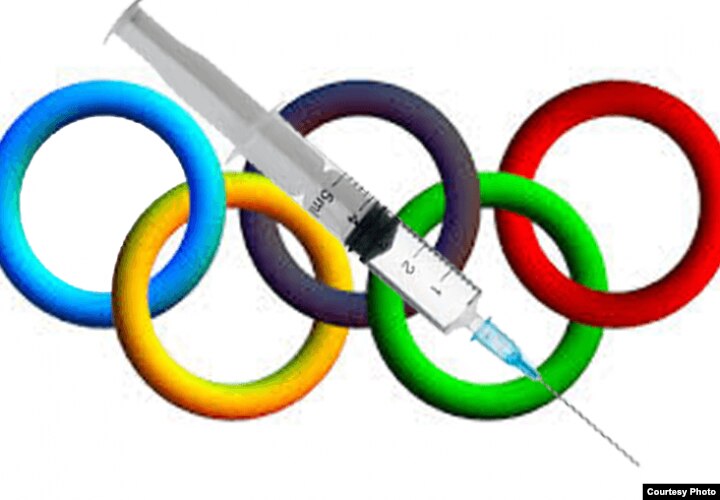
Sports and soft power. Bookshelf. From Gorbachev to Putin
Alexander Genis: On the air - Ach's quarterly section - “Mirror”, in which we and the musicologist and cultural historian Solomon Volkov are discussing what and how they write in the West about Russia.
On the eve of the opening of the Olympic Games, of course, the doping scandal occupies the entire world press, both American, and international, and Russian, of course. I propose today to talk about how sport has become a problem for Putin's Russia. The fact is that we often talk about soft power, Russian sport was just such a soft force for a very long time. You know, I remember very well how in the midst of the Cold War, when Soviet troops entered Afghanistan, I arrived in Canada. In Montreal, everyone, of course, heard my Russian accent, first of all they asked me: are you - Rogulin? Imagine how I do not look like Rogulin. It is interesting that if in America Russia, there was a belt of Russia's rejection after Afghanistan, the very times when the vodka of the “metropolitan” was poured from the bars, then in Canada the Soviet Union was still popular for only one reason. What is the reason?
Solomon Volkov: Hockey, probably.
Alexander Genis: Of course, hockey, because hockey is the national religion of Canada. The Soviet hockey team was very popular in Canada, everyone knew the names of Soviet hockey players. And in this way, the sport was, as it were, an outlet in international relations for a very long time. In Putin’s times, in my opinion, sport has become even more important than it was under Brezhnev, say, in our times with you. The fact is that Putin tried to build a picture of a new Russian society by famous standards - these are primarily young, strong, vigorous people who do not smoke, do not drink, lead a healthy lifestyle, play sports. This is exactly the image that Putin likes, Putin Sambist, just came out a book where he shares his secrets of struggle. He liked to imagine Russian society primarily as a youth, sports, such a society of the future. Now the story of doping ruined this image. In my opinion, this is the most painful blow to the Putin image of Russia.
Solomon Volkov: You know, there are many different aspects in this problem. I may not quite agree with you regarding the Putin approach to sports. Of course, he is a figure, as they say, Macho, he sees himself, he projects himself like that.
Alexander Genis: In every American newspaper, every American article says that Putin loves to shoot naked to the waist.
Solomon Volkov: The appearance of the judoist is also very important for Putin, everything is connected with this - we all understand this perfectly. But still it seems to me that for him, successes in the field of professional sports are not so important, whatever one may say, a large sport is a profession. People who are engaged in big sports - it is like ballet, people have a very quickly ending a career, but while they are engaged in it, 24 hours a day.
Alexander Genis: You remember, in Soviet times, they said that all the Soviet athletes, who, of course, were professional, they actually stood at the machine, and in the evening they played sports. Now no one believes in this, of course.
Solomon Volkov: We knew that. Was there really in the Soviet Union who would believe that athletes who participate in the Olympic Games are doing something else. Of course, they were all listed in factories, factories, design bureau and so on. But the same situation, as you know, in American sports, I don’t know anything about European, where American universities lure promising athletes who are still nominally studying.
Alexander Genis: This is a big problem, constantly arguing about it, how ethical it is. This is a difficult problem, not for us to solve it.
Solomon Volkov: Returning to Putin, I think, for him, it is more important for him, as for the leader of the country, so that the population as a whole is not engaged in as a profession, not to beat records, but to be healthy. Here are big problems in Russia.
Alexander Genis: That is why the FSB was engaged in doping so that a simple human society looked good. Nothing of the kind, in fact, for Putin, the victory at the Sochi Olympics meant about the same as Hitler Victory in the 1936 Berlin Olympics. That is why they went to doping, which is why they went to a grand scandal, which will forever ruin the reputation of Russian sport, because they simply robbed the Russian population. The Olympic Games were what Russian athletes could be proud of, now it was all stolen. You know, I looked at Facebook reaction about all these events, there I was struck by a constant refrain: they catch everyone in doping - this is a normal business. The drug is a terrible trouble. For example, the famous American bicycle pound Armstrong, and he was caught on doping, this is terrible. Such a person, it would seem, noble, defeated Cancer, a hero. In doping he admitted what is the difference? The difference, of course, is that behind this doping is a big brother. Indeed, in fact, Russian athletes are punished not because they took doping, but because the state forced them to take doping, and this is a tragedy. This has nothing to do with sports - this is related to politics. Therefore, when in Russia they say that sports and politics are different things, you can’t combine them, no one combines, we are not talking about sports, we are talking about politics, that politics does not have the right to interfere in sports. And, of course, secret services should not do this. This is all very sad. Sport, there is a massive call of mankind in this, there is some beauty that I personally worry very much. Because for me sports, I myself am far from sports, but I really like to watch sports, for example, a passionate football fan, so for me all these events are a strong blow. I can imagine how painfully this is perceived in today's Russia fans who suffered the most.
Solomon Volkov: You know, we have a lot of disagreements with you.
Alexander Genis: who, I must say, delight me, because the dialogue implies some kind of antagonism of views. We have a lot in common, starting primarily from fate. Not only are we from one city, we have been living in America for 40 years, which also does not often happen.
Solomon Volkov: First we lived in the same city together, and now we live in another city together.
Alexander Genis: But this does not interfere with our disagreements.
Solomon Volkov: well said. Here I once again do not agree with you and will not come together regarding sports. Sports are in a strong way not to be among my addictions, I look at the passions that flare up around sports competitions with some bewilderment. In particular, I am watching calls, there was a petition even about dispersing the Russian national football team after they are not the best, to put it mildly, in the way they played the next European Championship. In such cases, I recall, Dmitry Shostakovich once told me in a adviser that he would like to be appointed Minister of Culture. I was terribly surprised, because the last thing he lacked was to become the Minister of Culture in the Soviet Union. He explained: if I were appointed Minister of Culture, I would first dissolve all the ensembles of songs and dances first.
Alexander Genis: That is, he did not like folklore entertainment?
Solomon Volkov: Yes. He says: of course, it would be immediately fired from my post of the minister, but these ensembles would be very difficult to collect again.
Alexander Genis: You know, this reminds me of the famous story about Meyerhold, who immediately after the revolution said that the first thing to do is to close all academic theaters. And added - and the directors to shoot.
Solomon Volkov: Dmitry Shostakovich did not go so far, he just wanted to dissolve the ensembles. To me, too, when they say to dissolve the football team, in general, in my opinion, it would be necessary to dissolve all the national teams. If I had been made by the Minister of Sports, then I would also, following the example and desire of Shostakovich, would dissolve all the national teams, of course, I would immediately dismiss me, but only then it would not be so easy to collect.
Alexander Genis: I think that your desire will be fulfilled soon, because the Minister of Sports Mutko will probably cease to be a minister soon, and all Russian sport will need to be assembled after what happened. But, of course, I categorically disagree with you. Because I myself think that sport is great entertainment. The Olympic Games cause me a hot surge of enthusiasm, because it is a religion, which lasts from the VIII century BC, the Olympic religious cult. In my opinion, this is a unique event in the history of mankind.
Solomon Volkov: Tell me, how do you feel about boxing? For example, I do not actively accept boxing when two hefty peasants chop the faces of each other-this, in my opinion, is just a disgusting sight.
Alexander Genis: When I was young and stupid, I, of course, liked the box. I remember very beautiful Polish boxers, they were always very technical, I looked at it like a duel. Three Musketeers read? That's how I looked at the box. But Dovlatov, who, I must say, understood in boxing very well, he was a very promising boxer, of course, with such physical data. Once I read from Dovlatov, by the way, this thing is still not printed, called “one in the ring”, that when opening, the brain of a pink boxer. After that, I stopped watching the box. Everything else I like to watch, of course, most of all I love football. Since you remembered the European Football Championship, I can’t help but say in the framework of our Mirror’s column, in the Boston Glob newspaper, which we rarely remember with you, although this is a wonderful, one of the oldest American newspapers, was printed in the midst of the European Football Championship, an article by their correspondent of Scott Gilmore about Russia about Russia. This was due to the course of the European Championship. The article, I must say, is crushing, it says that Russia has long ceased to be superpower. When we perceive Russia as the heiress of the Soviet Union, we forget about statistics. And he cites such statistics: for example, the Russian economy is less than the current economy of South Korea. It should be recalled that when the Korean war began, from North Korea there was an industrially relatively developed power, part of the country, and South Korea was entirely peasant, there were no cities. Now South Korea is more. The population of Russia, writes Scott Gilmore, based on statistical data, poorer than in Kazakhstan. In the development of technology, Russia is inferior to Finland. According to the military budget, Russia is inferior to Saudi Arabia. Even tanks in Russia are fewer than in Pakistan. And he writes: what is more in Russia? The article ends very sadly - football hooligans.
Solomon Volkov: I would see this man, Gilmore, I would ask Bellow in words: what about Tolstoy? Also more fat in Pakistan?
Alexander Genis: Do you think that Tolstoy is the achievement of Putin's Russia? What kind of fat are you talking about?
Solomon Volkov: I'm not talking about Putin's Russia now, but he also does not talk about Putin's Russia. He says that Russia is currently worse, retired than South Korea, Pakistan, Saudi Arabia and so on. But after all, Tolstoy, Chekhov, Tchaikovsky, Stravinsky, Prokofiev, no one deleted from the life of modern Russia. This is an arsenal that remains at the disposal of the state.
Alexander Genis: Absolutely, the glory of Russia is its past. As always, I completely agree with you in one thing that in Russia, no matter how sad things are, and he gives examples completely monstrous, for example, per capita income in Russia than in Equatorial Guinea. Say, doctors have become less than 10 years ago.
Solomon Volkov: So what, does it mean that in Equatorial Guinea to live calmer, better, richer than in Russia?
Alexander Genis: I don’t know, I'm talking about the statistics that the author of this article is brought. I have never been to the Equatorial Guinea, frankly, I am not going there. Or, for example, that in terms of alcohol per capita, Russia is three times higher than data on North America. And all this is terrible, but this does not cancel the role that culture plays in Russia. Russia is a cultural superpower. Here we are talking to you about the weak power, what remains the current states when they refuse to use the armed forces. The Soviet Union in this regard, it had much more opportunities for the manifestation of weak power than today. No wonder I talked about sports, because sport was one of the few achievements in Russia that were recognized international. For example, the Olympic Games in Sochi, the victory in the Olympic Games in Sochi was recognized as the achievement of the regime, that is, something happened that could be proud of. Now all Sochi medalists will be checked for doping, it seems that the Sochi Olympics will be beyond these achievements.
Solomon Volkov: I do not specifically follow sports competitions, for responses to them, even for the Olympic Games, because, as I said, I am not very interested in this. But I, nevertheless, remember the response to the Sochi Olympics, where Russia, as we recall, won - I found out, I did not miss it. And the reaction of the Western media was absolutely unanimously negative, no one at point blank noticed any achievements of Russia. In hindsight, we can say that these achievements were mainly proud of them mainly in Russia itself.
Alexander Genis: The thing is that these were the achievements that could be presented-here are the Sochi gold medals. Now it turns out that they are not gold, but potato. As a result, the achievement that could be proud of is the very soft power, and it did not pass here. This, of course, is a big blow to the image of Russia. Precisely because over the past 20 years, Russian culture has not created anything that it could truly be proud of. For example, in Soviet times, say, what the last bestseller of the world was - it was a “doctor Zhivago”.
Solomon Volkov: "The Gulag Archipelago."
Alexander Genis: Okay, it means Solzhenitsyn. That is, there were some universal achievements. Of course, the achievements were in the field of music, the Bolshoi Theater has always been. There were achievements in the field of chess and so on. Now much less than all this is left. Sports scandals, and they are a monstrous size, take the last thing that can be and, in my opinion, it is extremely sad.
Solomon Volkov: You know, I’ll bring my two optimistic kopecks here, I will indicate one example to one example, the addition of this soft power in the area that we talked about, in music-this is the activity of the Mariinsky Theater, the former theater named after Kirov. I lived in Leningrad when this theater was the name of Kirov, the main Leningrad Theater of Musical, which is generally talking about. But he had absolutely no international reputation, his whole reputation was like the Mariinsky Theater. Nowadays, to the Soviet theater named after Kirov, they said that Leningrad turned into a regional center and the theater in many ways corresponded to this representation. Nowadays, the Mariinsky Theater is a first -class team with an international reputation of a grandiose. He is very popular around the world, expands the geography of his tour, now to China, in Japan will go, in Europe, not even to talk about anything and in America too. Their repertoire is both modern, and, of course, the classic also remains popular and in demand. So, you see, what I was talking about, the reputation of Mariinsky and the positions that he conquers, the endless line of the singers, world stars, which the Mariinsky Theater produces, as if from the assembly line, is an amazing thing, this is evidence that all reserves of soft power have not been exhausted. Moreover, these reserves are multiplied, and this is the case that deserves special attention. As an illustration, we will show the famous duet from the “peak lady” of Tchaikovsky “Evening” performed by two modern world stars of opera Maria Gulegin and Olga Borodina. Gergiev, the Mariinsky Theater orchestra.
(Music)
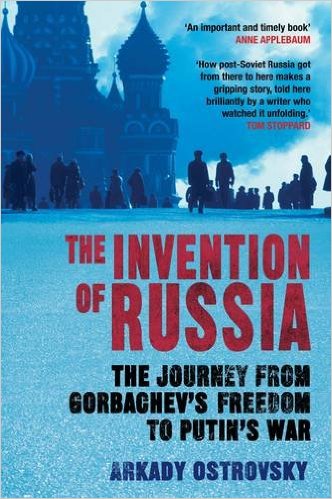
Alexander Genis: I propose to talk now about the new book that Arkady Ostrovsky wrote, it is called “The invention of Russia. From Gorbachev’s freedom to the Putin war. ” I must say that Arkady Ostrovsky is a very famous journalist in the West, he is the editor of the East European and Russian department in the journal "Economist". For 10 years he was a representative of this magazine in Russia, naturally, naturally, Russian culture, Russian history, Russian policy.
Solomon Volkov: He is a theater department by education.
Alexander Genis: It is interesting that he is not only a theater, he is also a translator, it was he who translated the trilogy of Tom Stoppard “The Coast of Utopia”, in his translation was delivered in Russia. How do you feel about this book of a new one?
Solomon Volkov: You know, I look forward to the release of her in Russian for a clear reason: we are talking about Russia. It is described there extremely an interesting aspect of Russian reality. Островский первый, как мне кажется, я не видел такого рода книг, очень хотел бы иметь, описывает влияние российской медиа на формирование облика России.
Александр Генис: Я бы сказал, что это его главная идея. Он сказал, что Россия — это идеократическая страна, это страна, которой правит идея, именно поэтому ни в одной другой стране нет такого влияния медиа на русское общество, как в России. Надо сказать, я с некоторым сомнением отношусь к этому тезису.
Соломон Волков: Я тоже отношусь к этому тезису с сомнением. Тут нужно разделить две вещи. Как людей, которые занимаются этим бизнесом, как участники этого культурного дискурса так или иначе, нам с вами очень интересно узнать о том, как в России в этот чрезвычайно турбулентный период, который начался с приходом Горбачева и продолжается по сию пору, как развивались эти медийные события в России, медийные интриги, закулисные истории этого всего. Это то, что описывает Островский, он инсайдер.
Александр Генис: Это, конечно, очень любопытно. Но вообще-то, я так сейчас подумал, слушая вас, я как раз и участвовал во всем этом. Я печатался с 1989 года, как только стали печатать эмигрантов, я печатался в России, я печатался во всех журналах и газетах перестроечного времени, постперестроечного времени, какого угодно другого. Поэтому я как бы сам участник этого дела, как и вы, собственно говоря. Поэтому мы может быть лучше других понимаем, насколько эфемерны все эти предприятия были. Вы знаете, в свое время медиа сыграла судьбоносную роль в истории России. Я считаю, что вся перестройка и, главное, победа над путчем была связана со свободой прессы. Именно то, что появилась гигантская могучая пресса, свободная пресса, она первая достигла рынка, именно это оказало гигантское влияние на Россию. Но чем дальше, тем сложнее оценить влияние прессы на Россию, потому что, мне кажется, что прессу съел телевизор. В нынешней России не пресса, а только телевизор определяет идеологию страна. Страна, которая способна поверить в распятого мальчика — это уже не та страна, которая поднималась в 1991 году на борьбу с путчистами. И это, конечно, самое печальное, что можно сказать о современной России. Книга Островского еще очень интересна, знаете, чем: мне показался любопытным старый, извечный вопрос — кто виноват. Как же он отвечает на этот вопрос? Кто виноват в том, что произошло в России? Кто виноват в том, что произошло и происходит сейчас в России? Какой ответ дает Островский — все виноваты. Как только все виноваты, то получается, что никто не виноват. Вообще меня это совершенно не устраивает. Я помню, вы знаете, мы так давно живем с вами, что все эти ситуации уже проигрывались, в 80-е годы, во время «холодной войны» в эмиграции был такой очень популярный тезис о том, что мы все виноваты в том, к чему пришла Россия, Брежнев, Советский Союз, война в Афганистане, все мы виноваты. И так каждый каялся, каялся, пока дело не дошло до Эрнста Неизвестного, который сказал: я не виноват, я не хочу нести ответственность за всех этих ублюдков. И очень возмутилась эмиграция: почему он не виноват? Нет, я не виноват, я всегда боролся за свободу, за свободу самовыражения и никакой вины на мне за это нет. Мне кажется, что обвинять всех — это не обвинять никого. Это, по-моему, самый легкий способ уйти от ответственности.
Соломон Волков: Я с вами и согласен, и не согласен. Действительно, степень ответственности или вины, во-первых, ощущение своей вины — это ведь вопрос психологический. У Достоевского князь Мышкин ощущает свою вину. Это зависит от личности, личность может чувствовать себя виноватой очень за многое, в разных ситуациях по-разному. Я всегда в таких случаях вспоминаю людей экстраординарных. Скажем, Бродского. Это был очень интересный, странный, сложный человек, я сейчас не говорю о даровании его поэта или эссеиста, даже общественного деятеля, чисто психологически. У него, безусловно, были какие-то психологические комплексы вины на каком-то личном уровне перед какими-то отдельно взятыми женщинами, перед какими-то отдельно взятыми знакомыми. Явным образом я сталкивался несколько раз с такой ситуацией, когда я видел,ч то он переживает по этому поводу и очень глубоко и серьезно. В другой ситуации он мог быть абсолютно бесцеремонным и грубым, вы знаете, конечно, об этом. То есть даже в одном человеке ощущение вины или ощущение своей правоты очень по-разному проявляется. То же самое и в обществе. This is on the one hand. А с другой стороны, мне кажется, что Островский, как инсайдер, как участник тех процессов, о которых мы с вами говорили, он немножко преувеличивает значение медиа. Оно было колоссальным. Я просмотрел недавно хронологию, то, что называлось в советской прессе назначений и перемещений, была такая специальная рубрика в газете «Советская культура», по которой я следил о том, что происходит в бизнесе культурном. Так вот у Горбачева эти назначения и перемещения начались почти сразу же, когда он пришел к власти, они постепенно набирали обороты и становились все более и более радикальными. Каждый день кого-то снимали с поста руководителя того или иного журнала, газеты, радио, телевидения, назначали горбачевского ставленника. Конечно же, Горбачев раскрутил этот маховик, который в итоге, как мы теперь можем сказать задним числом, погубил и самого Горбачева в свое время, именно раскрученный маховик гласности. С другой стороны я могу сказать на основании более позднего опыта, что соотношение медиа и реальной политической власти, государственной власти, оно мне очень напоминает эпизод из фильмов об Индиане Джонсе. Там, помните, Харрисон Форд выходит на каком-то восточном базаре, в конфронтацию вступает с туземцем, тот вынимает ятаган и начинает хитроумные пасы выделывать, показывая, что сейчас он Харрисона Форда разрубит на мелкие кусочки. Харрисон Форд смотрит на это спокойно, потом вынимает из кармана револьвер, пуляет в этого туземца.
Александр Генис: Ваша притча о том, что власть побеждает перо, она, конечно, очевидна. Кстати, это мой самый любимый эпизод в Индиане Джонс. Я не могу не сказать, что история этого эпизода была такая. У них долгий эпизод должен был сниматься, но у Харрисона Форда заболел живот, он сказал Спилбергу: я могу играть ровно 30 секунд, у меня болит живот. И тогда они придумали эту историю с пистолетом.
Соломон Волков: Грандиозная история.
Александр Генис: Я с вами, конечно, не согласен, потому что власть, чья власть сильнее — пера или револьвера, неизвестно. Потому что именно медиа в 1991 году вывела людей на борьбу с путчем, именно эта свобода, обретенная в горбачевское время не позволила Россию вернуть к коммунизму. Знаете, это гигантское достижение прессы, печати, свободы печати.
Соломон Волков: В последние дни люди обсуждают чрезвычайно печальное известие о гибели в Киеве журналиста Павла Шеремета. У меня дома есть книжка Шеремета о Владимире Яковлеве, который был, как мы знаем, какое-то время губернатором Санкт-Петербурга, считался в этот момент перспективной политической фигурой. Потом, как мы знаем, он стал министром жилищно-коммунального хозяйства, на этом посту все его политические амбиции прекратились. Шеремет рассказывает о махинациях медиа вокруг политических событий того времени. Я уже забыл эту историю, сейчас, перечитывая эту книжку Шеремета вспомнил, когда Гусинский, один олигарх, владевший очень мощными ресурсами, поставил на то, что после Ельцина к власти придут или Примаков, или Лужков, а другой олигарх Березовский поставил на то, что к власти придет мало кому тогда известный Путин. Оба эти олигарха, которые владели колоссальными медийными ресурсами, им как раз, как говорят в народе, моча в голову ударила, что они действительно распоряжаются политической жизнью в России и что они могут назначать.
Александр Генис: Серые кардиналы.
Соломон Волков: Что они могут назначать и смещать президентов. Точно абсолютно таковы были их представления. Дело кончилось, как в Индиане Джонсе: пришел Путин, которого якобы Березовский поставил и думал, что он сможет им вертеть, как он захочет, и чем кончил Березовский, и чем кончил Гусинский, мы с вами знаем.
Александр Генис: Но я знаю, чем кончилась перестройка. В перестроечные годы еще до падения советской власти, еще при Советском Союзе был такой распространенный анекдот: что мы будем делать, когда кончится перестройка? Как что делать, мы будем перечитывать перестроечные журналы.
(Music)