
Translated material
Modernization race
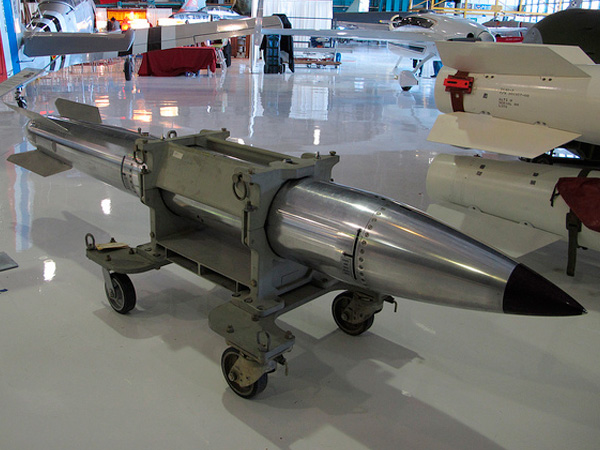
In the United States, the process of technological preparation of the production of tactical nuclear bombs of B61-12 began, according to the website of the National Nuclear Security Directorate (NNSA). The first sample should be released in 2020, after which the United States will begin serial production of a modernized bomb. The head of the NNSA Frank Claude emphasized that access to this stage has become possible thanks to the work of talented scientists and engineers who perform a critical mission for the national security of the United States. “At the moment, B 61 is systems with the most outdated component base in the US Arsenal. This resource extension program will give them at least 20 years of operation, ”Claude said.
The B61 nuclear bomb was developed in 1963 and adopted in 1968. From that moment, she was constantly subjected to modifications. The last bomb renewal program began in 2012 and lasted four years. The third, the final test of B61-12 was held in October last year-the bomb without a charge was dropped from the fighter over the tonop landfill in Nevada. The 12th modification should replace the version of 3.4.7 and 10 available in service with the US Air Force.
Washington denies the availability of plans to build tactical nuclear weapons in Europe and claims that the program for modernizing the atomic bombs does not threaten nuclear parity. In March, the Deputy Secretary of State Rose Gettemuller, who oversees the State Department of the problem of disarmament and non -proliferation, in an interview with Interfax said that the modernization of B61 would not lead to an increase in the military potential of these weapons. On the contrary, according to her, this will allow the United States to reduce the total number of nuclear bombs located on the European continent, as well as reduce the number of gravitational bombs in its nuclear arsenal. “The modernization of B61-12 will remove B83-1 from the Arsenal, the last bomb with a capacity of more megaton of the TNT equivalent in the US Arsenal,” said the US Secretary of Energy Ernest Monitz.
According to unofficial estimates, about 180 B61 bombs are located at NATO bases in Europe. Last fall, it became known that the United States plans to place 20 I61-12 bombs in Germany at the Buchel air base. Potentially new bombs may appear in Turkey and Italy.
From the very beginning of the testing of B61, the modernization program of the atomic bomb was accompanied by criticism not only from Russian politicians, but also from independent American experts. One of the main differences between B61-12 and previous modifications is the presence of a tail with rudders and an improved guidance system, which significantly increases the effectiveness of damage to goals, including underground ones. The warheads will have a reduced changing power of up to 50 kilotons. According to experts, the B61-12 program is not just an extension of the service life, but a significant military improvement. In addition, this will be the first controlled atomic bomb in the US arsenal. The superiority and reduced power of the bomb make it likely to use it higher.
“A nuclear bomb usually has a very large area of damage. If we increase its accuracy, we get the opportunity to use a charge of lower power. This allows you to apply more damage to a specific goal and less - the surrounding space. At first glance, this is good, but if we make it so small and accurate, will we have a desire to use it? After all, she will not cause such a large accompanying damage, ”the former deputy head of the United Committee of the chiefs of staff of the United States James Cartwright explained to Kommersant.
The Kremlin is still refraining from assessments in connection with information about the preparation of the United States for the production of an updated nuclear bomb. “This is to the Ministry of Defense. Here, experts should give the necessary assessment, ”Dmitry Peskov, spokesman for Russian President, told reporters.
Modernization of nuclear weapons does not have international legal restrictions, but under the current US administration it acquired an unprecedented scope, notes Mikhail Ulyanov, director of the Department for non-proliferation and control over the arms of the Russian Foreign Ministry: “In fact, all the key elements of the American nuclear triad are almost simultaneously updated. New carriers are created - a strategic bomber, a submarine and an intercontinental ballistic missile, as well as new nuclear weapons for them. In addition to modernized nuclear bombs, the Pentagon plans include the creation of a new nuclear winged rocket. ”
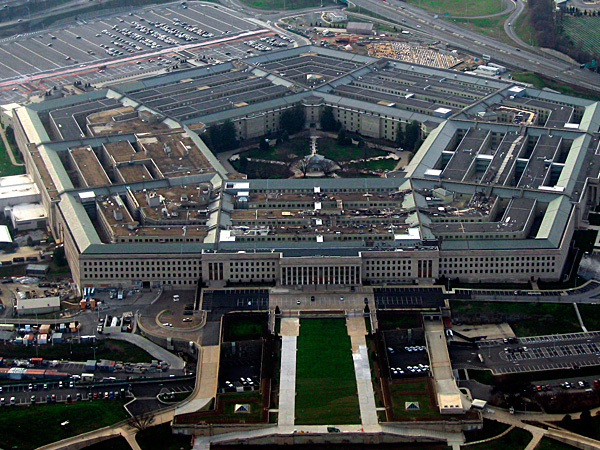 Pentagon. / wikipedia.org
Today, the United States remain a leader in military expenditures, which make up 36% of the world. Of the four trillion dollars in the US budget for 2017, 582.7 billion falls on the Pentagon, which is almost 1% higher than the 2016 military budget. This amount includes the payment of military operations abroad (Overseas Contingence Operations), including the fight against the Islamic State (terrorist organization, prohibited in the Russian Federation) in Iraq and Taliban in Iran. Four times the financing of efforts aimed at "strengthening the trust of European allies of the United States." The financing of the US military presence in Europe (European Reassuraance Initiative) will cost the budget of $ 3.4 billion. In 2017, about $ 16 billion is planned for the modernization of the US nuclear arsenal.
Russia also pays a lot of attention to the modernization of its nuclear arsenal, but on a much smaller scale. In the state program of weapons for 2011-2020, two trillion rubles were reserved for the development of strategic nuclear forces. The modernization of strategic aviation is provided, the purchase of missile underwater cruisers of the project 955 and 955A “Borey”, as well as the sea intercontinental ballistic missiles “Bulava” to them. Three submarines have already become part of the Navy, four more are being built. Presumably by 2025, a long-range aviation complex should be adopted, which will replace strategic bombers-raketing Tu-95 and Tu-160. By 2021, the Strategic Missile Forces for 98% should consist of new missile systems.
In mid -July, the military said that now in Russia a hypersonic strategic bomber is being developed , capable of applying nuclear blows from space. For the aircraft, the engine is allegedly already tested, which is planned to be presented at the Army-2016 forum in September. The engine developer Lieutenant Colonel Alexei Solodovnikov claims that the plane will be able to take off from ordinary airfields and reach anywhere in the planet in one to two hours. “On command, he will perform an exit to space to perform the assigned shock tasks, and return back to his airfield,” the developer said. Western military analysts, however, doubt that such a bomber will ever see the light for many technical and legal reasons.
Among other ambitious military projects, it is necessary to allocate a storm multi -purpose aircraft carrier, which will have a nuclear power plant and will be able to carry up to 90 aircraft and helicopters. According to rumors, the aircraft carrier has already tried to sell India. The Northern PKB is working on the creation of the Leader atomic destroyer, which is supposedly going to install a laser or electromagnetic cannon. In addition, in August, tests of the new MiG-35 fighter should begin.
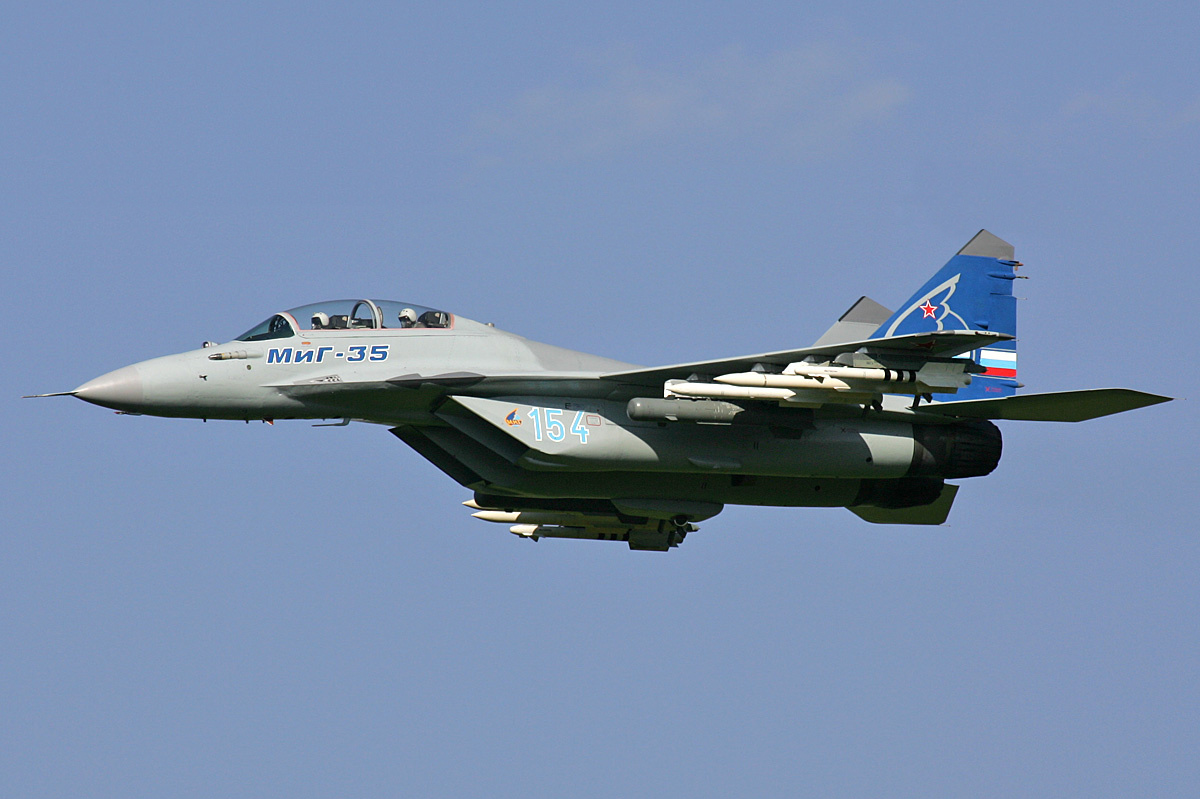 MiG-35 / ru.wikipedia.org
In 2015, Russia spent 2.9 trillion rubles on defense - 48% more compared to the previous year. Such figures are at least contained in the annual report sent by Moscow to the UN Disarment Office (UNODA). The information provided by Russia at the UN is opaque, so it is impossible to say exactly how much the state actually spends defense. According to the head of the Laboratory of the Military Economy of the Institute of Gaidar Vasily Zatsepin, the total military expenditure of the budget, designed in accordance with the UN standard, in 2015 amounted to 4.28 trillion rubles (5.3% of GDP), that is, 1.5 times more numbers that are declared Russia, RBC reports .