
Translated material
Simon Zhavoronkov: for the election as the last time
Simon Zhavoronkov 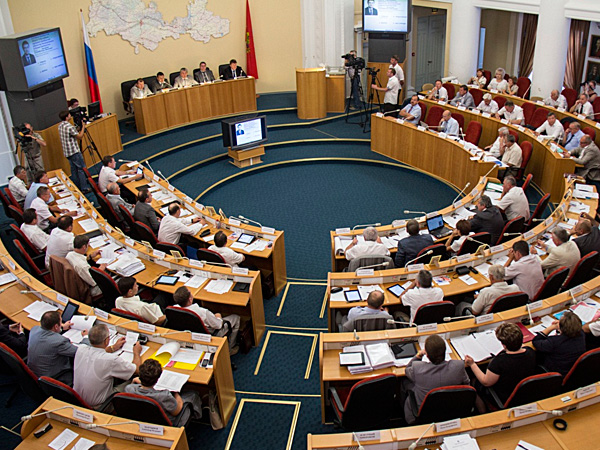 Voting for candidates Legislative Assembly
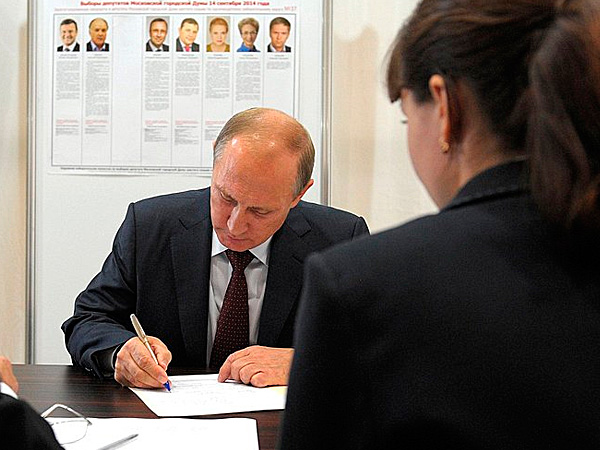 Vladimir Putin votes at the polling station. / kremlin.ru
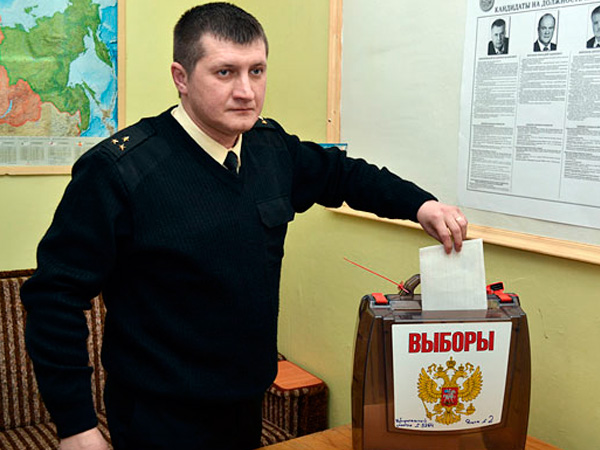 Elections using mobile urn for voting
 Voting for candidates Legislative Assembly
The Civil Initiatives Committee Alexei Kudrin published a report on the features of nomination of candidates and party lists in the upcoming parliamentary elections. The authors of the report - Alexander Kynev and Arkady Lyubarev - indicated that many problems of parties that do not have a "parliamentary benefit" were created artificially.
In accordance with the elected legislation, parties can put forward their candidates without a collection of signatures, which in the past parliamentary elections gained more than 3% of the vote, or those that over the past years were able to hold at least one candidate for regional legislative assemblies. Now such parties are 14 and their main problem is to correctly collect the entire package of documents, the size of which is only growing from the elections to the elections. However, all 14 parties coped with this and now little will prevent them from being in ballots on September 18.
A completely different situation with political parties, which formally have the right to participate in the elections, but in reality everything is arranged so that it is almost impossible to achieve this. Of the 60 parties that do not have a “parliamentary benefit”, only nine tried to take part in the elections and only four were able to assure their list in the CEC. Thus, 18 parties advanced.
KGI experts pay attention to the fact that 34% of those who have advanced from those who had the right to do so is the lowest indicator since 1993. This, according to the authors of the report, shows that the competition of political parties is limited to artificial barriers. Interestingly, the CEC is called guilty of the construction of barriers, but the legislator and personally the president.
Vladimir Putin votes at the polling station. / kremlin.ruAccording to the electoral legislation, the party can begin to draw up everything with the document and conduct full -scale preparation for the elections from the moment they are announced. The President can sign a decree on the appointment of elections 110-90 before the voting day, and the deadline for submitting documents in any case is determined hard, 45 days before the voting day.
That is, if Vladimir Putin signed a decree on the appointment of the elections on May 30, then the parties would have 66 days in stock, but he signed the decree on June 17, so the parties had only 48 days. Moreover, not all this time can be collected by voter signatures, you still need to conduct a congress, assure documents to the Central Election Commission and open a special account. Practice has shown that at best it takes 26 days for these formalities, which means that in reality a little more than three weeks remained to collect signatures.
The required number of signatures is 200 thousand pieces, and no more than 7 thousand should be collected in one region, that is, you need to work at least in 29 regions - KGI experts do not consider the prohibitive norm. Although it is noted that in 2011 150 thousand signatures were required, and then the law prescribed a reduction in the required number of signatures to 120 thousand to the next election.
A great problem is caused by strict requirements for the quality of signature sheets, back in 2003, 25% of the marriage was allowed, now - only 5%. Also, additional financial and organizational costs were led to the requirement of a notarial certificate of data on collectors of signatures.
Experts of the Civil Initiatives Committee predict that such problems with the nomination of the list and single -mandate will lead to the fact that in a few years the number of parties will be sharply reduced. The fact is that, according to the law of the party, they should participate in the elections, and if they do not, then the Ministry of Justice abolishes them. The criteria are quite strict: it is believed that the party has been participating in the elections, if it has nominates presidential candidates or the State Duma in seven years, participates in 9 governor campaigns, 17 elections to regional parliaments or nominates candidates in municipal elections in 43 regions.
So far, the law retains a rather liberal norm on nomination of presidential candidates, it is enough to collect only 100 thousand signatures, but by 2018 this item can be corrected. It is extremely difficult to participate in the governor's campaigns because of the “municipal filter”, and only two parties were able to exhibit their lists in more than 17 regones.
Elections using mobile urn for votingAt the same time, it is worth noting that according to the sociological survey, which was conducted by the Levada Center, the Russians are going to vote for parties that are already represented in the Duma. According to the survey, if the elections were held on the next Sunday, then the EP would receive 39%of the vote, the Communist Party and the LDPR at 10%, and SR - 3%. In this prose, sociologists decided to “joke” a little and included in a closed list a non -existent “youth party”. It turned out that 1% of respondents were ready to vote for her - this is more than for the “Party of Growth”, “Green”, “Homeland”, “Civil Platform” and even “Patriots of Russia”.
See also: Simon Zhavoronkov about the visibility of the election lull Simon Zhavoronkov as “small parties” try to collect signatures Ilya Karpyuk which of the governors will have to fight for their post