
Translated material
"I will not write about Putin's daughters"
Interview of the new editor -in -chief of Esquire Ksenia Sokolova
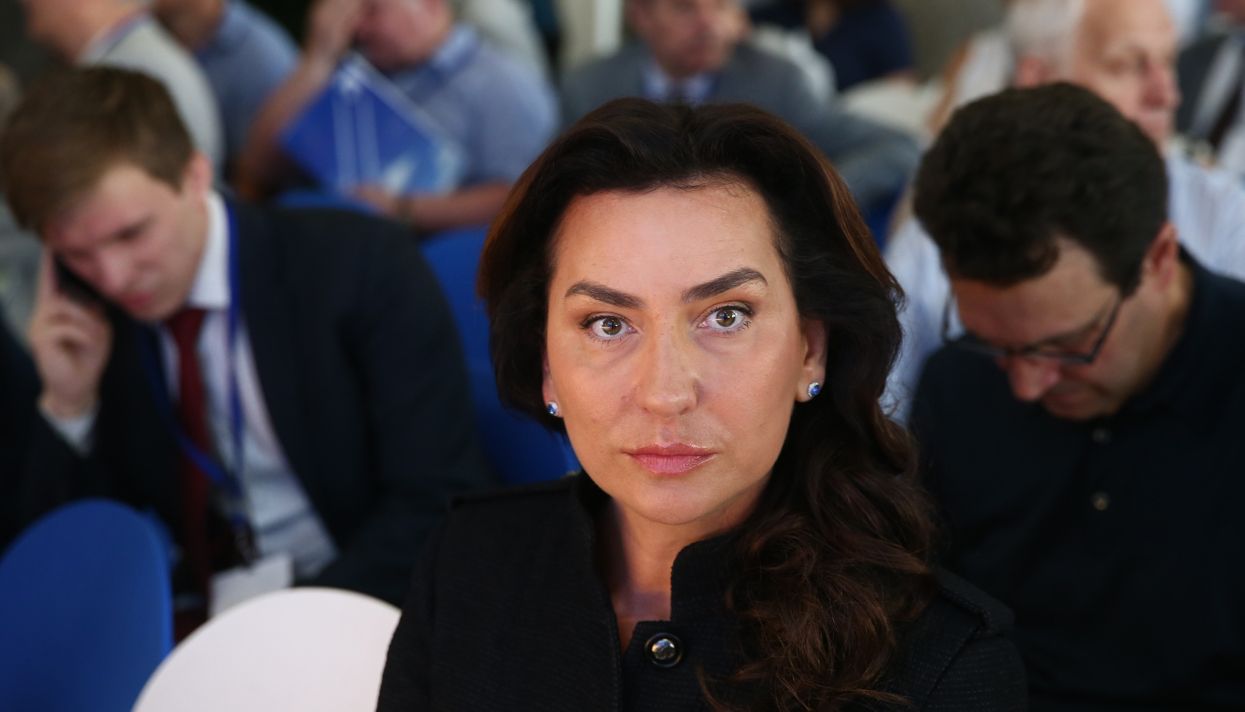
Ksenia Sokolova, a journalist who had previously worked in the GQ and the Snob project, was the new editor of Esquire magazine. The appointment is interesting not only in the sense that a woman will be headed by a male magazine, but also in the fact that Sokolova is parallel to politics and is running for the State Duma from the Growth Party. Medusa met with Sokolova and asked her about the failed care of journalism, censorship, conflict of interests and the meaning of the elections.
Ksenia Sokolova graduated from the Literary Institute. In 2003, she came to work in the GQ magazine, where he later became the head of the special projects department and the deputy chief editor. In GQ, a large resonance was reported by Sokolova from Beslan , the profile of Ramzan Kadyrov , materials from the Katrina, the new Orleans, North Korea and the colony, which were sentenced to life imprisonment. In the same publication, Sokolova acquired a reputation as one of the best Russian interviewers - in a duet with Ksenia Sobchak, she conducted harsh conversations with various representatives of the Russian political and media elite. In 2007, a collection of articles by Sokolova “Revolutionary Glamur” was published. In 2012, after the former editor of GQ, Nikolai Ukhokolova, went to the Mikhail Prokhorov media group “Live!”, Where she became vice president; Her materials began to be published in the magazine "Snob". In January 2016, Sokolova left Snob, and in July it became known that the journalist entered the ten federal list of growth party in the upcoming elections to the State Duma. Sokolova also goes to the polls as a single -mandate for the Moscow Central Administration.
- Over the past six months, after you left Snob, you gave several interviews in which you said that you have reached a career impasse and you are not going to engage in journalism anymore. What was this impasse?
- It was an absolutely practical consideration. I am used to progressing - I think that for many people this is a normal situation. And then I just saw the ceiling. Given what I did before, it would make sense to continue, for example, making an author’s project on television or working in some large state news agency. But I could not do this for ideological reasons - but no one would call me there because of my relative unreliability. Remember how in the "little prince"? So he said goodbye to his brilliant career as an artist.
- And what has changed now?
- I just did not foresee such a proposal - I mean Esquire. There was not a single woman in history - the chief editor of this magazine. I could not even imagine anything like that.
“Well, you probably could imagine the leadership of some female gloss.”
- I am completely not interested in any female gloss. Previously, this was at least well paid, but now, given the prices after the crisis, this is already unscarried to me from any point of view. And Esquire for me is an opportunity to become part of the legend. Because when I still studied at the Literary Institute for the art of translation from English, my teacher Viktor Petrovich Golyshev, a brilliant translator, and Esquire magazine and I studied. It was there that Kapota published “Breakfast at Tiffany”, which was not taken to Harper= Bazaar. New journalism began there. The genre that I loved most; That is why I moved from translators to journalists. Well, now fate really gave such an opportunity.
- And how did this opportunity arise? To invite a woman to the position of editor-in-chief of a male magazine is still a rather revolutionary idea.
- I will reveal you a terrible secret: in general, this whole story with Esquire began with a call of an indifferent reader. It so happened that he knew me and the company's management [Independent Media].
- From which I conclude that the reader is not only not indifferent, but also wealthy.
- Absolutely, yes. So, he called me and asked if I wanted. I said that this is impossible, this cannot be. But the indifferent reader was very indifferent, and everything worked out. And I could no longer refuse, because precisely due to the fact that I and this is Esquire, this connection can give some interesting result.
- How do you see Russian Esquire today? What is this magazine?
- This is a magazine that has a very short audience. And the shareholders set the task of expanding it, making the project more commercially successful. Accordingly, I need to figure out how to make journalism corresponding to the moment, journalism for which there will be demand. Because it is obvious that now there is an era of the formation of some new type of journalism. In general, large texts, long reports, longders have outlined - there simply is no time for them. But I think that since Esquire is still connected with the luxury consumption industry, it is appropriate to recreate the original formula that the gentlemen that created this journal was invented: to create a type of journalism or luxury quality literature, but appropriate for a monthly journal. We tried to reproduce this formula with Uskov in GQ, and then this was succeeded, the project was very successful. And now it seems to me that you need to come up with such a new new journalism. Which will correspond to what is advertised in Esquire.
-I still do not agree with you about Longrids. In America, their Renaissance is now quite powerful, in fact.
-Yes, yes, I directly feel this trend with my nose.
“You just said that Longrids have lost relevance?”
- No, this was only the first part of my thought. They did not lose at all, on the contrary, they return. But look - the states are quite obviously ahead of us, right? And there the pendulum was already swinging. And here - not yet, while everyone is sitting and thinking, how to shove the reader the most and cut down on this views. But the pendulum will swing. And maybe I will swing him, because these are those things that I know and can best. I had been engaged in reporting work for a long time, and I was just interested in complex projects requiring painstaking work. I did not spare on them either time, no money, nor my own energy. And I immediately entered into an agreement with the shareholders of Esquire that I myself will work, I will not only be an administrator, but also a journalist. Of course, this is a challenge, of course, this is a challenge. But for myself, I draw a clearly line from the creation of Esquire in my head in 1933 to the publication of the hood in 1954 and to the current revival of Longrid. I hope we will come to him because people are tired of literary and journalistic fast food. Unfortunately, a niche has narrowed in Russia, where high quality lives in this sense.
- And what, in fact, the niche is lost? What traditions do you mean?
-I now see a great hobby for mass culture-and a very narrow layer of people who are interested in serious literature or go to the theater for something really interesting.
- No, I mean - what kind of achievements of journalism? Is this the Russian Telegraph newspaper? Soviet traditions?
- Well, relatively speaking, yes, there was both interesting and high -quality Soviet journalism.
- And the current Esquire does not reach its level?
- There was just another task, I think. There was no task to reach him to some kind of bar. The magazine has a very narrow audience ...
- You say this all the time - so what kind of narrow audience is this?
- The shareholders define it as a hipster. I did not conduct research, but probably it can be called it. In my opinion, since the magazine is still a commercial project, it cannot be designed only for this audience, since it does not consume those goods due to the advertising of which this journal exists. And the circulation does not increase due to the fact that the audience is limited. And therefore, no progress is possible. Accordingly, the audience needs to be expanded.
- Do you believe that in 2016 you can generally radically increase the audience of a paper journal?
- I do not know how radical, but I think it is possible. You know, in the six months that I did not work, acquaintances came up to me all the time and said that they had nothing to read in magazines. This is not because of the fact that I did not write-but for some reason there are no such magazines that people are waiting for. And there is a request for interesting reports, Longrids. I feel that the audience is ready to spend money on it.
“And she is ready to spend them on paper?”
- Yes. There is such a thing-the status symbol. Paper is still a status symbol. It is clear at the same time that the relationship between the Internet and paper is a very thin thing that is now changing almost every day. It is necessary to somehow attach the ear and hear it. See, for example, what the Americans have there, what new formats now have. Obviously, we are in a situation where you can invent a lot of things.
- Do you buy paper magazines yourself?
“You know, I'm like that shoemaker.” I have not been buying them for a long time.
- Are your caring friends?
- Buy. And here it is also important that if the magazine falls into some important points in a person, he begins to associate himself with him, begins to wait for every number. And it seems to me that today in Russia these many people who have taken place are our indifferent reader in a state of some uncertainty, they cannot formulate for themselves what to do next, given the new crisis reality. And they are frustrated - especially men - because it is natural for them to bear responsibility for what is happening. And now reality is changing so quickly and unpredictably that it is difficult to cope with these processes. Therefore, people need some new formulation or reinforcement of their positions. And it seems to me that the magazine can contribute to some extent.
“You mentioned men.” Do you have some element of the feminist celebration now - now, a woman at the head of a male magazine?
-You know, I rather think about it in the historical and literary context that we talked about. Formally, the victory of feminism occurred, but, agreeing to this work, I did not really think about it.
- And what is a male magazine in general today, especially in the case of Esquire? Still, in Russia this term is usually associated one way or another with the objectification of the female body, and Esquire has never done this.
- Similar magazines arose as appendages of the fashion industry. Women's fashion is a female magazine, male - male. That's all. This is the practical side of the issue, and much more serious things can already be stringing on this frame. Fashion, consumption is a basis and a commercial component, the rest is a superstructure corresponding to the era.
-At the same time, the Russian Esquire, which Philip Bakhtin invented it, was essentially a socio-political magazine with a fashionable appendage. Do you want to change it?
- I simply do not consider fashion an appendage to content in such projects. I consider it a commercial basis. And if the magazine does not bring money, it does not develop. You can make three fashion pages, one hundred and twenty pages about society and politics, but it does not work.
- But when the magazine started - it worked?
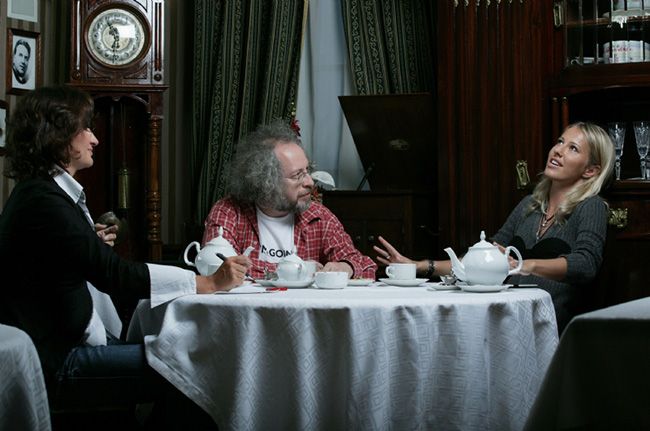
- There was still as much fashion as it was necessary to make a profit. But from the point of view of the image - yes, Bakhtin found, like us in GQ, the content corresponding to the era. Yesterday, Alexei Venediktov asked me - why, he says, your project stopped with Sobchak? To which I told him - when the censorship nuts twisted even softly, and the hand on the throat lay quite tenderly, the image of these two girls who brazenly asking odious characters was very appropriate. But! The era has changed. We need new images.
-That is, the nuts of censorship spun-and now there is no need to do socio-political journalism? I do not really see logic.
-You see, then we saw that the era of relative censorship was coming, and understood that we could somehow download, pull the situation in different directions. To contrast twisting the nuts of laughter and a carnival - or a rather serious front, as Bakhtin did. Now neither front nor laughter are no longer an answer to the call that is facing us. Nobody pays attention to them. Need some other answer. And I think over him now.
- Let me specifically ask: here Esquire published reports about the combat path of a Russian soldier killed in the Donbass, about the funeral of the GRU agent who died in Syria. Such journalism is no longer needed, in your opinion?
- I think that military reports are always needed. Always. We must put them, people should know about it. But something else is needed. The magazine is a collection of elements, you know?
“The nuts of censorship that you talked about - are they concerned Esquire or not?”
- I tell you from experience. We did very arrogant things in GQ - but I personally, Ksenia Sokolov, never have a censorship. Why? Because I was not shy in my expressions not on Channel One and not in the newspaper Komsomolskaya Pravda, but in a journal with a hundred thousandth circulation, which the people themselves in the Kremlin read. It was such a part of a person who did not pose any threat due to its low -torque.
“But you want to increase the esquire circulation!”
- Listen, we still will not become interesting to the large mechanisms of censorship. As Chubais said, Russia is a very large country. The authorities are interesting in millions of circulations, and the circulation of fifty, one hundred thousand is everything so ... Well, if there is some kind of terrible impudence there, but I don’t even know what it can be.
“You know, of course,” Putin's daughters.
- Yes, here! Putin's daughters. I just recently discussed this with a serious person who is now called a “source”. He says: “What is censorship? There is no censorship. You can’t write about two daughters of Putin, well, and more about ... "
- About whom else?
- Well, remember, then the scandal rattled with Roldugin and Panama offshore.
-That is, you can’t write about the daughters and about Putin's friends and, perhaps, about someone about whom we do not know.
-Well, about someone Putin.
- Putin has a rather large circle of acquaintances.
-Well, somehow it is necessary, yes, to filter the bazaar. They believe that in the body of a journalist some special elements should form that begin to vibrate when such a topic.
- It seems to me that they should vibrate with delight.
- They must vibrate with delight, but look at how it ends in the situation with RBC.
- That is, you also have a double continuous , so it turns out.
- I will not write about Putin's daughters - I declare this responsibly.
- That is, if a person comes with an excellent report about Katerina Tikhonova , you say - no?
- No. Go, I don’t know, to the New Gazeta.
- You can still send to Medusa.
- Yes! Here! Colleagues will still send me a bouquet.
- Agreed.
“But if, you know, I will decide that my shareholders were tired of something to me and let everything be closed with them, then, of course, I will publish it at home.” Listen, it really does not seem correct to this manner not to take into account the existing reality. I take it into account.
- And it seems to you that the spectrum of those that cannot be affected is quite small?
- Well, I quoted the source. But in principle, these are really some things related to the personal phobias of the president. He is really afraid when they illuminate the life of his children. There are some reasons for this, I will not pronounce them. And this leads to a disaster not only of me, Ksenia Sokolov, an honest journalist, but also my publication.
-Your appointment in Esquire is quite unprecedented not only in the sense of your gender, but also because you are actually running for the State Duma according to the list of a growth batch. You do not see a conflict of interest in this?
- Absolutely not. Moreover, these two things are connected for me. Formally, there is a conflict in the sense that if they elect me, I have no right to occupy a salary position. But I have already consulted, I can be an editor -in -chief on a voluntary basis. And I plan so. I do not see a conflict, because I run from a party that represents the interests of businessmen, an intellectual elite and just young people. These are those at the expense of whom I plan to expand the audience of Esquire.
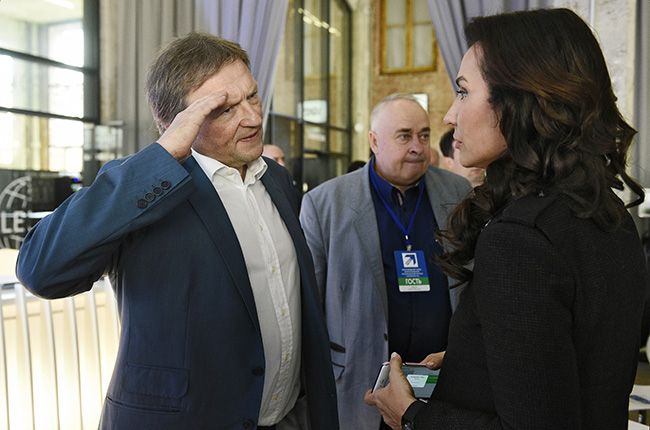
-But still, the party is a player in the reality that you are writing about. For example, your employee comes to you and says: I have a decoding of the meeting in the presidential administration, where Boris Titov ( creator of the growth party - approx. Medusa ) reports to Volodin about the work done. And let's say this is an interesting, cheerful dialogue that tells us a lot about Russian politics. What will you do as a chief editor?
- You described the rarest case. But if he arose, I think I would put such material.
- And what will the party leader say to this?
-Well, he will say: "Ksenia Sokolova, you have stupefied something with us." But you need to understand that I am a journalist. I will put such a thing. On the other hand, you said that he reports to Volodin. I doubt that this is happening.
- Well, how - he himself said that he agreed on the creation of a party in the Kremlin, and Khakamada literally confirmed that week that this was a hand party.
- What is a hand party? Давайте я буду говорить за себя, а не ссылаться на Ирину Хакамаду, при всем моем к ней уважении. Объясняю, почему я в этой партии, а не в той, которую поддерживает Михаил Ходорковский, не в радикальной оппозиции. Потому что радикальную оппозицию никуда не выберут и делать ей ничего не дадут в ближайшей перспективе. А я, как я уже говорила, учитываю окружающую реальность. Я бы не стала баллотироваться от партии Навального или Ходорковского, потому что это бессмысленное действие, занимающее время. А мне нужен результат. Ценности «Единой России» или ЛДПР я не очень разделяю, а партия Титова мне показалась подходящей.
— И вы не считаете, что это либеральный спойлер, созданный Кремлем для изображения видимости конкурентных выборов.
— Я не думаю, что все так примитивно. Очевидно, что одобрение на существование этой партии, конечно, было. Но я не думаю, что создали прямо ручную партию. Я полагаю, что ситуация сложнее и труднее, потому что большой класс людей лишен представительства. Люди не хотят голосовать. В чем удивительно сходятся и радикальная оппозиция, и власть? И те и другие транслируют мысль, что все очень плохо и надежды нет. Только одни говорят — денег нет, держитесь, а другие — деньги есть, но кровавый Путин вам их не дает. Полное уныние на обоих флангах. И тут я встречаю Титова. Я понимаю, что поверить в это сложно. Но вот я сидела на том месте, где сейчас сидите вы, и передо мной сидел Титов, который звучал очень оптимистично. Мол, а чего нам ложиться и помирать, руки-ноги есть, мозги есть, бизнес делать умеем, страна не самая позорная на свете, все для процветания у нас есть. И его настроение меня убедило. Оно совпало с моим.
— И вы решили пойти в политику?
— Знаете, мои друзья, когда мы об этом говорим, смотрят на меня так, будто я заболела чем-то нехорошим. А некоторые думают, что я теперь собираюсь есть детей, что в этом и заключаются занятия политикой в нынешней России, что это что-то непристойное. И когда я начала размышлять над этой реакцией, я поняла, что с их точки зрения вообще неправильно что-либо делать. Все застыло в каком-то анабиозе. И во власти тоже — они там сами говорят, что чиновники разных рангов боятся ответственности, поэтому никто не принимает важных решений. И среди моих знакомых многие давно тоже застыли в состоянии внутренней эмиграции. У меня другая точка зрения, и если уж я осталась в России, давайте я попробую что-то сделать. Ну не буду я есть детей, елки-палки!
— Это все прекрасно звучит, но вы же сами помните историю с «Правым делом» , которые тоже рассуждали про бизнес и процветание, а в итоге Прохоров попытался проявить малейшую самостоятельность и был разгромлен.
— Это все та же история с дочками Путина. То есть есть острые, крайне раздражающие действующую власть вещи, которых не надо делать, если ты хочешь продолжать путь, который начал.
— Что такое острые вещи? Вот сейчас Партию пенсионеров громят точно так же за то, что они включили в список бывшего единоросса из Челябинска.
— Ну вот поэтому эти прекрасные люди из нового руководства РБК и выразились так поэтически про эту двойную сплошную, которая все время движется неизвестно куда.
— То есть существует система жестких правил, которую мы не знаем.
- Yes. Нам навязывают жесткие правила, которых мы не знаем. Причем, знаете, эта болезненная точка — она может обнаружиться абсолютно где угодно. Немного зная всю эту кухню, я уверена, что людей из Партии пенсионеров предупредили. Но они не вняли. Этот почтальон всегда звонит. Ну а потом идут танки и наступает разгром.
— Так зачем вам тогда играть в эту игру?
— Я думаю, что это только начальный этап игры. Я отдаю себе отчет в том, что он может оказаться последним. Но чтобы стать участником этой игры, нужно сыграть по правилам, которые сейчас существуют. Я их не придумывала, они, наверное, не самые хорошие. Но это правила, которые есть. Я не имею достаточно сил, и никто не имеет, чтобы войти туда и их отменить сразу. Я веса такого не имею, мне его надо набрать — не физический, слава богу, а символический. И чтобы его набирать, мне надо идти очень аккуратно, как по минному полю. Тут у тебя дочки Путина, тут у тебя, значит, какой-то человек, которого ты не можешь позвать в партию… Какие-то кочки, на которые нельзя наступать. Собственно, даже говоря это вам сейчас, я уже нахожусь на грани.
- Well, yes. Так и ради чего? Кому удалось что-то сделать хорошее в последнее время, будучи депутатом Госдумы?
— Я верю в то, что это возможно. Может быть, глобальных вещей я не сделаю, но думаю, что могу улучшить жизнь каких-то людей. Достаточно большого их количества. Я бы тут привела пример того же Евгения Ройзмана, который сначала был депутатом, а теперь мэр Екатеринбурга. Что он делает и что стала бы делать я, оказавшись на таком посту? Он ведет личный прием и решает конкретные проблемы конкретных людей. Мне кажется, что здесь надо действовать, исходя из абсолютной конкретики. Первый шаг — избраться в Думу. Возможно, сейчас, возможно, через четыре года — потому что это марафонская дистанция. Я отдаю себе отчет, как власть в России устроена. Я прекрасно знаю, что я хреново монтируюсь с этим. Но с другой стороны, знаете, я иногда себя называю «Маленькое агентство по решению нерешаемых задач». Эта задача почти нерешаема, и поэтому я хочу ее решить.
— Вы баллотируетесь по ЦАО в Москве. Какие проблемы ЦАО вы бы стали решать в Госдуме? Мне кажется, у жителей ЦАО если и есть проблемы, то связанные с деятельностью Сергея Собянина.
— Я уверена, что, будучи депутатом Думы, решить проблемы, связанные с деятельностью Собянина, гораздо проще, чем если ты журналист. Как журналист я годами пыталась добиться от него интервью. Думаю, если я буду депутатом, мне будет гораздо проще. Вообще, притом что какая-то его деятельность мне кажется осознанной и правильной, я считаю, что главная проблема московской мэрии — что они не разговаривают. Поэтому они и выглядят такими аррогантными людьми. Тебе никто не сообщит, а завтра у тебя во дворе появится бульдозер. Мне кажется, у Собянина будет больше сторонников, если он выйдет и скажет: «Мы собираемся делать то-то». А почему они не разговаривают? Потому что если они начинают говорить, они начинают слушать. Они мне сами это говорили. А если слушать всех или хотя бы часть, не сделаешь никогда ничего.
— Ну вообще это их работа.
- Exactly. Но эту ее часть они саботируют. Давайте их научим этого не делать. Пока я журналист, я их не могу этому научить — они меня к себе не подпустят. А если я буду депутатом, уже придется.
Alexander Gorbachev
Moscow