
Translated material
Migrants
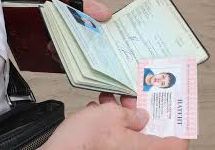
The revenues of the Moscow budget from taxes on labor migrants in the first half of the year amounted to 6.8 billion rubles, which is 2.3 times more income tax from the oil companies registered in the capital. This was stated by the head of the Department of Economic Policy of the city, Maxim Reshetnikov, reports Interfax.
"The economic model of regulation of migration is optimal for all its participants - for the city, for Muscovites, for migrants themselves. The Institute of Patent for migrants took place - an effective tool for monitoring and regulating labor migration flows has been created in the capital. On the one hand, foreign labor has occurred in Moscow, the migration market has become more transparent and more convenient for employers and migrants themselves, on the other hand, the transition - the transition - the transition - the transition - the transition - the crossing From quotas to patents allows you to protect the workplaces of Muscovites, ”the official said.
For the first half of the year, 195 thousand patents were issued by the Moscow Migration Center, 199 thousand medical examinations and 128 thousand testing in the Russian language, the history of Russia and the basics of legislation were conducted.
“On average, in the first half of the year, the documents for a patent, giving the right to work in Moscow, were accepted daily with 1,200 migrants,” Reshetnikov said. “In 2016, the amount of payment for labor patent in Moscow is 4200 rubles. Patent payment is an advance payment of personal income tax (personal income tax), which can be declared a business using the work using the work of the work using the work using the work migrants, to return. "
Among the legally formed and received patents of labor migrants, 43 percent are Uzbeks, 30 - Tajiks, 16 - Ukrainians.
From January 1, 2015, migrants for a legal work device should provide the results of tests in the Russian language, history of about and on the political structure of Russia. The test consists of four blocks. The first of them establishes the “level of communicative competence” of foreigners - they must be able to read small texts (advertising, signs, interviews, signs), fill out questionnaires, understand dialogs. The minimum lexical level is 850 words.
The second block is dedicated to the main events of the history of Russia. In particular, migrants should know the main historical figures, as well as the foundations of different religions and national traditions of the country. The third paragraph includes knowledge of the foundations of the constitutional system of Russia, which includes such concepts as the principle of separation of powers, multi -partyism, rights and freedom of citizens. And the fourth is knowledge of Russian law and legal liability of foreigners.