
Translated material
Gleb Korepanov: Olympics: Launch
Gleb Korepanov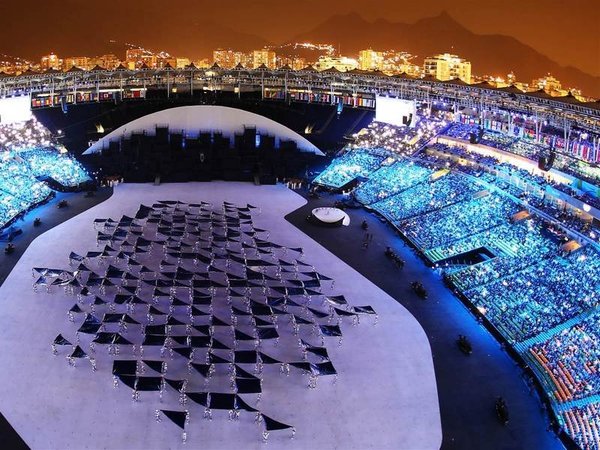

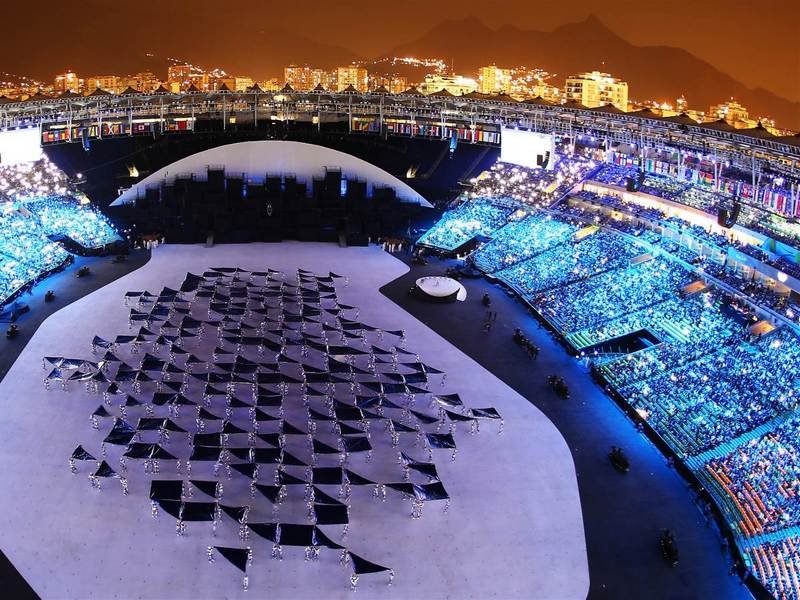
At the Marakan stadium in Rio de Janeiro, the opening ceremony of the Summer Olympic Games was held, which will be held against a deep recession and political protests. The directors of the show did everything possible to present the Olympic movement progressive and not indifferent to social and environmental problems with a relatively small budget. The emphasis on environmental protection, a team of refugees and a 12-year-old hip-hop performer from Favel-all this should have switched the attention of the public from organizational, political and economic problems to the triumph of sports unity.
The theme of nature protection was a red thread through the entire opening ceremony of the Olympic Games. If at the 2012 Games in London the Olympic rings were from the fire, then in Rio they were made of trees to emphasize the environmental accent. The production of the theatrical part of the ceremony demonstrated the history and diversity of Brazil, as well as the problems that the country is facing now. The appearance of large megacities was shown using a huge horizontal projection.
The entire ceremony lasted about four hours and was filled with music and Latin American dances. The shower of the show was the Brazilian film director Fernande Meyrellish, who shot the acutely social film “The City of God” about the life of Favel. One episode was decorated with decorations stylized under the poor urban areas. Highly limited in funds, Meirellish used the digital floor and smart lighting to create productions that are not inferior to previous ceremonies.
The procession of 208 Olympic teams also took place in a carnival style for incendiary music. The team of teams traditionally began with the Greece team. Each team laid wood in a special container in a special container, then to plant in the Olympic Park. In total, it is planned to plant 12 thousand trees. The Russian team, involved in a doping scandal, is presented at a reduced composition of 270 athletes instead of 389. The state flag was 40-year-old volleyball player Sergei Tetyukhin. The stands met the Russian team with restrained applause.
Athletes from the team refugees were awarded this applause, only the owners of the competition were met louder. The symbolic gesture was made by the Iranian team, for the first time in the history of the country, a woman was carried by a woman - archer Nemati. She paralyzed the lower part of her body, but she, nevertheless, achieved the right to play for the Olympic team.
The opening ceremony was attended by 37 chapters of state. The acting President of Brazil Michelle Temer officially announced the opening of the competition. His 10-second performance was met by whistle and hum. They shouted from the stands: "Down with Temera!"
The president of the International Olympic Committee Thomas Bach, who was criticized a lot for the fact that he allowed the Russian team to competition, despite the WADA investigation about the systematic use of doping and the existence of a scheme for hiding positive samples, which is allegedly, was supervised at the state level, also met.
“All Brazilians can be very proud today. With the Olympic Games as a catalyst in just seven years you have achieved the results that previous generations have only dreamed of. You turned the city into a modern metropolis and made it even more beautiful. You succeeded in a very difficult time, ”Bach said at the opening ceremony.
One of the most anticipated guests, the legendary football player Pele was forced to refuse to participate in the ceremony due to health problems. This became known just a few hours before the event. “I am physically unable to attend the opening of the Olympic Games. As a Brazilian, I ask God to bless all those who participate in this great event, ”said Pele.
The fire of the Olympic Games was lit by the marathon Vanderlei Cordira.
See also: in Brazil, the opening ceremony was held of the XXXI Summer Olympic Games about the beginning of the Olympiad and the situation with the admission of Russiansexperts about the prospects of WADA and the future of sports Anna Sakoyan and even the metro. Whether Rio de Janeiro is ready for the Olympiad