
Translated material
Kremlin Brotherhood
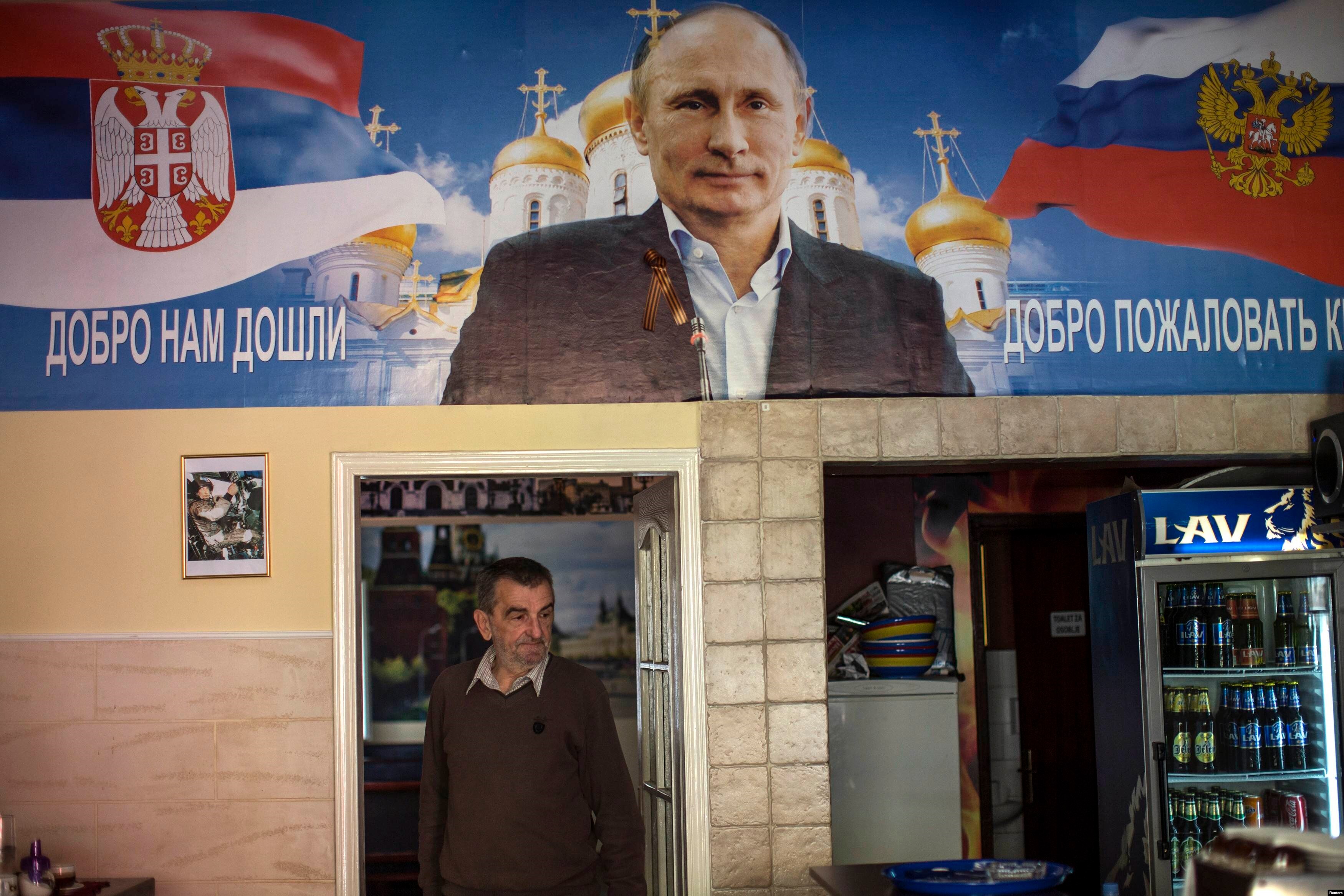
Russian "soft power" pushes Serbia to authoritarianism and gives nationalists hope for revenge
The strengthening of Russian influence aimed at slowing Euro -Atlantic integration and democratic processes in different countries of the region causes disputes in the Balkans. In Serbia, which remains the main partner of Moscow in the south-west of Europe, the structures related to the Kremlin are most active, developing ties with friendly parties, journalists and anti-Western organizations. Serbian experts indicate the opacity of the Russian “soft power” and its gross methods, fearing the surge of nationalism and the strengthening of the anti -European trend. The investigation of the Balkan Radio Service Free Europe Iva Martinovich and Dushan Komarchevich is devoted to this topic.
The term "soft power" was introduced into the circulation at the end of the 20th century Professor Harvard University Joseph Na . “Soft force” involves the achievement of political goals with non -violent means, using cultural and democratic values. In recent years, Russia has strengthened its influence in Serbia, but unlike Western countries, the goal of Moscow is to weaken the support of European integration and prevent NATO expansion in the Balkans. As an alternative, closer ties with Moscow are imposed, the strengthening of which goes both through the churches and through numerous public and political organizations. In the eyes of Serbian experts, the Russian “soft power” looks rude and politicized, while the countries of the West used the language, films, music and the generally popular culture to strengthen their influence.
The Center for Euro -Atlantic Research in Belgrade at the beginning of this year published a detailed study on the issue of Russian "soft power", counting more than a hundred pro -Russian structures in the country. These are political parties, associations of citizens, student movements, media, Internet portals, branches of Russian organizations and funds, the number of which is constantly growing. According to the study, the first such organizations arose in the Serbian areas in the north of Kosova after the autonomous field of independence in 2008. The activity of pro -Russian organizations grew against the backdrop of a dialogue that began in 2013 about the normalization of relations between Belgrade and Pristina, negotiations on the entry of Serbia into the European Union and the Serbian authorities, the mood for closer cooperation with NATO.
Orthodoxy is a special civilization of the highest values and an alternative to an American-western consumer concept that orientates people to material, rather than spiritual benefits
In the expansion of Russian activity in Serbia, according to the historian of Military Beshlina, the opening of the Belgrade branch of the Russian Institute of Strategic Research , which was established by the President of Russia, played a special role. The institute is headed by Lieutenant General Leonid Reshetnikov, who served in foreign intelligence from 1976 to 2009. The main task of RISI, as reported on his website, is the information support of the Administration of the President of Russia, the Council of the Federation, the State Duma, the Security Council, the Government apparatus, ministries and departments. Risi, among other things, deals with ensuring national security, evaluates strategic risk factors, considers ways to resolve crisis situations and counteract the falsification of history in the post -Soviet space.
Reshetnikov is known in the Balkans with his ambiguous statements, for example, about the new Serbian collective identity.
“In their public statements, the leaders of RISI constantly give hope to the nationalists in Serbia that the wars in the Balkans have not yet been completed, that the borders are not final, and thus Serbian nationalism, defeated in the wars of the 1990s, can hope for revenge,” says Milvini Beshlin.
Radio journalists Free Europe failed to get a comment from RISI's representative office in Serbia. Here this organization is registered as an association engaged in publishing with the aim of "strengthening research and other forms of cooperation." By the phone number that can be found on the Internet, no one answers.
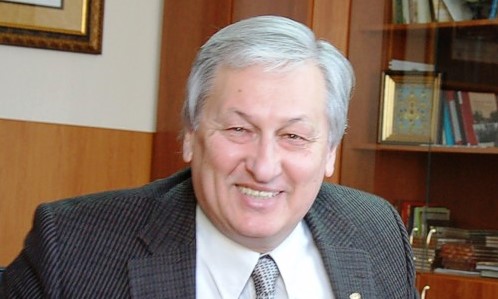
The RISI branch in Belgrade was opened in 2013, and his work received the blessing of priests of the Serbian Orthodox Church. Then representatives of the institute claimed that in Serbia, Russian "soft power" did not need, since spiritual and historical proximity and understanding were established between the two countries and two peoples. Later, RISI, Nikita Bondarev, said at a conference in Belgrade dedicated to "spiritual relations and methods of protection against the soft power of the West" that Russia's influence in Serbia is still weak and should be strengthened.
Balkans in Russian politics should be considered primarily as a landfill to demonstrate their power and rivalry with the West
A special guest of the conference organized by the Russian Support for Public Diplomacy Fund for Gorchakov and the Serbian Code organization (which also failed to contact) was Leonid Reshetnikov. The forum used the thesis that "Orthodoxy is a special civilization of the highest values and an alternative to the American-Western consumer concept that orientes people to material rather than spiritual benefits." As for the borders in the Balkans, according to Reshetnikov’s statement, they "are temporary, because they are artificially imposed from the outside, to the detriment of the Serbian people, which is separated, as well as Russian."
Reshetnikov is a frequent guest not only in Belgrade, but also in the Republic of Serbian in Bosnia and Herzegovina, whose leadership constantly flirts with separatist ideas. Here he received one of the highest awards - the Order of Negosh - and promised on behalf of the patriotic forces of Russia to protect the rights and the possibility of independent development of the Republic of Serbian.
In May 2016, the presentation of Reshetnikov’s book “Return to Russia. The Third Path, or the Dead World of Higanness,” published in Serbian, was held in the Criminal Chamber of Serbia. As in most similar cases, representatives of the Serbian Orthodox Church participated in this event, including Metropolitan Amphilochium, known for extremist views and inciting hatred. Radio correspondents Free Europe failed to contact the Association "Our Serbia", which organized the meeting, on the website of which it is indicated that it is engaged in humanitarian activities and assisting children.
- All these organizations that Russia finances or supports here have a similar policy. For example, they consider Kosovo an unresolved problem and play along with the separatism of the President of the Republic of Serbian Milorad Dodik. All this is used as a platform for the implementation of the imperial interests of Russia in the Balkans. The Balkans in Russian politics should be considered primarily as a landfill to demonstrate their power and rivalry with the West, ”said Poliva Beshlin .
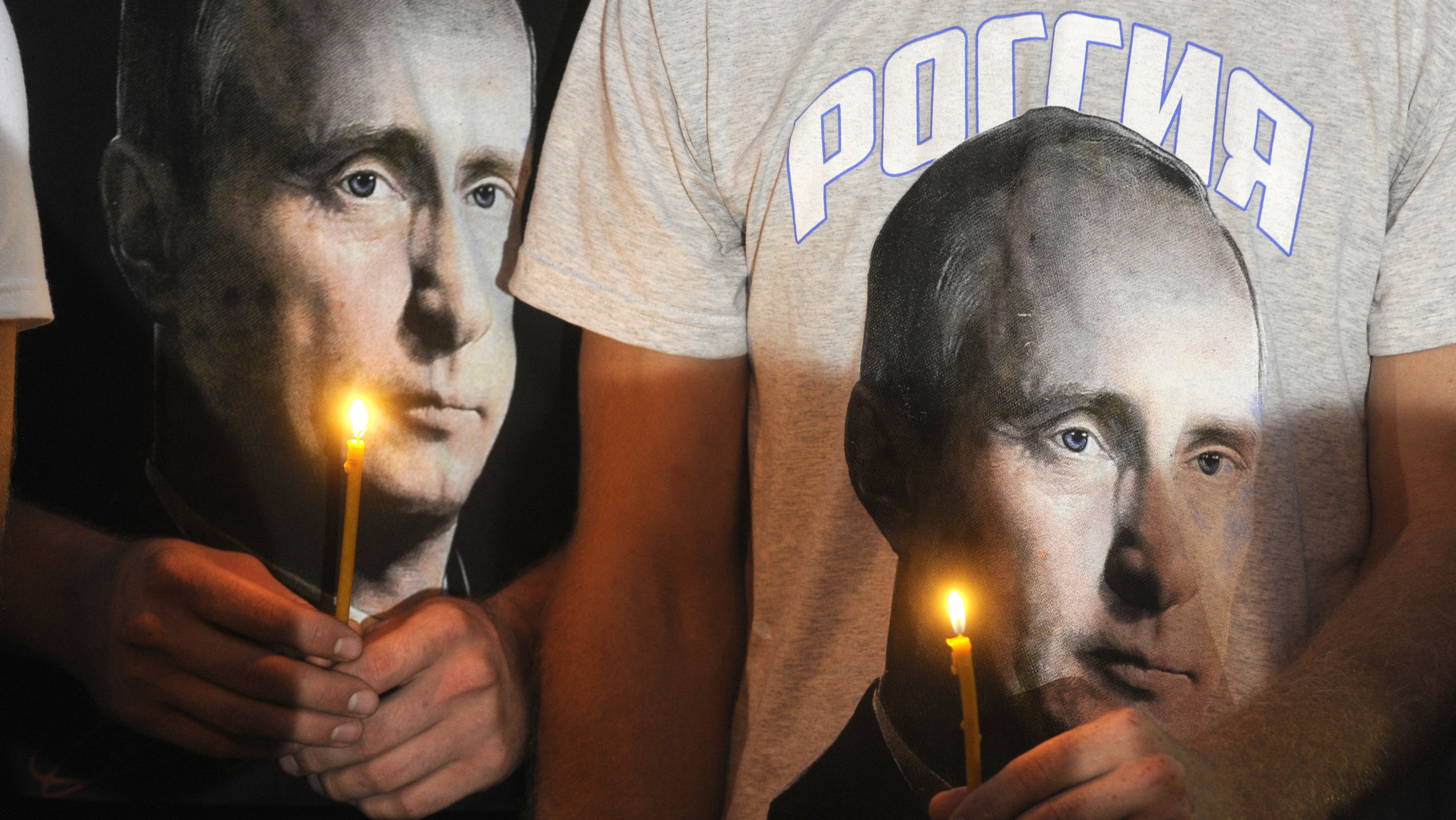
The main geopolitical task of Russia, which is not hidden in Moscow, is the restraint of NATO, and pro -Russian organizations in the Balkans are also concentrated on this purpose. Most of these organizations are nationalist and conservative, and their anti -Western rhetoric is directed against universal rights and freedoms, Radio's interlocutors say free Europe.
- These organizations often ignore the secular character of the country and promote conservative values in a completely non -modern way. They use inciting hatred, intimidation, spread of undemocratic principles. Speaking for the rejection of Serbia from the process of European integration due to the possible loss of part of the country's sovereignty, they at the same time believe that everything that comes from Russia should be accepted. At the same time, I am not sure that they understand what modern Russia is, what problems this country is faced with, what is the management system there and they could register their organization there and work freely, ”says Elena Milich, director of the Euro -Atlantic Research Center.
Organizations related to Russia include the nationalist group "Serbian Image" , whose activities were prohibited by the Constitutional Court of Serbia in 2012. This right organization advocates the creation of the Orthodox monarchy in the country, promoting traditional Serbian values and nationalist ideas. According to analysts, the “image” enjoys the support of the Serbian Orthodox Church and part of the country's political elite. The Ministry of the Interior described the "image" as a "cresters". Its supporters threaten the organizers and participants of the gay parade, break the exhibitions and performances of artists and artists from Kosov and Croatia, participated in violent demonstrations in Belgrade after the arrest of the former leader of the Bosnian Serbs, Radovan Karadzhich, whom the Serbian authorities were issued to the Hague in 2008.
The leader of the “image” of Miden Fraudich in 2014 spent four months under house arrest. He believes that the decision to ban the "image" was politically motivated. Obodovic collaborates with various organizations and movements in Russia. The basis of this cooperation, he calls love for God, the Orthodox faith and the realization that "all freedom -loving peoples should be a united front against Western aggression, threatening the values of the free world."
Pravovich recently visited Russia and South Ossetia, participated in the International Conference on the problems of the Caucasus, which was organized by the Russian Institute of Strategic Research and South Ossetian State University . “I was the only representative of Serbia and received a medal on the occasion of the 25th anniversary of the Republic of South Ossetia. President Leonid Tibilov presented me with the award,” says Pravidich.
Sources of financing pro -Russian organizations in Serbia in most cases are not transparent, so you cannot understand where the money comes from.
- They act in the gray zone, often without official registration in the relevant state bodies. Their websites do not contain information about the sources of financing, and they themselves claim that they exist at the expense of membership dues. At the same time, organizations that will receive financial assistance from Western countries are constantly criticized in newspapers. Since our study we published, debates have intensified about who stabilizes and who destabilizing the situation in the region, and attacks on us intensified, not only from the extreme right and marginals, but also those who are attributed to the mainstream. We receive money only through banks to special accounts, and we provide donors with financial reporting, ”says Elena Milich.
Speaking against Western and liberal values, supporters of strengthening Russian influence promote patriarchal and very conservative traditions
The Russian "soft power" has allies in the influential Serbian Orthodox Church and the parliament of Serbia. In the April parliamentary elections, four pro-Kremlin lists appeared, and two political forces were held in the parliament, which openly oppose European integration-this is the Serbian Radical Party and the Coalition "Democratic Party of Serbia-Dove". At the end of June, the ruling Serbian Progressive Party participated along with the opposition coalition of DPS-Devi in the work of the Congress of United Russia. Then a declaration of inter -party cooperation and joint activities in the countries of the region was signed, which involves the opposition of Euro -Atlantic integration.
- The declaration that United Russia signed with a number of parties in the Balkan region suggests that Serbia should fight the influence of the West, that is, to limit the financing of non -governmental organizations, various funds and the media. Speaking against Western and liberal values, supporters of strengthening Russian influence promote patriarchal and very conservative traditions, and statements about historically close Russian-Serbian relations and Orthodox fraternity dominate their speeches, ”says political scientist Boris Varga .
Supporters of strengthening the connections between Serbia and Russia cling to the past, while they, especially young people, know little about modern Russia. Pro -Russian organizations are actively involved in young people through student associations and movements, use the sites of the faculties of the University of Belgrade. Being opponents of globalization, they keep up with modern technologies, developing activity in the virtual world and attracting among other and aggressive trolls.
- Russian society is much more complicated than the Kremlin political regime, although we cannot see this in the media. If we talk about the promotion of Russian science and literature, then this can only be welcomed, but the Russian “soft power”, unfortunately, does not manifest through cinema, music, language or tea party, ”says Miliy Beshlin.
Experts believe that the influence of Russia will grow and become more and more thought out in the context of the conflict of Moscow with the West.
- The Russians learned from the West to use "soft power", acting through journalists or non -governmental organizations. However, she promotes completely different values. We have a number of patriotic, right, anti -Western organizations, and in fact we observe the clash of the "soft forces" of Russia and the West. Meanwhile, the problem of corruption is acute in Serbia, and journalists become less free. We are gradually moving towards the model, which is very similar to the Russian, that is, one dominant party with a strong populist nationalist leader, says Boris Varga.
The material was prepared by Julia Petrovskaya