
Translated material
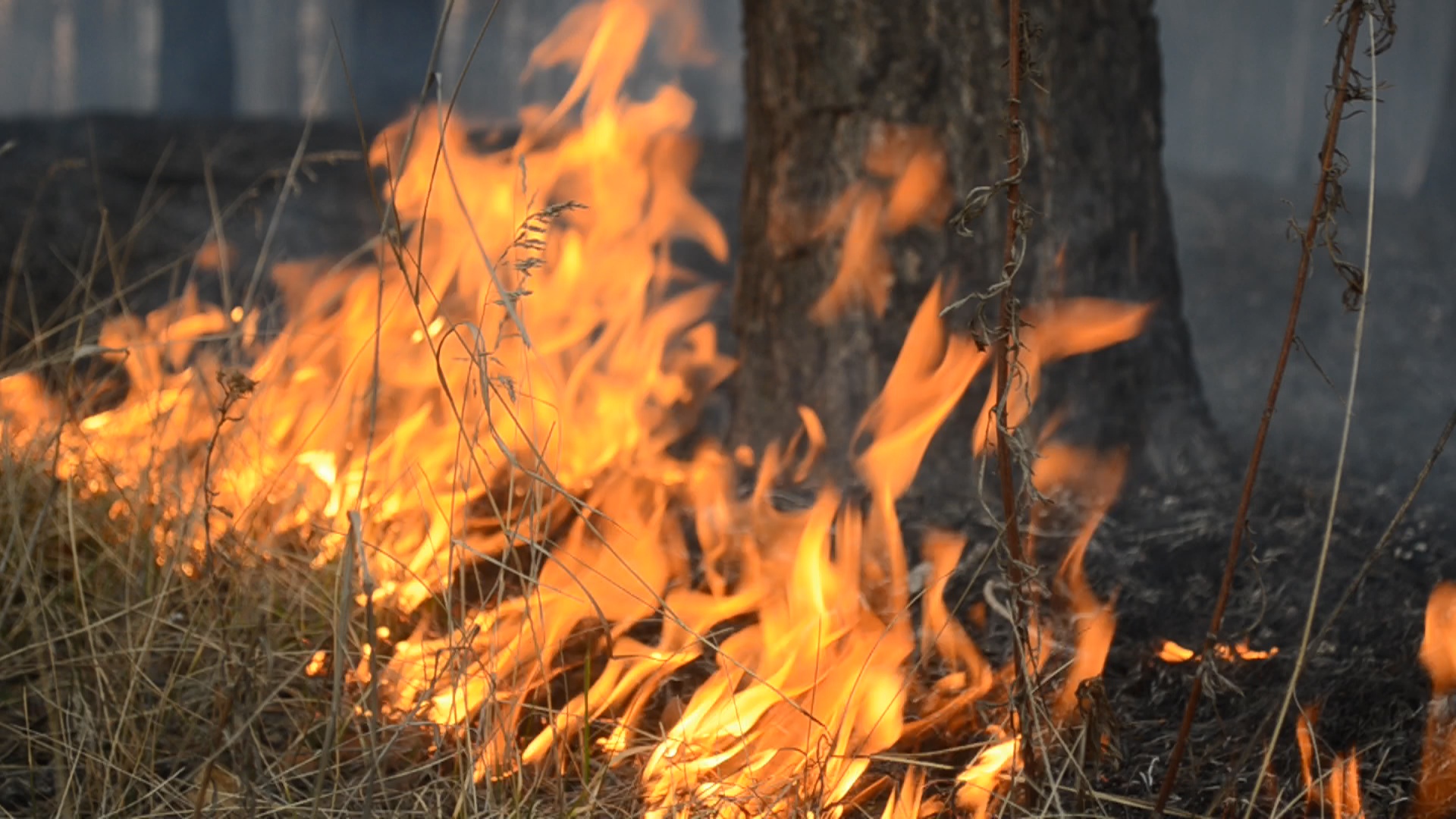
Siberia in fire
What awaits Russian forests?
Sergey Medvedev: A couple of weeks ago, flying on an airplane over the sleeping southern Siberia from Moscow to Seoul, I experienced shock: I suddenly saw a spectacle of forest fires, which extended to the horizon. It was a completely phantasmagoric sight! Once again I remembered this a few days ago, when I was in Moscow. I clearly felt the smell of Gary, read that it was ash and smoke from Siberian fires in some fantastic way through the upper layers of the atmosphere could reach Moscow for several thousand kilometers.
This is a good reason to talk about what burned in Siberia, which continues to burn there and what is the future of Russian biological resources and Russian forests in general. Our guest is Alexey Yaroshenko , head of the Greenpeace Russia forest program.
Tell me, is it true or was it a media duck, that the smell of Gary that was in Moscow at the end of July is Siberian fires?
Alexey Yaroshenko: Unfortunately, there is no doubt about this. This is confirmed by many different ways, in particular, even simply visually in the cosmosis, you can see how this smoke consistently went towards Moscow. He even reached the western borders, further Moscow. For example, in Latvia, smoke from the same source was noted.
Sergey Medvedev: What is the volume of disaster, does it continue to burn there?
The area of the current fire was approximately 2.5 million hectares, and the official reporting fell less - 14 thousand hectares
Alexei Yaroshenko: Now there are better, because it has gone rains; The burning peak was July 26. The area of the current fire was approximately 2.5 million hectares, and the official reporting fell less - 14 thousand hectares.
Sergey Medvedev: I also can’t understand this in any way - a gap of two thousand times ...
Alexey Yaroshenko: There is such a deity in our state structures, it is called "a similar indicator of the previous year." The whole state machine works for it, including, in terms of the fight against fires, it should not be worse than last year, they can be smeared otherwise. Therefore, all the power of our statistics is rushing to ensure that the picture is beautiful.
Sergey Medvedev : That is, it is a complete bullshit, and in reality it burns thousands of times more than what is stated. And what happens in the field, some real measures are taken, or all this, as they say, "in the control zone", that is, it burns by itself?
Alexei Yaroshenko: Most falls into the so -called "control zone", introduced last year instead of the second -level cosmonitoring. In fact, the same thing existed ten years before. This is a territory where fires can not be extinguished. Ten years they could not be extinguished semi -propelled, but now they can not be extinguished officially. They are not extinguished and they are very much abused. Somewhere up to 99% of the area of existing fires, sometimes in the worst situation fall into the "control zone".
Sergey Medvedev: From an environmental point of view, is this a crime? If it burns in California or Bush burns in Australia, is there also a concept of control zone and most of this fire remains insoluble?
Not all fires are stewed, but only those that pose the greatest threat
Alexey Yaroshenko: This is both in Australia and in the States. In general, this is the concept of fire management, when not all fires are stewed, but only those that pose the greatest threat, and some, which allegedly do not pose a threat, are rushed to their fate. This concept came just from the American and partially from Australian practice. The idea is that the fires in the taiga were always, and let them burn where there are no people. In my opinion, this is a very dangerous idea.
Danger consists in several things. Firstly, they were always, but there was no such population on Earth. A million years ago, a fire could not be so dangerous simply because people almost never lived before the age when smoke began to pose a serious danger to their life and health; There were no people who died of cardiovascular diseases, from respiratory diseases. And now the last affordable estimates: up to 600 thousand people per year around the world die from the smoke of natural fires. Smoke with strong disasters, as we now see, spreads to many thousands of kilometers. Our country is not yet in the leaders in mortality from smoke, but mainly because it is little inhabited, especially in the area of strongly burning territories.
Now up to 600 thousand people per year around the world die from the smoke of natural fires
The second point: in the historical past in the taiga there really were a lot of fires, but it was an ancient semi -named mechanism, because people live in the taiga for millennia and for millennia burn the taiga. But then this mechanism acted alone, and now it acts with the trigger. Even when we do not go beyond the boundaries of the permitted one, and fires act within historical limits, together they deplete the taiga much faster.
Sergey Medvedev: That is, cutting plus fires - this is the release of trees.
Alexey Yaroshenko: Of course. It turns out that the same territory loses as much as it has historically lost from fires, because the climate is changing, the area of fires grow, and at the same time it still loses as a result of notes.
Sergey Medvedev: Is there more and more fires over time? Due to warming?
Alexey Yaroshenko: Not only in connection with warming, but also with a change in the fire hazardous period. This is also a consequence of climate warming: it earlier begins and ends later. Therefore, the dry period that falls on the peak of summer is faster than the fire hazard period as a whole.
Sergey Medvedev: Another ecological disaster in Siberia, in the Yamalo-Nenets Autonomous Okrug-a Siberian ulcer-also from warming, from abnormal heat: as I understand it, disputes have been deformed, deer got sick, and for the first time since 1941, people became infected.
Alexey Yaroshenko: That's right.
Sergey Medvedev: To the question of the North, about the Yamal-Nenets district: after all, the tundra is on now ...
The tundra burned very strongly, there are estimates - more than 200 thousand hectares
Alexey Yaroshenko: Tundra was very burned, there are more than 200 thousand hectares.
Sergey Medvedev: There are already completely different consequences. If the taiga grows up, then the tundra is not restored on the eternal permafrost, she needs to recover for a hundred years.
Alexey Yaroshenko: In any case, this is definitely decades.
Sergey Medvedev: Is there a very thin, fertile layer, and does it burn entirely?
Alexey Yaroshenko: Yes.
Sergey Medvedev: Indeed, a completely catastrophic situation. I’m trying to understand: simultaneously with global warming, there is a degradation of forest conservation in Russia, more and more zones are transferred to the status of a special control zone, they manipulate numbers?
Alexey Yaroshenko: In a sense, this is an attempt by our state bodies to adapt to the degradation of the forest protection system. It began in a rather strict form after the liquidation of the Federal Forestry and State Ecology Service in 2000. The largest blow was dealt in 2006, when the new forest code was adopted. He actually destroyed the economic foundations of forestry, that is, he turned the forestry from a conditionally self-sufficient industry of the economy into a sparkle industry. She is forced to be a sparkle industry, since it is impossible or almost impossible to earn money for the farm himself, for forest protection, and the budget has not issued such changes, there is no money. All this has decreased, decreased, and now, from next year, a decrease or at least redistribution is being prepared: to select more Siberia and the Far East in European Russia.
Sergey Medvedev: And who is now responsible for the condition of the forests now?
This is an attempt by our state bodies to adapt to the degradation of the forest protection system
Alexey Yaroshenko: Depending on what category of land the forest is located, this or that department is responsible for it. Most of the forests taken into account are the lands of the forest fund , the Rosleskhoz and the Ministry of Natural Resources, which is above it, is responsible for them. There are forests on the lands of reserves and national parks, the administration of reserves and national parks is responsible for them, they obey the Ministry of Natural Resources directly. There are forests of defense and security (there are few of them), the Ministry of Defense is responsible for them, they also burned quite hard this year in the Irkutsk region. There are city forests, the administration and the Ministry of Emergencies are responsible for them. And there are still forests, and there are quite a lot of them, for which no one is responsible, for example, of the forest of ground agricultural agricultural.
Sergey Medvedev: There is no private ownership of the forest in Russia?
Alexey Yaroshenko: There are no private property to be taken into account. There is simply to the forests that are located on the lands of agricultural, industry and transport, private property is simply because we have a lion's share of land in private property.
Sergey Medvedev: In Finland, which I often recall as an example of a careful attitude to nature, a very large amount of forest is in private ownership. Many Finns living in cities, somewhere in Lapland, has a piece of forest, they follow it, clean-this is one of the important family investments. That is, a nation is a collective owner of forests. In Russia, this, apparently, is not.
Can you say according to the numbers what is happening with the forest fund in the last 10-15 years? Are the territories of forests reduced, cut down?
There is no private property for accounted
Alexei Yaroshenko: The situation is difficult here, in a word not to answer. If we consider forests with a classic definition of forest or with a definition that the UN food agricultural organization uses, then the forest area is growing, and quite significantly, because agriculture dies faster than forest, former agricultural lands are overgrown with forests and turn into the forest.
If we understand the forest in the general sense of the word - as a territory that is currently covered with trees - it is not known exactly how the area of such forests changes. According to our estimates, it is quickly reduced. This is because the area of unwolmed has grows quite quickly due to an increase in the number and areas of forest fires. Since this is also considered a forest according to the international and classical definition of forest, the area of forests is growing nominally, and in fact, the area of land covered with forest is reduced.
Sergey Medvedev: And after fires, does it not restore entirely? There is folk wisdom: "It grows better in burning."
Alexey Yaroshenko: Of course, it is restored, but for about the same period for which it was restored 10, 20, 30 years ago. But the annually generated Hares area increases, so the area of the lands that are in the interval between "burned" and "restored" is growing.
At a purely domestic level, I observe the completely fantastic degradation of the forest in the suburbs
Sergey Medvedev: At the purely domestic level, I am observing the completely fantastic degradation of the forest in the suburbs, especially what has happened in recent years in connection with the bark beetle. The forest is dying, cutting down, the forests near Moscow are simply melting in front of my eyes.
Alexey Yaroshenko: Here the situation is similar to what we see throughout the country. The area of the forest in the suburbs as a whole in total grows due to the fact that abandoned agricultural lands are overgrown on the outskirts, and around Moscow, approximately in a radius of 50-70 kilometers, forests are reduced.
But I would share two processes here. One process is these Sunrubus, of which there are really many, 10-12 thousand hectares per year. This is still a temporary and forced reduction. After all, if the forest died of bark beetle, then (not always, but in most cases) you have to do a sanrub, landing, and so on - this is a smaller problem. And a big problem is that the forest is constantly tracked in very large areas - for development, under infrastructure, and so on. These are irrevocable losses, and they are multiplied by the fact that infrastructure, fences, cottages, and so on, also close people's access to formally free forests.
Sergey Medvedev: In my opinion, a fairly significant event occurred in the world (at least it was announced): on May 26, the Norway government announced its decision to reduce forest cutting down in the country. Is this the first historical precedent when a large developed post -industrial country decides to stop chopping the forest?
People use wood, and often it is better than using non -renewable natural resources
Alexei Yaroshenko: There, in fact, the decision was not in the ban on deforestation, but in the ban on dexterity - these are two very significantly different concepts. Foresting can have different goals, it can be an element of a normal full -fledged forestry. It can be a cutting with the aim of harvesting wood, which is specifically grown: grown, cut down, then raised again and cut down again - such a cycle. People use wood, and often it is better than using non -renewable natural resources. Such a cutting in Norway is not prohibited, there was no such solution.
The decision was about the fact that it is impossible to take part in the activities that leads to dewording. Dewins is a constant disappearance of forests. First of all, this concerned the purchase of forest products from countries where it is very relevant, mainly tropical.
Sergey Medvedev: That is, this applies to palm oil, soy plantations?
Alexey Yaroshenko: Any agricultural products that are produced with the destruction of the forest.
Sergey Medvedev: Industrially developed countries track where the products that they receive came from. It’s like with children's labor: we do not buy anything that children's labor are involved in. And here we do not buy anything that the destruction of the forest is involved.
Alexei Yaroshenko: The tracking mechanism is probably not perfect yet, this has yet to be developed, but the meaning of the solution is in this.
Sergey Medvedev: Norway supports the programs to combat dexidity in Tanzania, Brazil - more than 200 million dollars. 250 million dollars to preserve Gayana forests, 150 million Nigeria to introduce a ban on cutting down ... India is ready to spend about six billion dollars on preserving and restoring her forests. This is a global trend. Maybe some kind of fracture to preserve the forest has come?
Over the past half a century, the harvesting of wood in the world has grown by about 40%
Alexey Yaroshenko: I would say that this is hope at a fracture. And in India the situation was this: there is a fund in which funds aimed at compensating for forest losses are accumulated, compensation for changes in the land cover. They did not have a waste mechanism of this fund, so the money accumulated, multiplied, and now a very large amount has formed, which they rightly decided to spend on a forestry, that is, it is not just landing, namely the breeding of the forest in those places where it was not. But, again, the question of what the mechanism will be and where sufficient land for this will be taken, because India is a very densely populated country, almost every piece of land is used there.
Sergey Medvedev: In other countries, for the most part - a third world, there is an uncontrolled cutting, especially for palm and soy plantations?
Alexey Yaroshenko: Yes, and this is not always in connection with the harvesting of wood, sometimes it is burning and destruction of the forest. But if we take just a harvest of wood, then over the past half a century it has grown by about 40%in the world. This is inevitable with the explosive growth of mankind. Most likely, the need will grow, especially if the wood is used as one of the renewable energy sources. So, of course, prohibitions cannot be saved by the forest. It can be saved by prohibitions where it can not be chopped, and with an effective forestry where it is still used.
Sergey Medvedev: That is, in the 21st century, humanity will more and more use wood?
Alexey Yaroshenko: So far, it looks like that.
Sergey Medvedev: Is it about that this whole process is renewable, so that at least one is planted in one fed tree?
We introduced dragon fines for overgrowing agricultural land
Alexey Yaroshenko: This is some simplification. I will give a very simple example regarding our country. We have the features of the development of agriculture are such that at least millions of 100-150 hectares of the former agricultural land are abandoned forever: there are no people who can process them, fertility and so on are killed. For many reasons, these 100-150 million hectares of agricultural land can no longer be used for agriculture. Now they are overgrown with forests, shrubs and, of course, serve as a feed base for Rosselkhoznadzor, since we have introduced dragon fines for overgrowing agricultural land.
But if you use them for forest exposure ... It is clear that not everything can be used, there are also environmental restrictions, but if you use about two -thirds of these forests, then in the future they can give five times more wood than now harvested in existing forests.
Sergey Medvedev: This is an economically very justified process.
Алексей Ярошенко: Сейчас во всем мире происходит процесс (он, к сожалению, медленный, и чем менее развиты страны, тем медленней он идет) перехода от добычи древесины в диких лесах к ее интенсивному выращиванию. Как когда-то, много тысячелетий назад люди перешли от собирательства к сельскому хозяйству, так сейчас идет процесс перехода от добычи древесины к полноценному лесному хозяйству.
Сергей Медведев: Это, наверное, прежде всего, происходит в развитых странах?
Сейчас во всем мире происходит процесс перехода от добычи древесины в диких лесах к ее интенсивному выращиванию
Алексей Ярошенко: Да, потому что лесное хозяйство – это не такая простая деятельность. Как любая профессиональная деятельность, она требует квалифицированных людей и умной организации.
Сергей Медведев: А в России есть понимание того, что биоресурсы – это природный капитал, инвестиции в природный капитал? В свое время мы делали эфиры про зеленую экономику, там это один из главных терминов.
Алексей Ярошенко: Мне приходится часто общаться с нашими лесопромышленниками, у них есть такое понимание. Но они работают в рамках законодательства, нормативной базы, которая сочиняется нашими горе-чиновниками и законодателями, а у них, к сожалению, понимания почти нет.
Сергей Медведев: Каково будущее российских биоресурсов? Россия по-прежнему остается одним из крупнейших заповедников биоресурсов на планете?
Алексей Ярошенко: В каком-то смысле, конечно, пока остается.
Сергей Медведев: По производству кислорода, по пресной воде, по зеленой массе… По зеленой массе – по-моему, вторая после амазонского тропического леса?
Рост пожаров сильно меняет роль наших лесов и болот в глобальном балансе, в том числе, и в кислородно-углеродном
Алексей Ярошенко: Да, но с оговорками, потому что мы теряем очень много наших природных территорий, они очень сильно меняются. Тот же рост пожаров сильно меняет роль наших лесов и болот в глобальном балансе, в том числе, и в кислородно-углеродном.
Сергей Медведев: Россия теперь производит меньше кислорода?
Алексей Ярошенко: К сожалению, на уровне страны нет достоверных оценок того, как у нас работают те или иные территории в качестве поглотителей или источников углекислого газа. И в мире тоже очень плохо с этими оценками. Пока остается множество неясностей. Но роль лесов у нас в мировом балансе – около нуля, и она довольно легко может скатиться к отрицательным величинам.
Сергей Медведев: То есть Россия превратится в чистого производителя, а не поглотителя углекислого газа?
Алексей Ярошенко: И такая же ситуация с Канадой и в целом с бореальным поясом лесов.
Сергей Медведев: Это из-за потепления и заболачивания?
Алексей Ярошенко: Потепление, рост пожаров... Но не только пожары. Например, одни только жуки, насекомые-вредители в западных провинциях Канады за последние годы уничтожили порядка 15 миллионов гектаров сосновых лесов. Это огромные территории, и они, конечно, превратились в источник выбросов.
Сергей Медведев: Это типа российского короеда?
Алексей Ярошенко: Да, он даже внешне похож.
Сергей Медведев: Проблема с жуком-короедом в Подмосковье уже ушла?
Лесной короед опять понемногу пошел в рост в Подмосковье
Алексей Ярошенко: Она частично локализовалась сама, потому что примерно две трети уязвимых ельников короед съел, соответственно, в таких масштабах вспышка уже просто невозможна, нет кормовой базы. Но лесной короед опять понемногу пошел в рост в Подмосковье.
Сергей Медведев: Нет никаких методик, чтобы контролировать очаги эпидемии?
Алексей Ярошенко: Химических или биологических средств борьбы с самим жуком на данный момент практически нет, он очень устойчив ко всему. Есть классические лесохозяйственные средства – держать лес чистым от мертвой древесины, быстро убирать свежезаселенные деревья и так далее, но для этого надо иметь мощное, развитое лесное хозяйство и разумное законодательство, чтобы работники леса не боялись вообще шаг ступить. Ведь есть такая проблема, что любое сколько-нибудь творческое действие, выходящее за рамки формальных процедур, легко может привести в тюрьму.
Сергей Медведев: Нарубил лишних деревьев без порубочных билетов…
Химических или биологических средств борьбы с самим жуком на данный момент практически нет
Алексей Ярошенко: Не успел оформить бумажки, оформил что-то не так… Здесь две крайности: с одной стороны, есть масса перегибов с рубкой того, что рубить не надо, а с другой стороны, нет возможности проводить рубки там, где это действительно нужно, по крайней мере, есть очень серьезные ограничения. Поэтому очень часто рубки проводятся тогда, когда они не влияют на короеда. Короед довольно шустрый, он два месяца отработал заселенные деревья и улетел. Дерево убито, молодые жуки вылетели, они разлетаются до полутора-двух километров. Если рубка свежезаселенных деревьев не проведена сразу в этот короткий период (а это почти невозможно с нашим документооборотом), то санрубка ликвидирует последствия, но не борется с жуком.
А бывают ситуации, когда санрубки становятся причиной размножения короеда. Это мы видим, например, в Ленинградской области, где под предлогом борьбы с короедом проводятся рубки на очень больших площадях в еще сравнительно здоровых лесах, и стены леса вокруг рубок на пике нарастания численности короеда становятся субстратом для его дополнительного размножения.
Культура не лучше, чем те леса, которые в ней растут
Сергей Медведев: Новое Киото не предвидится? Я помню, по старому Киотскому протоколу речь шла о том, что Россия может очень серьезно заработать, торгуя своими биоресурсами. Учитывая, что по лесу Россия выходит в ноль, а то еще и в минус...
Алексей Ярошенко: Мы еще очень далеки даже от того, чтобы просто достоверно посчитать, сколько у нас чего. Представьте себе гипотетически: возникнет некий работающий международный механизм финансовых зачетов того, сколько страна поглотила или выбросила углекислого газа. Захотят наши власти зачесть роль наших лесов – скажем, какую они покажут статистику по гибели лесов от пожаров – реальную или ту, которая идет в Росстат? Наш Росстат все съест, потому что ни за что не платит, а вот съедят ли это международные организации – это вопрос.
Сергей Медведев: Интересен выход российской внутренней проблематики на международный уровень. Вспомню замечательную цитату, которую я видел в Центральном парке Нью-Йорка, из американского поэта Уистена Хью Одена : "Культура не лучше, чем те леса, которые в ней растут". Я хочу закончить эту программу призывом к тому, чтобы беречь лес, сохранять его и думать о нем.