
Translated material
The unknown Ernst died
The unknown Ernst died
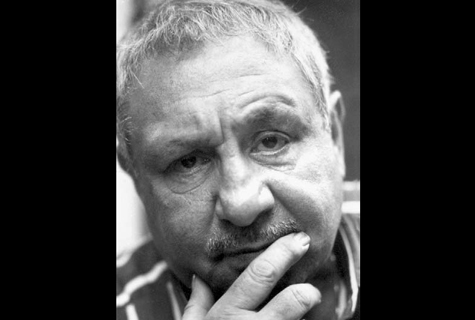
On August 9, the sculptor Ernst unknown died in New York at the age of 91.
It is reported by Radio Liberty .
Ernst Iosifovich was born in 1925 in Sverdlovsk (now Yekaterinburg), participated in the Great Patriotic War, in the spring of 1945 he was seriously wounded, later he went on crutches.
After the war, he returned to Sverdlovsk, taught drawing at the Suvorov School. In 1946-1947 he studied at the Academy of Arts in Riga, in 1947-1954 - at the Moscow Art Institute. V.I. Surikova, attended classes at the Faculty of Philosophy of Moscow State University.
In 1955, he was admitted to the section of sculptors of the Moscow branch of the Union of Artists of the USSR. In 1956, he became the laureate of the World Youth and Students Festival for the sculpture “There is no nuclear war!”, In 1959 he won a competition to create a victory monument in the Great Patriotic War (the project was not implemented).
In 1962, Nikita Khrushchev sharply criticized the exhibition of avant-garde artists “30 years of the Moscow Region”. Ernst the unknown entered the oral controversy with Khrushchev, after which he lost orders for a while.
Among the most famous works of the sculptor of the 1960s-1970s, the 150-meter relief “Monument to all children of the world” in the pioneer camp “Artek” (1966), a 970-meter decorative relief for the facade of the Moscow Institute of Electronic Technology (1971), a 75-meter memorial “Lotus Flower” in honor (1968), a tombstone of Khrushchev at the Novodevichy cemetery in Moscow (1974), created at the request of his family, a bas -relief on the building of the Archive of the Central Committee of the Communist Party of Turkmenistan in Ashgabat (1975).
In 1976, Ernst the unknown left the USSR, since 1977 he lived in the state of New York (USA). He gave lectures on art and philosophy at American universities, in the late 1980s he created the Man Through The Wall cycle.
Since 1989, he often visited Russia. In 1994, he created an Orpheus statuette, which was awarded to the laureates of the TEFI prize, in 1996 memorials in Magadan (“Mask of sorrow” were opened in memory of the victims of political repression) and Elista (“Exodus and Return” - in the memory of the deportation of the Kalmyk people), in 2003 - the Memory “Memory of Kuzbass miners” in Kemerov. The sculptures “Renaissance” (2000) and “Tree of Life” (2007) were installed in Moscow. One of the last works of the sculptor was the monument to Sergey Diaghilev in Perm (2007).
The author of graphic works (including illustrations for the works of Dante, Dostoevsky and Beckett, the book of Ecclesiastes), jewelry. The letters of Ernst the Unknown were published in Russian, as well as his book “The Unknown” (1984) and “Centaur” (1993).
Since 1987, a museum dedicated to the work of the sculptor has been operating in the city of Uttersberg in Sweden, in 2013 the art museum of Ernst Unknown was opened in Yekaterinburg.