
Translated material
Museum of skateboarding
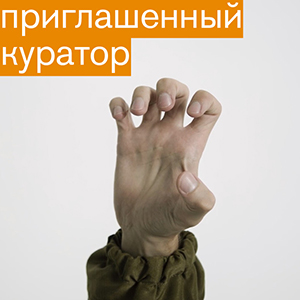
This year, Colta.ru decided to go to the experiment and invited to temporary curators over the section “Photo projects” of young and talented representatives of leading Russian photocurium. We divided the calendar year between six curators and asked them to select the most interesting samples of modern Russian photography for publication.
Invited curators
Katerina Zueva , center of photography named after Brothers Lumier
Nadezhda Sheremetova , "Femicip"
Sergey Lostev , "House of Metenkov"
Daria Tuminas , Freelance Curator, Amsterdam
Anastasia Bogomolova , The Blog This a Photobook
Svetlana Taylor , British Higher School of Design

The fourth resident: Daria Tuminas is a freelance researcher, photographer and curator. In 2011, Tuminas graduated from the master's program “Theory of Cinema and Photography” at the University of Leiden with a diploma considering the narrative in photography. During the training, Daria was held an internship in Foam Magazine magazine in Amsterdam. In 2011-2014 Daria, together with Evgenia Sveshchinskaya, oversaw the program “Experience of Dutch photography”, which included a number of educational events and an exhibition about Dutch photography “Undercover” (exhibition platform - Museum of Modern Art “Erarta”), which received a silver prize at the European Deesign Award contest. In 2014, Daria overseas the project “Reading a photo book”, which included an exhibition, a seminar and a review competition for photo books (exhibition platform - a press gallery). At the moment, Daria is teaching at Fotofactory (Amsterdam), Webster University (Leiden), works in the Johan Deumens Gallery gallery (Amsterdam), writes about photographs and is working on several independent projects as a freelan field.
Daria Tuminas presents the project “Museum of Skateboarding” by Kirill Savchenkova, in which the city is considered not as a set of buildings, but as a space that exists in “reading” by people.
Kirill Savchenkov (born B1987) works with different media, including with performance, installation, video and photography. His artistic practice affects the issues of relations between education, cultural conflicts, social space, the construction of identity and knowledge in marginal communities and subcultures. Lives and works in Moscow.
In 2015, Savchenkov implemented the Horizon Community Workshop project in the space of the Singular Research Agency in the TsTi Factory, the project “Skateboarding Museum” as part of the program “Expanding Space. Artistic practices in the urban environment ”of the VAC Foundation also participated in group exhibitions“ Methagography ”(State Tretyakov Gallery, 2015),“ Semiconductions ”( Stella Art Foundation , 2014) and in the parallel program“ Manifesto-10 ”(2014).
Daria Tuminas's conversation with Kirill Savchenkov
Daria Tuminas : There are many elements in the Installation of the Museum of Skateboarding: a video projection showing the prospect of the skateboard for urban space; Promo-Video of skateboarding and manual, in which skateboarding is considered as bodily practice as a whole, associated with combat, military practitioners or fitness; traces of a skateboard on the wall; The layout of an ideal place for skiing ... The project is not about the subculture as such, but rather about body and space?
Kirill Savchenkov : The installation that you are talking about was made as part of the project “Expanding space. Artistic practices in the urban environment ”, implemented by the VAC Foundation. The Skateboarding Museum has several forms of implementation. In the project, I consider skateboarding rather not as a subculture, but as a format of experience, knowledge and body existence in the city. I was interested in skateboarding after skateboarding - how it affects the optics of understanding the city, relationships with its body, fear, experience of pain, etc. Skateboarding can be understood as the practice of reading the city. This approach creates a schizophrenic understanding of certain public places, the regime of their perception and their significance. This is especially evident in the example of a combination of this practice with the modernist architectural project and the post -Soviet eclectic city space. You can also recall Ladovsky and architectural rationalism, Bauhaus, architectural avant -garde, where significant attention was paid to the psychophysiological perception of space. Ladovsky, for example, considered space as an architectural material. Such a practice as skateboarding makes it possible to direct these ideas.
There is another point: skateboarders often encounter private property, power, power structures-security, police and with regimes of social functioning: something is possible here, something is impossible. In some places, the police forbids to ride, municipalities are placed by skateoppers on the facades of buildings and on the architecture of the zero level. Often the forbidden territory is public spaces that borders on administrative buildings, infrastructure, schools, universities, and institutions. In such a situation, skateboarders become “colonialists” of new spaces, but de facto decolonize performances and norms. And, of course, they produce their space, however, somewhat unstable, migrating with them in the city.
Tuminas : You said that skateboarding is a practice of reading the city. What does man see in the city through skateboarding optics?
Savchenkov : We can talk about the vision of another meaning of forms, spaces, objects, surfaces, things, social regimes and norms. Obstacles become a resource for movement.
Tuminas : Is the colonization of space a purposeful task? That is, the city is divided into spaces already “colonized”, “colonized” and those that for some reason do not represent interest for skaters?
Savchenkov : The city is a rather porous, heterogeneous structure in which the concept of the outskirts will soon be lost in the near future. Therefore, relations in this space will be unstable and dynamic. In the practice we touch upon, I understand the skateboard “colonization” as a rather plastic decolonization tool in the broad sense of the word. This tool is primarily applied to space, forms, various fields of knowledge, regime of social functioning and norms. Skateboarding can be understood as comprehensive secret knowledge. The museum here acts as a model that allows you to look at the archive of things, objects and hidden, implicit knowledge, talking not only about the past and present, but also about the future. This is an impossible museum of evolving skateboarding. This is a certain tutorial, the reconstruction of exercises, scenes, which are made as in museums, where there are videos with, for example, reconstructions of the Vikings relations. The stand presented at the exhibition in the GES-2 belongs to the hidden community, which considers skateboarding in a special way-as a practice of survival.
Tuminas : The concept of the project is built around the idea of a museum from the future. And immediately the question arises of the future of the museum. Now art is actively led beyond the limits of museum walls. And for me, the phrase “Museum of Skateboarding” sounds like an oxymoron: skateboarding, a phenomenon directly related to the city space, where curators and artists strive, you put in the context of the traditional museum (with references, for example, to reconstruction). Why a museum?
Savchenkov : The museum can be understood as the totality of the archive, and the interface, and relationships, things, spaces, knowledge, where there are various ways of interpretation, interconnection and creation of the event. It turns out a fairly comprehensive concept, as well as skateboarding. Work at the junction between these concepts is interested in me in this case. Of course, it is worth considering that the modern museum is experiencing transformations and changes associated with a change in the social position of the state, the privatization of culture, which affects the role of the museum and its format.
Tuminas : What is the matter where the “Museum of Skateboarding” is “placed”? Is there any ultimatical place of the project?
Savchenkov : The Museum has several forms. One of them works inside the space - this is logic for a certain part of the material. Another part of the project becomes public art, works with the space of the city where the museum can become a fluid concept. And finally, there is a training manual - an important part of the museum. Actually, it can be a model for assembling the totality of knowledge and the “museum”.
Tuminas : I wanted to talk about eclecticism. For example, you build a tour of Yasenev in such a way that the 12th century can suddenly bake into a story about skinheads or about what events associate you with this specific space. A similar interweaving of different historical eras, as well as personal experience with well -known historical plots is found in many of your works, and in the description of the Iceberg project, you directly use the phrase “eclectic form”. Is eclecticism something system-forming for you?
Savchenkov : I think this concept can be considered wider and there is nothing special in it. I would not distinguish it in some special characteristic, this is a common place not only for my artistic practice. Probably, eclecticism can be characterized as an instrument, and it does not have to be systemic -forming.
Tuminas : Now you are working with the topic of education - you are experimenting with the formats of workshops ( Horizon Community Workshop ) and excursions. How did you move from city to education?
Savchenkov : Oddly enough, the city and education are connected by the practices of “survival” in a broad sense. The teaching experience is also important - education is transformed, changes the scale of its presence in people's lives and experiences the influence of the same processes as museums. One way or another, these processes are associated with a change in the social obligations of the state and the privatization of relations and culture. At the same time, the need for additional education or retraining is growing, which is associated with today's nature of labor and production. The need for knowledge or information can give rise to a sense of lack of knowledge, which at some point becomes insatiable. It is not surprising that against this background, various hybrid systems, training programs that are being built on the combination of marketing, education, fitness, and spiritual development are born. An important result of human activity is a conversation, and the word is an event. A different approach to a thing, human identity, anthropology, ecosystems of existence opens. Of course, all this is very ambiguous and creates the limal space of knowledge.