
Translated material
The connections helped
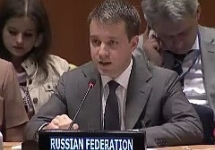
The Ministry of Education and Science will not deprive the degree of the Minister of Communications and Mass Communications of Nikolai Nikiforov. According to RIA Novosti, this was announced by the director of the Department of Information Policy of the Ministry of Education and Science of the Ministry of Education and Science Anna Usacheva.
According to her, at a meeting of the Presidium of the highest certification commission, the statement of the Dissernet community was considered about the deprivation of the scientific degree of the minister. At the same time, the Presidium of the Higher Attestation Committee recommended that the ministry refuse the applicants to deprive Nikiforov.
"Based on the conclusions of the Expert Council and the recommendations of the Vacation Presidium, the ministry decided to refuse to deprive the degree of candidate of economic sciences N. Nikiforova and on August 10, a corresponding order was issued," Usacheva said.
"Earlier, the same conclusion was adopted by the dissertation council at the RANEPA, and the expert council of the highest certification commission," she added.
The statement about the deprivation of Nikiforov was based on the analysis of the text of his dissertation carried out by the Disseernet. It found extensive borrowing. "Minister Nikiforov six months before his move to Moscow (where he was waiting for a high post in the government) hastily defended his dissertation. It found huge pieces of someone else's text, decorated so that it seemed to be the original text of Nikiforov. Moreover, it is clearly visible how Nikiforov systematically replaces keywords in his borrowed test so that other people's phrases are suitable for him The subject, ” wrote one of the founders of Dissernet," Sergey Parkhomenko.
The network community "Dissernet" unites scientists and journalists identifying plagiarism in the scientific work of famous people. Studies of Dissernet began in January 2013. Since then, the community activists have already exposed dozens of cases of plagiarism in the dissertations of politicians, public figures and representatives of the leadership of universities.
So, in November 2015 it turned out that among the proven dissertations of the current rector of the Russian universities, 21 percent of the work turned out to be false. "Dissernet" checked the work of 311 rectors who have been defended over the past 15 years. In 66 dissertations, extensive borrowings were found. According to Rostovtsev, this indicates a negative selection for the position of rector.