
Translated material
Shootings on the border of Crimea and Ukraine. What was it and what will it lead to?
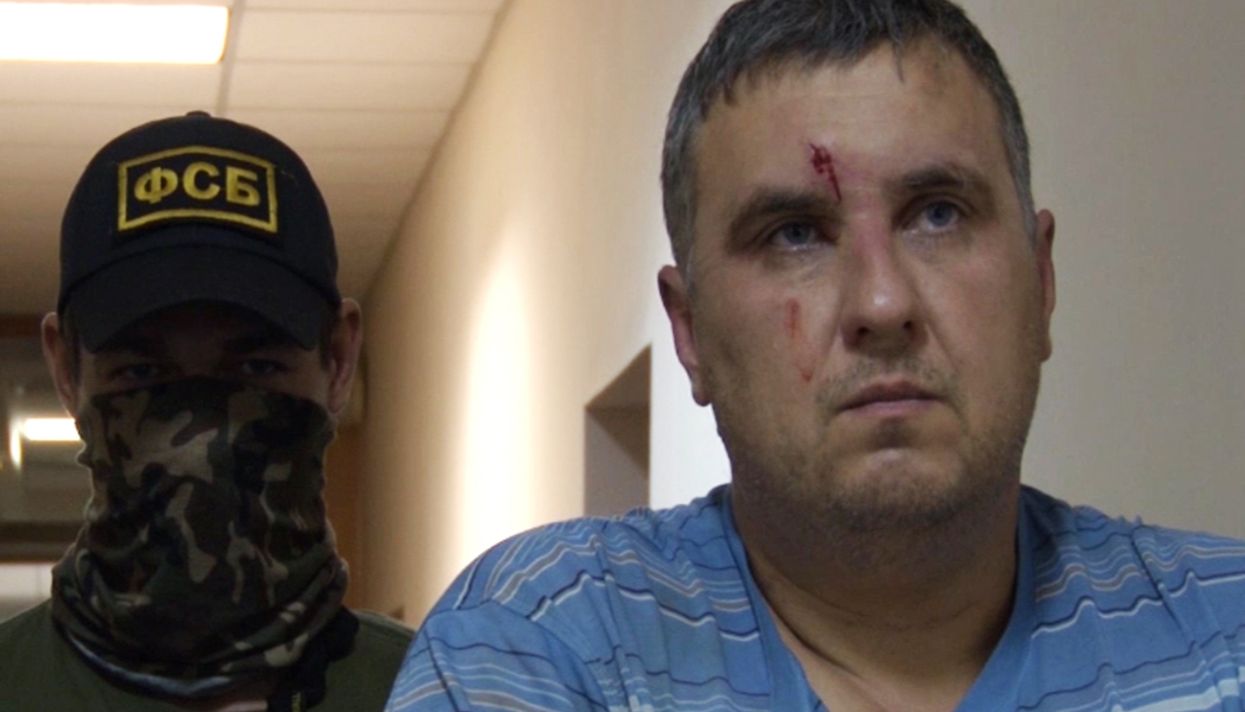
On August 10, the FSB announced the capture of Ukrainian "saboteurs" who prepared terrorist attacks in the Crimea. After that, President Vladimir Putin said that he did not see the point in continuing negotiations to resolve the conflict in the southeast of Ukraine. Messages about shootings on the border with the peninsula were frightened by observers and Western media. They agree that the incident in Armyansk will become a serious obstacle to stabilize Russian-Ukrainian relations, and perhaps even lead to a new military conflict. Medusa studied the main versions of what is happening.
What happened in the Crimea?
Version of Russia. According to the FSB, clashes with a group of seven Ukrainian "saboteurs" - employees of the Main Directorate of Intelligence of the Ministry of Defense of Ukraine - occurred on the night of August 7 in the Armyansk area. As a result of the shootout, one special forces officer of the FSB “Vympel” and two “saboteurs” were killed, Kommersant writes . Some of the detainees turned out to be the inhabitants of Crimea; It is also known that among them there are citizens of Russia (the FSB and the Foreign Ministry called the names of two detainees - Evgeny Panov and Andrei Zakhtei). They said that they took special training in Ukraine and prepared terrorist attacks on the peninsula, and attacks were planned against the tourism business of Crimea, and not against local authorities. According to Kommersant with reference to their sources, the detainees hoped to “organize a series of small explosions in various points of the resort, which should not lead to the deaths of people, but to cause panic among vacationers and ultimately“ kill tourism ”.
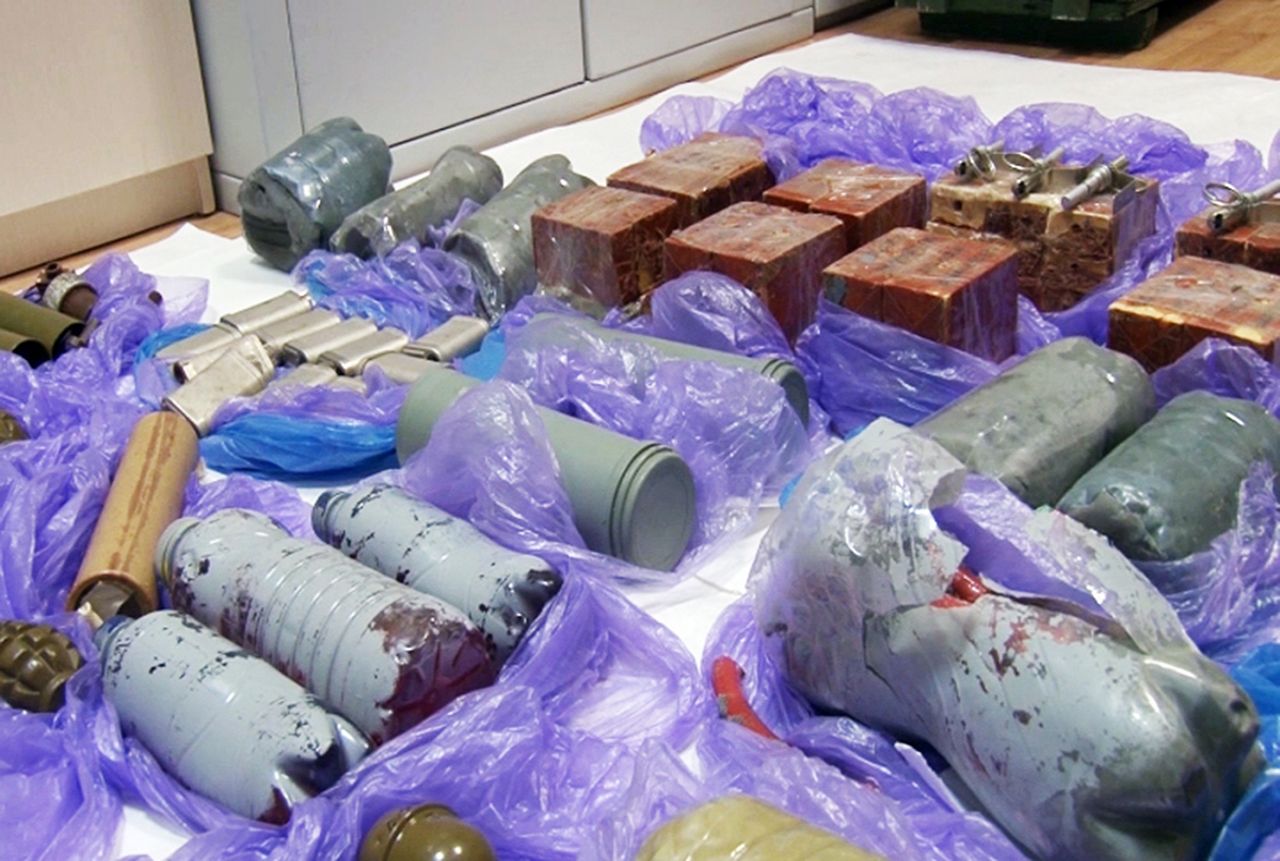
The second group of "saboteurs" was detained for the next night: they were heading to Lake Sivash, by which they expected to return to Ukraine. During the shootout, one of them died; Among the Russian paratroopers who participated in the special operation, there are victims. According to representatives of the FSB, at the place of collision they found 20 homemade explosive devices with a total capacity of more than 40 kg in Tractor equivalent, as well as ammunition, grenades, weapons and various types of mines.
Version of Ukraine. President of the country Petro Poroshenko called the FSB statements “meaningless and cynical” accusations - the same as the “statements of the Russian leadership about the absence of Russian troops in the Donbass”. “These fantasies are just an occasion for the next military threats addressed to Ukraine,” the statement published on the official website of Poroshenko said . The Ministry of Defense of Ukraine noted that Russian messages are “unfounded” - and connected them with the desire to distract the inhabitants of Crimea from the fact that it actually turns into an “isolated military base”.
The first consequences: Russia and Ukraine are pulling off troops
The incident in Crimea has already led to serious consequences in the relations of Russia and Ukraine: President Vladimir Putin accused Kyiv of the transition “to the practice of terror” and said that further negotiations on the settlement of the conflict in the Donbass were meaningless. Thus, the negotiations of Russia, Ukraine, France and Germany in China, outlined in September 2016, are apparently disrupted.
Putin also promised to take “serious additional measures” to ensure the safety of citizens and the Crimean infrastructure. According to Kommersant, additional armored vehicles and troops are pulled to the north of the peninsula. Ukraine on August 11 began planned military exercises in the south of the country. On the same day, Ukrainian intelligence announced a shootout between the Russian military and border guards of the FSB. President Petro Poroshenko instructed to bring all military units on the border with the Crimea and along the entire line of clashes in the Donbass into enhanced combat readiness. After that, he demanded that the Ukrainian Foreign Ministry organize telephone conversations with the chapters of Germany and France, invited Joe Biden, President of the European Council Donald Tuska to participate in the conversation in the conversation of the US Council and initiated a conversation with Putin (this conversation has not yet taken place).
The growing tension between Russia and Ukraine has already promised to discuss the UN Security Council. The Ukrainian mission to the UN turned to the Council of Council of Council of Ministers.
What will happen next?
Version No. 1. Hard negotiations. Russian observers agree that a shootout on the border of Russia and Ukraine will become a difficult test for the relations of the two countries. According to one version, the Russian side will try to use the detention of Ukrainian “saboteurs” in Armenian to pressure the negotiations in the “Norman format” (negotiations to resolve the situation in the east of Ukraine, in which Ukraine, Russia, France and Germany participate). Russian political scientist Ekaterina Shulman recalls that the intentional escalation of the situation is the usual tactics of Moscow in negotiations. “We scare everyone, overestimate the bets, panic, then roll back slightly - universal relief. In the summer of 2014, it was, and, apparently, now something similar is planned. This is a game on the nerves, and, I repeat, unpleasant. Well, again, the corpses, ”Shulman wrote on her Facebook.
Russian journalist Ilya Barabanov, who has long covered the conflict in Ukraine, notes that the Russian president has so far limited himself only to very laconic comments. “If the“ Norman format ”is meaningless, then does it mean from this that further attempts to fulfill the Minsk agreements do not make sense? If so, then this is a war. If not, then explain what next. Outside the August window, a month later, the elections and I really do not like all this, ”he writes .
Version No. 2. Crimea is accustomed to military position. The regional unit of the Ukrainian Service "Radio Liberty" "Crimea. Roals" on August 8 reported restrictions in the work of the border point on the border with Ukraine and the incident in Armenian. The publication employee Sergei Stelmakh calls the incident in Armenian a “large -scale provocation” and connects them with the exercises of the Russian contingent. “The exercises are precisely indicative, which imposes on the second version - the Crimeans are accustomed to military position or the commandant regime. For example, as some areas of the North Caucasus constantly live in the mode of the so -called “counter -terrorism operation”. The captured peninsula is waiting for the same fate. Fear is the only tool that invaders can hold the local population in silent humility, ”says Stelmakh.
Version No. 3. There will be a new military conflict. Le Monde notes the change of intonations in Putin’s statement: the Russian president again began to call his Ukrainian colleagues “people who seized power in Kyiv”. “The expression resembles the times when Moscow called the authorities in Kiev“ hunta ”, and reflects a serious change in mood in the Kremlin,” the newspaper writes .
The Guardian newspaper published several materials on the situation in the Crimea. The analytical article by Luke Harding went out under the heading “Vladimir Putin, perhaps it believes that the time has come for a new invasion”. Harding notes the similarity between the incident in Armenian and the events on the two -year -old peninsula: as the last time, “the crisis came from nowhere” (the appearance of Russian troops in Crimea in 2014 ended with a referendum on the accession of the peninsula to Russia). Harding recalls that Putin’s “past invasions” also coincided with the Olympic Games-for example, a military operation in Georgia occurred in 2008 during the Beijing Olympics (Dmitry Medvedev was the president of Russia and the commander in chief), and the conflict in the southeast of Ukraine began in 2014 after the winter games in Sochi.
Finally, the German Die Welt calls the Crimean incident planned provocation. “All this looks like Putin, with the help of obvious propaganda, clearly fabricated provocation of Russian special services and undisguised threats, is preparing for a new military aggression or even a full -scale invasion of Ukraine,” Richard Herzinger, correspondent of the newspaper, urges the power of the Western countries to “wake up from his madness,” and take measures against Putin. Just like Harding, he recalls the past military operations of Russia, which took place during the Olympic Games.