
Translated material
The time of personal liable
Why Putin replaced Sergei Ivanov to Anton Vaino: Carnegie.ru
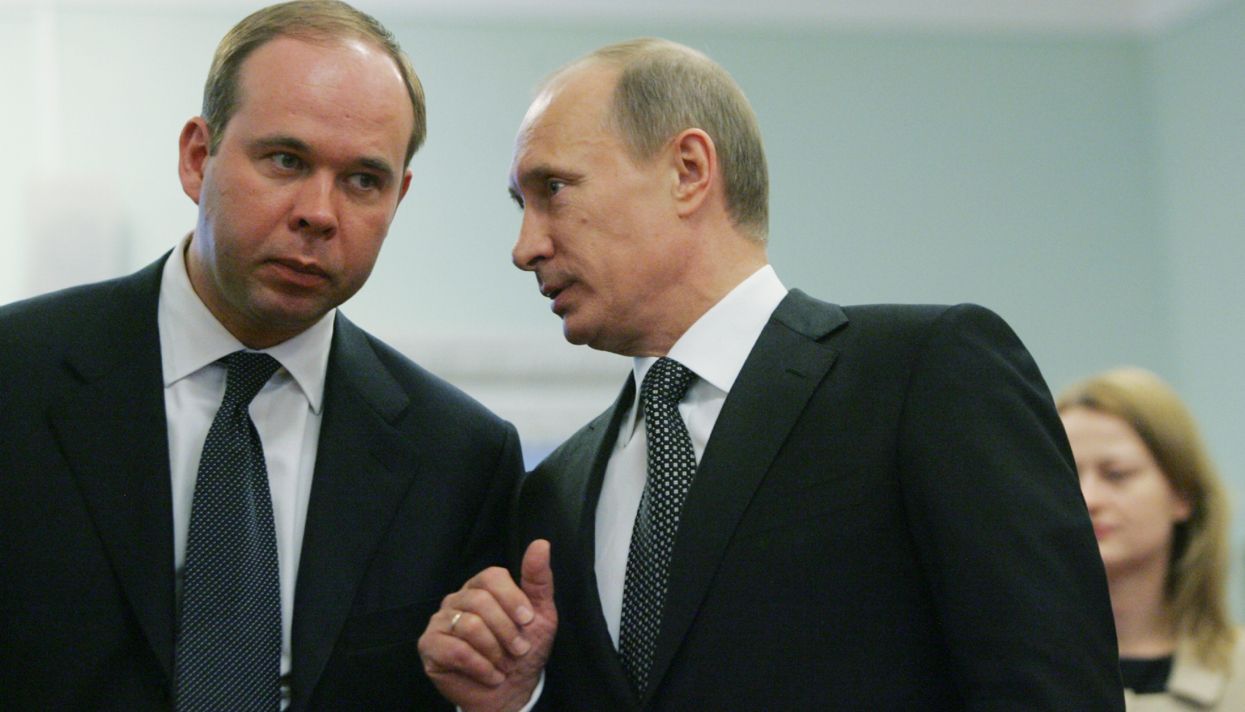
Russian President Vladimir Putin replaced the head of his administration. The place of Sergei Ivanov was taken by his deputy Anton Vaino. Journalist Andrei Peretsev in an article on the website of the Moscow Center of Carnegie believes that this appointment clarifies the rules of personnel permutations in the Kremlin: personal devotion on the verge of dependence has become more important for Putin more than a long -standing acquaintance. “Medusa” as part of a special project with the center of Carnegie gives this publication.
The permutation as the head of the presidential administration under Vladimir Putin is quite regular. After the departure in 2003, from this position of the representative of the Family, Boris Yeltsin Alexander Voloshin, the leaders of the AP changed on average every three years-Dmitry Medvedev worked from 2003 to 2005, Sergey Sobyanin from 2005 to 2008, Sergey Naryshkin-from 2008 to 2011. Sergei Ivanov wiped himself in this post the longest-from 2011 to 2016. Three (Medvedev, Ivanov, Naryshkin) were immigrants from St. Petersburg, with whom Vladimir Putin was familiar for a long time. The president preferred to work in the Kremlin with those whom he trusted personally. The appointment of the head of the AP of the Tyumen former governor Sergei Sobyanin was a personnel experiment - the head of the region was considered a technocrat, who built a tough vertical of power in his region and was supposed to do this all over the country. In this case, it was more about the appointment of merits.
The departure of Sergey Ivanov, on the one hand, fits into tradition - he already held this post for the longest. But on the other hand, it is abruptly knocked out of it, because before the chapters of the AP did not go nowhere. Dmitry Medvedev and Sergey Sobyanin moved to Deputy Prime Ministers and then further up, Sergey Naryshkin headed the State Duma. And Ivanov received the post of president’s special representative in ecology, which looks more like a link, and not particularly honorable.
Formally, Ivanov left his post voluntarily - in connection with the state of health. All rituals are also observed: Putin said that the new head of AP Anton Vaino was appointed on the recommendation of Sergei Ivanov. But the fact is a fact - the heavyweight resigned, and from such a deep personnel reserve it is unlikely to apply for higher posts. So it was already with Boris Gryzlov, who lost the post of Speaker of the State Duma in 2011 - initially it was assumed that they would find a position appropriate for the past, but now few people recall about Gryzlov. Of course, Vladimir Putin loves unexpected moves and can recall an old friend at any moment, but fortune telling on when it can happen and whether it will happen at all, the case is ungrateful.
Sources in the Kremlin argue that the departure of Sergei Ivanov can really be associated with his health, which undermined the death of his son in 2014. In recent years, Ivanov has become much less active. The obvious intentions of Vladimir Putin to run in 2018 could play their role. In 2024, Sergei Ivanov will be in seventy, that is, he is unlikely to be able to apply for the post of head of state.
It is impossible to exclude the fact that, in the conditions of mass personnel of the last months and against the backdrop of rumors about the resignation of the government, Ivanov could risk checking how unshakable his position was, and raised the president’s issue of trust. But Putin in response did not recognize the true intentions of his associate or intentionally did not go deeper into them.
But the appointment of the head of AP Anton Vaino fits perfectly into the completely understandable line of the latest personnel decisions of Vladimir Putin. The president pays more and more to those who are literally at hand - people who are useful in the literal sense of the word. The guards of the head of state go to the governor's posts; Anton Vaino, while working in the protocol, led the president’s schedule, personally talked with him on quite utilitarian issues. Roughly speaking, for some time the new head of the AP brought Vladimir Putin Paper.
Each of the new appointments is able to give the question "What did you do for the president?" quite a specific answer. For the head of state, it clearly becomes important that all those who received new posts earlier performed some simple instructions, then worked in positions more complicated, and then-who got what. The main thing is that both the Governors-Siloviks and Anton Vaino owed their appointments to the president: it is his will that the apparatchik becomes the head of the AP, and the FSO officer goes to manage the area. In the last logic, such a transition was not possible.
It turned out to be no less important in changes in AP that the first deputy head of the presidential administration, the curator of the domestic political bloc, Vyacheslav Volodin, remained on the side of them. It was he who, as expected, could replace Sergei Ivanov, and did everything for this. Sources in the Kremlin argue that there was a hardware struggle between Ivanov and Volodin: the main policy was looking for autonomy from the head of the administration. An increase could become a reward for him for a good result of a “party in power” in the Duma elections and, no less important, for recognizing this result legitimate. It was this Volodin that worked all five years after the past elections, which ended with scandals and mass protests. The results are visible - the unsystematic opposition is demoralized, the parliamentary parties do not bite each other and almost do not attack power.
But it turned out that these efforts were in vain: Vyacheslav Volodin tried too hard and did not particularly hide his desires. His career path serves as a certain prototype of Putin’s new personnel style: an experienced fighter who has passed the regional policy school managed to guess the President’s mood in the early 2010s. Volodin rose slowly: he was the average functionary of the party in power, then he became a large functionary, transferred to the government, unobtrusively offered services as a political strategist when Vladislav Surkov ruled the internal policy. But as soon as the personnel ambitions of Volodin became noticeable, his career immediately began to deteriorate. The official could not hide that his efforts are disagreed, that he strives for a certain personal goal. Vladimir Putin does not like such hints. Now Vyacheslav Volodin is running for the State Duma and after the appointment of Anton Vaino (a person who at one time working in subordination to Volodin) is unlikely to remain in the ap.
Old associates who do not look at Vladimir Putin from the bottom up, gravitate the president. After all, with their help, he successfully replaced the oligarchs and strong governors of Yeltsin times from the political field, and Putin wants to feel less obligated to someone. The appointment of Anton Vaino should clearly encourage quiet apparatchiks, bureaucrats and technocrats who worked and work before Vladimir Putin: their time has come. Dmitry Medvedev, judging by the new trends, would have every chance of maintaining his post and even become a successor again. In his biography, however, there is one dark spot: in 2011, he unquestioningly abandoned plans to go to the second presidential term. Vladimir Putin is personally grateful to him.
Read also on the Carnegie website:
Life according to the charter: why does the Kremlin put the security forces governors
How Putin's new personnel policy works
Bashneft's nebula: what new risks she designated for Russia
Andrey Pertsev
Moscow Center of Carnegie