
Translated material
Olympics of overcoming
Amazing biographies of athletes performing at the 2016 Games
Behind every Olympic athlete there is a great story, but some fates are truly unique. Medusa studied the biographies of athletes who perform at the 2016 games, and talks about the most incredible of them.
Yusra Mardini, swimming
Perhaps a thorough story could be told about each of the participants in the Olympiad who advocate a team of refugees, but still several biographies stand apart.
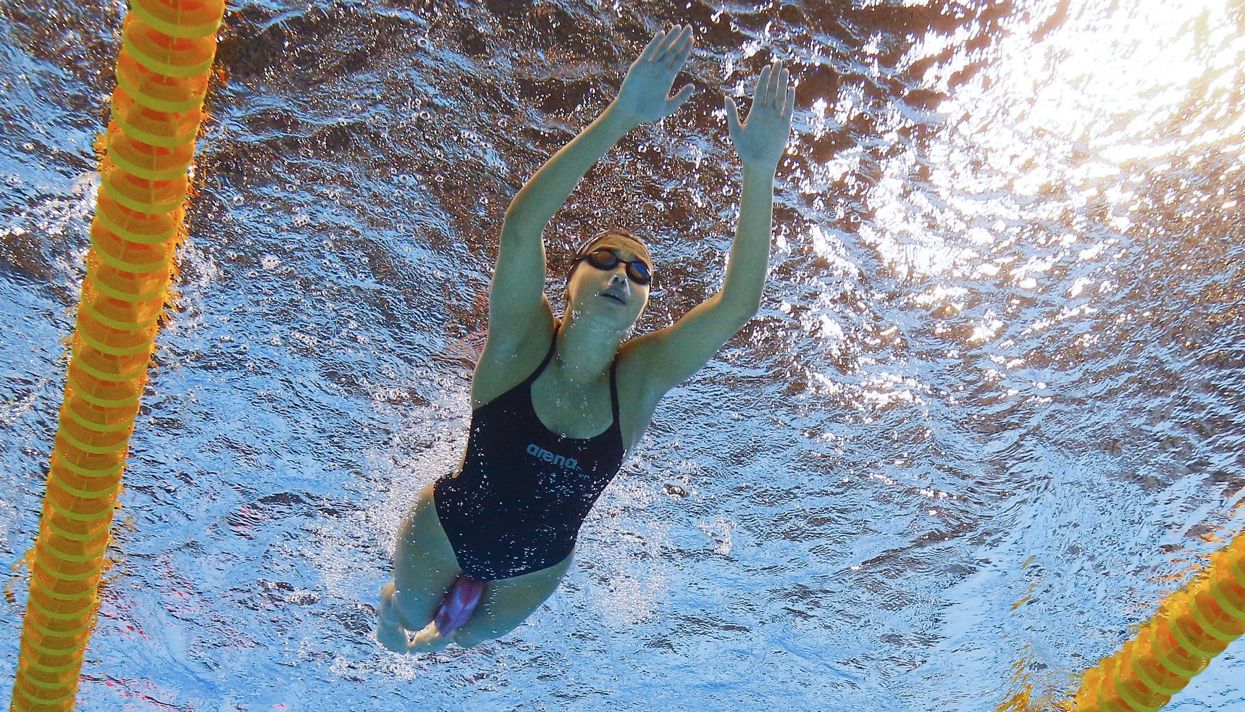
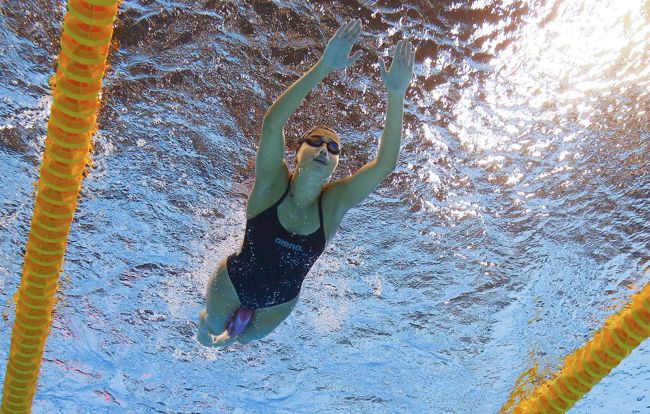
Yusra Mardini was born in Syria, but, like many other refugees, she was forced to leave the country. Her family went first to Beirut, then to Istanbul, next to Izmir - from where she was supposed to cross in Greece on the boat. The boat was crowded-there were 20 people on it instead of the laid six to seven. After half an hour of traveling, the boat motor stalled, and everyone who knew how to swim, dived into the water and began to push the boat to the shore. Everyone survived, but since then Mardini hates the open sea, preferring the pool. She did not achieve much success in Rio, but this is just the case when participation is no less important than victory.
Jonas Kinde, Athletics
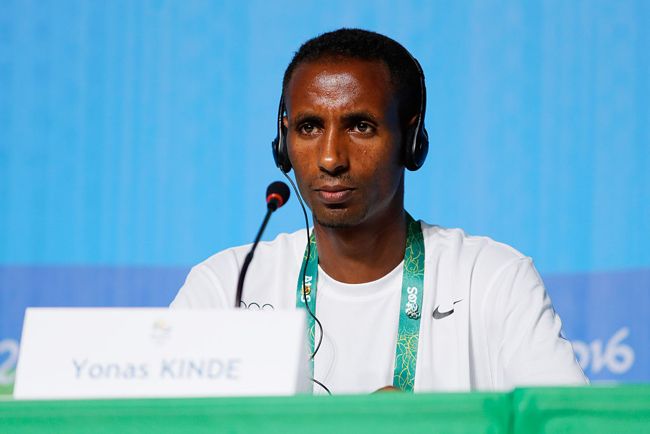
Another story from the refugee team: Jonas Kinde was born in Ethiopia, and now lives in Luxembourg. Unlike the rest of the Olympians, he is deprived of the opportunity to simply train and prepare for games-he still needs to somehow feed himself. To do this, he works as a taxi driver, and in his free time from this work - he runs marathons.
It is unlikely that Jonas Kinde will win the Olympic race, but it will definitely become the fastest and most resilient taxi driver in history.
Nemati, firing from onions
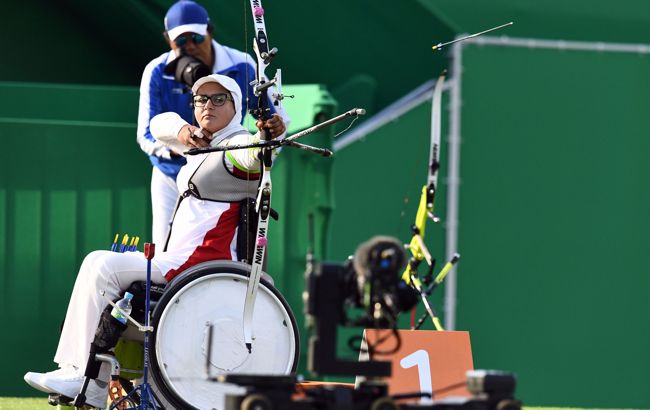
Cases when the Paralympicians managed to win the selection and come to the Olympics, although they are rare, but sometimes occur. Nevertheless, even against their background, the story of a nemati from Iran is special. The holder of the Golden Paralympic medal of London-2012, she managed to break into the final competitions of Rio-2016 at the Olympics and become a banner by her country at the opening ceremony.
In the youth, Taekwondo was engaged in Nemati, but fell into a car accident, due to which she was chained to the stroller. After that, she began to get involved in a bow - and even if it was much more difficult to shoot from a position than standing, she managed to give a fight to many best athletes in the world. From the Olympiad, the Russian woman Inna Stepanova was knocked out , which the Iranian archer beaten to the games, and therefore expected to go further. It did not work out - but one of the symbol of the Olympics in Rio Zahra Nemati still became.
Ekaterina Karsten, Academic Rowing
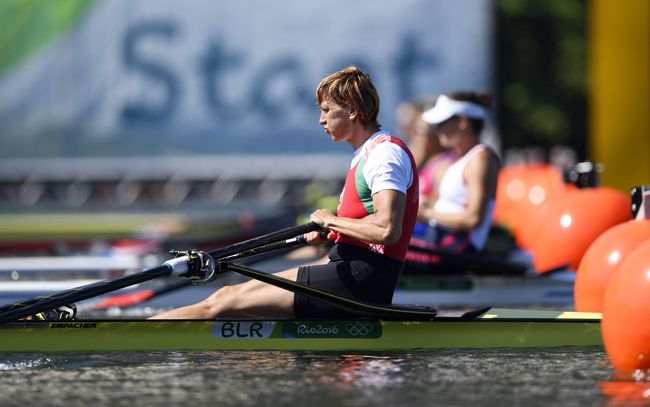
It is quite difficult to believe in this, but Ekaterina Karsten won the Olympic medal as part of a united team from former Soviet republics at 1992 games. Since then, all her competitors have already finished his career, but Karsten does not give up - the Olympics in Rio will be the seventh for her, and at each of the previous ones, except London, she took at least one medal.
Now Karsten is 42 years old, she plays for the national team of Belarus, but lives in Germany, as she married a German businessman. Everyone, of course, is possible, but most likely the Olympics in Rio is the last chance to look at the Great Belarusian athlete in action.
Claress Schilds, boxing
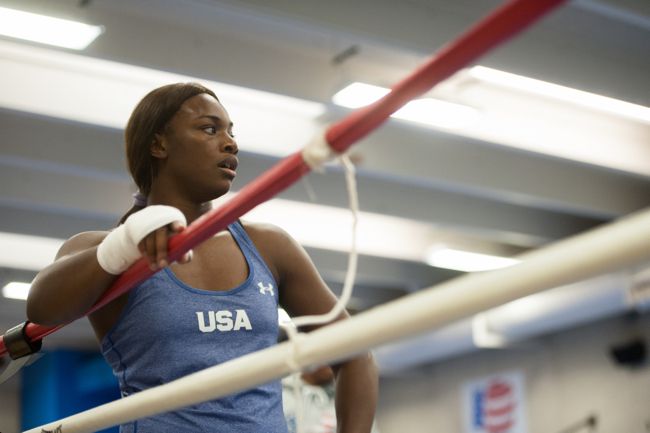
Claress Schilds is only 21 years old, but according to her biography they have already managed to make a documentary, and Universal bought the rights to art adaptation. The American grew up, let’s say, not in the most prosperous family - her mother used drugs, her father sat all her childhood in prison. And yet it was Schilds's father who brought her to boxing, and since then the athlete could not be stopped - the first Olympic gold Shields won at 17 years in London. Along the way, she became the first American to win the highest rewards in boxing.
Now Schilds has matured, starred for fashion magazines, everything is as invincible, like four years ago, but its life has not become easier. So, she tried to adopt the child of her cousin, and the first few months everything went well, but then they quarreled, and the case almost ended in a showdown in court. Schilds was forced to give in, but still misses the child.
Anthony Erwin, swimming
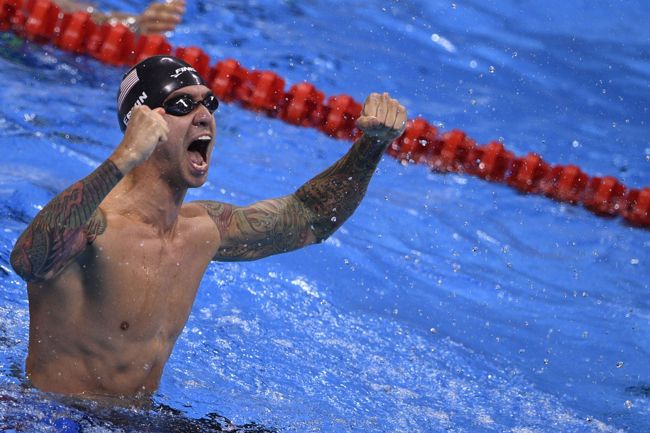
At 18, the American swimmer won the gold of the Olympiad in Sydney at a distance of 50 meters in a free style and won silver in the relay of 4 to 100. It seemed that the US team had another ultra -tasting swimmer who would show himself at the next Olympiads, but Erwin broke. He began to drink, take drugs, once flew from the police on a motorcycle. In 2003, Erwin officially completed his career, and what only did not do after that: he worked in a tattoo studio and in a record of records, then carried away with Buddhism, began to engage in swimming with children, graduated from the university in Berkeley. Do not think that it was easy for him - at least once he tried to commit suicide.
In 2010, Erwin decided to return to professional sport and even climbed to the Olympics in London, at which he took fifth place in the final. It seemed that this was certainly the end, but Erwin did not stop there. And not in vain - at the Olympiad in Rio, he won gold in both the relay and in the individual standings at his favorite distance - 50 meters in frequency. At the age of 35, he became the oldest swimming champion.
Daria Klina, Athletics
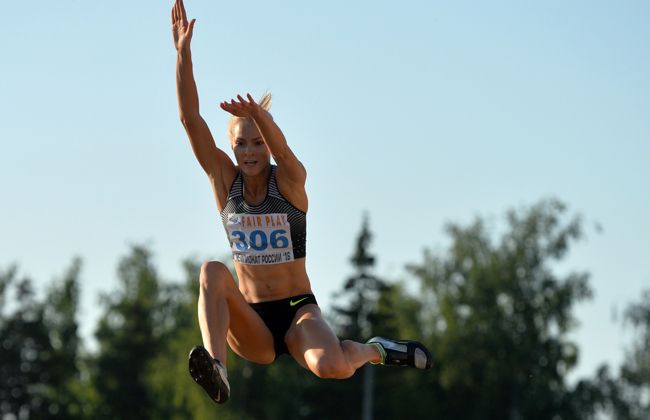
This story is more likely not about Daria Klishina itself, but about all Russian sport and attitude towards him in the country. Klavina is the only one who will represent Russia at 2016 games in athletics, but many in Russia are not happy about this. When it became known that for doping the whole team was removed, except for Klishina, who has long been living and training outside Russia, there were many comments in the spirit of "Let her play for her USA."
Klimina has been living in the United States since 2013 and really had little chance of encountering the Russian doping system. The large intrigue of the Olympiad is not even how she will perform, but how they will meet her at the stadium - a case when only one athlete in the history of world sports is allowed from a huge national team.
Robel Kiros Hubta, Swimming
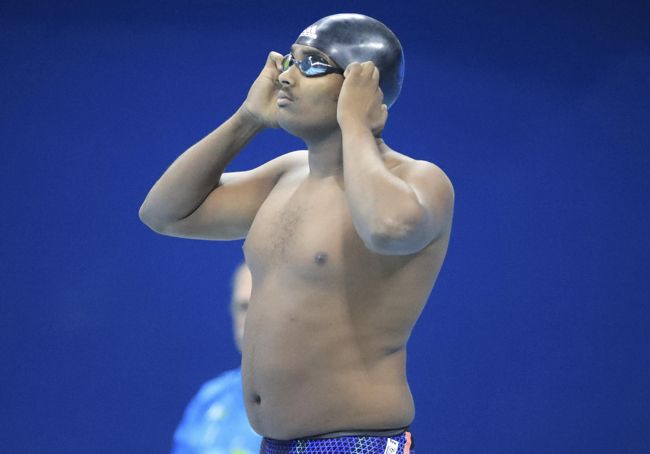
And at the end, just a funny story. The International Swimming Federation has a special program for supporting athletes in those countries that do not have money to build expensive pools. Such athletes are allocated by quotas, and they can take part in the Olympics. There are no chances for high places, but the sport is popular in those countries from where these athletes come.
Due to the program at the Olympiads, there were many funny moments, the most famous of which is the performance of Eric Musambani from Equatorial Guinea in 2000. He sailed a hundred -meter with the absolutely worst result of the Olympic Games - one minute 52.7 seconds, and, it seems, almost drowned at the finish line. Moussambani can be understood-before the Olympics, he never saw a 50-meter pool, but trained before games in a hotel where the pool was 20 meters.
The story of Robel Kiros Hubta from the same series, except that he still swims faster than Moussambani. Internet users were especially loved by Khabte for its appearance - with a growth of 176 centimeters, its weight is 81 kilograms. Habte proves with its history that if you want, you can get to the Olympics, without even having an athletic appearance and natural talents for this.