
Translated material
Import substitution in Jurmala
What is happening at their favorite resort of Russians in Latvia
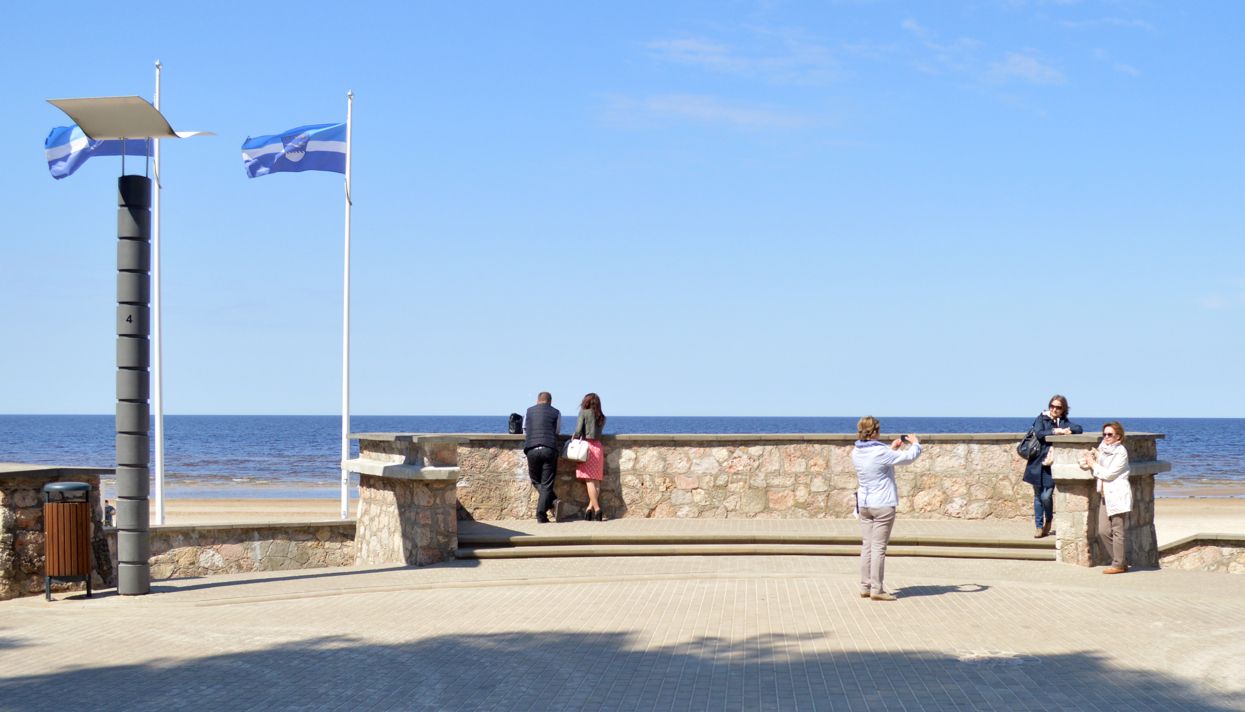
The number of Russians coming to relax in Latvia has decreased by almost 40%since 2014, local authorities report. For two years now, the New Wave, Vocal Kivin and other large events oriented to the Russian audience have not been held in Jurmala. The outflow of Russians is partly associated with cooling in the relations of Russia and the European Union after the accession of Crimea, but the main thing is with the economic crisis in the Russian Federation and the fall of the ruble exchange rate. In 2015, Jurmala gradually adapted to new conditions (we wrote in detail about this ); Now, local business is trying to become attractive to tourists from Europe. Medusa correspondents found how the favorite resort of Russians in the Baltic lives.
On a weekday, about noon of the crossroads of Yuras and Turaidas streets in Jurmala, one of the most lively in the city. From the concert hall "Dzintari" comes the music of Tchaikovsky, with the beaches nearby-the songs of the Russian group "Bi-2". A parodist Maxim Galkin and singer Christina Orbakaite smile from the cabinets with posters in a full mouth. Russian speech in the center of Jurmala is still clearly audible.
Until 2014, Jurmala was one of the most popular European resorts for Russian tourists - not least thanks to the New Wave festivals, the musical version of the KVN “Voting Kivin” and Comedy Club tour. For several summer weeks, Russian artists, politicians, businessmen came here. The middle class from Russia liked not only the opportunity to look at its own celebrities: just get to Jurmala (including by car), there is a pleasant climate - and there is no language barrier.
The main earnings of local business were in the summer, that is, the festival season. However, in 2014, Latvia closed the borders for Russian artists who publicly supported the accession of Crimea to Russia. Oleg Gazmanov, Valeria and Joseph Kobzon were on the Black List, in previous years-the VIP-guest of the “New Wave”. In response to this, the organizers of the festival decided to change the site - in 2015 and 2016, the festival was held in Sochi. Following the “New Wave”, the city lost the “Club of Funny and Resourceful” (“Kivin” moved to the Kaliningrad region), and then the Comedy Club (in 2015, summer tours were held in Sochi, and in 2016-and even in Greece).
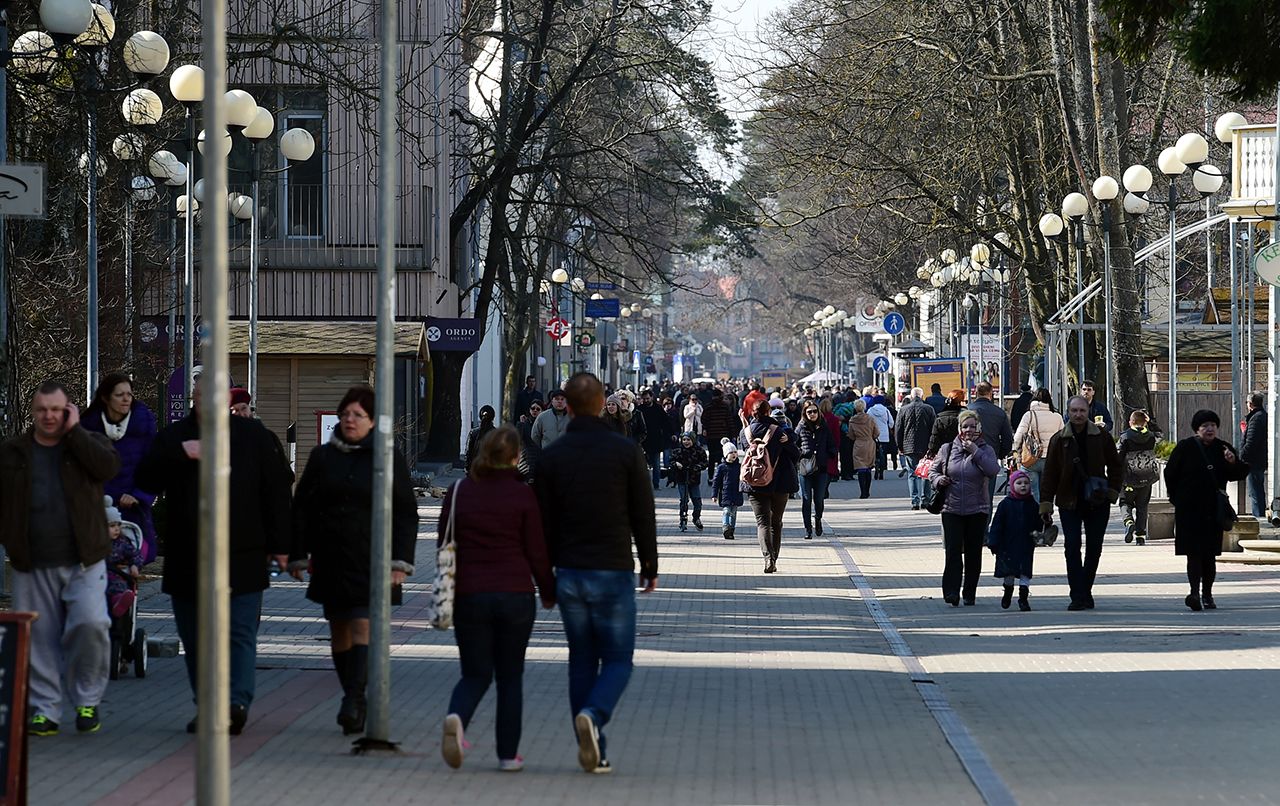
Most sellers in shops and stalls along the main tourist street of the city - Yomas - say in Russian. In the windows, ridiculous mannequins are dressed in Pareo from polyester; Local artists offer vernisage canvases with poppies and women in hats; Immediately, grandparents sell berries and cucumbers.
We ask one of the sellers how the resort lives without an influx of tourists from Russia. “No jurmas. Jurmala died, so write. - In general, there are almost no Russians compared to last year. Mostly the Russians were bought from me, and there is no trade now, ”says the seller, who continues his speech with discussions about the“ nationalist rhetoric ”of the local government and its dependence on the United States.
The legal entity of Jurmalas about the outflow of Russian tourists speak exclusively in an economic manner: by the end of 2014, the ruble exchange rate towards the euro has fallen almost doubles-and has been at about this mark for two years. “Every year, about 180 thousand tourists stop in the hotels of Jurmalas, of which about 20-25% are now Russians. In addition to them, there is a certain share of “summer residents” - people who own local real estate, who come several times a year, ”says Alexander Straimkale, chief specialist of the tourism department of the legal entity.
“Compared to last year, there were more tourists from neighboring Lithuania, Estonia, Sweden, Finland, Norway, as well as from Germany, Belarusian and Ukraine. On one day, that is, without an overnight stay, Italians and Spaniards come to us from Riga, but there are not many of them, ”she adds.
According to Stramkala, during the “New Wave”, prices in Jurmal hotels and restaurants grew against the background of increased demand. Now there is no this money, but no one can name the specific amount that the city budget was missing due to the abolition of Russian events. At the same time, local authorities claim that most hotels and restaurants have relatively calmly survived this decline: only those who associated their business with the only festival month - July, closed.
In front of one of the cafes on the beach there is a menu offering an Aperol Spritz glass for nine euros. "Very stunned!" - indignantly grins a woman aged. Lease of solenger - five euros, although special offers are in force for the Russians. “I will give you for 500 rubles,” the local employee is tempting the local employee with a child with a child. Due to prices, almost all sun loungers on the beach are idle; At the same time, the beaches themselves are by no means empty.
According to the mayor of Jurmala Gatis Trusksnis, over the past two years, the number of Russian tourists in Jurmala has almost doubled. In previous years, the total number of vacationers in the resort annually grew by 20%; In 2015, growth was only 3%. The task of 2016 is at least maintain current indicators. “Hotel income fell by a quarter. And this is only pure tourism - in addition to this, the Russians began to buy less housing in Jurmala. Now about 700 just built apartments are idle. Imagine what kind of money the city loses? " - says Medusa mayor of Jurmala.
Near the park in Dzintari (in this part of Jurmala the largest concert hall is located here ) , expensive residential complexes stretch for several kilometers. At first glance, they are empty at home: there are no people, linen does not hang on the balconies. Near one of the houses, the local resident Victor was washed by garbage tanks (and so looking clean): “On the contrary, the houses are really empty at home. And they live with us, everything is sold out, ”he says. “Both the old residents come, and the new ones appear, and in the summer and winter.”
Buyers of real estate from Russia became less not only because of the economic crisis in the Russian Federation-but also because the Latvian authorities tightened the program for obtaining a residence permit (known as “a residence permit in exchange for investments”). Now the minimum cost of real estate, when buying a temporary residence permit in Latvia, is 250 thousand euros (read more about the situation with the Latvian residence permit in our cards ).
Nevertheless, according to the president of the Latvian Real Estate Association and the owner of the real estate company Latio Edgar Shins, Jurmala remains an attractive place for potential investors: “For housing in Jurmala, people are still ready to pay more than in any other Latvian resort city. There is excellent infrastructure, great restaurants. And the fact that the city has become fewer glamor is so for someone this is only a plus. ”
“I worked in the Slavyansky restaurant at the hotel on YoMas Street, the restaurant closed the next year after the abolition of the“ New Wave ”. We received the main income precisely in the days of festivals - every year we were stopped by [singer Angelica] Varum, [singer Valery] Meladze; [Singer Grigory] Leps lit in a page-generously handed out to everyone for tea, a very good client,-recalls one of the waiters of the closed institution (now he works in another place). - So far [Foreign Minister Latvia Edgar] Rinkevich did not ban the stars, everything was fine. Now the country's rating has fallen, Jurmala's income has fallen. People are terribly unhappy. "
In the 36 Line Fashion Restaurant, rich people from Russia still spend money, but those who used to order a Crystal bottle for 600 euros are now limited to Drappier for 100. “Many festival parties passed with us, and without a“ wave ”our restaurant, of course, would not have been the way it is. But you can’t concentrate on one month in the year, ”says Lauris Alekseev, chef and co-owner of the restaurant. “People also eat, but they drink less expensive drinks: on average, it decreased by 30%.”
Although now the influx of rich tourists in July does not have to wait, the rest of the restaurant lives as before. “Our clients are mainly owners of local real estate, so we have as many Russians as before. Today, for example, [singer] Valera Syutkin went - just eat soup in eight euros, ”says Lauris.
Valery Syutkin, as in the time of the “New Wave”, continues to perform in the Dzintari concert hall: for example, in 2015 he participated in the Laima Vaikule festival “Randev” along with Grigory Leps, Maxim Galkin and other stars. In 2016, other Russian artists, familiar audiences on the “New Wave”-Stas Pieha, Natalya Podolskaya, performed at the festival. However, now the performances of artists from Russia are not the main event of the year.
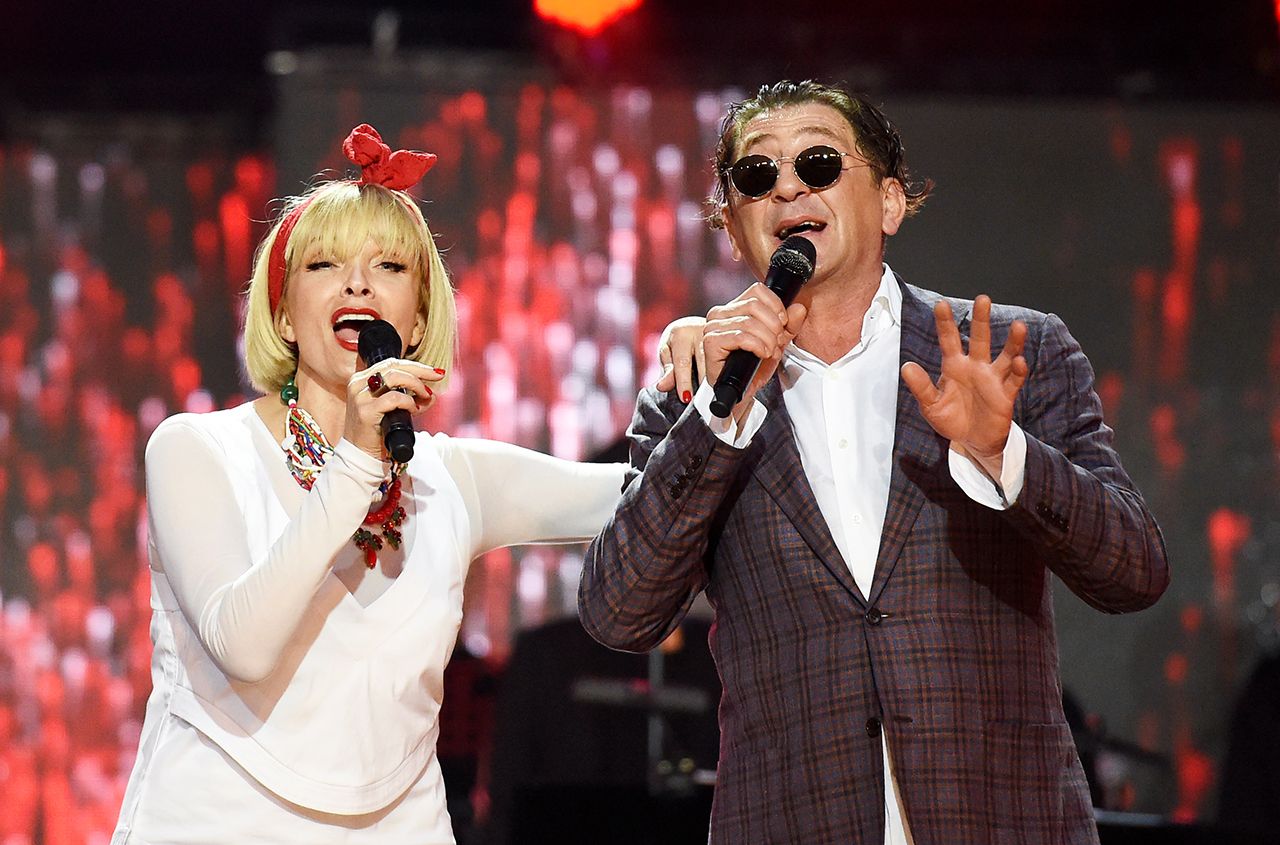
Director of the Dzintari concert hall Guntars Kirsis notes that the site adapts to the interests of the audience, which increased at the expense of tourists from Germany and Scandinavia. “Over the past three years, after the departure of the“ New Wave ”, the model of our work has changed fundamentally. Previously, we gave favorable conditions to the organizers of Russian festivals and suffered losses. Now we are handing over the halls at a market price, we ourselves will organize about 20% of the summer repertoire as producers and 100% in the rest of the seasons, and we earn on tickets. The tourist composition is changing - the Scandinavians and Germans are not interesting, ”Kirsis explains. Now the hall is trying to maintain a balance between jazz, classics, symphonic music and pop: in addition to the guests of Laima Vaikula on stage, you can see the opera performers Dmitry Hvorostovsky and Elin Guarantor, and the Philharmonic Orchestra of Israel, and the famous trumpeter Sergei Okazhmakova.
According to the director of Dzintari, in the new conditions, entrepreneurs will have to work on the quality of the services: “I have been to local hotels, there is a superficial attitude to my business. Previously, they thought: the service may not be very good - all the same they will buy all the places. Repair can not be done - they will still live. I hope this will gradually change. "
The local authorities are adapted to new conditions. “In 2014, we first held the presentations of the resort in Kazakhstan, Uzbekistan and Azerbaijan - in these countries they know about us, this simplifies work. We are a separate emphasis on domestic tourism. Now about half of the guests of Jurmala are the Latvians themselves, and, importantly, they visit the resort outside the tourist season. To make Jurmala is loaded all year round is our main task, ”emphasizes Alexander Stramkale from the City Hall of Jurmala. The city develops the infrastructure to attract local residents - opens new parks, decorates streets, spends free city holidays.
Nevertheless, the mayor of Jurmala, Gatis Trumksnis, hopes that with the strengthening of the ruble, Jurmala beaches will again become attractive to tourists from Russia. “If your neighbor is a 150-million state, where people go to you annually to spend their money, then why invent a bicycle?” - he concludes.
The authors of the material are graduates of the Farm, Summer School of Journalism "Medusa": Dmitry Vacedin, Alexei Gusev, Dmitry Komarov, Daria Orlova and Renata Serebryakova .