
Translated material
Who were and who they became
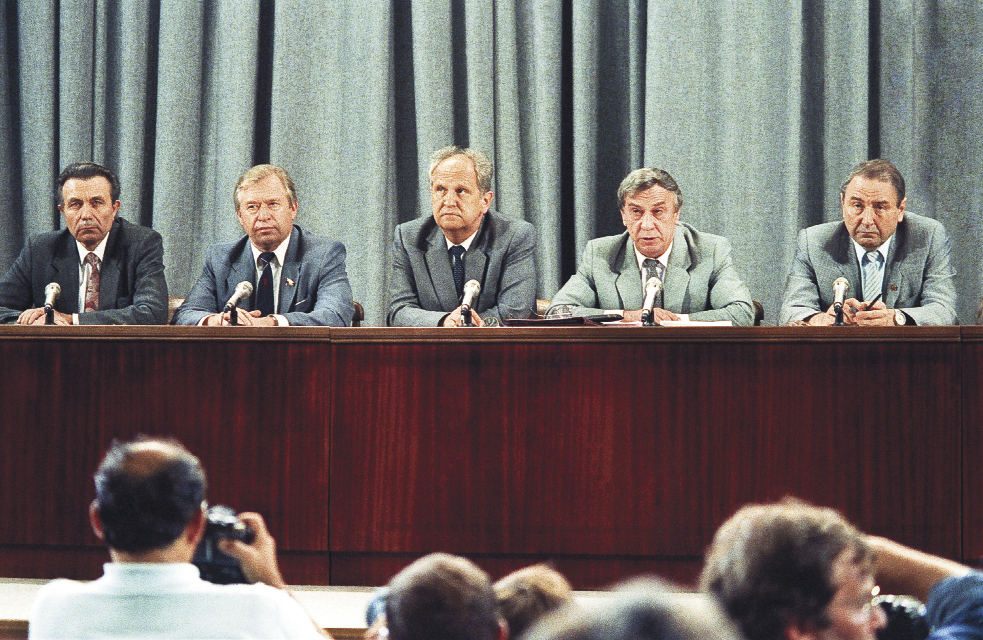
Members of the GKChP
Oleg Baklanov (1932)
Who was: deputy chairman of the USSR defense council, ex-minister of general engineering of the USSR, member of the CPSU Central Committee.
After the failure of the putty: arrested, spent a year and a half in the SIZO Sailor Silence, amnested in 1994.
He has become: for many years he has been headed by the board of directors of Rosobshemash OJSC-a union of enterprises of the missile and space region, created on the basis of the Ministry of General Engineering of the USSR. (As of 2016, Rosobshemash is part of Roscosmos State Corporation.) The Chairman of the Friendship and Cooperation of the Peoples of Ukraine and Russia (closed in 2014). In the Ukrainian presidential election in 2004, he supported the candidacy of Viktor Yanukovych. In 2014, he published an autobiographical book “Cosmos is my fate. Notes from "Sailor Silence".
Vladimir Kryuchkov (1924–2007)
Who was: Army General, Chairman of the KGB of the USSR, member of the CPSU Central Committee.
After the failure of the putsch: he was arrested, was in the Sailor Silence pre -trial detention center, and was released in 1993 on a recognizance not to leave, amnesty in 1994.
He became: shortly after his release, he collaborated with political scientist Sergei Kurginyan. Since the mid-1990s-Chairman of the Board of Directors of the "Joint-Stock Company of Scientific and Technical Development" Region ", which is part of the financial and industrial group of AFK System. At the end of the last century, he managed to be an adviser to the director of the FSB Vladimir Putin and a member of the Organizing Committee “Movement in Support for the Army” General Lev Rokhlin.
How died: from a heart attack in November 2007. He was buried in Moscow at the Troekurovsky cemetery.
Valentin Pavlov (1937–2003)
Who was: Prime Minister of the USSR, ex-Minister of Finance of the USSR, member of the Central Committee of the CPSU.
After the failure of the putsch: on the morning of August 19, it fell with alcohol poisoning, almost the entire putsch spent almost the entire pitch to the Central Design Bureau with a diagnosis of "hypertension". He was transferred from the hospital to the Sailor Sailor, but released after getting acquainted with the case. Amnesty in 1994.
Who became: I remember the author of the unsuccessful monetary reform of 1991, which led to a triple increase in prices. Immediately after the amnesty, he took the post of president of the Torusprombank, a couple of years later he was already an adviser to the head of Promstroybank. In both banks in the second half of the 1990s, licenses were recalled. In the last years of his life, the deputy chairman of the free economic society worked, collaborated with a number of other economic institutions.
As he died: in March 2003 he died of a stroke, was buried in Moscow in the Pyatnitsky cemetery.
Boris Pugo (1937–1991)
Who was: Colonel General, Minister of Internal Affairs of the USSR, member of the USSR Council of Security, a member of the CPSU Central Committee.
As he died: on the morning of August 22, 1991, a group of senior officials of the RSFSR, including the former deputy chairman of the Council of Ministers, Grigory Yavlinsky, left for the arrest of Pugo. They arrived too late - Pugo and his wife Valentine committed suicide. The pistol from which Pugo was shot is now stored in the Central Museum of the Ministry of Internal Affairs of Russia.
Vasily Starodubtsev (1931–2011)
Who was: the People’s Deputy of the USSR, the chairman of the peasant Union of the USSR, a member of the Central Committee of the CPSU.
After the failure of the putsch: he was arrested, he was in the Sailor Silence pre -trial detention center, in June 1992 he was released for health reasons for a recognizance not to leave, in 1994 was amnesty.
Who became: one of the founders of the Agrarian Party of Russia. In 1993–2001 - member of the Federation Council. Since 1997 - Member of the Central Committee of the Communist Party. In 1997–2005 - Governor of the Tula region. In 2007–2011 - State Duma deputy from the Communist Party, member of the Board of Trustees of the Pension Fund of employees of the agro -industrial complex.
As he died: from a heart attack in December 2011, he was buried in the cemetery of the village of Spasskoye.
Alexander Tizyakov (1926)
Who was: President of the Association of State Enterprises and Associations of Industry, Construction, Transport and Communications of the USSR.
After the failure of the putsch: he was arrested, was in the Sailor Sailor’s pre-trial detention center, released from custody in January 1993, amnested in 1994.
Who he became: since the beginning of the 2000s, he has been a co-founder of a number of production companies, and has been engaged in business. He headed the board of directors of the investment and traffic company New Technologies. Now he holds the positions of the President of the Russian-Cyrgist enterprise "Technology" and the supervisor of Nauka-93 LLC. In 2011, he unsuccessfully ran for the State Duma of the sixth convocation from the electoral bloc “Union of Patriots”. Member of the Communist Party Department in Yekaterinburg.
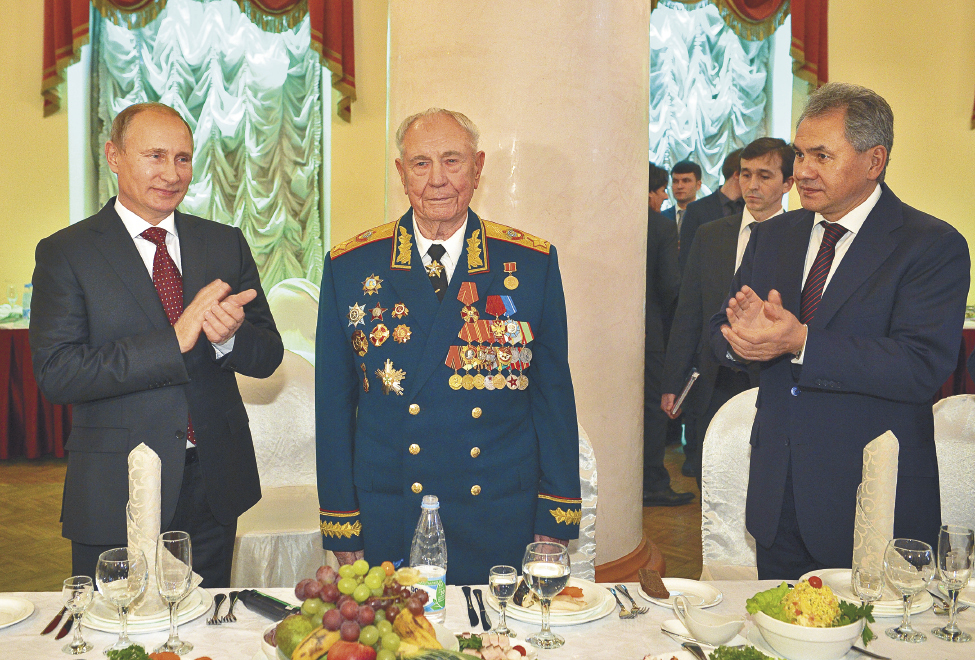
Dmitry Yazov (1924)
Who was: Marshal, Minister of Defense of the USSR, member of the CPSU Central Committee.
After the failure of the putsch: arrested, was in the Sailor's Sailor SIZO, in January 1993 he was released. In 1994, amnesty.
Who he became: in the late 1990s he held the position of chief military adviser in various departments of the Ministry of Defense. In 2007, he became an adviser to the ex-Minister of Defense Anatoly Serdyukov. Since 2008 - Leading Analyst of the Department of General Inspectors of the Ministry of Defense of the Russian Federation. He is fond of poetry and writes books. The author of memoirs “August 1991. Where was the army?”, Published in 2011. In January 2016, the Prosecutor General’s Office of the Republic of Lithuania in absentia charged Yazov of “creating an organized group of 160 military and political figures in order to return Lithuania to the USSR” in connection with the events of January 13, 1991 in Vilnius.
Gennady Yanaev (1937–2010)
Who was: the Vice President of the USSR, a member of the Politburo, Secretary of the Central Committee of the CPSU, chairman of the State Emergency Committee.
After the failure of the putsch: arrested, was in the SIZO Sailor Silence, amnestied in 1994.
He became: he was a consultant to the committee of veterans and disabled people of the Rodina and Honor of the State Service, the head of the fund for assistance to children with disabilities from childhood. In 2002–2010 - head of the Russian domestic history and international relations of the Russian International Academy of Tourism. The author of the book “The Last Fight for the USSR”.
As he died: from lung cancer in September 2010, he was buried in Moscow at the Troekurovsky cemetery.
Performers
Valentin Varennikov (1923–2009)
Who was: Army General, Commander -in -Chief of the Ground Forces, Deputy Minister of Defense of the USSR.
After the failure of the putsch: arrested, was in the pre -trial detention center "Sailor Silence". The only one of the GKChP process refused amnesty and appeared to the court. Was justified.
Who became: in February 1994, the presidential decree was dismissed. In 2003, he was elected a deputy on the list of the Rodina block, became the co -chair of the faction. In 1997-2005 - President of the Russian Association of Heroes. Before his death, he was an adviser to the ex-Minister of Defense Serdyukov.
How died: after a long and serious illness in May 2009. He was buried in the Troekurovsky cemetery.
Vyacheslav Generals (1946)
Who was: Major General of the KGB, deputy head of the 9th department-the security service of the KGB of the USSR, head of the security of the residence of M. S. Gorbachev in Foros (object "Zarya"). The investigation in the case of the State Emergency Committee established that, "holding the president of the USSR within the Zarya facility, generals on August 19 introduced additional restrictions that excluded the possibility of a breakthrough of insulation."
After the failure of the putsch: arrested, in 1992 he was released for health reasons.
Who became: in 1993-1994 - an adviser to the Region JSC, whose board of directors headed by Vladimir Kryuchkov. He retired. Appears in the media with comments on military and political issues.
Victor Grushko (1930–2001)
Who was: Colonel General of the KGB, the first deputy chairman of the KGB of the USSR, delegate of the last, XXVIII Congress of the CPSU.
After the failure of the putsch: he was arrested, was in the Sailor Sailure pre -trial detention center, was released in December 1991 for health reasons (two heart attacks transferred to prison).
Who became: the author of memoirs "The fate of the scout" (1997). The prototype of the protagonist of the British criminal thriller Grushko (1994). In 1996–2001-Vice President of the Russian SOO "Russian Insurance Center".
As he died: in November 2001, the cause of death is unknown. He was buried in Moscow at the Troekurovsky cemetery.
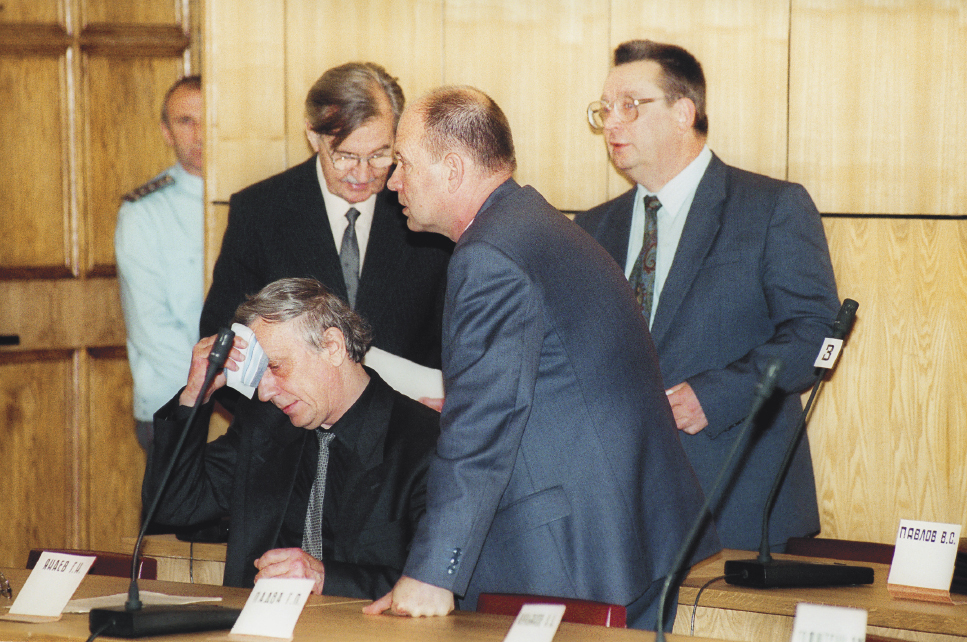
Alexey Egorov (1953)
Who was: KGB lieutenant colonel, assistant to the First Deputy Chairman of the KGB of the USSR. Together with Major General, KGB Zhizhin prepared analytical notes on the introduction of a state of emergency in the country.
After the failure of the putty: he resigned and took up business.
He became: from 1992 to 1994 he worked at the Microdin company, then on the Board of Rato Bank, from which a license was withdrawn in 1997. In the 2000s-a successful businessman-Deputy General Director of Severstal, member of the Board of Trustees of the Tretyakov Gallery and a collector of painting.
Victor Karpukhin (1947–2003)
Who was: Major General of the KGB, commander of the group “A”, Hero of the Soviet Union.
After the failure of the putsch: in August 1991, he was removed from the post of commander of group “A”. On December 27, he wrote a report and a day later was dismissed from the KGB.
He became: in 1991-1992 he headed the security service of the President of Kazakhstan Nursultan Nazarbayev. Since 1992, he worked in the field of private detective business, was a member of the Committee of the Chamber of Commerce and Industry of the Russian Federation on business safety. He founded and headed the non -profit structure of the Rosfond. He took an active part in the international movement of war veterans in Afghanistan.
How died: in the Minsk - Moscow train in March 2003. He was buried in Moscow at the Nikolo-Arkhangelsk cemetery.
Anatoly Lukyanov (1930)
Who was: the chairman of the Supreme Soviet of the USSR, a member of the CPSU Central Committee.
After the failure of the putsch: he was arrested, in December 1992 he was in the Sailor Silence pre -trial detention center, was released on a recognizance not to leave, amnestied in 1994.
He became: he was elected to the State Duma in 1993, 1995 and 1999. From 1995 to the present - a member of the Central Committee of the Communist Party from the Moscow branch of the party. Since 2004 - Professor of the Department of Constitutional and Municipal Law of the Law Faculty of Moscow State University named after M.V. Lomonosov. The author of the book “August 91st. Was there a conspiracy? ”, Published in 2010, and the collection of poems“ Continence ”, released under the pseudonym Anatoly Autumn. Member of the Union of Writers of Russia.
Vladimir Medvedev (1937)
Who was: Major General of the KGB of the USSR, Head of Personal Protection M. S. Gorbachev.
After the failure of the putsch: removed from office.
Who became: since 1992 - a member of the Supervisory Board of the Association of Veterans of state authorities "nine". Since 1996 - Advisor to the Anti -Terror Foundation (FSB and FSO of the Russian Federation). For more than 20 years has been working in the security business. He holds the post of general director of the ChOP "Firm Center-K".
Sergey Surovikin (1966)
Who was: the captain, the commander of the battalion of the Taman division, in 1991 he was only 25 years old. Surovikin became famous throughout the country by the fact that one of the BMP of his battalion was the reason for the death of the three defenders of the White House, trying to prevent the passage of combat vehicles along the garden ring - Dmitry Komar, Ilya Krichevsky and Vladimir Usov.
After the failure of the putsch: arrested, was under investigation for more than six months. The accusations were removed, and Surovikin himself, according to the former commander of the united grouping of troops in the North Caucasus, Colonel General Vyacheslav Dadonov, was increased by the personal order of Yeltsin.
He became: he made a military career - he graduated with honors from the Military Academy. Frunze and the Academy of the General Staff, served in Yekaterinburg, Tajikistan and Moscow, fought in Chechnya, became Lieutenant General and First Deputy Commander of the Central Executive Committee. Since October 2013-Colonel General, commander of the troops of the Eastern Military District.
Oleg Shenin (1937–2009)
Who was: a member of the Central Committee and the Politburo of the Central Committee of the CPSU, People's Deputy of the USSR.
After the failure of the putsch: he was arrested, spent more than a year in the SIZO Sailor Silence, where he underwent three operations. For health reasons, he was released on a recognizance not to leave, in 1994 amnested.
He remained: he remained a convinced communist, was a member of the Central Committee of the Communist Party and chairman of the Council of the UCC-CSS before the split in 2001, after which he became the chairman of the “Schinin” CPSU. It was considered the theoretician of the radical red-brown organization “Army of the will of the people” (in 2010, its activities were recognized as extremist and banned in the Russian Federation). In 2008, he attempted to nominate the President of Russia, but was refused registration. The author of the book “Time to fight is time to advance”.
How died: in May 2009 after a serious illness. He was buried in the Troekurovsky cemetery.
Photo: Vladimir Musaelian and Alexander Chumichev/TASS; Vladimir Mashatin/TASS, Alexey Druzhinin/TASS