
Translated material
"Strange insects"
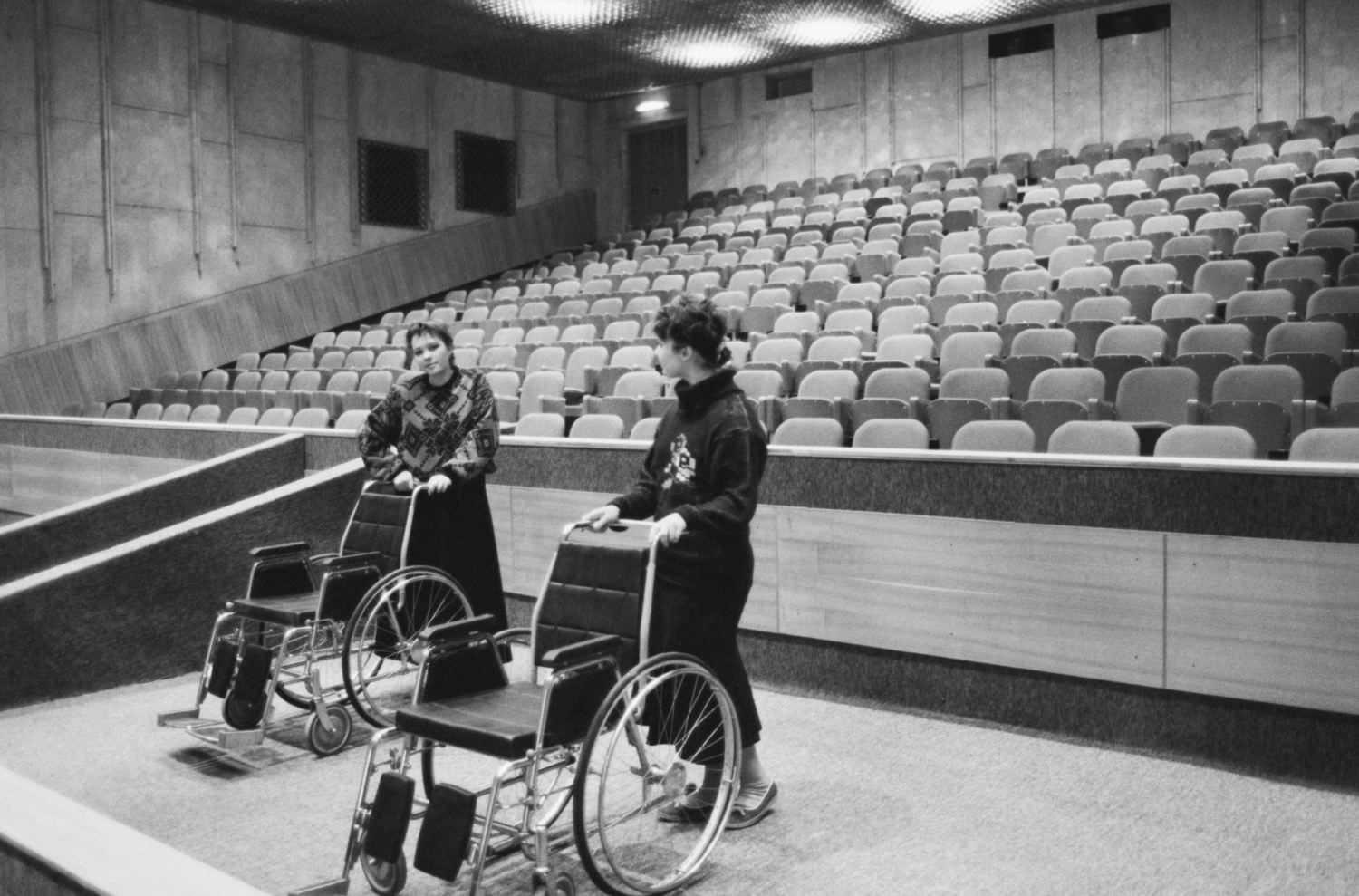
In the USSR, formally, there was not only sex, but also people with disabilities - only a handful of courageous activists tried to resist the soulless Soviet system. Historian Alexei Makarov tells about the 40-year resistance of the stroller Yuri Kiselev and his friends from MHG.
Relations of the state and public organizations in our country have a difficult history. The situation hesitates, like a pendulum, from relatively neutral to frankly hostile. In Russia, the situation with disabilities and their rights is gradually improving, but the cold, even soulless attitude to them of officials and ordinary people is still not uncommon.
Historian Aleksey Makarov, an employee of the archive of the international memorial, one of the few who remembers and knows how the struggle of people with features for their rights began in the Soviet Union, and what it cost them.
- How did the movement began in defense of the rights of people with disabilities in the USSR?
- There was a legendary demonstration of strollers near the building of the CPSU Central Committee in 1956. We do not know any details, but it is mentioned only in the memoirs of Yuri Kiselev (the central figure in the human rights movement of Soviet disabled people - approx. Ed.).
Attempts to create something were made in the seventies. For example, there was Irina Vinogradova in Ivanovo, who in 1973 tried to create a society of disabled people, but the authorities did not allow her. In 1972, Gennady Guskov, who created an electric-technical workshop in the Voronezh boarding house-five years later his activity was tired of his superiors, the workshop was closed and Guskov was sent to some distant boarding house. And then there was Kiselev, who began to work out something.
- Who was Yuri Kiselev?
- In many ways, he was an artist. Disabled from childhood (having fallen under the tram, lost both legs - approx.). One of the participants in the first political demonstration in the post -war USSR is a rally of publicity on December 5, 1965 on Pushkinskaya Square. He was friends with very many among the Moscow intelligentsia, and his house near Koktebel was a vacation spot for a dissident public. The local authorities really did not like this, so the house was first burned, and then they demolished the remains.
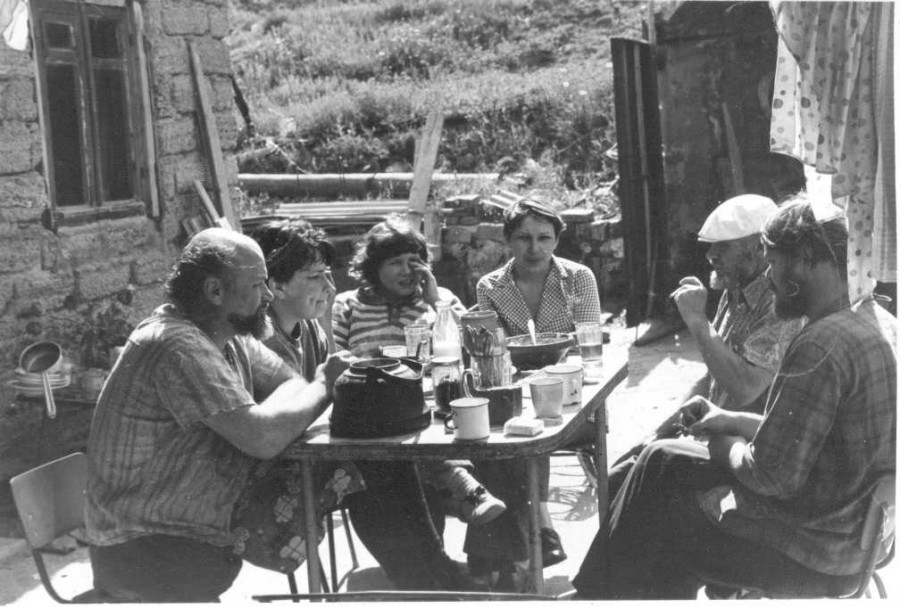 Yuri Kiselev (left) in Koktebel, early 1970s photo: Leonid Chachko
It has long been known about human lawlessness in the USSR, about the zero value of his life. Disabled people are doubly powerless. The cost of their life is negative. (From the archive of Yuri Kiselev)
Kiselev is an amazing story! He began to defend the rights of disabled people in the Khrushchev years, continued in Brezhnevsky, then during the years of perestroika and until his death in the first half of the nineties.
- After all, he organized an “initiative group of protecting the rights of disabled people in the USSR”?
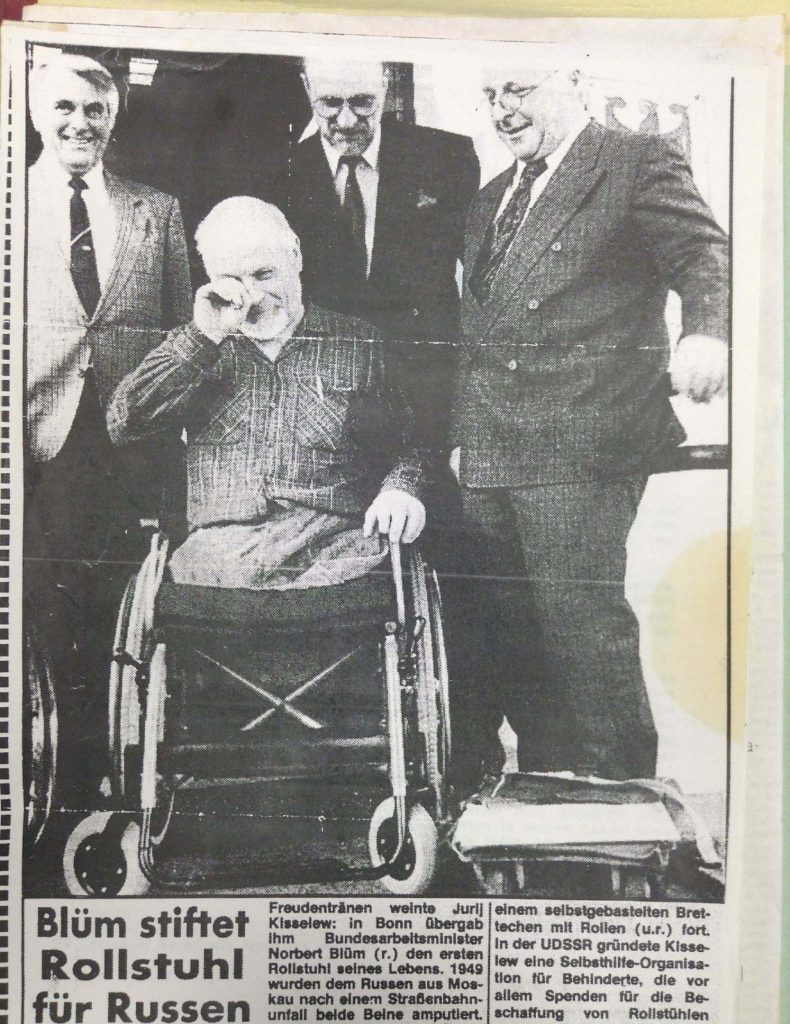 Bonn. Secondary Minister of Labor Norbert Blum (right) and Yuri Kiselev in his first wheelchair in his first life stroller : from a personal archive
- Kiselev created this association in May 1978, it lasted five years. It included five to six people and another ballot editor Elena Sannikova.
Their main activity was this: collecting materials about what is happening, in particular, a survey by mail. And this is very interesting, because these are the stories of specific people from regions that are completely far from the idea of human rights, from dissident associations - they simply describe what happens to them, their usual life.
“I want to work and very, from terrible boredom. There is a profession - a livestock technician, ”wrote Leonid Karachun from the Minsk region. He did not imagine his life in the "House of the Disabled". (Questionnaire from the archive)
These certificates were generalized and issued documents, correspondence was conducted with Soviet instances, foreign organizations. That is, not just fixing the situation, but an attempt to improve it.
Of course, the KGB did not like all this. They had both searches and warnings, but still, since these were disabled people, there were no criminal cases. But in 1983, Elena Sannikova was arrested. Not for the activities in this group - it was not even formally a member - but for active participation in the Fund for assistance to political prisoners and an attempt to publish a human rights ballot.
- How did the movement in defense of the rights of people with disabilities acquire a political color?
- It must be understood that the “initiative group of protecting the rights of disabled people in the USSR” was forcedly dissident movement - any civil activity in the Soviet Union was objectionable to the authorities. It was the All -Union Society of the Deaf and there was the All -Union Society of the Blind, but, for example, there was no special non -state organization engaged in strollers. I’m not talking about people with mental disorders, it’s just not talking about this yet - the USSR in this regard lagged behind the standards adopted in the West.
One generation is replaced by another, and help comes to units. The honeycomb of wheelchair apartments, interspersed into a common anthill ... No one cares about strange "insects" enclosed in small boxes and separated from the huge and inaccessible to them by an impenetrable wall of empty promises. The system of indifference that has become the norm leads to modification of behavior, turns people into spiritual disabled people. (From the archive of Yuri Kiselev)
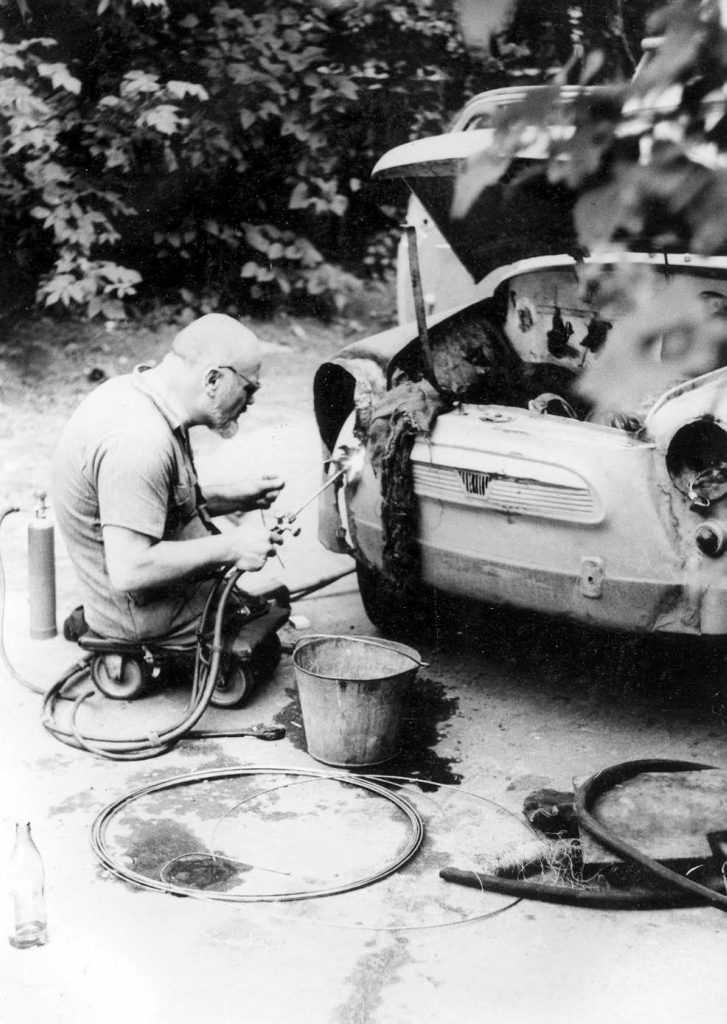 Yuri Kiselev photo: Victor Smirnov
The strollers had a lot of problems: issues of movement, life that was completely unsettled. Not only ramps were not, but all Soviet architecture did not meet the needs of the disabled. It seemed natural to organize a community of people who could help each other, share experience, correspond with state agencies and abroad. But since it was activity, which was not controlled by the state, as if saying, “something rotted in the Danish kingdom”-accordingly, it was persecuted.
- Why didn’t the state take the question “to control” and did not create its own organization?
- Let's look at what happened in Europe in these years. We must understand that we are now looking from our modern point of view of 2016, and some things seem natural for us. But then awareness could still not reach them - not only in the USSR, but also in the West. Of course, there was hardly a purposeful policy to hide the disabled. Rather, it was simply a certain infringed group of the population, which was provided to some kind of help, but this was not a priority question.
Disabled people have actually and officially divide into three “varieties”. The first is the disabled of war and the army. The second is not. The third variety is labor disabled. Disabled cases, childhood and general disease, apparently, are accepted as an annoying misunderstanding. (From the archive of Yuri Kiselev)
- Was the “initiative group” of Kiselev part of the human rights Helsinsky movement?
- Yes. What is the Helses movement in general, if we are talking about the Soviet human rights movement, differed from the previous ones? More attention was paid to socio-economic rights. That is, not only a closed list of human rights, but also the right to work, the situation with the disabled - all this was in sight. Moreover, two rather active people from the dissident circle had a corresponding experience: this is Elena Bonner, who herself was a disabled person, and General Peter Grigorenko. These topics were not empty words for them - they themselves came across a soulless Soviet machine of bureaucracy.
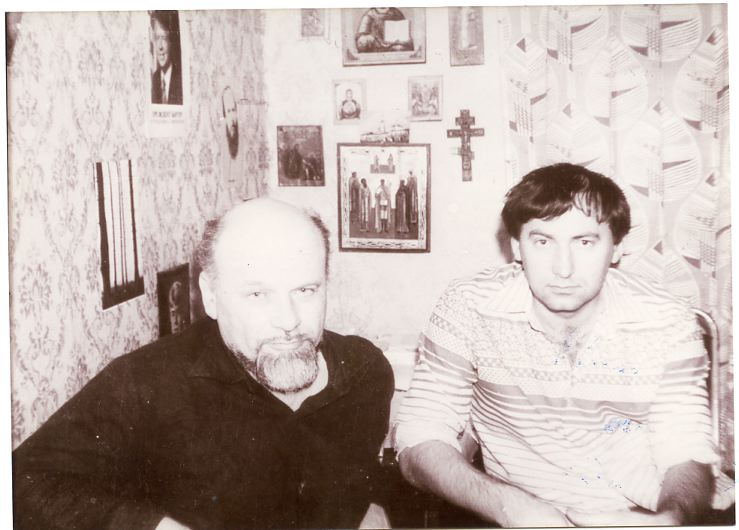 The founders of IGZPI (initiative group of protection of the rights of disabled people) Yuri Kiselev and Valery Fefelov. No later than 1982 photos: Archive of the International Memorial
Normal people with a developed moral feeling do not understand how to put in such a humiliating position anyone, especially - disabled! And in newspapers and magazines, on radio and television, in the cinema, the people are brought up by love for animals, humanity .... (from the archive of Yuri Kiselev)
First, a document of the Moscow Helsinsky group (MHG) appeared on the need to create a movement in defense of the rights of disabled people. Then human rights organizations engaged in certain problems began to appear: a separate working group on psychiatry, the Christian committee to protect the rights of believers. And then, in May 1978, a “initiative group of protection of the rights of people with disabilities in the USSR” is being created, a subsidiary of the ICG.
-During their existence, did they manage to achieve any significant changes?
- practically no. It was still important anyway. Firstly, we now have concrete evidence of that era-we may not speak unfounded that “disabled people in the USSR were not very living”, but we can refer to specific facts. Secondly, the Soviet leadership was still written from Western countries and were interested in what was happening. And the bosses had to think what to answer.
There is no one to stand up for the disabled. The neglect of their fate does not bother anyone. The disabled never gathered on the initiative of those on whom, ultimately, their fate depends. (From the archive of Yuri Kiselev)
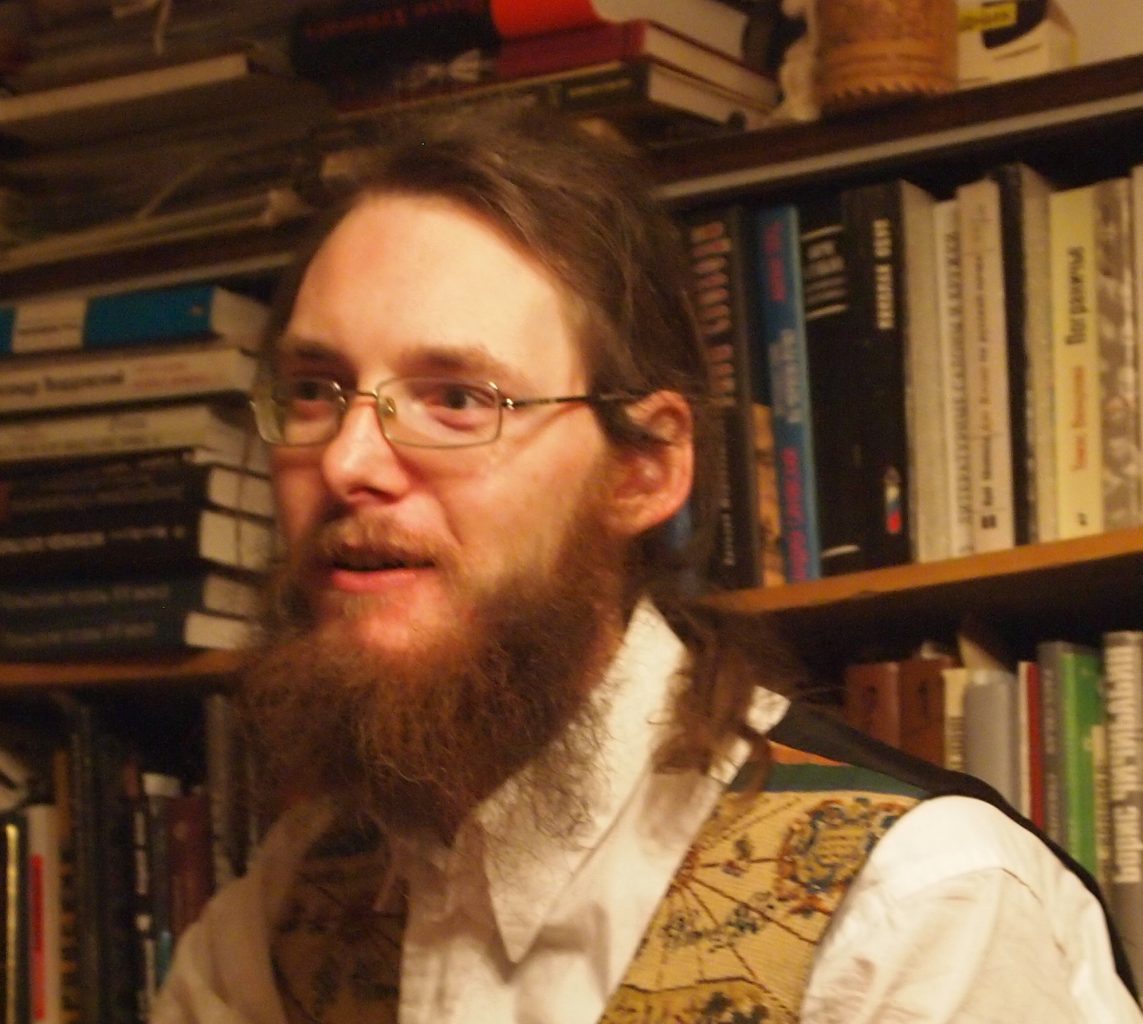 Alexey Makarov Photo: Anna Rodionova
Some things are still relevant. For example, I recently looked when the USSR began to participate in the Paralympic Games - only in 1988. And they were held stably from the fifties or sixties. And MHG, in particular, raised these questions. Most likely, the USSR did not participate for obvious reasons: we have a wonderful state, and we do not want to admit that we have disabled people at all. And there were no conditions for the preparation of such athletes, there was no idea to include disabled people in a common life, including through sports competitions. There was a certain norm, and deviations from it were not taken into account.
- The memory of the human rights activity of that era was preserved thanks to the materials of the Yuri Kiselev Foundation?
- Yes, but there was no one to collect these documents after his death in 1995. The history of the protection of the rights of disabled people in the USSR, by and large, is a black hole. There is a book of one of the participants in the “initiative group” Valery Fefelov “There are no disabled people in the USSR!”, There is an archive of Kiselev. But, for example, there is no collection of documents of this group, almost nothing to find on the Internet. What happened in the regions, we also almost do not know. Here, for example, this Irina Vinogradov, which I mentioned. What do we know about her? Nothing. Nothing but 1973, the city of Ivanov and the fact of her attempt to create such an organization. We don’t even know if she was disabled.
The global lie about the world's first state of workers and peasants, which ensured universal social justice, obscured the disabled from the world and their own people. While citizens of the USSR are increasingly aware of the terrible conditions in which they live, and the thousandth of the truth about the situation of disabled people is not yet open to the general public. (From the archive of Yuri Kiselev)
Now this topic has become relevant again thanks to Irina Yasina. State policy begins to change: new metro stations are made with elevators, ramps and so on. Although, as for people with mental disorders, everything develops very slowly.
- In the Soviet years, no one was engaged in them either?
- In Soviet times, it was a side of the working group of the MHG, which was investigating psychiatry for political purposes. Because people who fell into the psychiatric hospital saw what was happening there, and could not talk only about the political aspect.
But there were no special efforts on this subject. These were wonderful people, but they themselves were partially the product of the Soviet system. For example, who would come to mind to protect LGBT rights then? There was simply no such movement, the topic itself was strange and alien to them. Although there were separate cases when, for example, people were blackmailed by this, they had to cooperate with the special services, then they revealed their cooperation and planted them. But in general, all this was on the periphery.
We thank Maria Muradov for participating in the creation of this material.