
Translated material
And in Rio the wrong pool
Scientists have accused the Olympic object of that it “helps” some athletes: WSJ
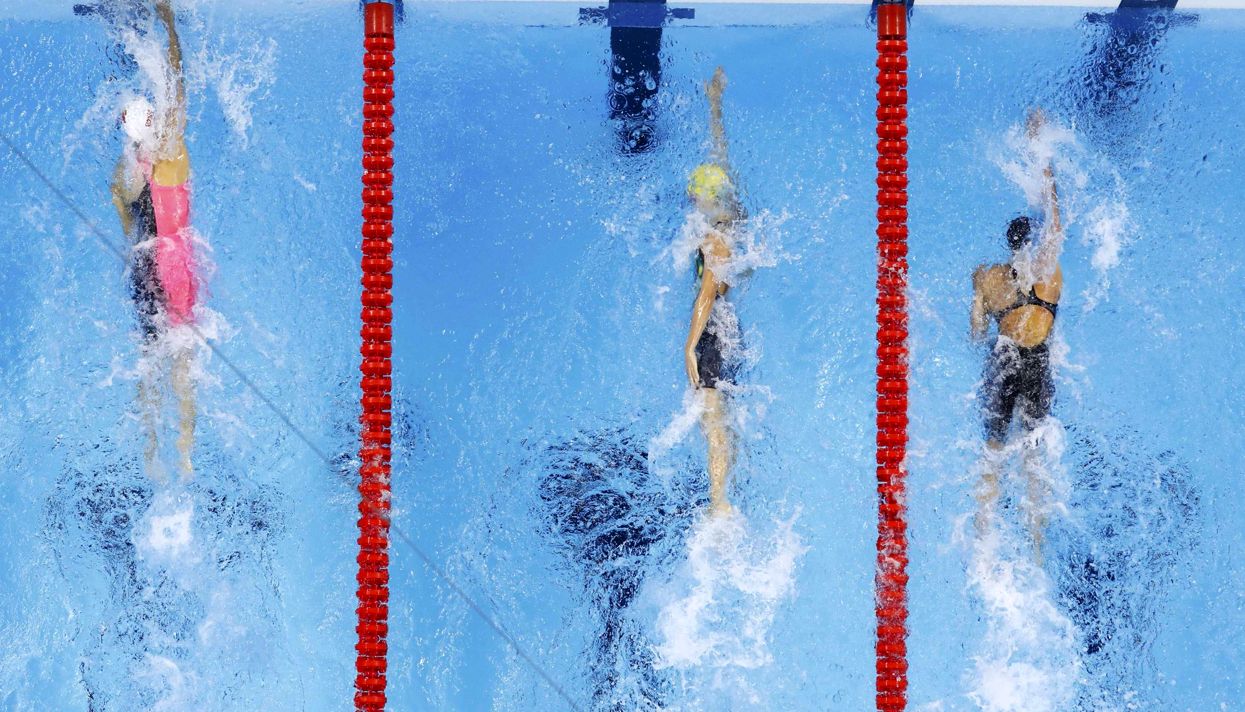
The Olympic pool in Rio is arranged in such a way that athletes floating along some paths get an advantage over the rest. This conclusion was reached by a group of scientists who analyzed the performances of swimmers in Rio. The company Myrtha Pools, which built the pool, rejects all accusations.
Scientists, led by Joel Stagger from the University of Indiana, analyzed all the swims at a distance of 50 meters and found out that athletes sailing along the tracks from the fourth to eighth are better than those who float in the first three. So, of all the athletes who participated in the semifinals, 15 swimmers who performed on the tracks from the fourth to eighth made their way to the final. This is an unusual distribution, even taking into account the fact that on the fourth and fifth paths, those who showed the best time in the preliminary stages are usually floating.
Medals in the Olympic finals at 50 meters went to six athletes (three men and three women). Four of them sailed along the paths from the fifth to eighth, one more on the fourth and one in the third.
Moreover, athletes who first performed on the fifth-eight paths, and then switched to paths from the first to the fourth, showed the results worse, although usually during the tournament the results of athletes improve.
Scientists have long been dealing with the problem of uneven distribution of results in large tournaments. Previously, they found out that in a similar way the paths “helped” the athletes at the World Cup in Barcelona in 2013.
Pools in Barcelona and Rio were built by one company - Myrtha Pools. She rejects all the accusations against her: according to the company representative, the pool in Rio was tested for any currents, but did not find anything.
Scientists specifically investigated the results at a 50 meter, where only one pool should swim: at longer distances, it is necessary to turn over and swim in the opposite direction. In addition, it is at the shortest distance of the Olympics that even hundredths of a second are important - in the final of women, for example, the winner and the silver medalist separate two hundredths of a second.
At longer distances, it is more difficult to notice an uneven distribution. Nevertheless, scientists found that at distances 800 meters and 1,500 meters, swimmers on the first, second and third paths swam more slowly when they moved to the starting cabinet and faster - when from it. On the sixth and eight paths, everything was exactly the opposite.
Athletes who were moved from paths under numbers 5-8 to the tracks 1-4 showed an average of half a percent worse (English)