
Translated material
Master of half -hearted reforms
What will be remembered by the dismissed Minister of Education Dmitry Livanov
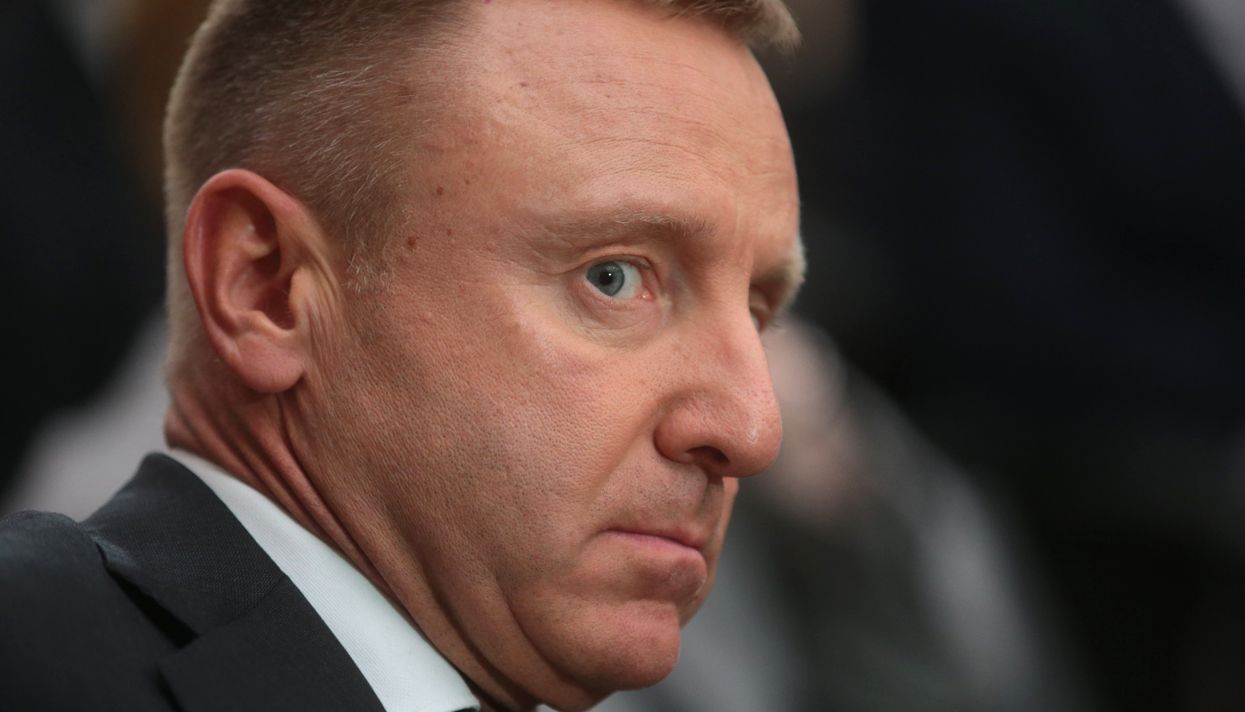
On Friday, August 19, the Minister of Education and Science of Russia Dmitry Livanov, who headed the department for more than four years, resigned . Now the official will become the special representative of the President for trade relations with Ukraine, and Olga Vasilieva, an employee of the presidential administration, as a scientist who was mainly occupied by the history of the Russian Orthodox Church, is appointed in his place. Medusa recalled the main plots related to the stay of Dmitry Livanov at the head of the Ministry of Education and Science.
Reduction of budget places in universities
Even before the Minister officially take office, Livanov gave an interview with Rossiy Gazeta, in which, in particular, he said that the number of students studying in universities at the expense of the state must be reduced by half. This statement immediately made Livanov the Communist Party of the Communist Party (throughout the official’s work in the ministry, the party issued statements with a sharp criticism of his activities)-despite the fact that real measures to reduce budget places, apparently, were taken: if in 2013 there were 491 thousand in Russia, then in 2017, according to the ministry, there will be 575 thousand. Nevertheless, Livanov constantly had to refute rumors about emergency abbreviations - the last time the minister spoke about this two weeks before resignation in early August.
Reform of the Russian Academy of Sciences
Livanov criticized the device of the Russian Academy of Sciences, still being deputy Minister of Education and Science of Andrei Fursenko in the mid-2000s-and it was he as the head of the ministry who had to carry out a large-scale and ambiguous reform of the Academy. Here, the minister was again in wait for the rhetorical failure - Livanov even had to apologize after the members of the Academy were offended by his words that the Ran in its former form was an economic institution.
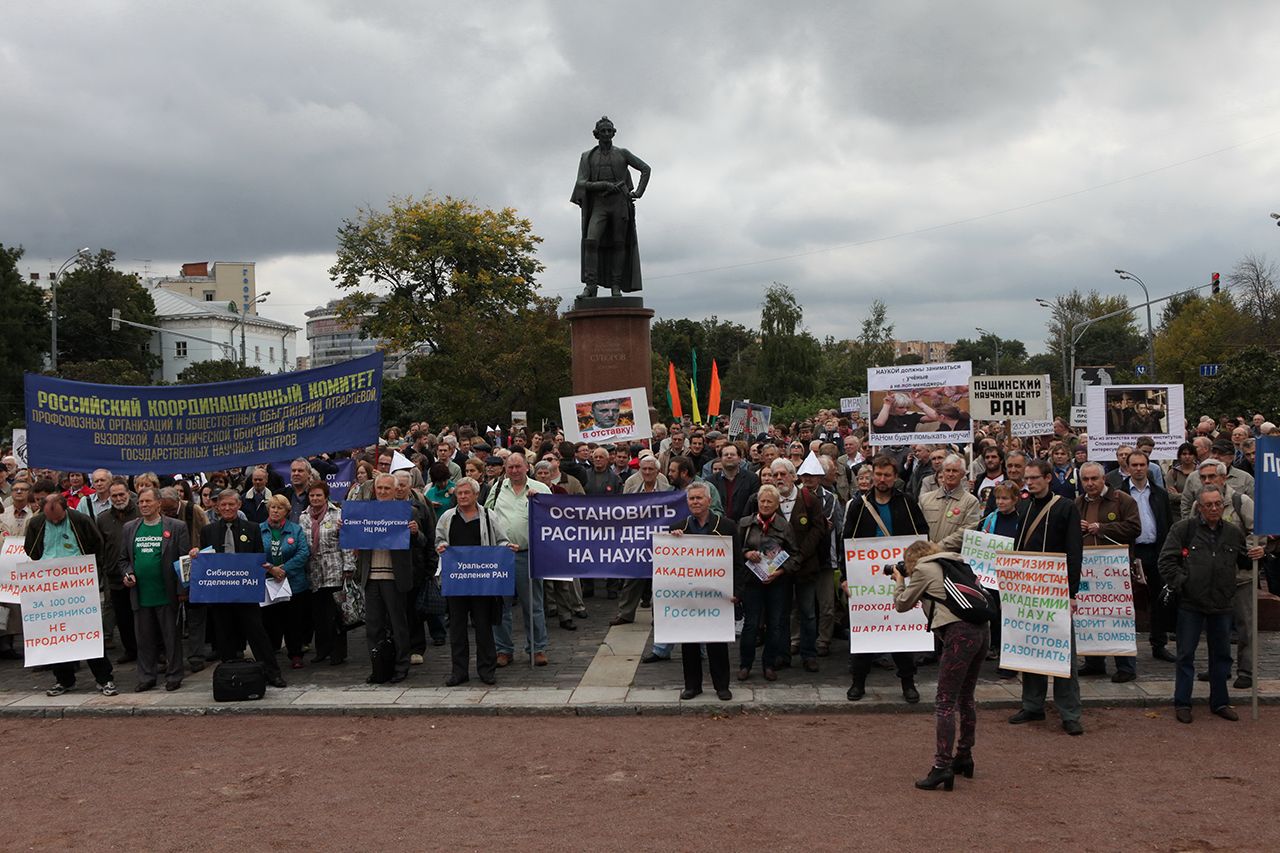
As a result of the reform, the Federal Agency for Scientific Organizations (Fano) was created, which now runs the property of the Russian Academy of Sciences and its subordinate institutions; At the same time, the Academy itself was united with the Russian Academy of Medical Sciences and the Russian Academy of Agricultural Organizations. The reform was actively criticized by many members of the Russian Academy of Sciences and scientists who, in particular, were unhappy that officials would now refuel their activities; Some academics announced their refusal to become members of the New RAS; In the cities of Russia, protests were held against changes. There was also a version that the reform was the revenge of the director of the “Kurchatov Institute” Mikhail Kovalchuk, close to Vladimir Putin, to academicians - supposedly for not elected a member of the Russian Academy of Sciences. Already in 2016, more than a hundred scientists sent an open letter to the president, in which Fano is reproached for the collapse of Russian science and demand to reordinate its wounds.
List of ineffective universities
Shortly after Livanov arrived, a preliminary list of ineffective universities to reorganize or optimization announced a preliminary list of ineffective universities to the post of Ministry of Education and Science. Among other things, the “signs of inefficiency” were identified in such honored universities as the RSUSU and MARCHI.
The principles that the Ministry were guided by the compilation of lists were criticized primarily: for example, the scientific reputation of universities was not actually taken into account, but the average area of premises per student and the number of foreign graduates were important indicators.
The story with the failed reform of the Russian State Humanitarian University turned out to be a symbol of the half-strategy of the minister in a sense: Livanov seemed to be wanted to change the rector of Efim Pivovar, and the media even reported his ambulance with reference to sources in the department, but as a result, the brewery played out a difficult combination with the participation of various government structures, launched the program of cooperation with the FSO and the Federal Regulation -And he remained at his post (in 2016 he became the president of the RSUSU, and Yevgeny Ivakhnenko was elected to the new rector). Linguist Maxim Krongauz, who was a part of the university optimization commission, which was a university reform project for the Ministry of Education and Science, said then that "the inefficiency of the ministry [was] above the university ineffectiveness."
University unification
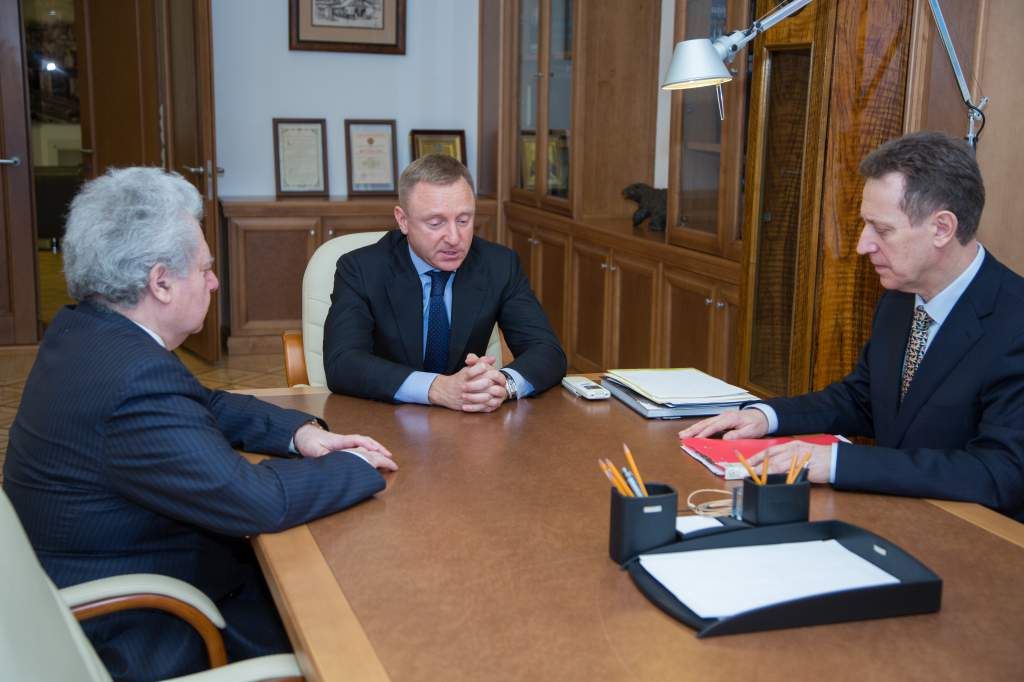
Under Livanovo, the Ministry of Education and Science actively carried out the union of universities in order to increase their effectiveness. Livanov himself explained this process by the demographic situation in the country: in order to survive, institutes and universities with a small number of students must unite with larger ones. The minister also assured that the consolidation of universities and the creation of the so -called “supporting universities” would not affect the teaching staff, but it would reduce the bureaucratic apparatus.
Nevertheless, scandals regularly arose around the associations. For example, in December 2013, students of the Russian State Trade and Economic University, headed by his rector Sergei Baburin, Basto in protest against the union of the university with REA named after Plekhanova. In 2016, the petition against the merger of RHTU with MISIS collected 20 thousand signatures, and at the end of July, representatives of the aviation industry opposed several transport universities at the National University of Transport.
A single history textbook
To create an official line of textbooks that will talk about the past of the country “within the framework of a single concept, within the framework of the logic of continuous Russian history, the relationship of all its stages, respect for all pages of our past”, actually Vladimir Putin personally proposed in 2013-but Livanov’s department should have developed it. So it was the Ministry of Education and Science that was criticized in connection with this: for example, the Committee of Civil Initiatives created by the former Minister of Finance of the Russian Federation Alexei Kudrin was worried that such textbooks would educate “obedience and servilism”.
The scientists who worked on a single history textbook stated that schoolchildren would tell the “scientific truth” about wars in Chechnya, as well as about events in South Ossetia and Abkhazia; With regard to Stalin, it was decided to avoid both the term “effective manager” and the definition of “bloody tyrant”.
As a result, however, they covered the initiative quietly-in August 2014, Livanov said that instead of specific textbooks, a “unified historical and cultural standard” would be developed, which the authors of the manuals should take into account.
Opposition statements
Dmitry Livanov was considered one of the most liberal people in the Russian government - and repeatedly confirmed this reputation. Thus, the Minister of Education and Science publicly opposed the law prohibiting US citizens to adopt Russian orphans (the initiator of the bill Ekaterina Lakhova in response said that Livanov “does not understand what she was doing”).
In addition, it was under Livanovo that the Ministry of Education and Science was engaged in the problem of fake dissertations-in particular, the minister in February 2013 signed an order to deprive the scientific degrees of 11 candidates and doctors of sciences defending the MPSU, among whom were several officials (for example, the head of the Zamoskvorechye Council and the head of the Commissioner for Human Rights in the Astrakhan Region). In response, however, the State Duma deputies accused of fake degrees and educational documents of the Ministry of Education and Science of the Ministry of Education and Science; As a result of the scandal of Deputy Livanov, Igor Fedyukin, who headed the commission, which investigated violations,resigned .