
Translated material
Is there an alternative
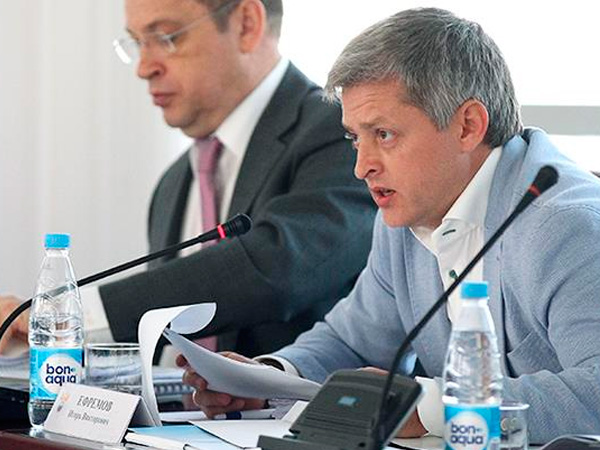
The election campaign of candidates for the post of head of the Russian Football Union began. So far, four have been registered as candidates, including the Minister of Sports of Russia and the current head of the RFU Vitaly Mutko.
The candidates were the former head coach of CSKA and the Russian national team Valery Gazaev, as well as the President of the Russian Football Premier League Sergey Prazhkin and the head of the football National League Igor Efremov. In addition, according to media reports, Gazaev suggested that all employees of the RFU nominate their candidates in the election of the head of the Union.
As Gazzaev himself explained in an interview with the newspaper Sport-Express , in his conviction, Mutko, Pryadkin and Efremov “go in the connection”, “where someone was prepared for the role of“ for safety and safety ”. “But I have already said that any competition is interesting. Well, we will fight against the entire RFU, ”he said.
The ex-mentor of the national team emphasized that the names of Prygkin and Efremov became known only on August 18, although the deadline for submitting applications for applicants for the post ended on August 15, and called the current situation “strange”. Mutko said to this that during the election campaign, you need to keep yourself in the framework of decency, and emphasized that the nomination of Gazzaev "no one speaks out."
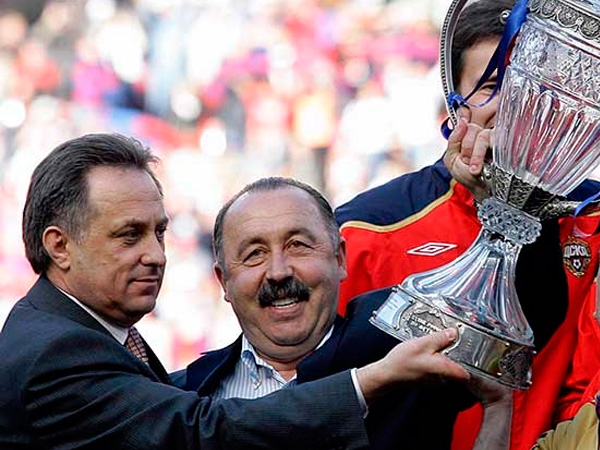 Vitaly Mutko and Valery Gazzaev /rfs.ru
The election of the head of the RFU will be held on September 24.
Analyst Polit.ru Vasily Izmailov commenting on the situation, analyzing the general principle of development of the country in relation to this area.
“The society in which we live is under very large pressure from different angles, and, above all, from the authorities. So it, at least, looks. In this regard, the configuration that has developed, historically or forcibly (there is no contradiction: it has developed historically and partly - forcibly), raises a lot of questions from the inhabitants and those people who, due to their affection, professions, and specialties, are obliged to monitor this. And recently, the idea has been increasingly sounding that if there were no administrative tightening of 2003-2004 (the most striking example and element of which was the arrest and the subsequent prison term “discharged” Khodorkovsky), then we would have a very interesting country.
In particular, publicists-first of all, Julia Latynina-love to tell that, aboutdo, our oligarchs without power through a complex consensus would have built something unlike what is now. Something, apparently, existing with a very large gap between the competitive sector of high technologies (“high technologies” not in the sense of electronic activities, as they say now, but high technologies in the sense of competitive in relation to world samples) and some other economy that would serve an uncompetitive worker, an uncompetitive layman. And, according to common sense, this thought seems very correct and, at least, seductive.
Unfortunately, we are almost deprived of the opportunity to check if this is really so. That is, how could this be done? Designing a certain parallel reality, where there is no power, but there is some analogue of it with Semibankershchina. Well, it probably doesn’t happen. However, there are some small semantic and business segments where we can make sure that one or another model or another model can be convinced. And now, in a paradoxical way, it seems to me, it is precisely such a story that takes place in the Russian football Premier League.
People who are engaged and are interested in football (they probably are not very many in our country, and even fewer among them those who are interested in football management and various kinds of intrigues that occur in this area) know how dormous and difficult at least some innovation in this organization passes.
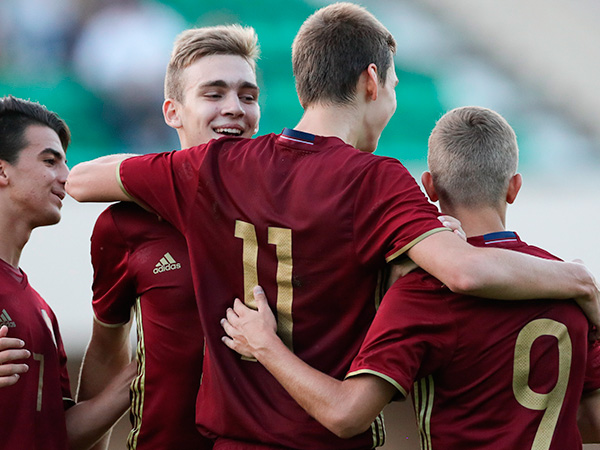 Youth team of Russia / rfs.ru
What is a Russian football Premier League? This collection of clubs, each of which (or behind the overwhelming majority) is a specific business interest of absolutely specific people and structures. It is very important here that it is both people and structures, insofar as Eugene Ginner with his assets stands behind the football CSKA-and, as everyone believes, someone else (no one knows who). For “Anji” stands Suleiman Kerimov with all his power. For Spartak - Leonid Fedun and Lukoil company. And so on, and so on. So, following the logic of parallel development, it was assumed that our wealthy people would sit down, agree among themselves in order to make a competitive product; They will make a competitive product, reach a competitive level in relation to the West - and everything will be fine.
I pay attention: we are not talking about the football results of the national team - the concept is more complicated there, the state plays there. We are now leaving the team by brackets. We are only talking about clubs that now exist for partly private, partly inappropriate money and which wealthy people can develop in their minds as they consider it necessary - well, of course, with understandable weights of any administrative market.
The question arises: did this happen? Well, everyone is able to answer this question. I can only say that, in my opinion, even on the quarterfinals of the Champions League, not a single Russian team, with all the remarkability and independence of its owners, never came out. Well, there was once “Spartak” under Romantsev, but this is not considered. It was so long ago that no one remembers.
I prefer to judge everyone else. The point is that as soon as we reach some essential changes-whether to the limit to the legionnaires, to the elections of the new head of the Russian football union, to what it were-this is all degenerates into an infinite number of coordinations, an infinite number of tactical unions, an endless mouse fuss and turns into the same mountain, which, by determination, gives rise to a mouse.
Therefore, in no case do not want to seem to be some kind of person who makes the last judgment, in no case claiming the truth in any authority, I am still ready to raise the question: are those people who claim that the administrative development that Russia has gone is so harmful as it-and partly to us, too, is presented today? And was there a real substantive alternative that would allow our state and our society to be not where they are now, but a little higher and away? To be a little more free, a little more calm, a little more harmonious and natural, and most importantly (which, in fact, is a key condition for the survival of our state and our people) is a little more competitive.
The experience of football, in my opinion, shows that this is not so. But perhaps our readers or my colleagues will tell me some other markets that develop perfectly and completely, which will question my rather controversial hypothesis, ”said Vasily Izmailov.