
Translated material
Simon Zhavoronkov: putsch as the basis of dualism
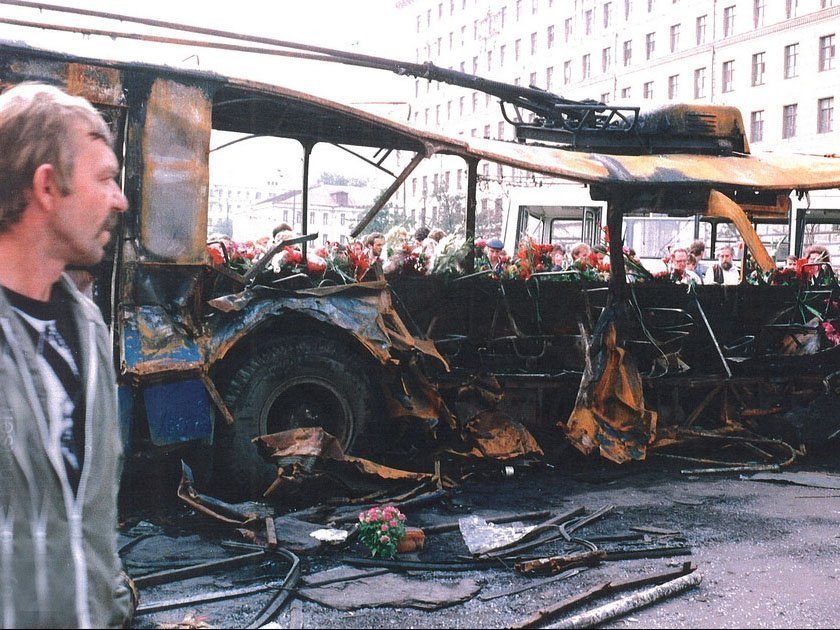
Simon Zhavoronkov 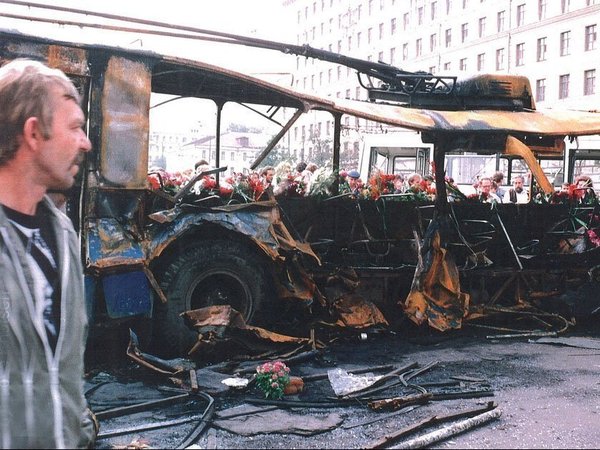 Burned trolleybus. Moscow, August 22, 1991. Photo: TOVE KNUTSEN
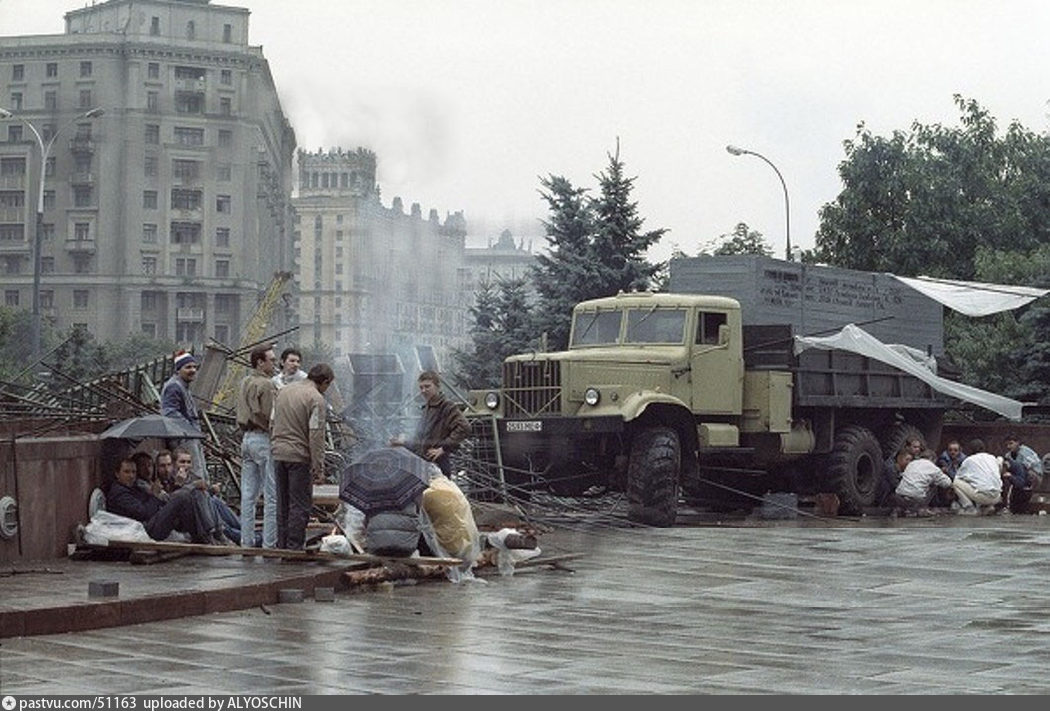 August 1991. Barricades on the streets of Moscow. Source: Oldmos.ru
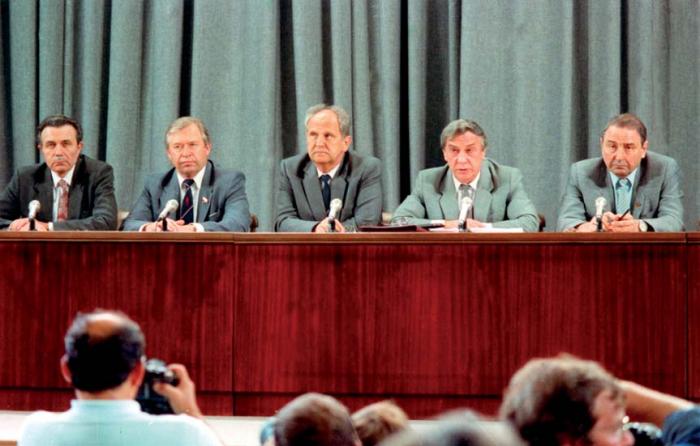 Press Conference of the State Emergency Committee in the building of the Ministry of Foreign Affairs on August 19, 1991. Photo: GOSTELEDRODOMSRI of the USSR
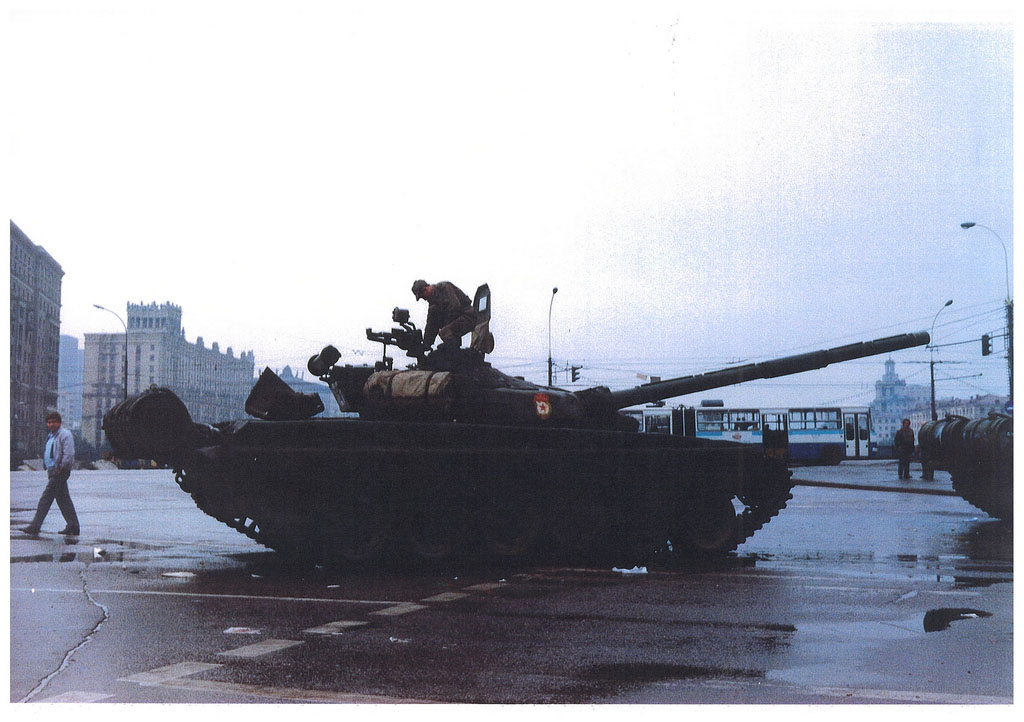 Tanks at the White House. August 20, 1991 Photo: Ole Husby
 Burned trolleybus. Moscow, August 22, 1991. Photo: TOVE KNUTSEN
On August 19, the 25th years of attempt by a coup in the Soviet Union are 25 years old. By this time, a quarter of a century ago, Boris Yeltsin urgently arrived at the White House to organize resistance, and Mikhail Gorbachev was under house arrest in the Crimea, already approaching Moscow.
Events of 25 years ago are now perceived in different ways in the country, largely because they coincided with the collapse of the Soviet Union and the implementation of political, economic and social reforms. Some were extremely successful, some led to controversial results, the failure of others was recognized as the reformers themselves. But it cannot be denied that the country that we see outside the window is largely built according to the results of the events of 1991.
The surveys conducted by the anniversary of the event showed how ambiguous the Russians relate to the recent past of their country. So, for example, among the respondents of the Levada Center to the question of who was right in those days, 15% indicated members of the State Emergency Committee, 13%-to their opponents. 33% found it difficult to answer, and 39% “did not have time to figure out the situation”, which was 25 years ago.
August 1991. Barricades on the streets of Moscow. Source: Oldmos.ruWhile the metropolitan city hall is addicting with the coordination of shares associated with the anniversary of the events of 25 years ago. As a rule, these dates use these dates to organize the liberal flank of the Russian political spectrum.
The observer Vasily Izmailov in a conversation with Polit.ru said that the confrontation in August 1991 was much deeper than many seemed to many or now. Then the anti -communists did not resist the communists, as it seemed to them, but a certain power, which we still cannot clearly form the positions of which.
The GKChP represented traditional Soviet society and traditional Soviet values - primarily the social hierarchy of orders, prescriptions and even food, it was represented by the Blat system.
Press Conference of the State Emergency Committee in the building of the Ministry of Foreign Affairs on August 19, 1991. Photo: GOSTELEDRODOMSRI of the USSRThose who were against the GKChP, these numerous hierarchies denied-and for a variety of reasons, someone for the ideological, someone because they could not integrate.
The GKChP was the heir to the traditional Russian society, one of the main categories of which was the rank - in this the Soviet system was surprisingly similar to pre -revolutionary Russia.
Tanks at the White House. August 20, 1991 Photo: Ole Husby As a result, the screening, the symbol of which was the August coup, turned out to be a break of personal values. The place that was previously occupied by socialization, no matter what ugly forms to take on, began to borrow money, in the broadest sense of the word. It is good or bad, it is impossible to say so far, society is only in the middle of the way, but it can already be seen that demoralization and dehumanization were intermediate result. It is not even easier that such a development of society is a global trend.
It is characteristic that in August 1991 only the coalition of various forces could defeat the puffers-firstly, because the Soviet government interfered with too much, and secondly because it would not have become so simple. Boris Yeltsin, although he came to power as a nominee of the coalition, he quickly felt the delights of autocracy and successfully leveled it.
But the place of the ideological coalition was taken by the property coalition. People changed the slogans in support of democratic values, as it was then called, for calls for enrichment. As a result, people really began to enrich themselves - and not look for a better life. The new coalition was a power that was interested in modernization as the main condition of their survival, and people who wanted to enrich themselves and they had to use power mechanisms for this.
Until now, the symbiosis of these two forces is often decisive. The state has its own tasks, goals and interests, and the society, which is nurtured on material values, the goal is to multiply individual capital. It is bad or good to judge, again, it is impossible, but the basis of this dualism was laid precisely then, on August 19, 1991 on the Krasnopresnenskaya embankment of Moscow.