
Translated material
GKChP through the eyes of a communist
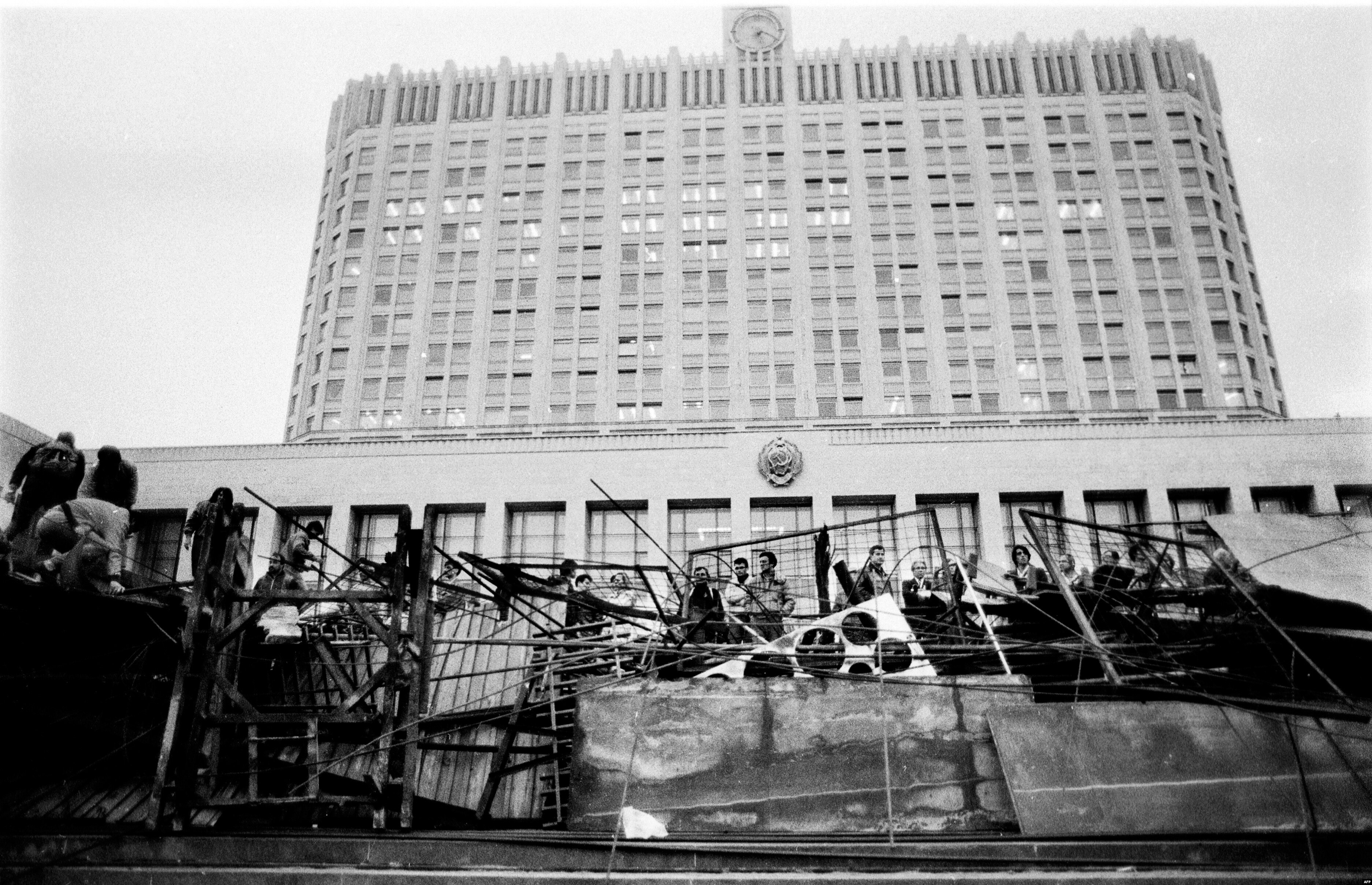
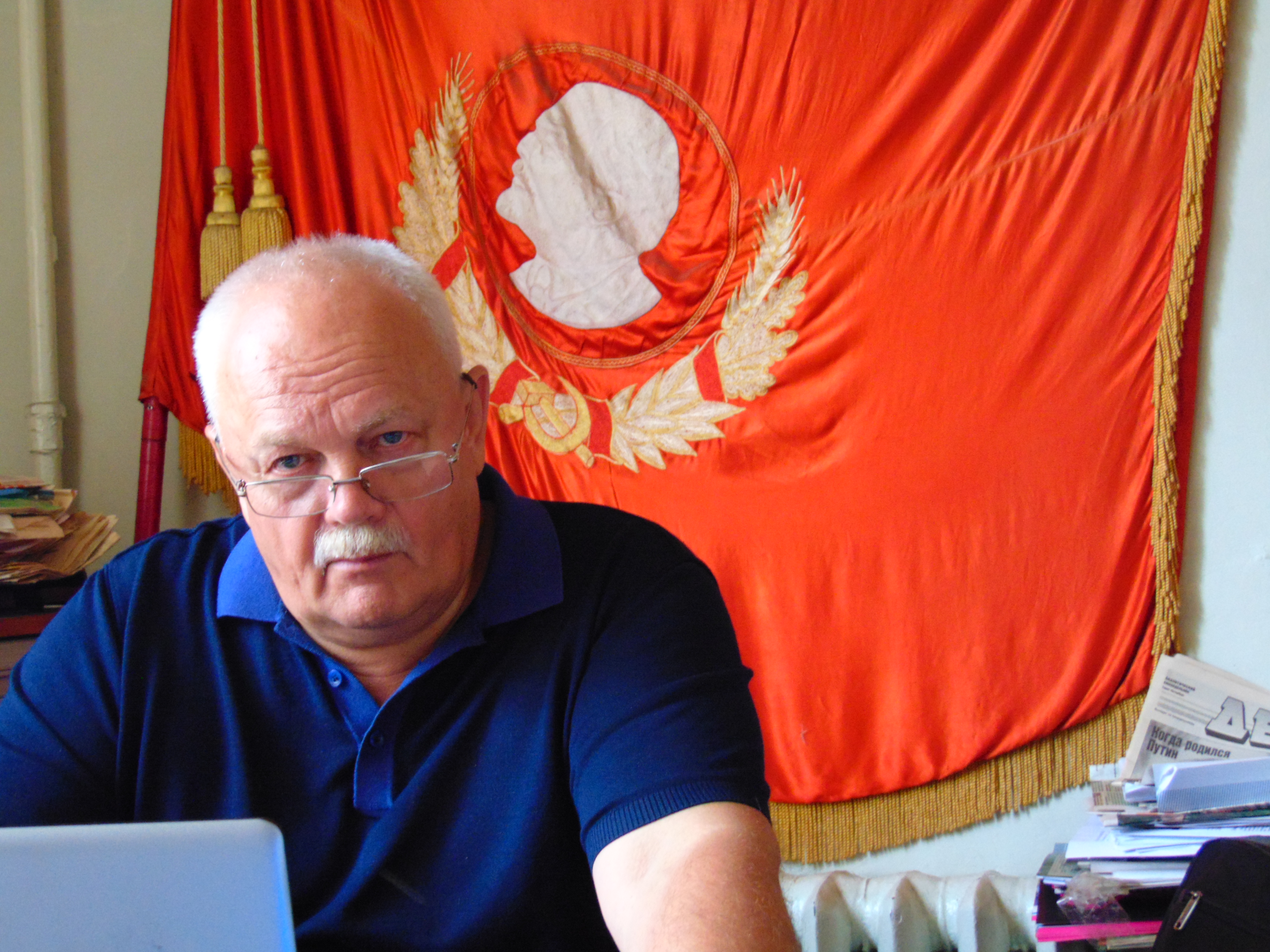
We continue a small cycle of memoirs of participants in the events of August 1991 in Leningrad. Today we are visiting a faithful communist, first secretary of the Central Committee of the Russian Communist Workers Party (RCRP) of Viktor Tulkin .
- Viktor Arkadievich, what posts did you occupy in August 1991, who were you?
-Firstly, a Soviet citizen. Secondly, I was the secretary of the party committee of the Avangard association; member of the Leningrad regional committee of the CPSU. He was also a member of the Central Committee of the newly formed KP RSFSR. By this year, I have already actively participated in politics.
- What is the political situation in Leningrad on the Left Front to the August coup?
- In Leningrad, there was a center of left resistance to Gorbachev and his policy within the CPSU. The so -called "initiative congresses of the Communists" began in our city in 1990 and took place regularly, including before the XXVIII Congress of the CPSU . At this congress, a certain battle was given, first of all, to the market rate. Then we, together with the Marxist Platform and with other left delegates, made a “minority statement”, in which we warned the party and the people that the “treatment” of socialism will not lead to an increase in the welfare of people, not to the heyday of the economy, but to severe disasters and all this will end with a collapse. We emphasized that the party cannot be called communist if it leads people to capitalism, so the CPSU itself will not withstand such a blow. Unfortunately, these forecasts have come true.
In Leningrad, there was a center of left resistance to Gorbachev and his policy within the CPSU
After all, the tension in general increased then. Something was in the air, something was supposed to happen, because in general, the socio-economic situation worsened, dissatisfaction with the course of the so-called "perestroika" in society grew, including dissatisfaction within the CPSU.
Gorbachev then issued the theses of the new program, which stated that we should head for another party, and in fact, and by name, frankly proclaimed a course on social democracy, the market. Inside the CPSU, a decision on privatization has already been made. Therefore, our resistance to Gorbachev’s line increased, an organizing committee was organized, headed by a member of the Central Committee, Professor Alexei Sergeyev, a participant in our movement, to create an organizing committee demanding the convocation of the Extraordinary Congress of the CPSU.
And in this situation on August 6, the Plenum of the Central Committee of the Communist Party of the RSFSR was held in Moscow. Then the tortured and stuck first secretary of the Central Committee of this party Ivan Polozkov resigned (he was a target for all democratic media). We supported the candidacy of Gennady Zyuganov. He then went to patriots. But Gennady Andreevich went to the stand and, shifting from foot to foot, sweating, like a big elephant, said that he had little experience, that he does not know industry well, has no practical experience in this area and therefore refuses Valentin Kuptsov.
Something was in the air, something was supposed to happen, because in general the socio-economic situation worsened
It was now Zyuganov that he was dealing with a “special folder”, studied the theory of controlled disasters ... And the whole thing was that Mikhail Gorbachev proposed to this post Valentin Kuptsov. And then, at this Plenum, we, a group of members of the Central Committee, expressed the opinion that we must rest, confront Gorbachev, maybe even go into the opposition and thereby save the honor of the Communists. But we did not succeed, there were not enough voices.
And Oleg Shenin , the secretary of the CPSU Central Committee, who was present at this plenum from the Great Central Committee, during the break, asked us to step aside to smoke and said: "Guys, you will not be offended, but now it is necessary. We cannot openly support your line here, but, believe me, certain events will occur in the near future." And now some time passed from August 6 to the 19th, and we heard about these "some events."
- Where did you hear about the coup?
- On the train. He returned from Ivanov, took his family from the holidays. He took his wife and children home, and he rushed to the factory. My driver ironized: "The guys say that it is necessary to quickly close the debt on partnerships!"
When I arrived at the Association, the general director was already in Smolny, where they assembled a party holder. At that time, he was already over. Having left this meeting, my director Vakhtang Pavlovich Koveshnikov, a very decent person, later-the president of the Union of Industrialists and Entrepreneurs of St. Petersburg, said to me: "You know, Victor, nor horseradish is not clear: who, why, let's divide, and I will go to the factory."
The next day, when even on television, the frivolity of the intentions of the GKChP became visible, it became clear that nothing useful from this event would come out
Since I was also a member of the regional committee and a member of the Central Committee, then we and Yuri Grigoryevich Terentyev, the secretary of the party committee of Arsenal, waited for the opportunity and went to the first secretary of the regional committee of Leningrad Boris Gidaspov. There was a calm conversation, during which he said that he also did not understand anything. "I would like to know where Gorbachev is now?" He said. We were surprised: after all, it was transmitted that he was in Foros. “I don’t know, I don’t know ... here. I give you an installation. I entered the local GKChP only as a member of the Defense Council, so I can’t take any actions without a team, to strengthen vigilance at the enterprises, to ensure the protection of objects, weapons and other things,” Boris Gidspov said. And the next day, when even on television, the frivolity of the intentions of the GKChP became visible, the mood was declining and it became clear that nothing useful would come out of this event.
- What did you do these days?
-Firstly, they analyzed the situation, tried to keep in touch, including with Moscow. Secondly, they studied those kutsy documents that were. The appeal of the GKChP ... I must say that it disappointed us on the move, because besides good words that the Soviet Union, which has external enemies, has to be preserved, there was, in general, the same Gorbachev course. The same market, the same “socialism with a human face”, the same democratization, the same reforms, that is, there was no main thing - the understanding that restructuring as a change of building is, from our point of view, an anti -people action, counter -revolution.
The main disaster of that time was an increase in the stratification of society
Our line, the line of the orthodox wing of the CPSU, that is, the communist that it was in it, is that it was necessary to correct the situation in the USSR, that the main disaster of that time was an increase in the stratification of society. Dislike for dislike, maybe even hatred of the "sniffing" party -names, which by that time had nothing to do with communism. First of all, it was necessary to establish the life of ordinary people, and not move on to the stratification of society under the guise of reforms. There was nothing of this in the GKChP statement. Therefore, our hopes that these are serious people and they are going to change the policy in the country in the right direction quickly melted on the second day.
And then we only monitored the development of events and, of course, prepared for the fact that we would have to continue our struggle in the worst conditions. Then, as you know, some prohibitions were adopted. Boris Yeltsin prohibited by formal signs the activity of the CPSU and KP RSFSR. We were ready for this better than others. We said: "We saw such prohibitions! And we were more abrupt!" On November 24, we had an initiative congress in Sverdlovsk. We gathered and proclaimed at this congress the creation of the Russian Communist Labor Party.
We said: "We saw such prohibitions! And we were more abrupt!"
By the way, at this congress, I personally called all the secretaries of the Central Committee of the RSFSR: Kuptsov, Ilyin, Zyuganov and others. I specifically traveled to Moscow: you are secretaries, secretaries pay money for mobilizing people, went to the congress! “No,” they said, “now we need to bend down, wait out ...” The so -called liquidation commission prepared cases for transferring the presidential affairs to the archives and was engaged in the employment of the apparatus.
And we collected the communist that was, and continued work. And we have been continuing for 25 years in the form of RKRP, the first registered party in the new democratic Russia. On November 25, there was a congress, and on January 9, 1992 we received a registration certificate.
- Viktor Arkadievich, have you witnessed how the deputies of the Leningrad City Council captured Smolny?
On November 25 there was a congress, and on January 9, 1992 we received a certificate of registration
- At that time, we occupied party premises in the house of political education opposite Smolny, on the Square of the Proletarian dictatorship. We had several rooms there. We established a duty there, established security. And when these figures came to us and demanded to leave the premises, we asked: "Who are you?" They replied that they were from the Leningrad City Council. We demanded that the paper indicate what their rights they have to evict us. They replied that there was no paper. Well, then come from here. They trampled and retreated. We did not rent these premises, saved them until 1995. In this indefinite position, they kept the moment when Putin saw the red flag above the house of political education and was forced to cut it off with the involvement of riot police and the Japanese crane.
The story of the red flag on the house of political education, which is located opposite Smolny, is very symbolic. Vladimir Putin, who was sitting in Smolny, in the committee on external relations, as, apparently, to his boss, Anatoly Sobchak, the red flag of the Communists opposite, especially after the coup, was like a red rag for a bull. Viktor Tulkin tells how Vladimir Putin tried to eliminate this flag:
- There was a World Congress of Geographs. Even then, the geographical society was held in high esteem. He was then headed by Sergey Lavrov, professor, communist, our good friend. We knew that this congress would be, and decided to please the people who come from all over the world. At the house of political education stood an iron mast fifteen meters high. We raised a red flag on this mast, which was taken from Smolny, beautiful, five meters by two and a half. But, seeing this, Sobchak gave a stick to anyone, so the next day the red flag was launched and a tricolor was raised. We decided to replace it. They, cunning guys, turned off the electric drive that lifts the cables. But the manual drive remained, so we found a ratchet, inserted the handle, turned the gear and replaced the flag.
The "Gold of the Party" worked not so much on movement as for certain guys who converted their nomenclature position in the success of a market economy
They sent the command from Smolny again, the red was lowered at night, raised a striped one, but they did a tricky thing: they cut the cables. What to do now, no one knew. The flag seemed to be impossible to change. But there was a craftsman named Slyusar, grandfather, captain of the Soviet Army in retired, and the adjuster from the Svetlana association. The difficulty was: the mast below was 500 millimeters in diameter, at a height of 5 meters it switched to a diameter of 300 millimeters, and then another step, that is, you can’t climb there on ordinary "cats". And Slyusar came up with special captures with a fist mechanism, which are adjustable in height.
The first to go upstairs Alexander Kazennov, in those days he was forty and small, he was a young professor. Until half the mast, and then he was forced to go down: his hands were trembling, his legs were tired. And this Slyusar (and he was seventy), so dry, with a mustache, decided to rise by himself. He went upstairs, attached a flag there, Kreiser: the Smolninsky light silk was already over, and this one was heavy, woolen, dark. He unfolded him there, and he began to flutter. And those who later came to remove him could not understand how to do it. And then the angry Vladimir Putin sent a bus with riot police at night, drove the Japanese crane and cut the mast. This was the case when we openly encountered Vladimir Vladimirovich on political grounds.
- At the same time, the friends of Vladimir Putin quickly began to privatize the Rossiya bank, which is located next to the house of political education. Already in the fall of 1991, not without the support of Smolny, the main shareholders of the bank were companies established by Vladimir Yakunin, Yuri Kovalchuk, Andrei Fursenko and his brother Sergey Fursenko. You, as a member of the regional committee, knew what kind of bank it was?
Why did the CPSU be defeated? Because by this time she was no longer communist
- If we take the official version, then it was organized as if with the participation of the regional committee - so that the "gold of the party" would work for the future movement. But, as expected, it worked not so much on movement as for certain guys who converted their nomenclature position into the success of a market economy. But some of them were poorly finished (I mean, for example, the same Dmitry Filippov ). The bank is still functioning. But our communist movement did not get anything from this, we did not receive any support.
- If we take a list of the most senior officials of Russia, it turns out that they all were in the CPSU, starting with Vladimir Putin and ending with Valentina Matvienko. It turns out that the party nomenclature took the same revenge, managed to create a new society and get everything that certain restrictions in the Soviet Union did not allow it?
- Why did the CPSU be defeated? Because by this time it was no longer communist. It was a control structure with formal signs of ideology, but it contained a variety of elements. Speaking at the XXVIII Congress of the CPSU, our representative Professor Sergeyev began his performance as follows: “Dear comrades Communists, legal Marxists, right-wing and left-wing social democrats and other members of our party! ..” Such appeal was met by applause.
There were different people in the party: from orthodox Marxists to frank anti -communists
Indeed, there were different people in the party: from orthodox Marxists to frank anti -communists. The common feature was that these were the most active, most advanced, educated elements who wanted to make a career, because the party was ruling. This explains the fact that the CPSU served as the basis for all other party formations, which then grew on this basis, and for all managerial personnel. Therefore, I say that Valentina Ivanovna Matvienko sent me the rails to the "bright tomorrow" on the Komsomol construction sites. Now she lays them in the other direction. And I still continue to fulfill the task of Komsomol member Vali ...
- There is an opinion that it was the coup that created the possibility for further strengthening in the power of a certain political group. By the way, the members of the State Emergency Committee themselves, speaking at one of the press conferences, said that it was Vladimir Putin who continues the case they had begun.
- Regardless of the feelings and intentions of these people, in fact, this was a kind of provocation, which allowed the counter -revolution to take a huge step forward: to ban the CPSU, change the flag of the state, openly declare capitalism and dissolve the alliance. Of course, despite the good intentions, without a compass, without a clear plan "what we want" to take on this business ... it was not necessary to do so. And if you do it, then it was necessary to do it decisively.
If you do, then it was necessary to do it decisively
Even if you consider it a coup, then coups are not done. "Fright" did not work out, but what they do in such cases, Yeltsin showed in 1993. Especially making heroes from these people is not worth it.
I personally respect Oleg Semenovich Shenin. This is the only secretary of the Central Committee of the CPSU, which remained in the communist movement, went through the prison and did not change his beliefs, although in theoretically we have a lot of discrepancies and disputes with him. I respect Valentina Ivanovich Varennikov , who was my personal friend. He acted honestly, steadily, the only one who abandoned the so -called "amnesty" and, by the way, was justified by the court. That's perhaps that’s all. To all the other guys, even though they wrote memoirs, I have no respect, because after that they lay down on the bottom, went to the hospital, the other-to business, the third-somewhere else ...
Perhaps in this GKChP there were also frank provocateurs who knew what was being done, where they were going ... But we can agree with Mikhail Sergeyevich Gorbachev, who stated that we would not recognize the whole truth about how it was, Viktor Tyulkin, the first secretary of the Central Committee of the RCRP.