
Translated material
Gene doping, keto-diet and healthy sleep
How will professional sport change in the near future?
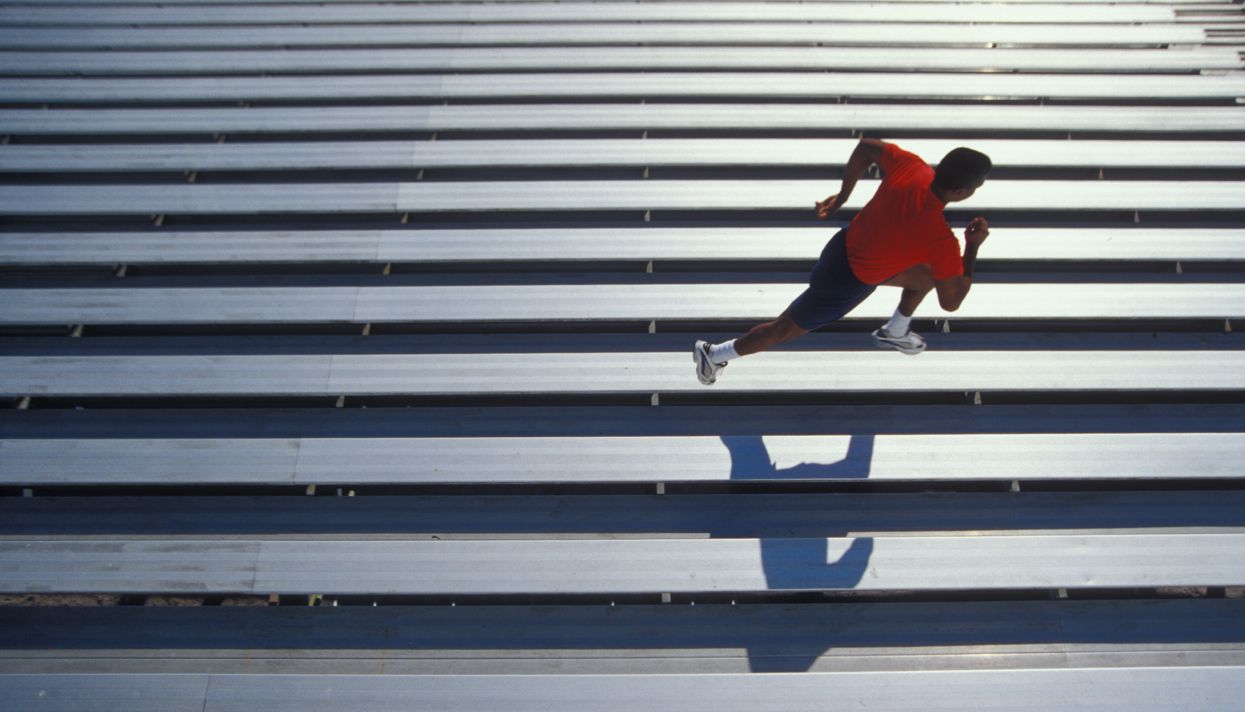
During the Olympics in Rio de Janeiro, a video was incredibly popular in social networks, which compares the performances of gymnasts at the games of 1960 and 2016. The difference in the complexity of the elements, speed and visual lightness of their performance turned out to be so huge that it is impossible to believe that this is the same sport. At the request of Medusa, sports journalist Vladislav Voronin sorted out how world sport had changed in recent years - and what would happen next to him.
Workout
The times when the loads were not dosed and all the athletes worked according to uniform standards have long gone. The development of science and technology has made many training on the verge of loss of consciousness meaningless - now the tasks are determined individually, each athlete is monitored using computers.
Even in a football team where more than 20 people train, doctors, physiotherapists and coaches can study in detail the work of each directly during the lesson: sensors fixed on the body of players, transmit detailed information about the pace of work and reaching the peak of the load, these figures can be compared in a matter of seconds with the results of past training. As a result, the risk of injuries is reduced and the condition of each athlete is extremely determined.
To calculate the training methodology, pay attention to every detail. For example, the Danish pusher of the nucleus of Joachim Olsen in 2003 was recommended to make a biopsy of muscle tissue: it turned out that he had much more fast muscle fibers than the athlete who claims to be an Olympic medal should be. With this knowledge, he rebuilt the training and refused constant strength training - instead, he worked with the maximum weights in short periods, and then paused.
To the 2004 Olympics, he approached the best form and won bronze, which after the disqualification of the Ukrainian Belonog turned into silver (Olsen himself later became a star in his homeland - he won the local version of “dancing with stars” and even chose to parliament). Without a biopsy and with constant power exercises (as it would happen several decades ago), the Danish could not perform at 2004 games at such a high level.
How will training in the future change?
The main phenomenon that should be paid to is the massive use of technologies associated with virtual reality. In American football, several teams are already using virtual reality points for tactical preparation for matches. In the future, the technology should also adapt to other sports so that athletes can tighten the equipment and work out tactical maneuvers without unnecessary physical exertion.
The second important component of training of the future is technologies that reflect the muscles in detail at a particular moment and prompting coaches when it is better to rest at the athletes to reduce the risk of injuries. The owner of one of the best NBA teams Golden STATE Joe Leukob invested in ATHOS, which is developing equipment that can shoot electromyography and electrocardiogram.
Dream
In modern sports, the quality of sleep is also taken into account - 30 years ago, even the Olympic champions did not have this. The Golden Medalist of the Games-1988 weightlifter Israel Arsamakov recalled : “I have a peak of performance in the afternoon, and in the morning I swing for a long time. But who was interested in such details in the national team? At 7:30 in the morning, the duty officer is how it bursts with a fist on the door - climb! I jump up as plague, and half -asleep I do charging with everyone. And then the same semi -toned wandering all day on a sports base. ”
For 25 years that have passed since then, the situation has changed noticeably. Say, basketball player Lebron James and tennis player Roger Federer sleep at least ten hours a day. Coaches in sleep are assigned to top athletes. The best of them is the British Nick Littleheles, who in 2013 began working with one of the strongest football clubs in the world - Madrid Real Madrid. He taught the players to evaluate the sleep environment: the temperature and quality of the air (ideal-16-18 degrees Celsius), lighting (if an important game is ahead, you need to turn off all the screens and even glue a red light bulb on the TV with a dense tape), the rigidity of mattresses and the density of blankets (it is better not thick and wool, but a light microfiber, since it is sensitive to temperature).
One of the best players in the world of Gareth Baile, coach Littlheles taught a special method: the dream must be measured in a half hour cycles. For one such cycle, the human body passes through various stages of sleep (in particular, deep and fast), which are necessary for relaxation and restoration. “It is important to set the time when you need to wake up, and constantly get up at this time. Then, taking into account the cycles, count the time when you need to go to bed. Seven and a half hours of sleep, that is, five cycles - this is optimal for an adult. If you need to get up at 6:30, it will be right to go to bed at 11 pm. If it is not possible to lie down at 11, it is best to wait for the start of the next cycle (half the first night). It is always better to wake up at the end of the cycle than in the middle, ” says Littlhales.
Food
Food, like training, ceases to be uniform for all members of the national teams. Plovchikha Julia Efimova, who won two silver medals at the Rio Olympics, after moving to the United States and starting work in the team of American David Salo completely rethought the power system. In this she was helped by the German physiologist and manual therapist Homayun Garav.
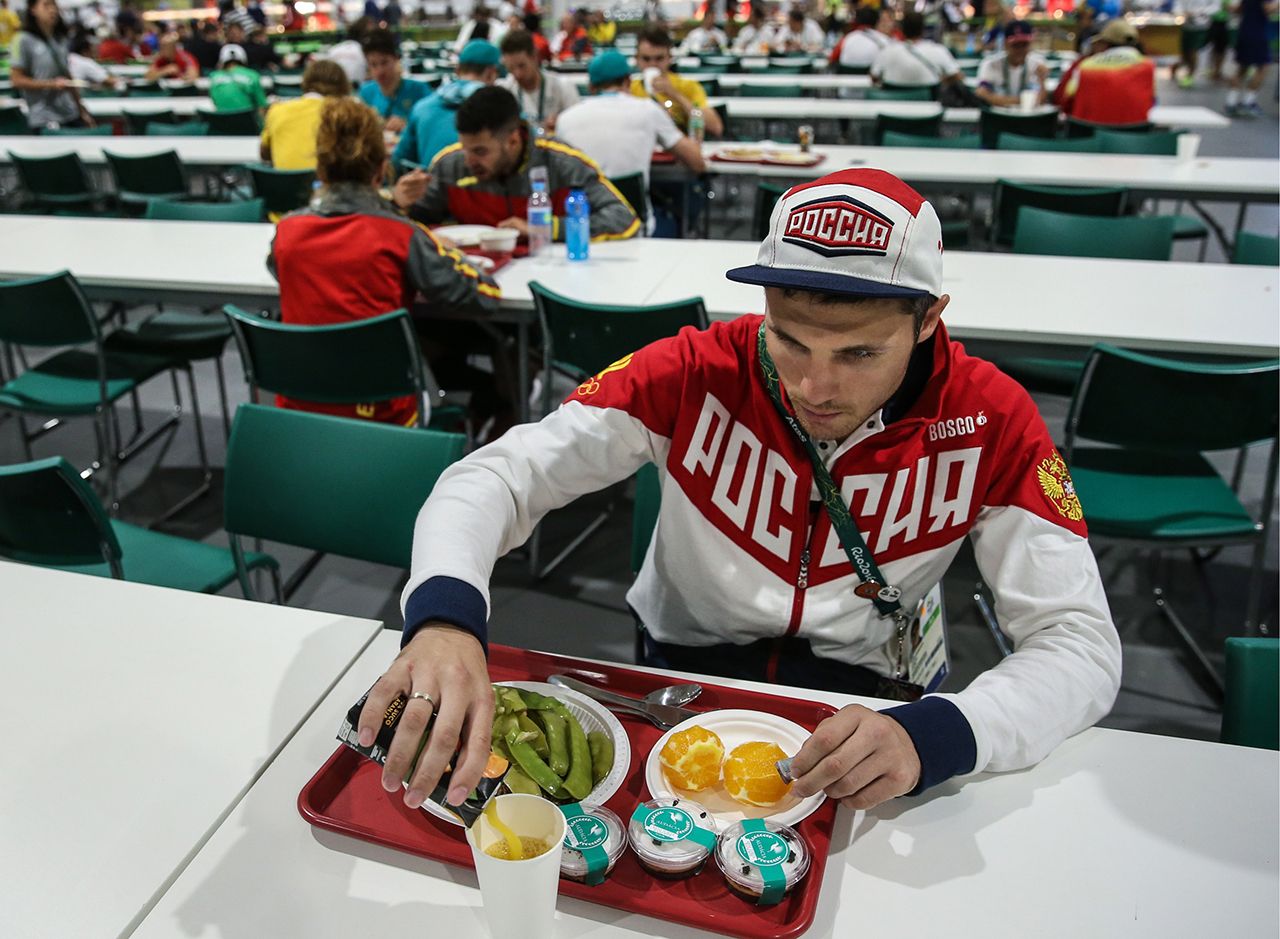
Based on the analyzes, it compiled an individual keto diet, which consists in the maximum decrease in carbohydrates and at the same time guarantees the athlete vigor (with a frequent change in time zones, she does not even have to take melatonin separately). “If you will stay on this diet for three to four weeks, then you can eat carbohydrates until two in the afternoon and sometimes until six in the evening. But no carbohydrates after this time - bread, rice, sugar. White rice is not very good, pasta, pizza is poison for our body, ”Garah explains .
Daria Klina, the only Russian athlete at the 2016 Games, also underwent a special examination in the States. As a result, it turned out that in her body, orange products are well absorbed - now she eats glazing and peaches for breakfast, and also drinks orange juice.
Equipment
The first tennis players played with wooden rackets, on which strings made of natural material - ketgut (are produced from the intestines of small cattle). Now the tennis market is conquering strings from synthetic materials, which every year withstand the blows, repuls the ball faster, give it the right rotation and increase the speed of impact. Even interweaving strings of different types are used - for example, polyester and Kevlar (the first accelerates the ball and enhances rotation, the second promotes the stiffness of the impact, control of the ball).
In connection with technical innovations, the game itself has changed: tennis players actively use the ball twisting during the draws - and thus knocking up rivals.
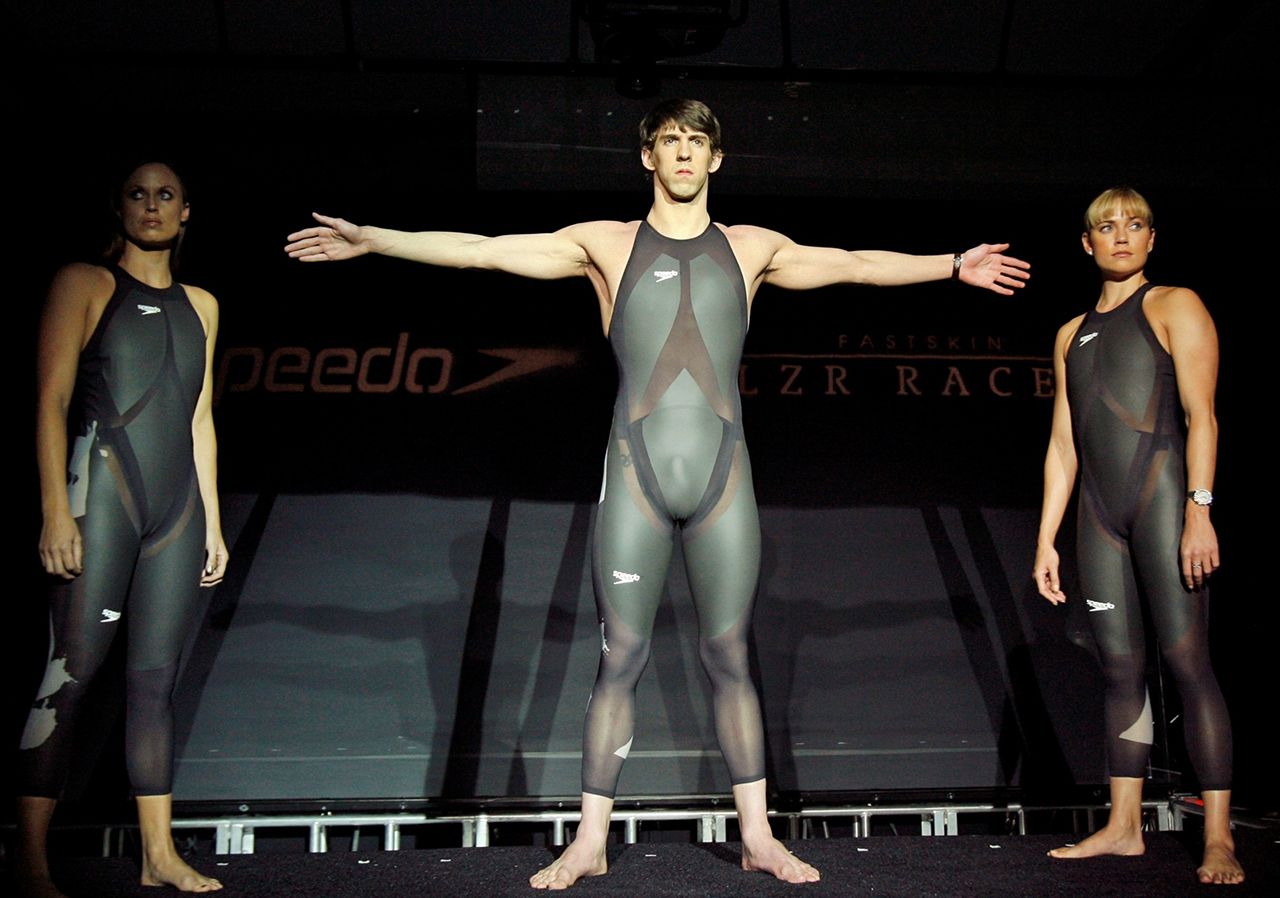
More distinctly, the influence of modern equipment on the results was manifested at the 2008 Olympics, during which the scandal flared up due to the Speedo LZR RACER suit. Throughout 2008, swimmers set more than a hundred world records (the average number of records for the Olympic season - 22), and at the Olympics athletes in LZR RACER costumes won 89% of medals. However, soon Speedo was recognized as a “technical doping”, and it has been prohibited: since 2009 it is forbidden to use costumes that cover the entire body and increase its hydrodynamic properties.
What else does sport expect in the near future?
Even the most convinced opponents of doping are sure that in a couple of decades, sport is waiting for a revolution due to genetic manipulations-against this background, all changes in nutrition and training are simply faded. According to the former president of the International Anti -Doping Agency (WADA) Dick Pound, genetic doping may be the end of the sport that we are used to. “The scandal with Ben Johnson, devoid of gold of the 1988 Olympics due to taking steroids, will look just an ancient rock painting compared to genetic engineering,” he said .
Scientists argue that with the help of gene manipulations, you can regulate energy metabolism, change the flow of blood to tissues, the pain threshold or even delay sexual development to extend the career of gymnasts and skaters, who often leave sports in 20-22. Moreover, tests on guinea pigs show that when exposed to certain genes, it is possible to accelerate the restoration of the body after fractures and muscle damage.
The case of the Russian skater Sergei Lisin, who was disqualified, is known when traces of the GW1516 substance were discovered in his sample. “GW1516 and Aicar are rebuilding the work of genes in the human body. Mice treated with these drugs run 60-70% longer and further than their usual brothers, ” said the expert on the fight against doping, professor Nikolai Durmanov.
Gene manipulations are much more powerful than existing types of doping, and most importantly, it is more difficult to detect them. If many modern drugs affecting endurance, speed, strength or concentration (there are doping for shooters who affects the heartbeat), leave traces in urine and blood, then genetic doping, as is supposed to be found only in individual muscle tissues in biopsy.
In September 2015, with the participation of the owner of the Boston hockey team, Jeremy Jacobs, a research report“Future of Sports” was released. It states that the athletes of the future, contrary to forecasts, will not compete with robots - they will simply be divided into two divisions. In the first - athletes who use legal doping and using genetic engineering, in the second - “clean” athletes. Periodically, general tournaments will be held between the leaders of both divisions.
According to the authors of the report, in the next 10-15 years, detected types of doping can be officially allowed that increase the physiological capabilities of the body-however, with agreed key indicators for each drug. Thus, the conditions will be equal, and success will depend primarily on the correct strategy. In addition, apparently, the following types of genetic doping are allowed: improving breathing and blood circulation; increasing endurance by no more than 60%; increasing muscle mass and blocking pain.
The authors of the report are sure that the most popular championships of the future are not ordinary national ones, like football in England or Spain, but international and transnational. It is possible that someday a competition will be organized between clubs from Europe and the United States, which will collect record television.
Vladislav Voronin
Moscow