
Translated material
I serve the Lesbian Union
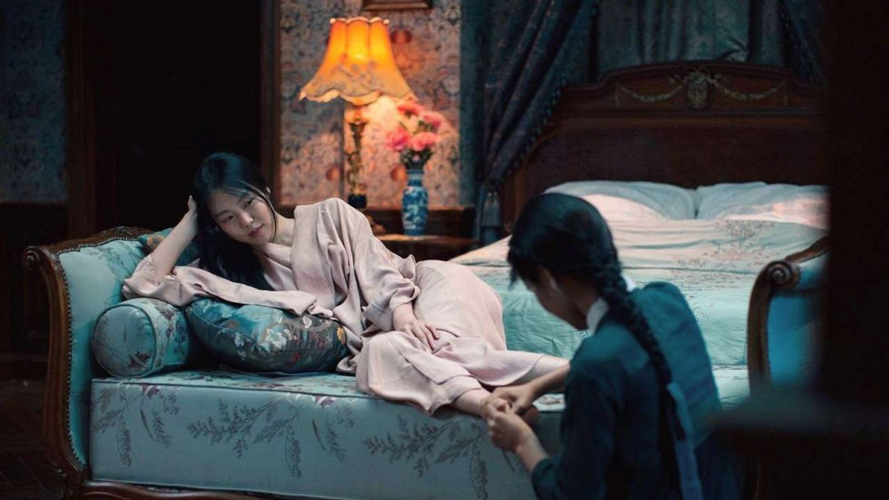
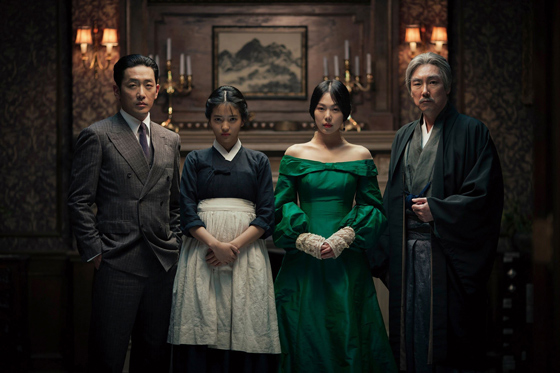
The young thief of the bitch, an orphan living in a completely dickensian brothel among fake scrolls and screaming babies (yes, the owners sell Korean children to Japanese parents, having previously sided with Malyutka Suj), receives the only chance in their lives. The elegant Count of Fujivar hires her in the maid to the beautiful heiress, Lady Hideko, who lives in a huge terrible estate somewhere in the depths of Korea occupied by the Japanese (it takes place in the conditional 1930s) with Uncle Kazuki, aesthet and collector of ancient manuscripts. There, washed and combed bitches should be lost in confidence in the lady and convince her to marry Fujivar. After, having received most of the inheritance (10 percent - the maid), he is going to send his wife in a madhouse. But everything will not go as planned. Start with the fact that the hostess and the maid will fall in love with each other. As the heroines will subside, the covers of secrets and lies from all the heroes of this extremely confusing story, in which everything is a lie, a mor and everyone is not what it seems to be.
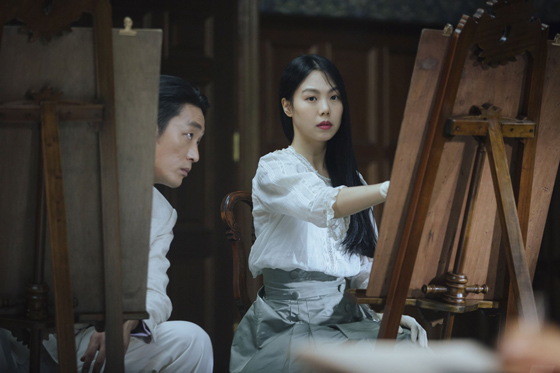
An elegant, like a bride kimono, gloomy, like a kunstkamera at night, perverted and at the same time naive, like an erotic romance in a soft cover, overloaded with interior details and zigzags of the plot, the maid carries all the signs of the directorial style of Park Chkhan, the author of the baroque and eclectic. This is majestic - even bulky - and at the same time funny cinema; Its reduced model may well serve as the main decoration of this whole story, the bastard residence of the fake aristocrat of Kazuki: the English estate built in the middle of the Korean forest, which seemed to have entered the traditional Japanese house (in the basement of this building, something terrible and obscene at the same time is hiding in the Hitchcock tradition at the same time). Courteous novels are read out loud here - and after that they are staged by their most wild episodes. There is not a single heterosexual scene - but sex and prelude to it are almost half the film. A demonstration of silk clothes and various kinds of antiques takes as much space here as a demonstration of partial objects. In short, there are so many things - strange, aesthetic, kitschy and witty that this is rather fatigue.
 © Moho Film
The creator of this whole fetish country of miracles is perhaps the most (if not the only) Korean director known to the Russian audience, and the roots of this fame (here we will close our eyes to the features of the rental policy of our distributors) - in its initial orientation to the international context. At the same time, the pack cannot be called cosmopolitan-rather, his cinema reflects the syncretic, hybrid line of the Korean culture itself, which was constantly under the influence of the neighbors (China, Japan and even-through Catholicism-Europe, the director himself barely escaped the spiritual career, but still graduated from the Catholic University). The most famous films Park Chkhan are the “Trilogy about revenge”, which includes the international hit “Oldbo”: this is a film adaptation of the Japanese manga. The next popular and abroad of Korea Pak’s film, “Thirst,” was the wildest Masop of Vampire Gothic and Teresa Raken. And not a very intelligible Hollywood debut of the director, “vicious games”, by a decorative remake of the “shadows of doubt” by Hitchcock (it is worth saying that it was the viewing of the Hitchcock's “dizziness” and pushed the philosopher’s student towards filmmakers).
The “maid” is also a pilimsest, and a parody is written on top of another parody (or stylization)-the source of the plot for the script was a neo-Gothic bestseller “velvet fingers”, written in 2002, but carrying the reader to Victorian England. This principle - imitation of imitation with the complete loss of the original and a sense of reality - forms the entire structure of the "maid", in which the conflict of false identity and its consequences is infinitely recurrently multiplying. All the characters here are impostors and pretending, and even antique artifacts placed in the background turn out to be fakes. Strawberry sunsets and walnut arches of the Kazuki castle with all the achievements of modern CGI do not look in kind, but carefully drawn back. This obstructing effect continues equally in dramaturgy itself: all the heroes here from the very beginning exist as if in a literary translation (including for the Korean audience - half of the dialogues here are conducted in Japanese); That rare case when even forever dumbfounding Russian dubbing cannot damage the film - but, on the contrary, only strengthens the author’s intention.
 © Moho Film
And it is literature with its limitations in the representation of reality, with its support on metaphors and foggy euphemisms that is a source of vice, a tool for corruption of a worse than hidden in the basement of a lustful octopus. The seduction of the mistress of the maid begins with the fact that one teaches another letter. The sexualization of Lady Hideko - with a thorough articulation of aloud the obscenities recorded in ancient books. It is logical that the film that employees of a clear cause of visuality eventually decisively cracking down on the tradition of a floodplain-matting word-making. In the novel of the 19th century, to which the "maid" indirectly appeals, the tension of the love triangle, as a rule, was allowed by the death of one of the three protagonists. On the screen, a courteous literature itself, which gave rise to this cunning plot and three -story dialogs, is already sacrificed. However, the final reprisal of mistresses with the library of the hated uncle is more like the burners of textbooks after a successfully passed exam: the happy escape of lovers to the ends of the earth, to Vladivostok (!), It ends with a staging of an erotic scene, subtracted in one of the pornomanuscrips.