
Translated material
Alexey Levinson: The origin of optimism
Alexey Levinson  Pixabay 's Harmony Game
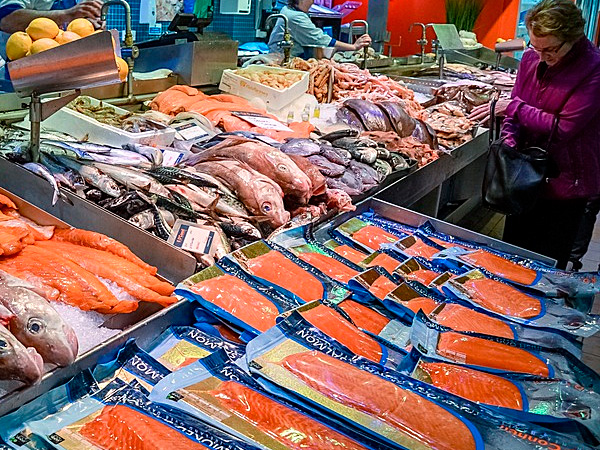 Fish counter in the store / pixabay.com
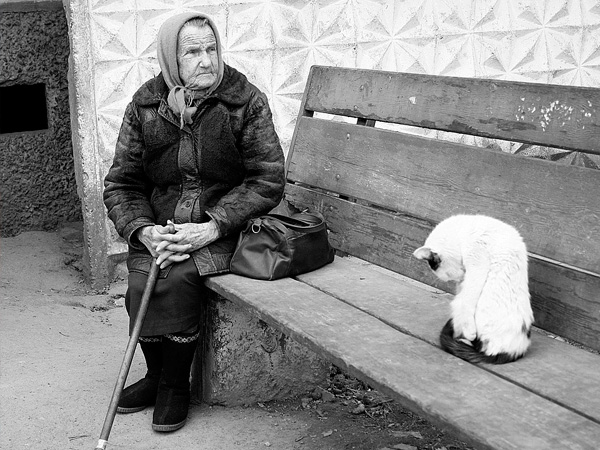 Grandmother and cat at the entrance /pixabay.com
 Pixabay 's Harmony Game
Despite the ongoing economic crisis, the Russians as a whole retain a rather positive attitude, and many evaluate even the country's economic situation as good.
Moreover, according to the Public Opinion, which conducted a survey among three thousand respondents in 73 constituent entities of the Russian Federation on August 20-21, in August the Russians even more positively evaluate the economic situation: if in July only 45%called it, then in August-49%.
At the same time, according to the results of the survey, the share of respondents who consider this situation bad decreased from 45% in July to 40% in August. At the same time, the share of Russians who consider the situation good has not changed: in July and in August, it was 6%.
33% of the respondents decided that the situation in the economy does not change, 17% - what improves, 41% saw signs of its deterioration. According to the Ministry of Economic Development, it really worsens a bit: in the first seven months of 2016, GDP has decreased by 0.9 percent compared to the corresponding period of 2015.
Real wages for the same period remained at the level of 2015. Inflation in July amounted to 0.5 percent, from the beginning of the year - 3.9 percent. However, sociologists note that not only economic indicators, and not even them mainly determine the mood of citizens.
Fish counter in the store / pixabay.comThis was stated by sociologist Alexei Levinson, head of the department of socio-cultural research in the analytical center of Yuri Levada (Levada Center).
“This phenomenon as a whole stand out three components. The first one, whose action is gradually reduced, is the enthusiasm caused by the annexation of Crimea. Not even this action itself, but by the fact that this action, according to the overwhelming number of Russians, showed that Russia returned to the position of a great power.
This is very significant for mass consciousness, for national identity. Soon after the accession of Crimea, we recorded a sharp improvement in assessments of what is happening "on all fronts", that is, not only related to the events of Ukraine or with foreign policy, but literally everywhere there was an rise in optimism. And in relation to the economic situation, then the mood of mood was also observed: they say, everything is not so bad, the difficulties are not so great, and so on.
The action of this factor is reduced, but it still has not come to zero.
The second component is an adaptation, more precisely, a phenomenon for which the Levada Center proposed its term "reducing adaptation". The point is that a certain reconciliation with the existing gradually occurs, a decrease in requirements for living conditions, to the level of consumption. And in this way it turns out that neither frustration, nor aggression, nor any other negative reactions arise, since the level of the request itself is reduced.
This mechanism does not work far for the first time - it is known as "the Great Longerness of the Russian People." And, in general, for society, which lives not only the conditions of risky agriculture, but also a risky social situation that can easily turn an unfavorable way for a person, it is a form of protection.
Grandmother and cat at the entrance /pixabay.comAnd the third component is also a kind of adaptation, or the sum of the first two components. This is an adaptation to a new situation in which Russia and Russians find itself - a situation of isolation, a situation of confrontation with most former partners. And this adaptation looks like a rejection of the previous picture of the world, the one that has existed since 1991, where Russia was supposed to go into the family of European peoples, was supposed to become a democratic country.
It was with this that hopes were once connected, including to improve welfare. But now these political aspirations have disappeared, and, accordingly, the hopes that were discussed have also disappeared. Well, since there are no hopes - there is no disappointment, ”Levinson said.
Recall that information about the growth of optimistic moods among Russians already appeared in the media in October and early November. As Alexei Levinson explained then, people “share feelings about life in the country and the attitude to the crisis”, although they clearly understand that the crisis is evident.
“The political and social component, the solidarity of people and their feeling that“ we are all together ”, firstly, and“ we are a great power ”, secondly, is still experienced as a more significant thing than crisis phenomena. It turns out that there is a picture of a crisis, but not a crisis attitude among the Russians, ”he explained.
See also: Expert Grigory Golosov: In Sympathy for Putin, one can expect negative dynamics polls showed a decrease in the level of sympathy for Putin Polit.ru explained the strengthening of positive moods among Russians