
Translated material
Memory update
In Lithuanian Moletai, a large -scale action of the memory of the victims of the Holocaust was held. Report "Medusa"
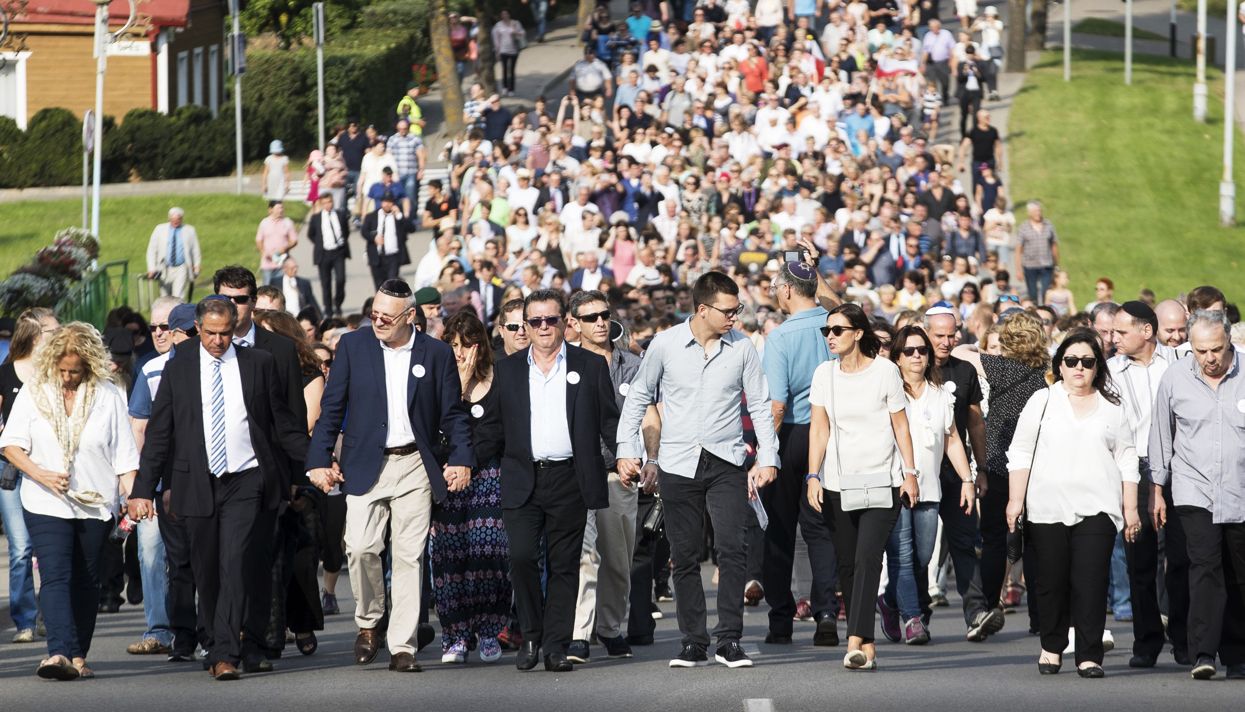
On August 29, thousands of people gathered in the Lithuanian town of Moleti to honor the memory of local Jews killed during the Holocaust - exactly 75 years ago the whole community was exterminated here, about two thousand adults and children. There are a lot of such places in Lithuania, but, apparently, it is the Swede that will become a symbol of the new attitude of the Lithuanian society to the experience of the Holocaust. Medusa journalist Alexander Borzenko visited the march of memory and talked with its participants - including those who saw the prayer Jews led to execution.
The march of the victims of the Holocaust is probably the largest event that a prayer service has seen, a town with a population of 6 thousand people, over the past few decades. By three o’clock in the afternoon on August 29, several buses from Vilnius and dozens of cars from all over Lithuania arrived here. Opposite the square in the city center, a small scene was installed, the space in front of it was quickly filled with people. The march of memory was organized with the help of the local authorities and the Jewish community of Lithuania, the Malat Memory Foundation Foundation, founded by the relatives of Jews who died in Molekleti. After the speeches of officials - the mayor of the city, representatives of the fund, the ambassador of Israel to Lithuania and others - the participants went to the place of execution of the same road, which 75 years ago led local Jews. A new monument was opened there - in return a small plate that was installed in Soviet times.
Witnesses
Before the rally, a elderly woman in an elegant black jacket with a white pattern sits not far from the scene on the bench in the square. Veronica is 88 years old. “Mom was [in the city] that day and saw how the Jews were led [to execution]. She was 13 years old, ”says her daughter Laima, who is sitting nearby.
The Germans entered the prayer service on June 26, 1941. According to the historical certificate on the website of the Malat Memory Foundation, shortly before that, Lithuanian nationalists seized power in the city - they arrested supporters of the Soviet regime and especially hunted Jews.
Veronika is at first silent, but after the leading questions of his daughter (“Mom, remember, did you tell?”) He begins to remember. She speaks short phrases, describes small separate scenes, hardly choosing Russian words. “Damed. With machine guns. Young people walked. And the children were carried in their arms. Old people. We didn't look for a long time. Father said: “Hurry, let's go from here.”
Veronica is silent again for a long time. “It's hard to tell,” she admits. Then he begins to recall the acquaintances of the Sulpen Jews. The old woman, who before she took her, told Veronica’s father to take their things for herself if they did not return. Dr. Bergutz, who treated her for meningitis. “He saved my life. After the puncture, I woke up, and he stands - tall, beautiful, with dark hair - and asks how I feel. "
The elderly Old Believer Efrosinya shows a number of small shops and a cafe made of red bricks, which must have never accepted so many visitors in one day: “There was a very good [Jewish] store, they sold everything - meat, bread.” Then she turns in the other direction and waves her hand somewhere behind the stage: "And here there were Jewish houses everywhere."
Both Efrosinya and Veronika recall the family of local Lithuanians, who through generations pursue the misfortunes and condemnation of the neighbors. They told about their grandfather: after the Jews were shot, he walked and folded their bodies in even rows, so that it was more convenient to bury. And he took a lot of Jewish gold. “The Germans did not shoot, only the Lithuanians shot. And this is the worst thing, ”says Veronica and falls silent for a long time.
Keepers of memory
After the mayor’s performances, the prayer and the ambassador of Israel to Lithuania, a man rises to the stage, who is met by long applause. This is Zvi Criter, an Israeli football agent. All his relatives from prayer. Thirty of his relatives died here. Starting from the 60s on the last Sunday of the summer, he traveled from Vilnius with his relatives on a small bus to the place of execution. A year and a half ago, Criter decided to make a documentary about Jews prayer. He arrived at the scene of the execution and found that it was desolate (march participants say that “companies with alcohol” were usually gathered there). Soon even a small memorial plaque, standing from the Soviet era.
Criter undertook to restore the monument. Later he had an idea to conduct a procession - to collect relatives of local Jews from different countries and go together to the place of execution. From the stage, he said that he did not expect that as a result, so many people of different nationalities would join this procession.
When Critzer took up the organization of the procession, he ran into the Lithuanian bureaucracy and called one of the most famous immigrants from prayer - the playwright Marus Ivashkeavicius.
Ivashkevichyu is 43 years old, he is one of the most famous writers in the country. Three years ago, he knew almost nothing about what happened on August 29, 1941. I heard that some Jews were killed, but I did not know about the scale and did not think about it. Now he says that this is the common trouble of Lithuanians - they know about the Holocaust, but do not want to fully realize what happened. Before the procession, he published an article in which he called to join the march of memory of the Lithuanians - and stop treating the Holocaust as if it were only a Jewish tragedy. “There is only one question,” wrote Ivashkevichyus. “Our Jews will go again alone - or this time we will be with them.”
This year, the theme of the Holocaust in Lithuania is generally discussed more actively than before. Discussions were also facilitated by the book of Ruta Vanagaita in January, describing the role of Lithuanians of the murder of Jews - many were indignant that they were trying to accuse them of crimes committed by previous generations.
The road to the wasteland
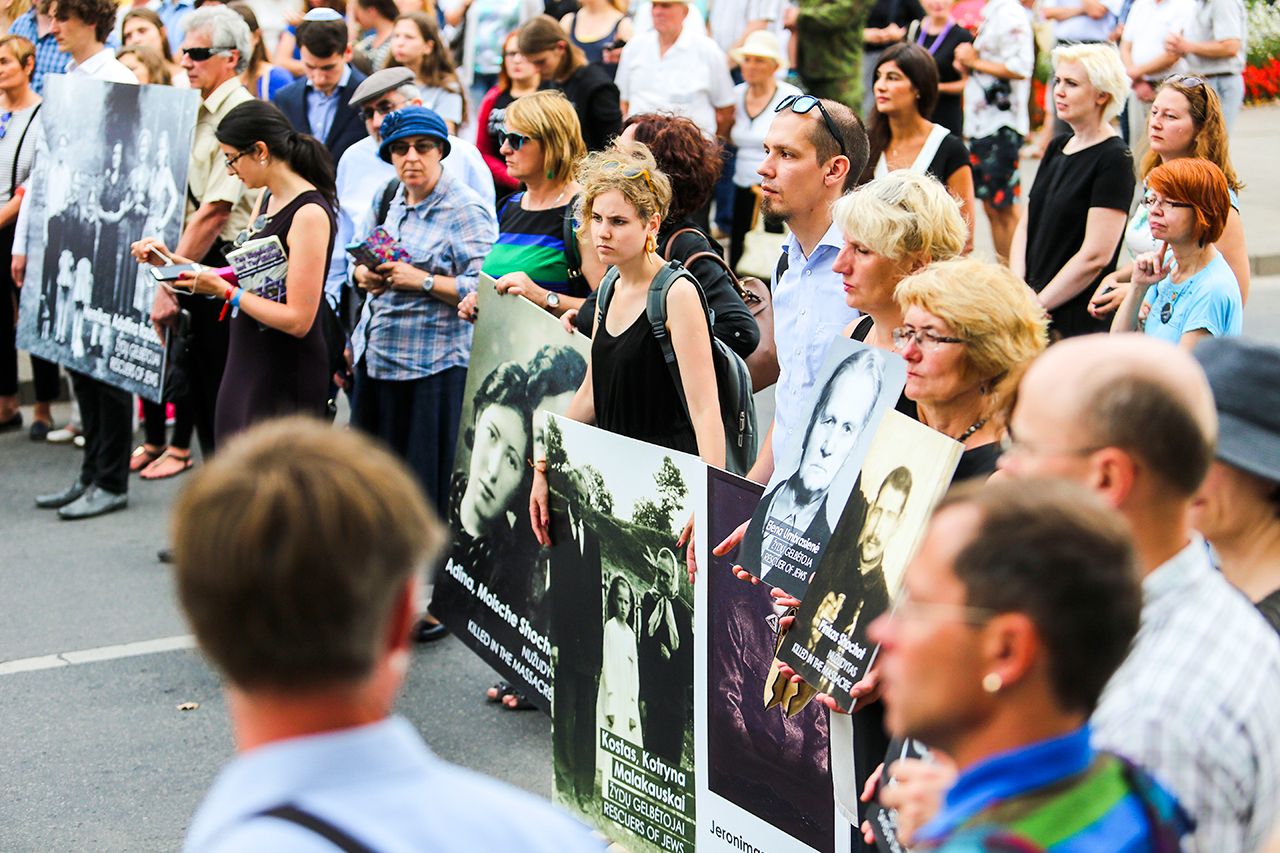
The procession set off at four in the afternoon. Ahead were relatives of those who died in Moletai; Some put on the badges with the inscription "I am a Moletian." There were people with large portraits - the Lithuanians who saved the Jews, and the Jews, who were saved by the Lithuanians. There were those who came to Lithuania from South Africa, America, Israel - those whose ancestors managed to emigrate from the city before the Germans entered there. There were local residents, many of whom, judging by the scraps of conversations, did not know at all that Jews once lived in the city. Quadrocopter flew over the procession - it was broadcast on Lithuanian television live. It was difficult to assess the number of people, as always on mass shares. After the procession, one of the participants said that the main thing is that there were more than two thousand people on the march: more than those who went here to death 75 years ago.
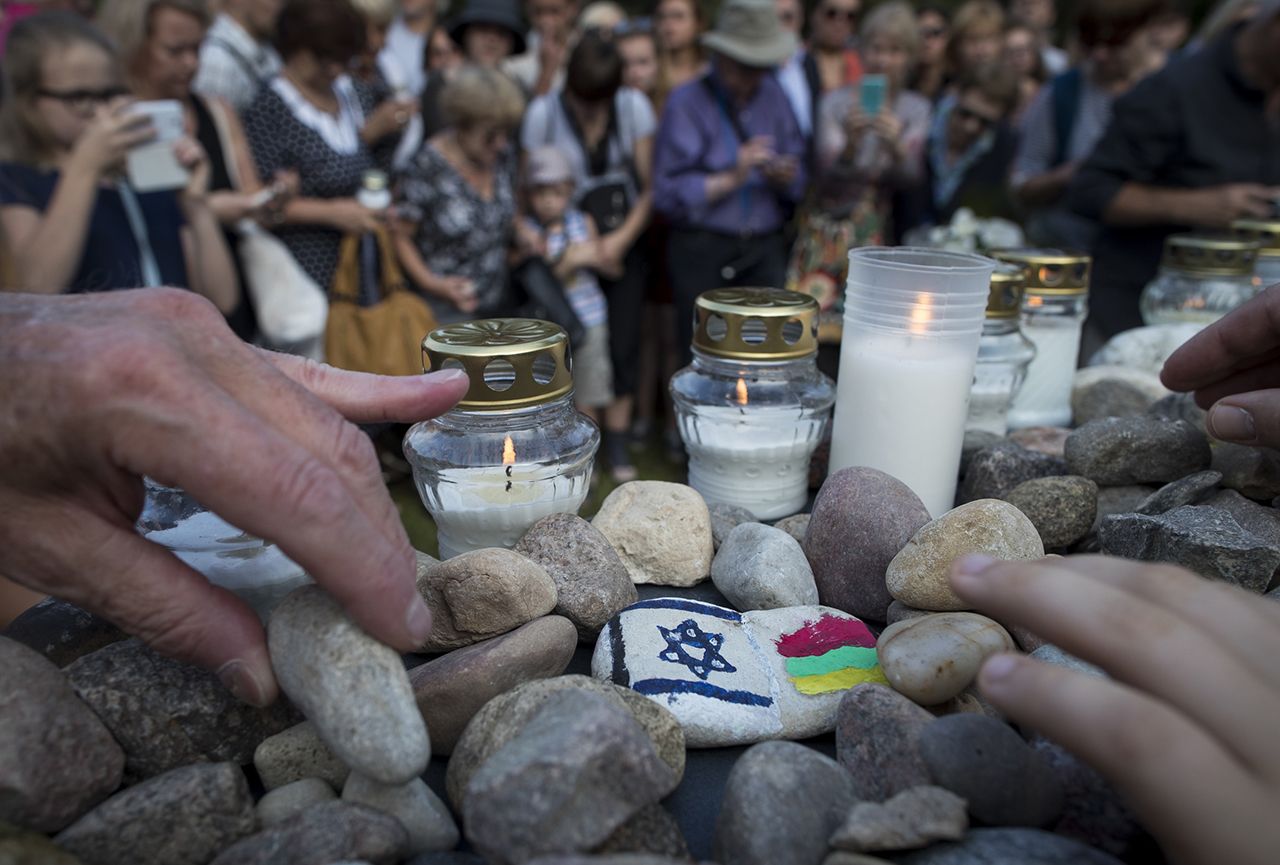
About 200 thousand people were killed in Lithuania during the Holocaust - that is, approximately 90–95% of the total Jewish population of the country. There are a lot of such places as prayer, where in one day they killed the whole community. There are several towns where it happened exactly on the same day - August 29. Zvi Critzer is sure that such shares will certainly continue there: “Blood is the same everywhere. This is the tragedy of the Lithuanian people, this is the tragedy of the Jewish people, this is the tragedy of all of us. ”
Alexander Borzenko
Vilnius-Children