
Translated material
From a clean sheet
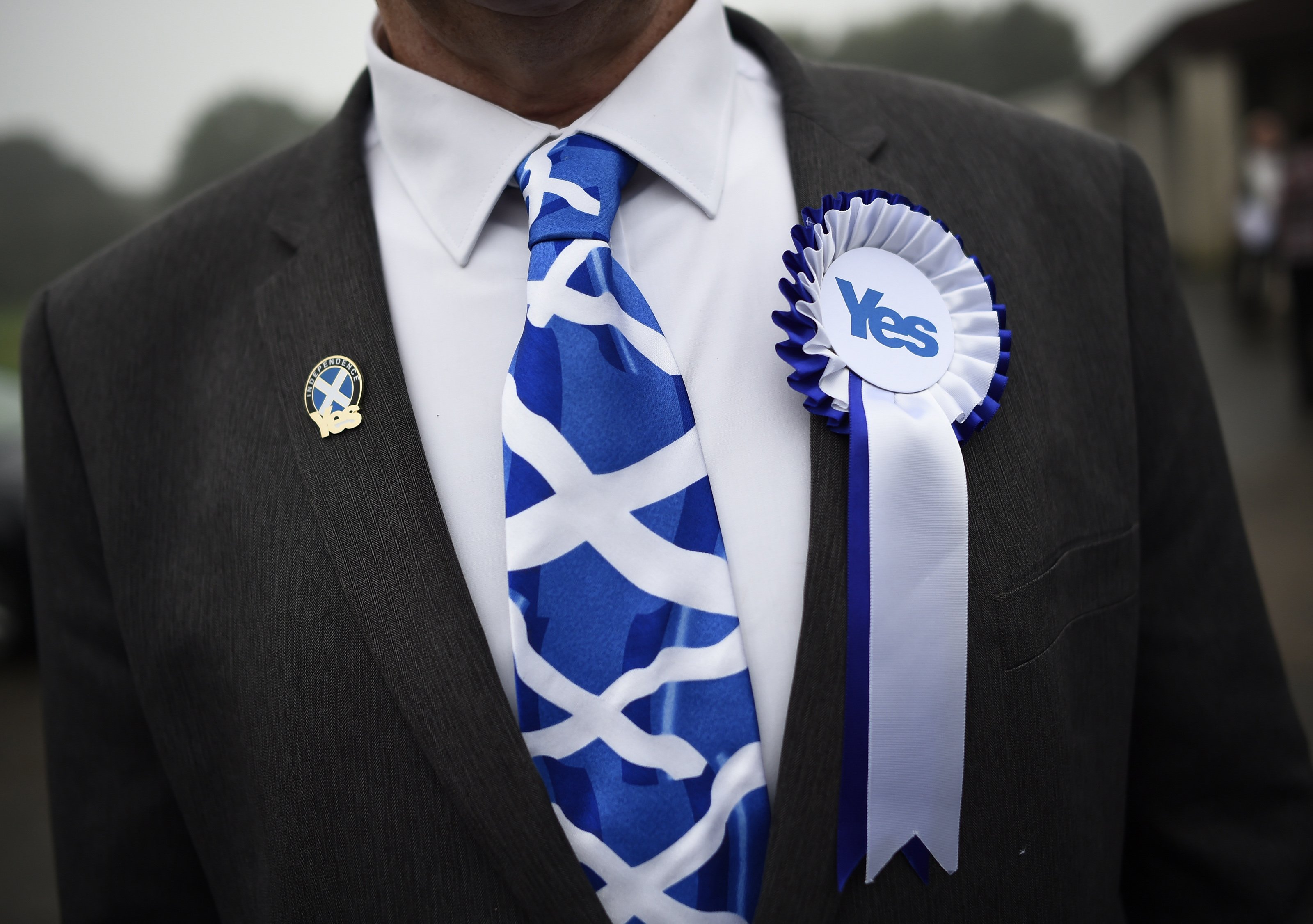
Will the decay of Britain look like the collapse of the USSR? Comparison by the eyes of the Scotsman who knows Russia
"Problems in the relations of [Russia and Ukraine] can be traced, moving into the past-by the time Russia became the successor of the USSR . Having taken control of all Soviet foreign assets and bases in 1992, it also acquired the entire baggage of Soviet foreign policy, history, geopolitical strategy. Although our relations with England are unlikely to deteriorate the current Russian-Ukrainian, potential for mutual claims. And there is a lot of anger. "
The Scot Kenneth Makinnes observed the collapse of the USSR with his own eyes, living in Russia in the early 90s. He decided to compare the events of 25 years ago and what could happen on the British Islands if Scotland acquires independence-and that this will happen sooner or later, Makinnes has no doubt. His recent article “How the collapse of the USSR can indicate the path of independent Scotland” in the Scottish publication The National has made a lot of noise. After the majority of the British (but not the Scots!) At the referendum in June spoke out for leaving the European Union, the debate of Scottish independence is again on the agenda, and relations between Edinburgh and London are becoming more and more tense.
The first Minister of Scotland, the leader of the nationalists, Nikola Nerdzhen, still claims that her country should remain in the EU contrary to the desires of London. The exit from the United Kingdom of Scotland is able to transfer almost painlessly, Ruden believes. Its opponents indicate that the revenues from the sale of oil that are counted in Edinburgh so significantly decreased due to the fall of world prices for this raw materials, the budget deficit is growing and is now approaching 15 billion pounds, and the problems associated with the possible separation from the rest of Britain will shake the Scottish economy to the base. In a word, the unity of opinions on this issue in Scotland is far away, but polls show that after Brexit the number of supporters of independence began to grow again .
Kenneth Makinnes , a translator, art critic and publicist, has long been engaged in Russia: he lived in St. Petersburg for many years, worked in the Russian Museum, and after returning to Scotland, he started his Internet project- a large English-language site dedicated to Russia and its culture. In an interview with Radio, Freedom Ken recalls the youth held in Russia and compares the situation on the eve of the collapse of the Soviet Union with what is happening today in the United Kingdom.
It was the most wonderful time, it was the most unfortunate time
-Let's start with the impressions of your early youth, from the time when you lived as a student in Russia-just during the dramatic changes in 1991-92. Where did you live then?
-In St. Petersburg. At first I studied the Russian language at a school in Scotland, then at the university. Then, under the terms of the curriculum, it was necessary to spend one academic year in Russia, and I chose Petersburg. I studied there in the 1991-92 academic year.
- How did you perceive everything that is happening? After all, I, too, was a young man, a student and I remember very well that life, to put it mildly, was not the easiest, although funny. Are you as a foreigner who came to Russia, how did you look at it?
- In this regard, I recall the words of Charles Dickens at the beginning of his "Tale of two cities" : "It was the most beautiful time, it was the most unfortunate time." On the one hand, Russia was the subject of my scientific interests, so I was afraid to be there, especially in such a curious time. Two years before, there was the experience of Eastern Europe, where revolutions also occurred, communist regimes were overthrown . I got to Russia when there was the same process. But on the other hand, in domestic plan it was very difficult. 1991-the year of the end of the USSR. Huge problems, completely empty shelves, there was no bread, it was impossible to conduct a normal international telephone conversation, it was necessary to order in two days. And then 1992, the origin, the formation of a new Russian Federation, and also problems, hyperinflation. In general, I would describe the situation as anarchy. On the one hand, it was interesting to live in a country that is in such an unusual state, but, of course, in general it is difficult.
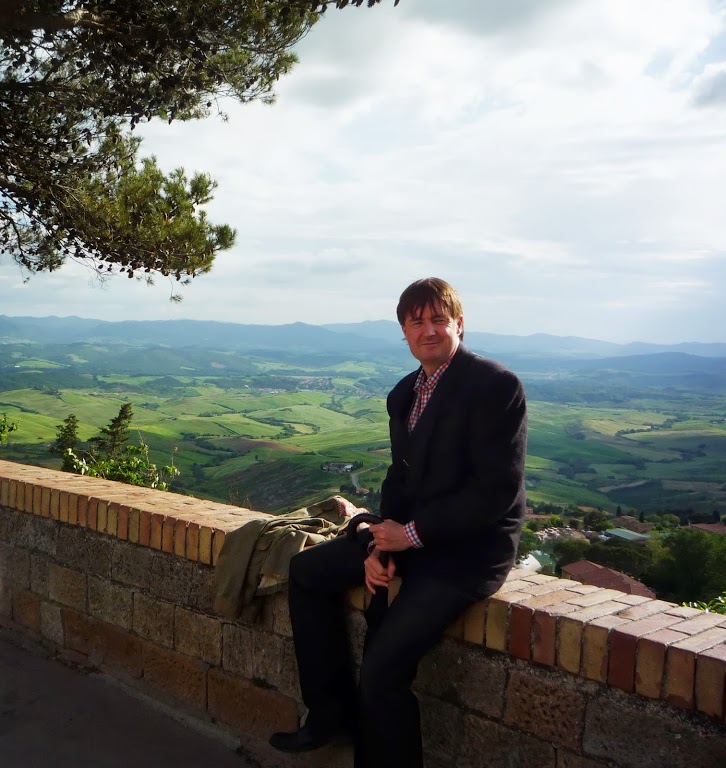
- Was you sometimes scared?
- I personally was not scared, but many Russians, I think yes. Suppose a former Soviet "middle class", my teachers. I remember one literature teacher went to live in Korea. Many of the middle class then left, who had the opportunity. Many were in despair - I remember, one neighbor who lived in a neighboring house hanged himself. I myself was not afraid, but local residents in conditions of hyperinflation, when your savings disappear in the blink of an eye, of course, had hard.
- How do you remember then moods, which prevailed among the people with whom you talked - hope, fear, despair?
- In general, hope, because after the coup, when the activities of the CPSU was prohibited, a real feeling appeared that Russia will now become a European country. When a child is born, it is not clear what kind of life is waiting for him ahead, but still his parents rejoice, they meet him with hope. I tried to communicate with different people then, it was very interesting for me to hear various opinions. Those who participated in political processes who personally fought for democracy against the Soviet regime, of course, were glad about what was happening. Others were somehow indifferent or even skeptical. I remember when they met a new year, 1992, I was surprised when one woman opened, as usual, the windows and said: this is so that all the bad would leave, the old year was bad. For those who were interested in politics, it was a time with a plus sign, but those who tried to just live, go to work, receive a salary - they, of course, had grounds for anxiety and despondency. Nevertheless, basically I remember those years as a time of hopes.
- In your opinion, what was the main reason, why did these hopes not come true?
Russian democrats, having come to power, behaved unworthy of themselves, and the international community also
- In many ways, the Russian democrats themselves are to blame. There was an unfair privatization program, conflicting reforms. Okay, you needed shock therapy, but what is it? Shock therapy is also a type of treatment, it should not kill the patient. The goal of any reform is to make a normal person to live with dignity. I remember how disappointment intensified every year then. 1993 - the shelling of the Russian parliament , 1994 - this is already the heyday of wild capitalism . In 1996-falsification of the presidential election . Further and further. I think that Russian democrats, having come to power, behaved unworthy of themselves, and the international community too.
-What is the fault of the international community, in your opinion?
- They gave all these eternal tranches of loans, which were quickly plundered in Russia. If we help, it should be helped by the Soviet Union in the last years of Gorbachev’s reign, when there was a huge need, but in reality they helped already in the 90s-and so that it looked worse than just throwing money into the wind: they were actually given to the thieves. If your neighbor lives poorly and you want to help his family, his children, you will not just give him money, knowing that he will immediately go to the bar and drink everything. We need certain guarantees, conditions, control. Another serious mistake, as I think, is that Russia, like most other republics of the former USSR, was not invited to join NATO. I do not know whether it was done consciously or not. It is beneficial for politicians to have an external enemy in order to scare voters in the elections in order to support the military-industrial complex. But I do not know if Western politicians deliberately acted in this case. Be that as it may, it turned out that Russia was not invited, there were many misunderstandings and conflicts, and we now have to some extent the continuation of the situation that existed during the Cold War. Then - with the Soviet Union, now with Russia.
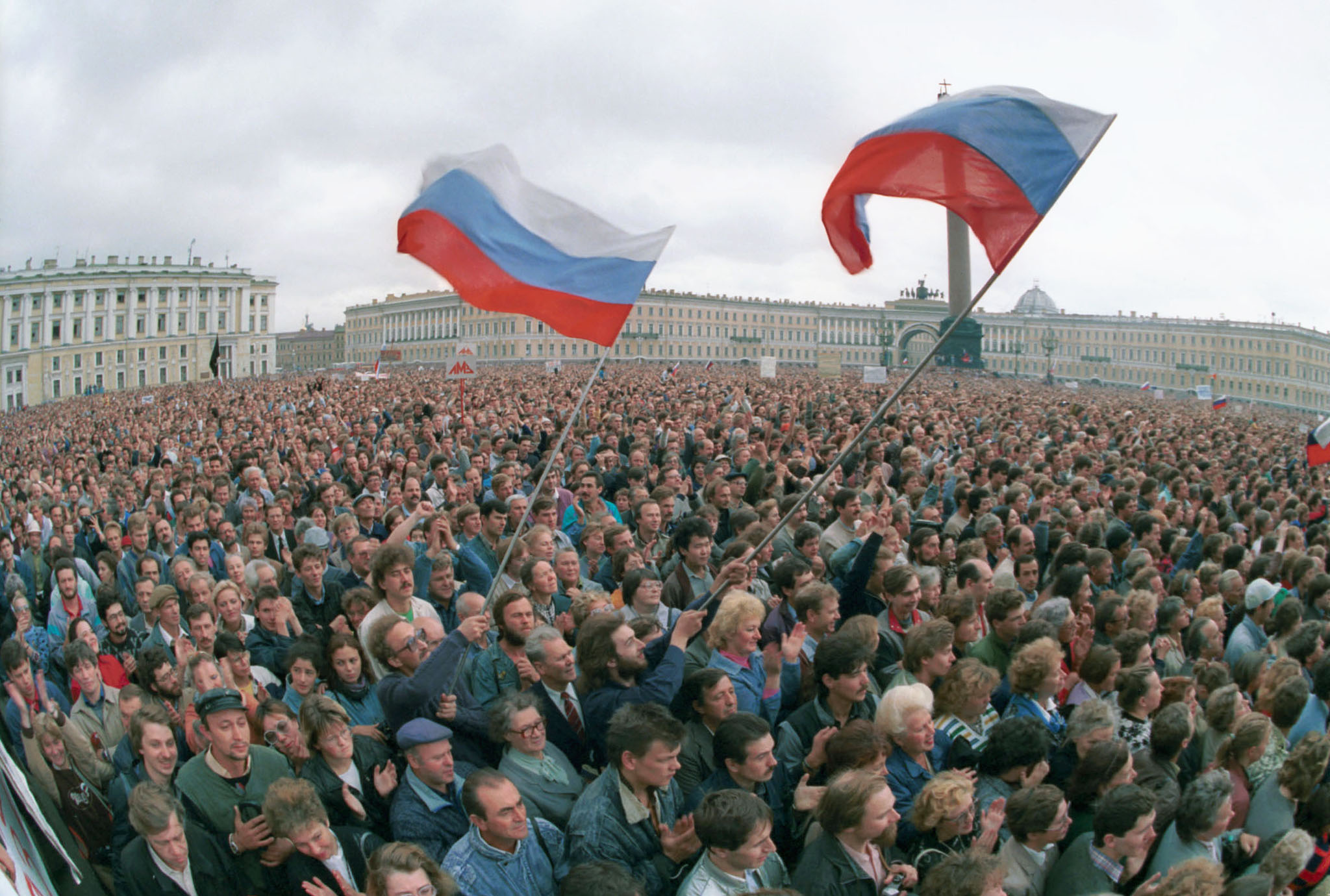
- You, reflecting on the lessons of the collapse of the USSR, are trying to understand how relations between Scotland and England can continue to develop, if the UK breaks up. In your article you write about this situation, as if it have already been resolved, although at a referendum on the independence of Scotland two years ago with an advantage of 10%, supporters of the conservation of the union won. Why do you think that Scotland will still go its own way-as the republics of the former Soviet Union once went to them?
- According to a recent survey, two -thirds of the Scots said that, in their opinion, Scotland will still become an independent country. Half of them believes that this will happen over the next ten years. That is, not all these people are supporters of independence, but they think that in any case it goes to her. Yes, two years ago, the minority, which voted, spoke in to independence. But Scottish independence is not only the ultimate goal, it is a process that has been going on for decades. I remember that during my youth, only about 10% of the Scots advocated independence. At the beginning of the campaign before the referendum there were already 30%, on the day of the referendum itself was 45%. Now, according to polls, this is about fifty fifty, half of the country for independence. This process goes, and goes in one direction. I would say that the question is already as follows: not if, but when. The alliance with England, I am convinced, was a mistake 309 years ago when it was concluded . Well, this is a controversial opinion, maybe in the 18th century, when England created the empire, this was the benefits for Scotland. But we see that now, in the 21st century, just small countries are most successful: Denmark, Norway, Estonia, Singapore, Hong Kong. The Union has exhausted itself. I see a lot of parallels for Scotland during the collapse of the USSR. When we have rallies in support of the independence of Scotland, this greatly reminds me of the Baltic states in the late 80s. That experience tells me that, although we do not know now exactly when independence comes, it can happen very soon.
- It is often said that Brexit , the recent decision of Britain to withdraw from the European Union , may contribute to the fact that Scotland will also gain independence, since most of the Scots are supporters of the EU.
Although we do not know now exactly when independence comes, it can happen very soon
- Yes, of course. At the referendum on June 23 in Scotland, unlike England, in every district there was a majority to stay in the European Union. This is in our blood - we are Europeans more than islanders. I will return to the parallels with the Baltic states. There, too, in the late 80s there was a process, a campaign for exit from the USSR, for restoring independence , but a shock was needed. This shock was the August coup of 1991. I think, of course, the decision to leave the European Union will become such a shock in the case of Scotland, when it will soon become clear what the consequences of this decision are. So, it will be possible to hold a second referendum on independence and get a positive result on it.
- What, in your opinion, should avoid Scotland and England if their divorce takes place, taking into account the lessons of the collapse of the Soviet Union?
- I would really like to have a “velvet” divorce, as in Czechoslovakia . So far, with regard to the issue of independence, a very acute campaign is being conducted on both sides, there is a great bitterness. What should be avoided? When I began to study the process of the collapse of the USSR, I came out, it seems to me, for the main reason for the problems that are available in the territory of the former union. Look, at first in 1991 there were agreements that all the republics are "new", 15 republics - all successors of the Soviet Union. But then Russia said, and this was legally enshrined: no, it was we who are the country - the successor of the Soviet Union. Because of this, there are a lot of problems. Because when Russia took on these powers and this status of a successor, it assumed all not only material assets and liabilities, but also the entire baggage of Soviet foreign policy and geopolitical strategy.
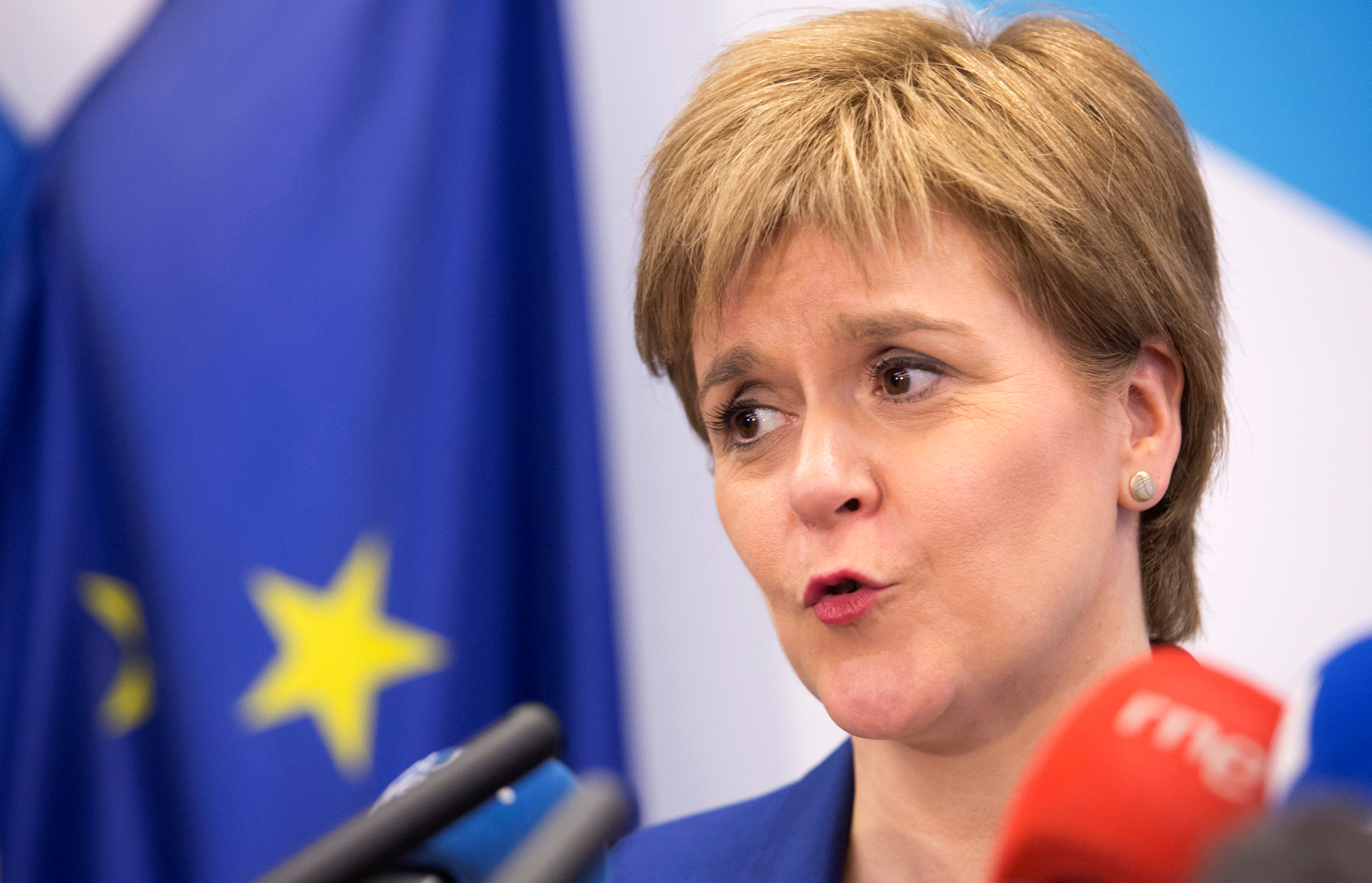
- That is, I understood you correctly, the most important mistake made by the collapse of the Soviet Union was that Russia began to personify the continuation of the USSR? You think that, for example, things would have developed better with Ukraine in a different scenario - which? How should it be, in your opinion? And how can it be in the case of Scotland and England?
- Another scenario is the one in which from the very beginning each republic takes on a certain share of assets and a certain share of general debts. There was another important point: how the problem with nuclear warheads was solved. After all, after the collapse of the USSR, Ukraine suddenly became a nuclear power. The Ukrainians were badly damaged by the Chernobyl accident and at that moment, apparently, they did not particularly seek to become a nuclear power, although it is very profitable to have nuclear weapons in the international arena. I know that in Ukraine now many regret that they went towards Russia so quickly and succumbed to the pressure of the international community, they quickly gave everything and did not receive the necessary compensation. I repeat: a big mistake was that Russia became the only official successor and successor of the Soviet Union. This is approximately, as if 15 patients at the same time ran away from a crazy house, and then one of them said: no, you know, guys, I am a new heir to this crazy house. It was better to completely get rid of the past and start a new life from scratch as a Russian republic. Many democrats strove for this, as I remember. We can say that the expectations of the democratically configured part of the population, which went to rallies in 1989-91, turned out to be deceived. They wanted to bury the Soviet Union and start in a new way.
15 patients fled from a madhouse, and then one of them said: no, you know, guys, I am a new heir to this crazy house
In the relationship of England and Scotland, I hope we will be able to avoid such mistakes. If we get independence, then Scotland will have a slightly different foreign policy compared to England and a completely different economic policy (social democratic type, closer to the Scandinavian, not to neoliberalism popular in London). But if at the same time the “residual” UK remains like the same country, only without Scotland, that is, the Union country, then mutual bitterness will only continue: we will not be two new states (or restored by the old ones, because the kingdom of Scotland existed until 1707), and, as it were, the former Britain and Scotland, which separated from it. There will be a clash of two systems, when each side does not want the other to be the best, but vice versa. But I really hope for another: that an independent Scotland will arise, which will be friends with prosperous neighbors.