Again to school, reader! No matter how many years you are, the time to return your windy thought to the granite of science that was not borrined at the Institute and the next eight cold months to hamper it yourself. In order to maintain zeal for knowledge, our comrades from the independent “Samozhzda” Common Place decided to share their work with all the suffering sabers and laid out eight books on their site in the free domain. Actually, this is the only true way to spread texts-that's why you love samizdat.
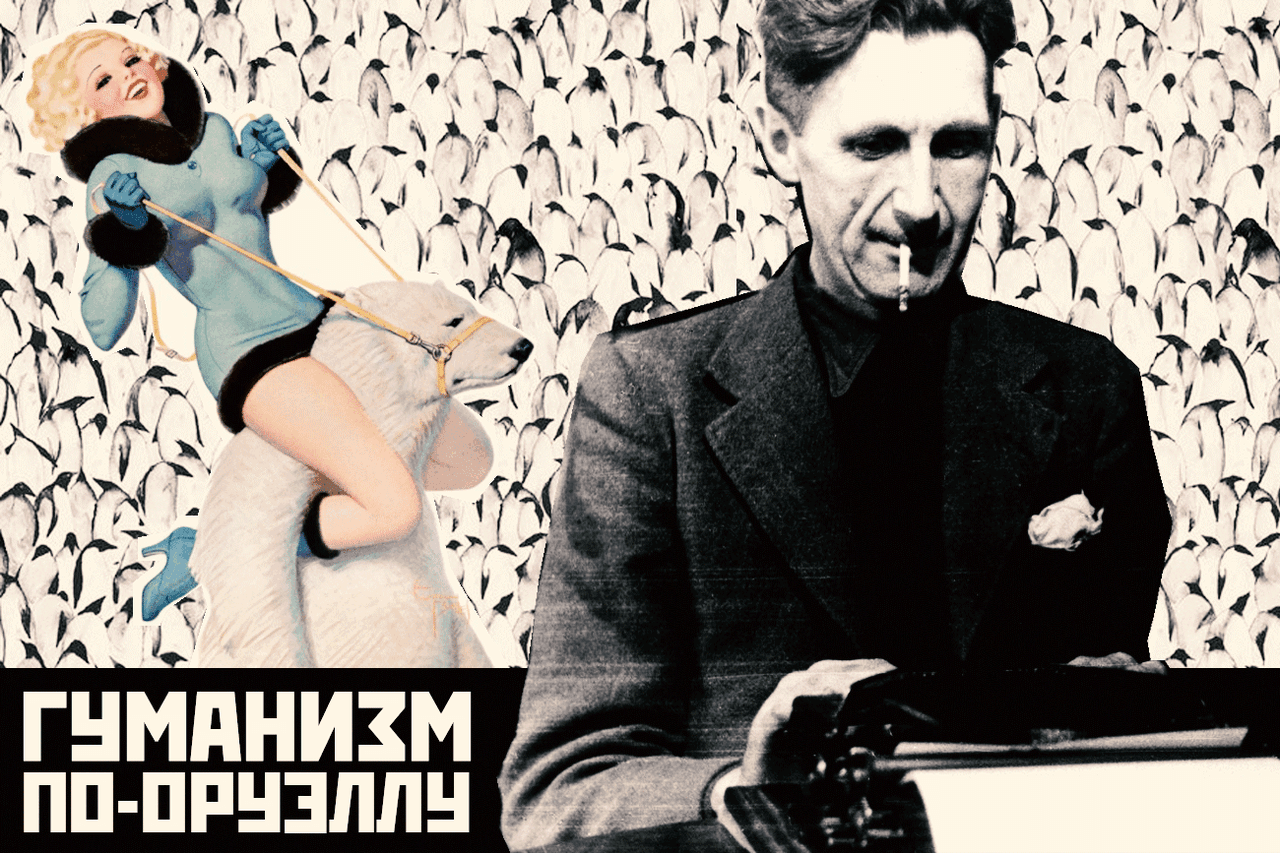
Here is the text of the Italo-English anarchist and publisher Vernon Richards “Orwell-Humanist” from the book “Orwell in the family circle and among the anarchists”: he talks about how the writer's views on socialism were formed and what brought him closer to the anarchists. The whole book is devoted to this issue that, in addition to the texts, rare photographs of one of our favorite authors.
Vernon Richards: Orwell Humanist
The fact that George Orwell died, I learned from a friend: he had a habit of reading aloud headlines from the evening newspaper. He knew about Orwell only what could be read in the local press: a writer who became famous for his book “The Castard”, and then wrote the novel “1984”. A friend did not read either one or the other, but he heard that these are anti -communist and antisocialist works. In the Necrologist of the Labor’s newspaper Daily Herald, they wrote that he “died without waiting for the worked out money” (January 23, 1950).
But for me, as for many of his friends and readers in anarchist circles (Orwell’s books were widely known in the international anarcho press), Orwell was primarily a humanist. He did not share our views, and other sectarians from the anarchy must be horrified, reading individual fragments of his works. However, for twelve years (after the release of “memory of Catalonia”) my respect and friendly feelings for him only grew, despite our disagreements in such fundamental issues as the attitude to the past (and upcoming) war, military service and parliamentary policy. It seems to me that this paradox is revealed by Orwell-Humanist-and I am sure that he will survive the author of the “Castard” and “1984”.
As for Orwell as a writer, I am presenting to him more competent researchers, and I myself will limit myself to a link to the stunning work of George Woodcock, which was first published in the American journal Politics, and later included in the volume of his elected works “Writer and Politics” (Porcupine Press, 1948).
It seems to me that Orwell could not be an anarchist, if only because he called himself a “realist” - and he considered a ghostly social revolution to be useless; It was necessary to solve more urgent problems.
As a result, he had to choose a smaller of two evils. Woodcock calls Orwell "an opportunist in the broad sense of the word." This is true if you do not take into account its motivation. During our conversations with him, I constantly felt that he wanted action, everyday struggle, and not abstract reasoning. This desire was partially determined by his contempt for the left -handed philosophers of the middle hand. Many did not forgive him for this and often recalled in the memoirs the second part of the "Road to Wigan-Pirs". When Orwell and I talked for the last time, he condemned with special bitterness those French intellectuals that supported Russia, deciding that the Russian political system is better than democratic capitalism. He said that he supports the anarchists who deny both of these regimes, since their position is consistent; And for the French, who lead a bourgeois lifestyle and have relative freedom, to support Russia, realizing that there will be nothing of the kind there - an undisguised hypocrisy.
But, I think, his limitations made her contribution to the political views of Orwell. He played in a "simple guy." Woodcock writes:
“Simple guys always have a framework, and the most stringent of them is their inability to penetrate the surface of events and see the actual causes of social evil. Separate manifestations of evil are only the symptoms of large violations of the structure of society itself. ” He added to this: “I have never seen or heard Orwell seriously analyzed the political life of Britain. His judgments in such important aspects as money, property, the state seemed to be kept on ordinary vague slogans, which were inspired by many generations of the Labor. ”
Orwell deliberately compared himself to a “real worker”, who never understand the deep meaning of socialism.
“Workers,” he wrote in the “road to Wigan-Pirs,” “often become the best socialists than orthodox Marxists, because they remember what others often forget about: socialism is justice and universal decency.”
This desire to do at least something, regardless of the restrictions of the environment, was both a strong and weak side of Orwell. I did not leave the feeling that if the revolution had happened in this country, Orwell with a pure heart would join the anarchists, because in this situation he would be able to realize his ethical anarchism and his “realism”.
Orwell was not afraid of the revolution, rather the opposite. He did not have time to listen to those who always predict the revolution in the near future, and the propagandists who brought the Spanish revolution of 1936 to the struggle of democracy and fascism, he despised: “What happened in Spain was not just an outbreak of civil war, but the beginning of the revolution. It was this fact that the anti -fascist press outside Spain tried to obscure at all costs. The situation in Spain was portrayed as the struggle of "fascism against democracy", the revolutionary nature of the Spanish events was carefully hidden. "
With the permission of readers, I will completely give a fragment from the “memory of Catalonia”, where George Orwell’s revolutionary views are much more precise than in any research speculation:
“More or less by chance, I fell into the only mass team in all of Western Europe, in which political consciousness and disbelief in capitalism were perceived as something normal. On the Aragon Front, I was among tens of thousands of people, for the most part - although not exclusively - workers who lived in the same conditions, on the basis of equality. In principle, it was absolute equality, it was almost the same in practice. In a certain sense, this was a kind of anticipation of socialism, or rather, we lived in an atmosphere of socialism.
Many of the generally accepted motives-snobbery, a thirst for profit, fear of the authorities and so on-simply disappeared from our lives.
In the smell of money soaked in the air of England, one cannot even imagine to what extent the usual class differences disappeared at the front. Only the peasants were here and we are all the rest. All were equal. Of course, this situation could not be preserved for a long time. It was only a short and local episode of a giant game, the scene of which is the whole Earth. But this episode lasted long enough to leave its mark on everyone who participated in it. No matter how we curse everyone and everything at that time, later we realized that we were in contact with something unusual and highly valuable. We lived in a society in which hope, and not apathy or cynicism, was a normal state of mind, where the word “comrade” really meant a partnership and was not used, as in most countries, to take the eyes. We breathed the air of equality. I know well what is now customary to deny that socialism has something in common with equality. In all countries of the world, a large tribe of party apparatchiks and insinuating professors work, “proving” that socialism is just a planned state capitalism, which leaves the full preservation of the profit as a driving force. Fortunately, there is a completely different idea of socialism.
The idea of equality is what attracts ordinary people in socialism, it is for it that they are ready to risk their skin. That is the "mysticism" of socialism.
For the vast majority of people, socialism means a non -class society. There is no socialism without it. That is why those few months were so valuable for me that I served in the ranks of the militia. The Spanish militia, while it existed, was a cell of a non -class society. In this team, where no one sought to take a better place, where everything has always been not enough, but there were neither privileged nor lysobathers - perhaps there was a anticipation of what the first stages of a socialist society could become. And as a result, instead of disappointing, socialism really attracted me. Now, much stronger than before, I want to see the triumph of socialism. Perhaps this is partially explained by the fact that I had the happiness of being among the Spaniards, whose innate honesty and the never -disappearing raid of anarchism can make even the initial stages of socialism acceptable. ”
Despite the fact that the growth of totalitarian trends around the world and the prospect of atomic war made a deep impression on Orwell and put forward the “realist” in it in the forefront (although in our last meeting he was not so pessimistic about the possibility of war), he took part in any initiatives to protect the rights and freedoms of a human way; Thoughts about events in Spain have never left him. He collaborated with the anarchists - in 1938, Orwell became an active participant in SIA (international anti -fascist solidarity), the organization of Spanish anarchists; The English department of Sia in London was headed by Emma Goldman. Despite the fact that he radically diverged with the anarchists in the assessments of the last war, it was he who first publicly protested against police raids in the editorial office of Freedom Press, and then became the vice-chairman of the Freedom Press Protection Committee, which was created to protect the rights of four anarchists arrested as part of the action of emergency law. He actively supported the Committee and, after his transformation into the Freedom (Freedom Defense Committee) protection committee and even spoke in public twice: at a rally in support of the universal amnesty of wartime deserters, as well as at the Committee’s protest rally - on behalf of the Spanish anti -fascists, internomed in Chorly (Lankashir). The last time I saw him two weeks before his death: he was cheerful, cheerful and, as always, closely followed the news. But doctors strictly forbade him to write. He suffered the idea of a new novel, wanted to “live with her” for some time and hoped that he would be ready to entrust it with paper in 1951. What is characteristic, Orwell was going to ask the doctors how much he had to live, so that, if it was about a year, to neglect them with a ban and finish the texts that he wanted to have time to write before his death. We spoke with him about his adoptive son, Richard; He remembered how his son recently told him about the campaign in the zoo, and his thin, elongated face revived, his eyes lit up. Arthur Kestler writes that at such moments "the enormous power of the love of a lonely person radiates light." If I will someday ask a question on which side was Orwell in the struggle for humanity, I will quote the “memory of Catalonia”:
“The poor classes of Barcelona treated the gendarmes with hatred and, as it seemed to me, were sure that the gendarmes were acting on their own initiative. Hearing how things are, I sighed in relief. The situation acquired clarity. On the one hand CNT, on the other, the police.
I do not have a special love for the idealized “worker” - the fruit of the imagination of the Communists brought up in a bourgeois society, but when I see a specific worker who grabbed with his original enemy - I must not ask myself twice on whose side. ”
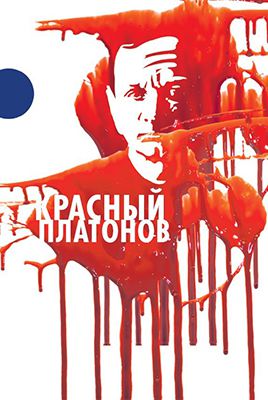
A collection of articles by Andrei Platonov, written in the 1920s-a time of hopes and enthusiasm, hunger and devastation. The young writer reflects on topical problems and new revolutionary tasks, as well as about life and death, sexual relations, develops a philosophy of labor and working self-awareness, and interprets some biblical plots in a new way. Platonov passed this stormy era through himself and captured it in his early articles.
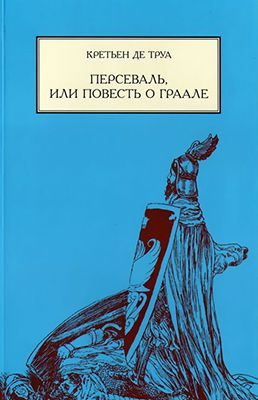
Roman Chretien de Trois, a great literary monument of the Middle Ages, who had a significant and long -term influence on the culture of subsequent centuries, up to our time, since it was in this novel that the initial story about the search for the Holy Grail was deployed. The full poetic translation of this work into Russian was carried out for the first time. The publication includes a scientific article and notes to the novel.
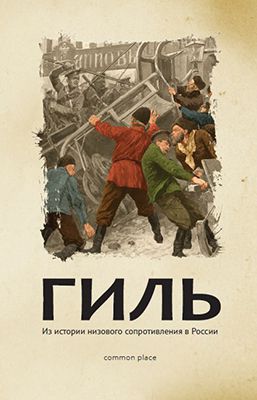
Gil - Troubles, rebellion (Dahl dictionary). This book is devoted to the history of popular unrest in Russia from the uprisings of pagan magicians in the XI century until the revolution of 1905. In addition to large armed speeches, such as the riots of Stepan Razin and Emelyan Pugachev, more local events, as well as other forms of lower resistance: flight to the territory, robberies, and the creation of closed communities.

 Text Theodore Glagolev Moscow
  Illustration Bojemoi! Moscow