
Translated material
Adventures of electronics
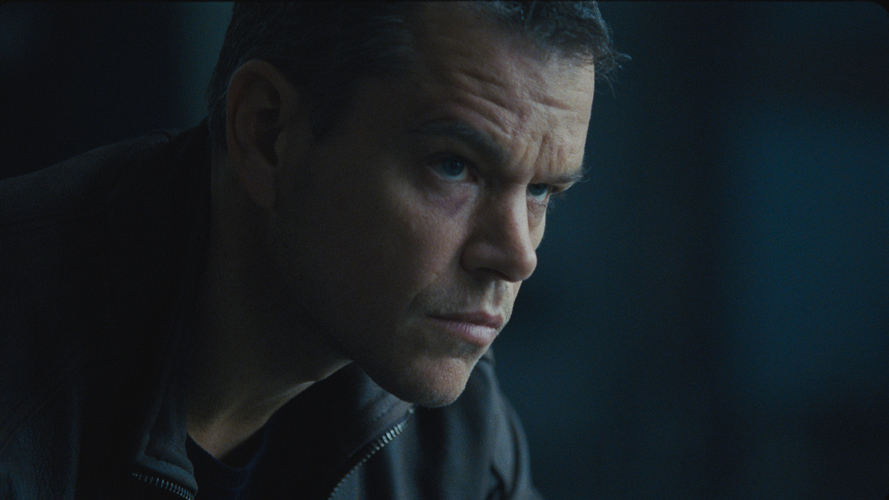
Once the electronics escaped from his creator. In the literary source, the novel by Veltistov, he was included in the socket with improper voltage, and the Android was injected. In the Soviet television series, electronics wanted to become a man. The CIA of the CIA Jason Born also once also closed, and he also wanted to become a man - to establish his own identity and gain subjectivity. In “Bourne’s identification”, the agent was not actually a man: he had a lot of skills and qualifications - martial arts, knitting sea nodes, driving vehicles, surveillance and leaving it. He, like Sherlock Holmes, could examine the surroundings so that a train of information was formed around each object. But he completely did not remember where all these skills came from - they were simply, but were not part of his personality. In the "identification" Bourne was like a Hegelian absolute spirit, completely alienated from himself. The most important information at that time - the cell number in the Swiss bank - was inserted into it almost like a flash drive. But even the scattering of passports found in the cell did not give the key to a solution: there are a lot of identities, which means not a single one. Meanwhile, all new talents were revealed in Born, as if more and more programs were self -launched; Bootstraping , but it is not clear for what purpose. Electronics, like any robot who wanted to become a man, was happier than Jason Born, who became a robot, the first at least knew the whole range of his abilities, he had a minimum gap between the announcement of the launch of a particular program and the actual launch: this gap was his personality. In the boron, abilities are shot without any gaps, they are revealed as a parachute, the existence of which he does not suspect.
Bourne is perfectly inscribed in the surrounding reality. All things and all countries have an absolutely transparent interface for him, because they are deprived of individual properties that would prevent them from becoming tools. You can leave the chase even on a police car, at least on a yellow taxi, even at the Volkswagen-Zhuk: Bourne will be able to squeeze what you need from any car. Yes, and there are practically no difference in interfaces between people and things/guns: if you need it, Bourne can drop the next statist-zlodeus into a staircase to depreciate his own fall.
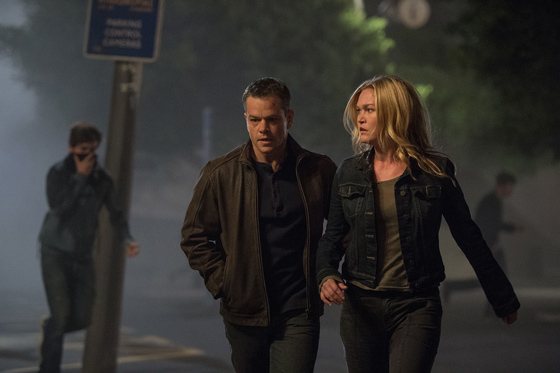 © Universal Pictures
Borne himself was also instrumental, but he did not have a control center. He had to be just an avatar, but broke away from the players who controlled them, although the avatar itself was not filled with meaning. As it was an empty shell, it remained. His idea is fixed (in addition to identity) - to move away from the control center as far as possible, to hide, to lie to the bottom. But the control interface as the franchise develops penetrates deeper. Careers in the CIA leadership are becoming more rapidly: after the quite mature Pamela Landy (Joan Allen) in Jason Born comes to power, almost girl Heather Lee (Alisia Vikander). However, there are not enough real personnel in the field. The capture groups continue to go into expense. And only an elderly special agent with a noble gray hair in the hair and a tired look (Vincent Cassel) continues to jump over a boron from the roof to the roof and from the continent to the continent. It is not surprising that the CIA leaves no hope of returning Born back, proving him that the core of his identity is patriotism and loyalty to the office. In fact, the boron is convenient for the CIA. He does not fight with them, he is the orderly of the forest - an external instance, which is at the same time and is not part of a structure striving to close, which again and again saves the structure from the collapse.
Paul Greengrass, the author of the now three films about Born, is the conductor of the modern style of the action Run - And - Gun . You can read about the claims to this style on the blog American film expert David Bordell. Too rapid installation, shots only two seconds, a shaking camera, defocuses, an uncended image, not a single “normal eight” ... All this interferes with perception and understanding, visually stunes the viewer (he also audibly succeeds with constant “alarming music”), covering, as Bordell, plot bloopers and the absence of an outstanding acting. It seems to be further from the model of classical cinema. But in paradoxically, one of the main features of the borne franchise is a look, the very elusive fantaside entity that the radical cinema of the 1970s wrote so much. In Born, the look is materialized in people and technology. Departments that do not take their eyes off the cameras of outdoor observation and pictures from the satellite, snipers, stunned into optical sights. The reality here is very good, perfectly in the limit, it is visible, although it has its blind zones, for example, Russia (where the police shows a photo of the boron by random passers -by at the station for identification). But with each new film, the look is becoming increasingly all -seeing. In Jason Born, the episode in Athens almost completely repeats Bourne's meetings with Nicky Parsons (Julia Stils) in Berlin (“Excellence”) and in Tanger (“Ultimatum”), but despite the levatian riots on Sintagma Square, the CIA controls the operation, or rather, better sees everything.
The space in Born is clearly visible, but perhaps it is much worse. Even in “superiority”, the characters discussed the most dangerous issues on hotel phones and willingly picked up the phone when they called the room. In the Ultimatum, the CIA failed to listen to the journalist from Gardian. Bourne always easily hacks phones, puts wiretap and writes out incriminating evidence on the recorder. However, he plays freely with his gaze. It easily merges with the environment. If the interface of any thing is transparent to him, then this is because he himself is transparent, invisible. If they see him, then he wanted to light up. Bourne on the monitor is a message from Bourn, and not himself. If necessary, he can easily take a glance: for example, when in “superiority” he is hidden in the gigantic letters of Bosch on the roof and takes Pamela Landy and its department to Mushka.
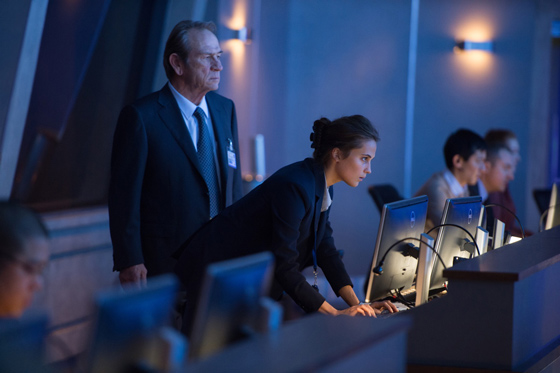 © Universal Pictures
In the new “borne”, Greengrass is even more deeply immersed in visual abstractions and enjoyment of the movement as such, no longer looking for any plot excuses. Yes, and why do he, code already know everything? Meeting with the source, the pursuit of the pursuit of the hero Killer, who help him with compassionate women, as a result, another open conspiracy and the death of the next corrupt gerontocrat from the CIA, involved in the transformation of Bourn into cyborg. In passing, there is a theme of surveillance of citizens via the Internet: Hycom-millionaire Aaron Callur (Reese Ahmed) took money for his startup from the CIA and now, launching a new global platform, is obliged to drain user data. However, this line is not that capturing. The franchise about Born was not about this, and her once advanced technologies (in the “Identification of Bourn” special agents had special -wormers!), Perhaps they will soon be completely out of the way. Work with big data and view are different things. Bourne, as you know, generally went into the network from the Internet cafe, and in Jason Born is forced to go with a flash drive, on which are the next details of his personal history, to the famous hacker. Born is not a hacker, because he himself is in some way a car. He may not be so much growing up as to become obsolete (the same, by the way, was afraid of the electronics in Veltistov’s story). Perhaps the franchise about Borne has its own technological limit for development.
Did Born get his identity back? Did he manage to appropriate her? The episodes accumulate, the scheme is repeated, catharsis, which would take somewhere (to a new level?), Does not occur. If this is a computer game, there are no levels in it. The tautological name of the film seems to indicate that Jason Borne finally became Jason Bourne. He coincided with himself. Or just reconciled. And in this sense, he repeated the fate of the same absolute spirit, that is, an ordinary person: in search of an absent, lost principle, in negative throwing after himself, he finally receives his own identity as the form of this emptiness itself, galluste, repeatedly played out and never filled with a fantasides. Man is a robot that understands the absence of anything human in it.