
Translated material
The last of the old guard
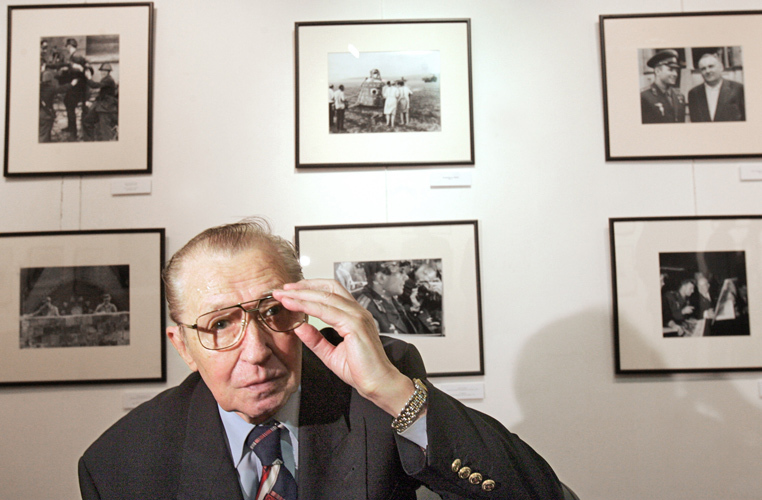
On the last day of summer, the oldest photo correspondent of Russia Sergey Ivanovich Smirnov died in the hospital at the 93rd year of his life. At the request of Colta.ru, Sergey Shahijanyan wrote about him - his colleague, photojournalist, teacher of the Faculty of Journalism of Moscow State University and a special correspondent of “Evening Moscow”.
Sergei Ivanovich Smirnov worked in the newspaper Izvestia for more than 50 years - since 1959. And the legendary chief editor of the newspaper - Alexei Adjubey called him there. The one about whom there was a proverb "do not have a hundred friends, but get married like adjust." He was the husband of the daughter of the first person in the country, Nikita Khrushchev, - Rada. As the editor-in-chief, Adjubey made a lot of Izvestia: a newspaper, where only a random hole in the strip was packed with photography, and the cliches for photographs were prepared very much in advance, like most of the texts, he quickly transferred to new rails, and the materials began to publish “from the wheels”-this is with those technologies!
Sergei Ivanovich categorically objected when he was called the "photographer". He always considered himself a photojournalist and remained for him until the end of his days. He told me that Ajubey actively helped him get to the shooting in the most inaccessible places. The editor -in -chief enjoyed influence and generously shared his capabilities with a photojournalist, well aware that a good photograph will always replace a bad text, so often said Sergei Ivanovich.
Under Adjube, Smirnov managed to enter the circle of those who were trusted to shoot first persons. Smirnov was famous for fantastic thoroughness and obligation - on any business trip he always had a set of necessary chemistry. And even water to make solutions, he dragged with him from Moscow - who knows what water in other places? That is, after shooting, he fled to the room, interfered with the developer or diluted it from the concentrate with water, which he brought, and showed a photographic a photographic a photograph in the hotel toilet in a special sleeve. He also had a photo enlightener with him. Negativ did not know how to transmit the negatives then, he was dried with a hairdryer or alcohol, then he turned on the red lantern, printed photographs 9x12 or 10x15 and dried - either on a tile, or rolled on glass. The quality turned out so -so, but for the newspaper it was suitable.
And while all officials and their official photographers still drank and bite at some reception, he dragged the girls at the embassy-from the same reception-and agreed that they were handed over to the photographic television to Moscow as soon as possible. So he managed to transmit pictures faster than photographers attached to the first persons. And in his lifetime, he rejected the first persons: he shot Khrushchev, Brezhnev, Castro, Honecker, Arafat - all the Soviet leaders and all to whom they flew and whom they received at home.
- I could shoot Brezhnev, Yeltsin as I considered it necessary - they knew and allowed me. And now they say to you: "Stop here, do not get shaved and do not bother." So you can’t take a good photo!
A month after the removal of Khrushchev, Adjubey was removed - and Smirnov remained. The ability to remove at all costs and in time to convey the photo was valued by any bosses. Then, in many central newspapers, photographers did not print the pictures themselves - they gave to laboratory assistants. In the Izvestia, each photojournalist had its own laboratory - Sergei Ivanovich had the largest, most distant, on the fifth floor, in the room 501. He always printed his photos on the photo surplus, and how much he was shooting, the pictures were ready for the morning glider.
According to the Izvestin tradition, photographers needed a special look - the photographs were supposed to differ from the Tassovsky or Pravdinsky, and the competition was quite tangible, despite the restrictions and censorship. During my work in Izvestia, in the 2000s, Smirnov so advised us, young photojournalists: “Guys, e*isa TASS! Always e*is official photographers - either find others, or find a way to convey the pictures faster. Always try to enive them - you should have more freedom and imagination! ”
He was generally friendly to the young. I remember that I was beaten during the editorial assignment in the Lyubertsy - they dragged me out of the car, broke glasses and took the camera; He found out about this, came up, asked if it was necessary to help. We talked about the war several times - he was at the front, fought, I was interested in learning from the original source, as it was. Sergei Ivanovich began to tell, but he was called somewhere, then they torn me to shoot-we really did not talk, we did not talk. I remember he said that there were a lot of staging filming in the war and that our photographers did not take off the real war: approval was required for any shooting. Filming on the front line, during the battle, were generally almost everywhere prohibited.
I was surprised by his democracy: now some young guy will go to the Maidan or remove the acceleration of the rally-and lifts his nose: they say, do not send me to all nonsense, I will not shoot this. Sergei Ivanovich, as an ace, performed ordinary editorial tasks - he could easily send him to shoot a fountain at the Bolshoi Theater or, for example, to remove a new building. Later, the billdells simply tried to protect him, given his age, did not give difficult filmings. He sometimes grumbled on this occasion, but while his legs walked, he conscientiously performed the most ordinary tasks. And always looked impeccable. Figure jacket, ironed shirt, tie. I do not remember that I saw him rumpled or dirty.
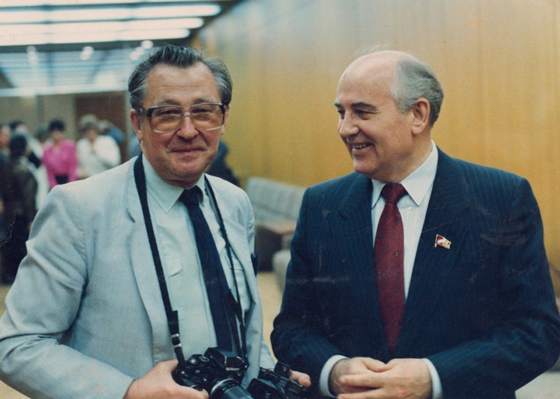 © Izvestia
He watched our work. “I feel sorry for you guys, I see how you are shooting. You become a service service - you, like mannequins, are placed on a point with which you cannot move. Mistracted further and further. I had a 35 mm working lens (this is a small wide -angle), and you are pushed over Mozha, you have all the government’s important shootings start with 300 mm, or even 600. How hard it is for you to work! I could easily approach Fidel and treat him to fried sturgeon, they recognized me by person, and I was almost a friend of the family. I could shoot Brezhnev, Yeltsin as I considered it necessary - they knew and allowed me. And now they say to you: “Wait here, do not get shaved and do not bother.” So you can’t take a good photo! "
He always came to the editorial booze inside the department - New Year, March 8, February 23. He was witty joking. He was magnificent.
Until the last days, he lived his work-he plans to make a large exhibition for the centenary of the Izvestia newspaper, by 2017. He broke his leg in May of this year, lay in the hospital and almost did not go. I can say that, to the honor of Aram Gabrelyanov, he supported Sergei Ivanovich in every possible way - he helped with treatment and money. Shortly before his death, Sergei Ivanovich asked him to choose a chair-reclining chair-to move-and he was very angry when he realized that none of the existing models was suitable for his active lifestyle. He wanted to go on a business trip to St. Petersburg-but he always called him Leningrad. He himself was from there.
Yes - he shot film almost all his life, up to 85 years. And the last government shooting he seemed to be at the beginning of the zero - when Vladimir Putin awarded the Order of Maya Plisetskaya.
Over the years, he has accumulated a huge archive. All this was stored in negatives. And negatives - in boxes. None. Only he could figure out a heap of films and understand what box what. Part of his archive was scanned, but the special person was not allocated for this, and the work was carried out a little, not in the volumes as we would like. As he himself said, they scanned a little more than a tenth of what he had. The rest still lies in the boxes of his house. His memory was good - as soon as he looked at the picture, and he called the year and place of shooting. Such was a man. The last of the old guard-surviving war, thaw, stagnation, perestroika, 90s and our time.