
Translated material
Hypotetic resignation
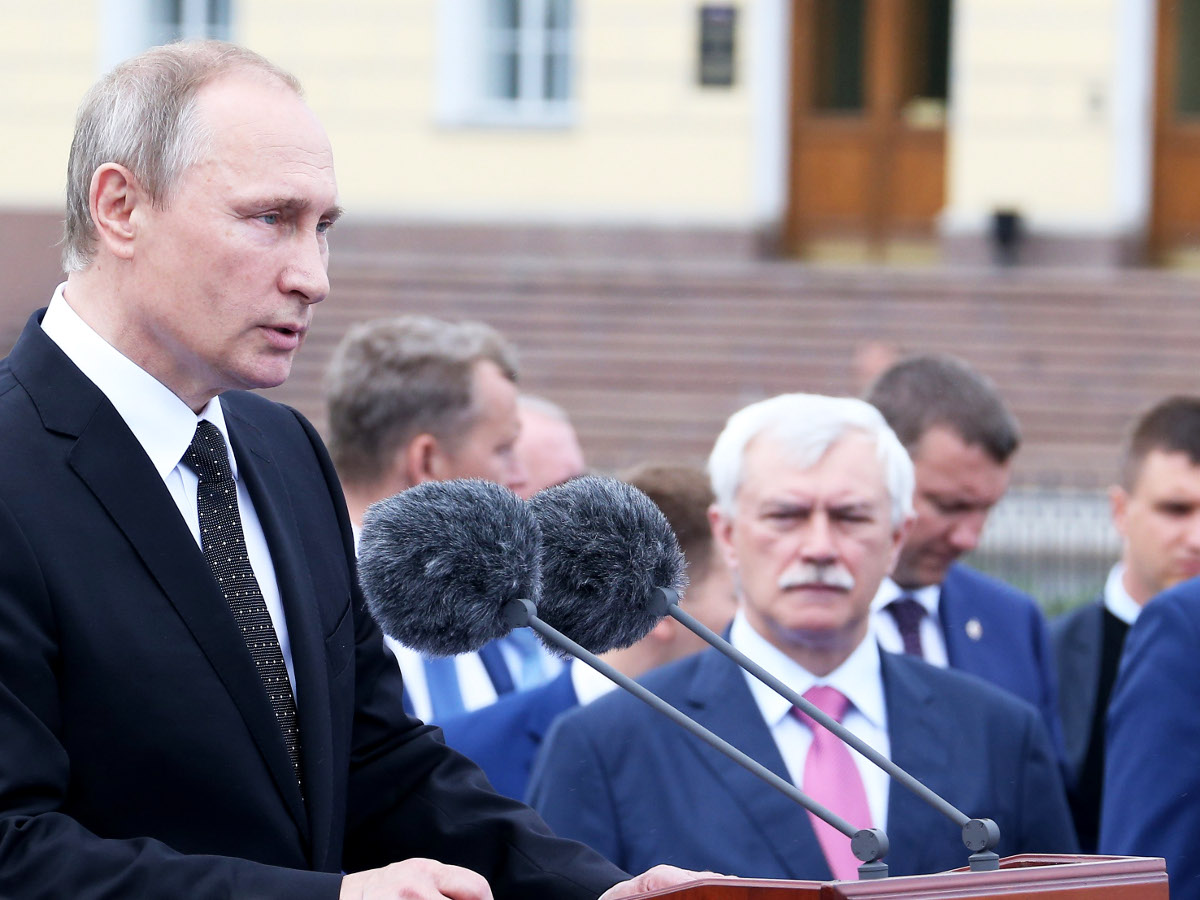
The hypothetical resignation of the Governor of St. Petersburg Georgy Poltavchenko remains one of the discussions in the media and social networks, despite the refusal of Dmitry Peskov, the press secretary of the President of Russia, and representatives of the administration of St. Petersburg to comment on the information.
The fact that Poltavchenko can leave his post after elections to the State Duma was reported on August 30 by the RBC information agency. Referring to three sources close to the Kremlin at once, it argued that after the election , Poltavchenko should go to a higher position, which "was inscribed in the cycle of large personnel permutations."
There were no official evidence of this information. Governor’s spokesman Andrei Kibitov only noted that Poltavchenko’s powers “end in 2019” as the governor, and rumors in the administration are not commented, TASS news agency said.
The press secretary of the President of Russia Dmitry Peskov, who also declared RBC that he did not comment on rumors, later made it clear to reporters that he did not have any information about the possible resignation and new appointment. “We don’t guess on the coffee grounds,” the agency quotes the words of the sand.
Georgy Poltavchenko has been the post of governor of St. Petersburg since 2011. In the election of the governor in 2015, he won by gaining 79.3% of the votes.
The resignation of the governor after the elections is quite possible, as, indeed, his further stay at the post. This opinion was expressed in an interview with Polit.ru Deputy Director of the Center for Political Technology, editor -in -chief of the Politkom.ru website Alexei Makarkin.
“As the president says, everything is possible. The resignation [Georgy Poltavchenko] after [parliamentary] elections is also possible - so that the new governor has a whole year to prepare for the next election. Moreover, the candidacy for the post of successor can be almost any: it can be a politician, as has always happened in St. Petersburg; It can be a technocrat who will need to complete the Zenit Arena, the stadium for the World Cup. In principle, everything is really possible here.
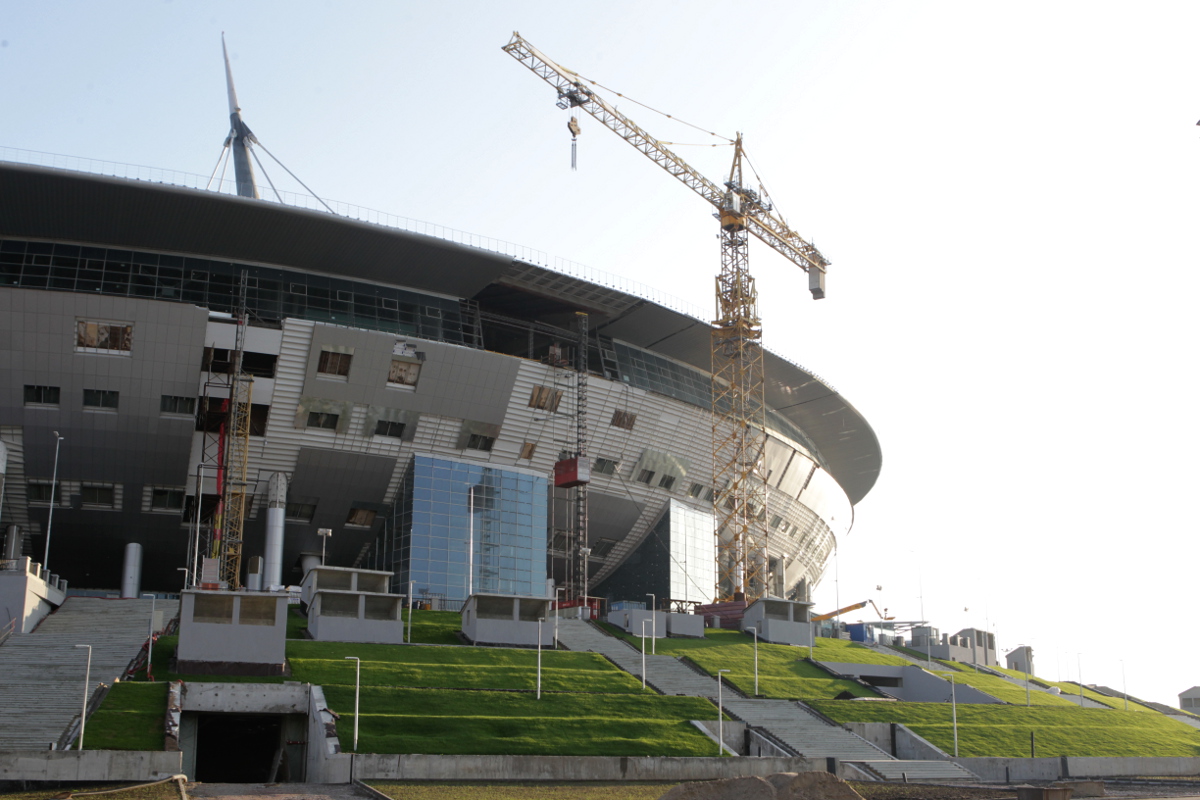 The Zenit Arena stadium under construction. June 22, 2016. Photo of the press service of the administration of St. Petersburg
I would not look for any big patterns in the current personnel policy at the regional level. When we are prescribed by the security forces, they say that there are now continuous security forces, when they are appointed civilians - they say that now civil officials from the federal level come. When the regions are appointed, they say that a rate on the regions is now being made. In fact, the personnel policy is individual, and when decisions are made on it, they are not focused on the fact that it is necessary to fill out the regions by security forces or, conversely, immigrants from the subjects of the federation - and it just looks who can be put for a particular region at the moment. Who, from the point of view of the Kremlin, is now the most promising candidate.
So there may be a variety of options. Maybe Poltavchenko remains at the post, after all. This option is also not excluded.
There are two significant points in this matter. The first is that someone should prepare Petersburg for the World Cup. This is the largest project of those that will be in the near future, and it will have to be prepared for it in conditions of reducing financial resources. When there was an Olympiad in Sochi, there were a lot of resources, and now you have to prepare the country for the championship in conditions when there is clearly a lack of resources, and in 2017 problems will most likely intensify.
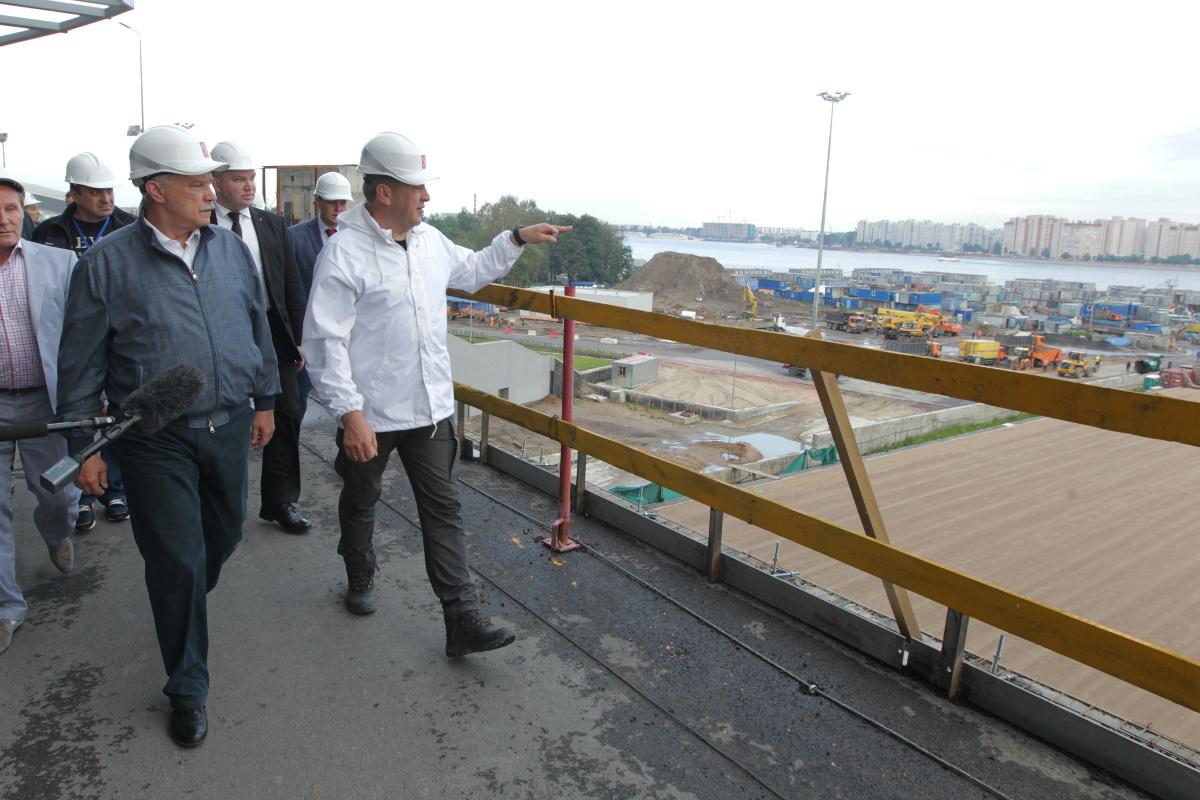 Governor Georgy Poltavchenko and vice-governor Igor Albin inspect the construction of the Zenit Arena stadium. June 22, 2016. Photo of the press service of the administration of St. Petersburg
The second point is this: there is a feeling that the economic crisis seriously affects the personnel policy.
For more than one and a half decades of Vladimir Putin’s stay in power, as a president or prime minister (which, in general, has changed very little in his real prerogatives, even changed almost nothing) a certain layer of people who are part of the “Petersburg environment of the president”-that is, who are together with him since the 1990s (some since the 1980s, and some even since the 1970s). Among them are a lot of security officials (including Poltavchenko) who worked in the Leningrad Administration of the State Security Committee.
And, in general, this system seemed to be able to function further-with minimal changes and permutations. Suppose there was a man at the embassy - he switched to governorship. Or he was in the presidential administration on the frames - he began to fight drugs at the federal level. In general, it was a fairly stable elite with its internal contradictions, with temporary coalitions, with a presidential arbitration, with a section of resources. In a word, this is such a kind of "hardware idyll." And in order to leave their position without sufficient compensation, without transferring to another equivalent job, its representatives had to make some huge mistake.
Now the situation has changed. Now there are fewer resources, there is less money, and the feeling that something needs to be changed has become significantly more. Another thing is what to change.
I think that the system is not ready in some large structural reforms. There is a memory of perestroika - how they began to rebuild the system and how it ended. There is, of course, and a certain instinctive conservatism. In general, a lot of things are both rational and irrational, which prevents the implementation of some serious reform plans. Therefore, what can you do? On the one hand, it is possible to reduce expenses - it is no coincidence that the issue of raising the retirement age, for other optimization measures, is discussed. On the other hand, you can try to update the personnel - update by promotion, invitations to key posts of new people.
Then, on the one hand, immunity is eliminated in people from the “near circle” (immunity is not from reshuffle, but from flying away from the upper part of the elite, from the layer that affects the decision -making) - and the number of examples after the resignation of the head of Russian Railways Vladimir Yakunin is increasing. And, on the other hand, the desire to arrange new personnel, and new personnel, who have a different level of relations with the president. They do not remember the president either by the KGB officer or the vice-mayor of St. Petersburg-for them he, we can say with a certain degree of convention, has always been president. They can hardly imagine another era, and the relationship of these personnel with the president is very harsh hierarchical. There is no such "fraternity" that was characteristic of the layer that came to power with Putin in 1999-2000, there is no feeling of the "Chekist fraternity". This is already a strict hierarchy, and both security forces and civilians can advance within this hierarchy. I think that the general principle here is that all of them the president "was always." This is the king.
Accordingly, those people who, from the point of view of the president, lose efficiency, leave the top of the elite. They remain within the framework of the elite, but rather already as pensioners, or something. They can occasionally meet with the president, discuss some ideas with him, talk about some plans, projects, but they are no longer responsible for key spheres and do not affect decision making. That's about such a process is happening now. Whether it will be with Poltavchenko, whether he will be involved in this, let's see. Given the fact that Petersburg should be prepared for the World Cup, it is possible.
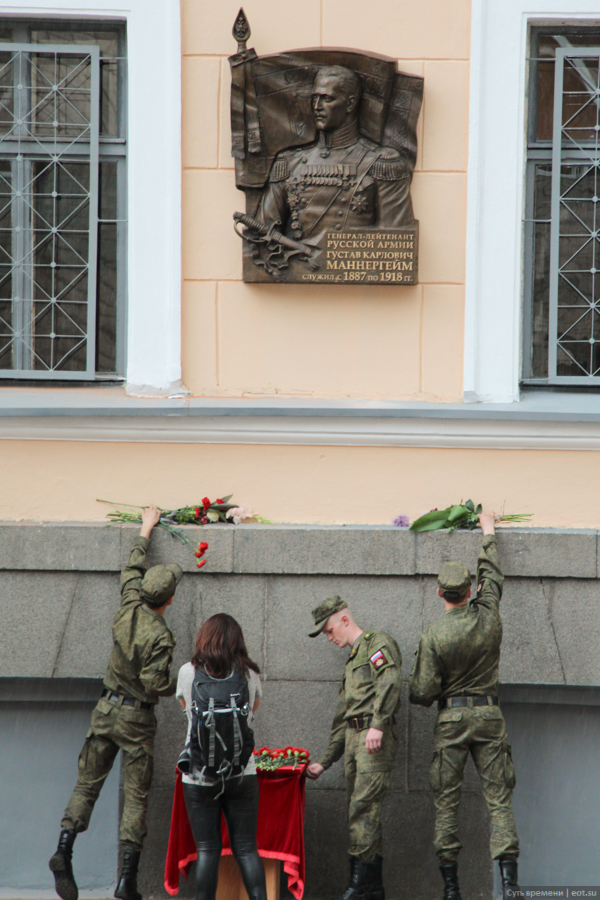 The opening of a memorable board in honor of Marshal Mannerheim. Photo: "The essence of time"
At the same time, I must say, there are interesting signals: the city authorities of St. Petersburg demonstrate that they are ready to adapt to new realities. The features of the current situation are such a story very clearly. More recently - this summer - Sergey Ivanov, still being a powerful head of the presidential administration, opened in St. Petersburg a memorable board to Marshal Mannerheim, which caused a lot of disputes. Now Ivanov is retired, and the board is going to shoot in the near future. That is, the city authorities demonstrate that they feel the situation.
So now hardware instability increases sharply - both at the real level, at the level of specific permutations, and, as we see, even at the symbolic level. The story of the board, associated with the name of Sergei Ivanov, is a kind of symbol. With him, she could not be touched, despite all the conflicts (and she was doused twice with some muck). Now the removal of the board is considered as such a smart hardware step, especially before the elections, ”explained Alexei Makarkin.