
Translated material
Solovki as Russia in miniature
The "abode" of Zakhara Prilepin. Fragment of the book Galina Yuzefovich
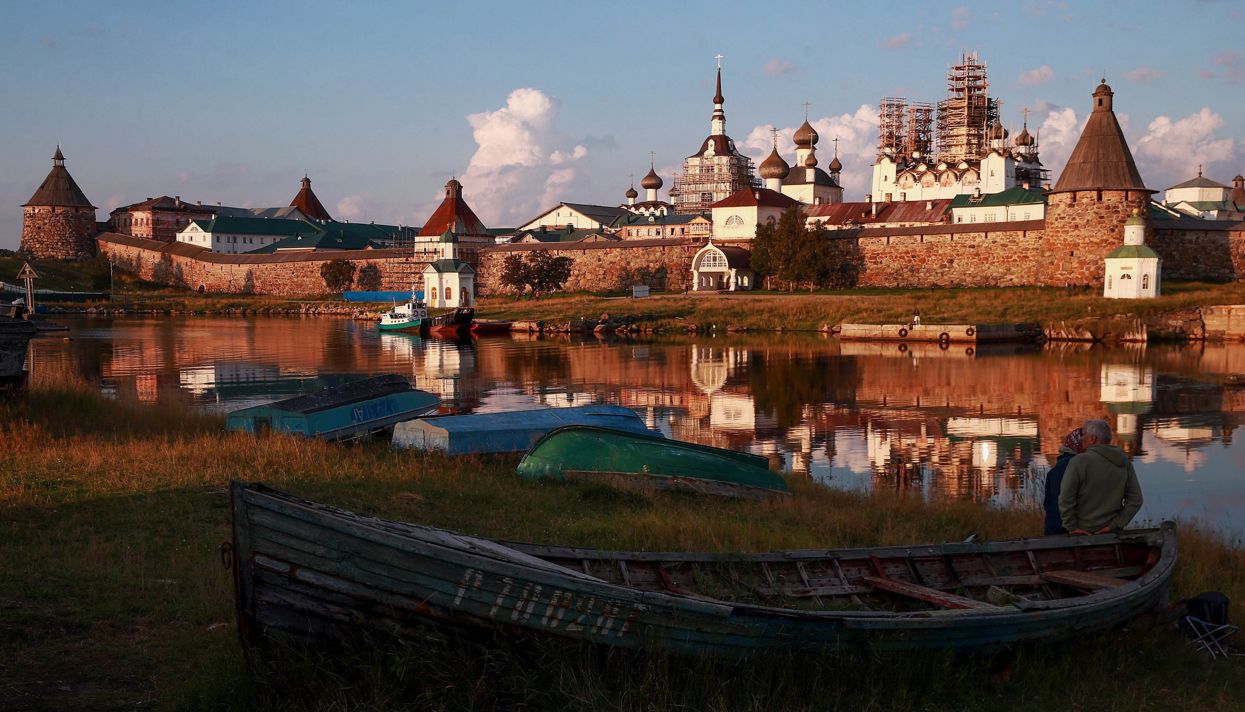
At the end of September Elena Shubina, the editorial office of Elena Shubina, Galina Yuzefovich’s literary critic “Amazing Adventures of the Lotsman Fish: 150,000 words about literature”, is published. The publication acts as a navigation map in the world of modern literature - Russian and foreign. The book includes the author’s articles written over the past ten years in different media - “Results”, “Vedomosti”, “Expert” and “Medusa”. In addition, the collection includes the previously not published texts. One of them, dedicated to the novel by Zakhara Prilepin, “Monastery”, we publish with the permission of the publishing house.
Zakhar Prilepin. Abode. M.: AST, editorial office of Elena Shubina, 2013
A few years ago, I was a member of the jury of the Literary Prize “Nose” (oriented, as you know, to support the “new literature” and “new sociality” in literature). And then, looking at the Long List and trying to distinguish in it some pattern and trend, my colleagues and I suddenly realized that the most relevant trend in modern prose is the reflection of the past. In the yard there was 2012, and for some reason this idea seemed terribly ridiculous and ridiculous (“The future of Russian literature is its past, well, it is necessary!”), But several years passed, and it became clear that we were completely right then. Books stronger than others exciting thoughts and exciting feelings today are books about the past, and primarily books, which are somehow integrating, working out injuries of the twentieth century.
In this series, the “monastery” of Zakhara Prilepin, of course, stands under a solid number one - both chronologically and semantically. Big and traditional, at first glance, a very respectable, full -blooded, crowded and polyphonic novel about Solovki was surprisingly one of the most painful and provocative texts written over the past couple of decades. And the thoughts that sound in it still remain an underlying leitmotif of all further discussions about, sorry for the pathos, the fate of Russia and its prospects.
Strictly speaking, the plot as such in a very dynamic and not at all boring “monastery” is not-the main character, a young man named Artem, falls on Solovki for a crime, for a long time remaining not known to the reader (it is this intrigue to provide the novel with some kind of integrity and coherence), and unexpectedly for himself, in the middle of a kind of old form of Russia in miniature. Further narration is the study, comprehension and development of Artem of this new, compact and at the same time infinitely diverse world, organically including space from a Jew to the bishop, from the classic Chekhov intellectual to a thieves urka and from the aesthetic Bolshevik-Decente to a woman-emansipa. In order to accommodate this incredible new experience, Artem has to transform himself, becoming at the end of an already not living person, but a kind of walking and talking construct, an ideal repository for all vices (very numerous) and virtues (rather modest), inherent in the Russian - in the broadest sense of the word - society.
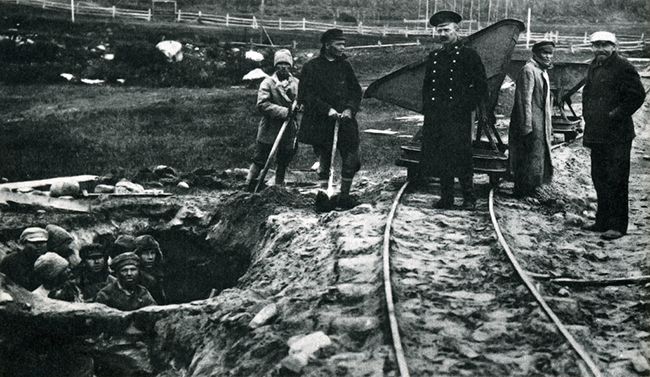
Perhaps the ultimate blurry of the image of Artem (when the hero does not have enough valentines in order to master the next compartment of the Solovetsky world, Prilepin draws an extra arm, ear or, for example, his tail), could be considered a serious drawback of the novel, but it was stupid to criticize this “monastery”. Quite quickly, the reader understands that Artem’s novel function is not in a demonstration of a person’s abilities to adapt to truly hellish conditions (according to Prilepin, the abilities of almost limitless). The task of the protagonist is to listen to a lot of monologues, to observe and occasionally catalyze many human conflicts, piece and unique, but quite typical, arising in the closed world of Solovki, but most fully describing the Russian world as a whole.
However, the demonstration of all this blooming (and, it must be said, very repulsive) diversity is not for prostin super -task. He writes not another encyclopedia of Russian life, but (and this, in fact, becomes clear only by the middle of the novel), the historical and philosophical treatise, the essence of which in the most brief presentation comes down to the famous maxim “no punishment without guilt”.
All the heroes (and Artem is no exception), as it is gradually becoming clear, are one way or another guilty - not always in those sins for which they got into the camp, but there are no people who suffer the punishment innocently among them. Moreover, even the border itself between the jailers and the prisoners, between the subjects and objects of bullying and torture is extremely blurred, and not only because the former periodically flow into the category of the latter, but also because they all represent a single community soldered by uniform rules and, as surprisingly, a single system of values. And since there are initially positioned as Russia in miniature, the following logical step suggests itself: Solovki - and wider the Gulag as a whole - were not an unnatural act of violence, not the result of an evil triumph of one (poor) side of the conflict over another (good), but, in fact, a consequence of a certain vicious and terrible universal consensus. Well, or if you look at the matter from a religious point of view, an act of total redemption of vice and sin accumulated over many centuries. Thus, Prilepin with one blow destroys the concept that remained for us from the times of perestroika with publicity, dividing the Society of the Stalinist era into sacrifices and executioners, into bright martyrs and gloomy fansing. In the Prilepinsky reality there are no good and sinless, and if so, then any abomination is permitted.

It is possible and, moreover, you need to argue about the moral viability of such a vision of the world (especially in our time, when in the worst case legitimization, and at best, the soft oblivion of the horrors of the Stalinist era becomes de facto by the social norm). The statement according to which the punishment is always fair, and the measure of this punishment determines the exclusively the general level of brutality (or, on the contrary, humanization) of society, looks simultaneously doubtful and inferior ethically. However, it is difficult to argue with one of the Prilepinsky theses: attempts to draw a clear border between good and evil in relation to the past are not only unproductive, are also fraught with a new turn of violence and alienation already in the present, and the adoption of their own history is, of course, the necessary, but at the same time much less pleasant and benevolent, which is commonly believed. In short, all lovers to speculate that the beneficiaries of today's regime are “grandchildren of the informers and Vertukhaev”, while people who are opposing him and suffering from him certainly lead their noble family from the victims of the Stalinist regime, there is a reason to think about their beliefs. Eugenika is a false and vicious thing, no matter how it expand it.