
Translated material
Battle of Bota with Pokemon
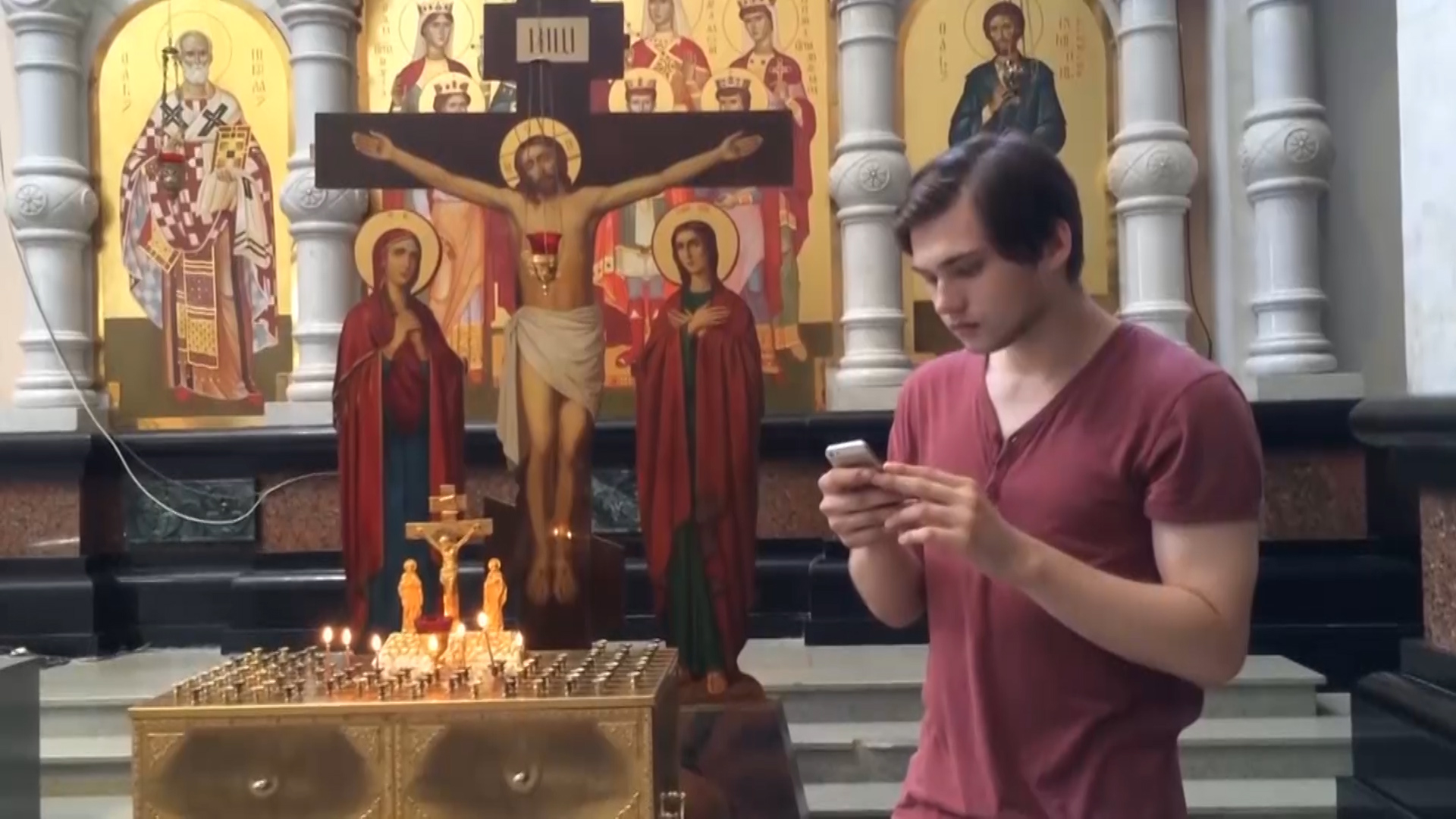
In 2011, Fedor Krasheninnikov - Yekaterinburg political scientist, publicist and public figure - published, together with the opposition activist Leonid Volkov, the Cloud Democracy book, which proposed a certain ideal political system, where, using computer technology, "every citizen has all the possibilities for direct participation in resolving issues."
It was a time when, for the most part, opposition sentiments reigned in the Russian -speaking Internet, Alexei Navalny was still perceived by many as a blogger, and Dmitry Medvedev, who spoke about new technologies and innovations and washed the reformer, was still in the presidential post.
At the end of the same year, tens of thousands of people took to the streets, protesting against fraud in the parliamentary elections.
For five years, which have been past the presidential post, Vladimir Putin returned to the presidential post, mass protests gave rise to a tough reaction of power and restrictions on freedoms in almost all areas of public life, including the Internet. Alexei Navalny became recognized leader of the opposition, was under court and was deprived of the right to run for the State Duma.
We intended to talk with Fedor Krasheninnikov about how relevant the ideas of “cloud democracy” are relevant for modern Russia, but the conversation began with the history of the 21-year-old Yekaterinburg video blogger Ruslan Sokolovsky, whom the court sentenced to two-month imprisonment on charges of extremism and insulting the feelings of believers-for the video in which he catches Pokemon in The Yekaterinburg temple-on-blood regrets that “he has not caught the most rare Pokemon-Jesus”: “what to do-they say that it does not exist at all.”
1000 Sokolovsky will come to the place of one Sokolovsky
Fedor Krashennikov believes that the history of video blogger is the development of the idea of "cloudy democracy":
- Not even so much “cloud democracy”, but at all the formation of a new information society, in which each person is his own, and any person can be the media. YouTube channel of this person has about 300 thousand subscribers. This is a lot. The plot for which he was judged was watched by 900 thousand people. The plots in which he discusses how he is threatened and want to plant - more than 700 thousand views. Whoever says that this is not the media, let the first throw a stone at me. At the local level, this is a very popular media. And this is just a young guy who may have a small team. This intersects closely with the theme of Vyacheslav Maltsev , who was also a video blogger, and now a federal politician. A person talks about politics for an hour and a half, and every day of more than 100 thousand people are watching. And these are not just some passive spectators, like news spectators on the first channel-spectators who simply turned on the TV and it is not clear what they are doing at this time. Those who watch video bloggers are active users, they deliberately entered this channel. And in this sense, the trial of Sokolovsky is a hysterical reaction of the security forces, the state (and these defenders of Orthodoxy in uniform are part of the state) to this sphere not controlled by them. То есть мы в 2016 году столкнулись с тем, что в России существует мощная альтернативная культура видеоблогинга, которая вдруг стала прорываться в реальный мир, и она по охвату своих зрителей уже может соревноваться с легальными СМИ, влияет на огромное количество людей, создает информационную повестку, о которой вынуждены говорить и традиционные федеральные СМИ, а все это в итоге завязано на новые технологии, которые позволяют любому человеку из любого места с помощью Internet and smartphone translate, video blog, report, and so on. In this I see a powerful jump up, and 10, 20, 100, 1000 Sokolovsky - these video bloggers will come to the place of one Sokolovsky, it is very popular among young people. This is part of the development of society. The fact that he fell under the distribution is trying to show all video bloggers on his individual example, which [although] cannot yet control everyone, but he will try. The authorities are trying to scare them.
The power itself arrested him
- That is, are you sure that this is a reaction of power, and not a society that is now rushing to everything when he hears something under the name "violation of the feelings of believers"?
- I did not observe in Yekaterinburg that society in the form of a crowd of people rushed to write statements to the Investigative Committee. I have not seen any public protests, manifestations on this subject. I only saw that the law enforcement agencies opened a matter and came to a person. Moreover, they did this not out of the blue, but immediately after he published a report on catching Pokemon in the temple - and you think who was outraged? Church? Society? No. His main pursuer and condemn was a TV presenter of one of the local channels, who is also a candidate for deputies from United Russia. That is, he regularly on the air of his transmission demanded that this person put, judge. Not society required this, but a specific television program on state television. No society arrested him, he was arrested by authorities. Even the church seemed to be taken by surprise, because it was not done from its submission. Maybe they are not opposed, but they were not initiators. All the conversations that in Russia there is some kind of society that creates an atmosphere of hatred, arrests and pursues, this is complete nonsense! I officially declare to you that there is no society in Yekaterinburg that would have achieved from the authorities to be arrested. The power itself arrested him. The press secretary of the Department of Internal Affairs, the police colonel says: "I believe that for such things you need to plant for five years." Is he a representative of society? Or is he a colonel and an employee of the Ministry of Internal Affairs? Why call people who are civil servants, society? And now there is a replication of all mud about Sokolovsky, and it is replicated by bloggers who are traditionally engaged in serving the interests of the power organs in Yekaterinburg and methodically poison everyone who oppose the authorities. Now they all attacked him.
This is the fatal mistake of the state
-That is, if this plot made any unknown video blogger, then no one would pay attention to him?
- Not a fact. If he had few subscribers, but some kind people accidentally saw him, it could be the same. I think that they did not expect, maybe even that he has so many subscribers. After all, the problem of our state - and, perhaps, is good - in that they are guided by people who do not understand how the Internet works at all. They do not understand anything at all. They think that this is something like a traditional media. They finance a huge number of bots and are convinced that on the other hand the same bots are opposed to them. I think they are sincerely convinced that this person has no 200-300 thousand subscribers. And they are. And this is the fatal mistake of the state, [which], in principle, is engaged in the suppression of any dissent. The guy is very active, defiantly, let's call a spade a spade a spade - although I do not understand that this is bad. A man chose such a career - to be a video blogger, YouTube allows you to monetize popularity, he monetized it, and did the right thing, that is, he behaved like a normal TV star - created scandals around him, went to conflicts and laid out all this. But the state decided to punish him - such the costs of the profession. I hope that they will be released in the near future, because this, of course, is the most perfect disgrace, but I do not think that his persecution is directly related to the fact that he has 300 thousand subscribers, and if there were 50 thousand, he would remain aside.
The state is most afraid of the Internet
- Five years ago, when you and Volkov wrote about the “cloud democracy” and it went to those elections in 2011, the picture was largely different. And when I am listening to you now - about the Internet as an alternative media - this is such a return back. Five years have passed with a sharp tightening of the regime, the political landscape is completely different. Do you still think that it is free Internet that poses a political threat to this state?
-Yes, I still think so, and over these five years I strengthened in the thought that the only site where it is possible to resist the pressure of the state is the Internet. That miserable Shapito into which the elections turned into - of course, is not at all what threatens the state. Whoever participates in these elections, no matter how percent the opposition parties gather, even if two or three deputies are in the Duma, even if there are ten, which can be called conditionally opposition, this will not affect the situation in the country and in society. But the growth of the information environment not controlled by the state on the Internet is very harmful to him. And the fright of the state, which we have observed since the winter of 2011, is the state reaction to the fact that they professed the Internet. After all, the whole situation of 2010-11 from which we proceeded when we wrote our book was caused by the fact that the state was not at all interested in the Internet or very little was interested. That is, on the Internet of 2010-11, the opposition ideology completely dominated, and the prosperous views were somewhere in the corner, they were not interested in anyone. And the state then considered the Internet some nonsense, a game for teenagers. And when in 2011 in the elections it suddenly turned out that Navalny is not just some kind of blogger with hamsters, but he has an impact on the situation in the country, and not only him, but also many other people, the state was sharply engaged in the Internet. And an attempt to engage in the Internet is an indicator, which the state is most afraid of. It is afraid of the Internet. Of course, we were largely wrong, we were idealistic and believed that the Internet was a good environment. The Internet is a neutral environment. Our main mistake is that we believed that the Internet itself is able to form a healthy expert environment. Unfortunately, we see that a bunch of crazy conspiracy nonsense comes out of the Internet, that the Internet has become an opportunity to combine marginal ideologies. If earlier the marginal sat at home and wrote letters to the district newspaper, which no one published, now they all find each other on the Internet, put likes to each other, they are pissing each other, and we are observing a whole network of completely crazy people, [about which we did not know before that there are such people in the country. On the other hand, it is foolish to pretend that Russia is only people who understand everything correctly, do not like Putin and so on. Russia is different, and the Internet shows this well.
Huge violent army of bots
[The idea of "cloud democracy] we proceeded from the fact that the state (not the Russian state, we are not such idiots to believe that Putin organizes electronic democracy in Russia) should be an active agent in the establishment of this area of democracy. In Estonia, relatively speaking, the state encourages this. And our state, of course, does not encourage any democracy, but it finances and displays it. All these terrible nonsense are a huge violent army of bots that can turn any discussion into a nightmare. The picture is created very bizarre, in 2010 in the Live Journal, where everyone was sitting, there was a quite pro -European, quite liberal party, and it seemed that the entire Internet is about this, if you go on the Internet, the general impression is completely different, but you do not need to take everything for a clean coin, because the picture is somewhat distorted.
I'm just a bathhouse of those people who come to me to swear
- When the state felt a danger, it created entire troll factories , and their tactics - any opinion to drown in the flow of other opinions, absurd or obviously stupid, any. And this is quite effective tactics. You can now look at the story with the 57th school , there are significant things for discussion, but all this drowned in the stream of a wide variety of opinions. And it turns out that no meaningful dialogue, no meaningful development of a position on the Internet is now impossible. And you still think that the Internet can form a positive program, that some group of people can unite as part of a positive program, as it was 5-6 years ago?
-Well, firstly, 5-6 years ago, too, no one united around the program. Volkov and I ran the whole of 2011 and offered to create some kind of system in which people could choose someone with their representative, and all this, of course, would be very useful in the winter of 2011, but the opposition’s coordination council was tried to choose only a year later, when the situation was already lost. But now I think that a normal discussion can be conducted on the Internet. For example, I do not notice these attempts to drown my opinion in shit, because I am just a bathhouse of those people who come to me to swear. And I do not understand those people who encourage the transformation of any discussion into a trash. Indeed, by and large, there is nothing more stupid than sincerely believe that you need to listen to everyone who came to insult you. If it seems to a person that this contributes to discussion, I can only sympathize.
Probably too lazy to do this or the laptops in Moscow were inaccessible
Discussion is when people who want to agree. If you cut off everyone who came not to agree, but to mock, mock, scream slogans, then it is quite possible to organize everything. And the masses are sites, portals, blogs where there is a calm and constructive discussion, and people who are trying to run there and shout, they are simply bath and do it right. I urgently call everyone - bath, bath and again bath those who insult, swear and scream slogans! Now everyone can create a site, blog and talk about his position. And people who agree with him will gather around him. Here, for example, Vyacheslav Maltsev, no matter how they treat him, he had a blog, where he spoke about politics every day, which, by the way, none of the Moscow liberal politicians allow himself. Why? Probably, it was just too lazy to do this or the laptops in Moscow were not available, I don’t know what was happening there. Here Vyacheslav Maltsev was sitting in Saratov and every day he talked about an hour and a half about politics. And someone watched this man. And around him the audience gathered, which then came to the primaries of Parnassus and voted for him, and now if somewhere Parnas has some kind of organizational structure, these are people who are campaigning for Maltsev. And tell me - Maltsev drowned in the stream? He simply did not let himself drown.
Investing money in a real policy in Russia does not pay off
“You mentioned Navalny, Maltsev.” These are people who came out of the Internet to Real. That is, you have to go to Real, you need to participate in the elections, and the Internet is only a tool for going to a political struggle in the real world?
- I do not think so. I have a very specific attitude to what is now called real policy in Russia. If Navalny had all the forces that he spent on registration of the party, on the elections in Kostroma, Novosibirsk and other activities, would spend two years ago such a video of the video resource that the same Maltsev created, now Navalny had had millions of subscribers and a huge mobilized audience. Investing money in a real policy in Russia does not pay off. Now the deputies, who went from the opposition to participate in the elections, will spend the already skinny resource opportunities to achieve nothing. Most likely, they will lose in their districts, because the situation there is very difficult. And I think just that the Internet should not be an instrument for moving to real policy, because as soon as a person from the Internet goes into a real policy, they end it there. Look, Navalny had an audience, he could take people out into the streets, but he could not do anything against the court. The court forbade him to participate in the elections, and even though you crack! This means that in the real policy of such a person as Navalny, does not exist. But in the virtual world, if he had invested there (he was investing, but if he had been invested even more), this would not have damaged his influence.
If 300 thousand votes on the Internet are collected in support of Navalny, he must be a deputy of the State Duma
The future of democracy is not at all that someone will come out of the Internet in the real world, and the future of democracy is that democracy itself must go on the Internet, and political discussions, like voting, should take place on the Internet, verified. I do not understand why you need to collect paper signatures. This is the topic that we discussed with Volkov because he collected signatures, and he was removed from the elections in 2011. Если есть у человека электронная подпись, почему он не может поставить подпись в поддержку того человека, которого он поддерживает? Maybe! Зачем эти все бумажки? А если он может поставить подпись, значит, он там же может и проголосовать, и его голос абсолютно точно верифицируется, его не может тетенька в избирательной комиссии подделать. Все очень просто и близко. Поэтому государство и бьется сейчас в такой истерике, что убрать эти препоны очень просто. Я уже не говорю о том, что если в поддержку Навального собираются 200 или 300 тысяч голосов в интернете, то он должен быть депутатом Госдумы. Вот где демократия – там, где государство не может скрыть, запретить, остановить. В реальной политике оно всегда это сможет. Поэтому я абсолютно ничего не жду от выхода людей из интернета в реальность, а я жду совершенно от другого – что в интернете сформируется совершенно другая, свободная бесцензурная среда, которую государство не сможет ни остановить, ни запретить, как бы ему ни хотелось. Свободная среда, которая рано или поздно выплеснется и сметет эту всю реальность. Сметет не в смысле, что в Госдуме будет сидеть на задней скамеечке одним из 450 депутатов, избранных непонятно кем непонятно где. Нет, эта вся система в принципе должна хрякнуть и самоликвидироваться. Как советская система. Ни одна система не рухнет из-за выборов. Советский Союз не на выборах развалился. Коммунизм не на выборах упразднили. Наивно надеяться, что Путин разрешит провести выборы, на которых он же и проиграет. Должна сформироваться критическая масса людей, которая потому и называется критической, что игнорировать ее мнение будет нельзя. И это изменит ситуацию в стране.
Всех не пересажают
Государство не может игнорировать то, что в интернете кто-то что-то говорит и это поддерживают. Всех не пересажают, и если тысячи блогеров будут говорить с утра до вечера аудитории по несколько сотен тысяч человек то, что говорит тот же Соколовский, – это очень сильно бьет по православной церкви, по государству. Если вместо одного Вячеслава Мальцева будет десять тысяч видеоблогеров, у каждого из которых по сто тысяч подписчиков, и они будут говорить о политике с разных точек зрения, с националистической, с либеральной, это размоет и уничтожит аудитории государственных телеканалов, или там останутся только пассивные люди, которые в принципе никогда ничего не решают. Я абсолютно не верю, и не жду, и не интересуюсь восстанием масс, что прямо весь народ когда-то восстанет и что-то сделает. Такого никогда не было и не будет, это и не нужно. "Облачная демократия", как и любая демократия, – в том, что пассивные люди делегируют свое право выбирать активным людям, тем, кому это интересно, а сами продолжают смотреть сериалы и сидеть дома или на скамеечке, и им совершенно все равно, что происходит в политике. Те, кому не все равно, и формируют критическую массу, а собирается она в интернете. Пока ее нет, поэтому ничего не меняется. Как только она сформируется, перемены наступят.
Если бы был список, в котором фигурировали Навальный и Ходорковский
– Государство, мне кажется, приветствует, когда люди идут в интернет и там что-то обсуждают, государству нравится этот расклад: люди сидят где-то дома, в кафе и что-то печатают, а на поверхности все тихо и гладко. Но правильно ли я понимаю, что вы против того, что оппозиция идет на выборы?
– Я не то что против, я просто знаю, что это кончится ничем. Даже если в Думе будет сидеть Дмитрий Гудков и еще кто-нибудь... Дмитрий Гудков и в этой Думе сидел, ну и что, сильно он помешал работе "бешеного принтера"? No. И будет он дальше там сидеть – и что изменится? Я вовсе не против, каждый сам для себя решает. Но я вижу, что самые сильные игроки от оппозиции не допущены к участию в выборах, например Навальный и Ходорковский. Если бы был список, в котором фигурировали Навальный и Ходорковский, я бы сказал: вот это список российской оппозиции. Но такого списка нет. В списке есть Касьянов, Мальцев, Явлинский, кто-то еще, но я не верю, что это оппозиция во всей своей красе. Это не самые сильные люди в оппозиции, не самые влиятельные, не самые популярные. То есть оппозиция допущена в усеченном формате. К сожалению, это люди, не способные поднять миллионы, и мы это обнаружим по итогам выборов. Нет там людей, которые способны мобилизовать, и у них нет возможности мобилизовать, потому что для контакта с аудиторией важен доступ к аудитории. Государство, пока не наступила окончательно информационная революция новых медиа, все еще контролирует основной массив избирателей через телевидение. Поэтому эти выборы такие убогие.
Я живу в Екатеринбурге, какое мне дело до митинга в Марьино?
И я абсолютно не согласен с тем, что государство хочет, чтобы люди шли в интернет и там обсуждали что-то. Государство хочет, чтобы люди смотрели телевизор, ходили на выборы и там голосовали за то, что им говорят по телевизору. И оно на это работает, предпринимаются огромные усилия, чтобы вернуть аудиторию на место, чтобы она смотрела телевидение и делала то, что по телевизору ей говорят. И я не понимаю, почему сидеть в интернете и обсуждать какие-то вещи – это плохо, а выйти на митинг в Москве в каком-нибудь Орехово-Кокосово – это хорошо. Я живу в Екатеринбурге, какое мне дело до митинга в каком-нибудь Марьино? Ну, собрались в Марьино 5 тысяч человек, 10 тысяч – и что? Это абсолютно внутримосковская повестка, которая никак не влияет на ситуацию в стране. Особенно после митингов в 2012 году. Ну, собирались по 100 тысяч человек, но по сути ничего не изменилось. Поэтому говорить, что государство боится выхода на улицу... Ну, выйдут опять на улицу 100 тысяч человек, постоят и разойдутся, а потом 100 человек посадят в тюрьму, например. Мы все это проходили уже! Я не говорю, что это плохо в принципе, но я говорю о том, что выходить на улицу имеет смысл, когда это точно к чему-то приведет. А так просто ходить, как на работу, на митинги, ну, для каких-то жителей Москвы, наверное, это интересное развлечение, но Россия – это не только Москва. Из других городов в Москву на митинги не поездишь – далеко и дорого. А в других городах митинги получаются маленькие, и Москва их игнорирует. Государству, может, и выгодно показывать эти маленькие митинги и говорить: ну, вот, посмотрите, вся оппозиция собралась, вот они! Поэтому государство больше всего боится, что упустит момент, когда люди выработают какую-то общую повестку, и выяснится, что таких людей миллионы, и эти люди друг друга увидят и поймут, что вот их очень много, нас очень много. Пока такого ресурса нет, потому что эта критическая масса еще не набралась.
Они приближают свой конец
– Многие говорят, что в экономике дела плохи, но это может тянуться еще годами. Предстоят президентские выборы, и понятно, что Путин переизберется. У вас есть представление, когда эта критическая масса наберется где-то?
– Я не могу предсказывать, но думаю, что это никак не связано с графиком выборов в России. Конечно, на тех выборах, которые организует Путин, он победит. Я не думаю, что это связано с экономикой, потому что экономическая ситуация может довольно долго ухудшаться. Я придерживаюсь теории "черных лебедей"... Или можно по-другому сказать – на чем-нибудь власть сама споткнется. Ведь экономическое положение людей может ухудшаться, а потом одно неверное решение может окончательно взорвать ситуацию. Причем совсем не то, о котором все думают. Поэтому я думаю, что никто не может предсказать, когда в России наберется критическая масса, потому что, как только она наберется, ситуация тут же изменится. Уверяю вас, где-то сидят тысячи людей на большой зарплате и с утра до вечера бесконечно просчитывают эту ситуацию, чтобы, не дай бог, она не случилась. И с этим косвенно связаны и эти миллионы ботов в интернете, и все эти репрессии против непонятных мальчиков-видеоблогеров. Они дуют на воду, чтобы, не дай бог, чего-то не случилось. Но это обязательно случится, потому что чем больше они дуют на воду, тем больше они приближают свой конец.