
Translated material
Sweets
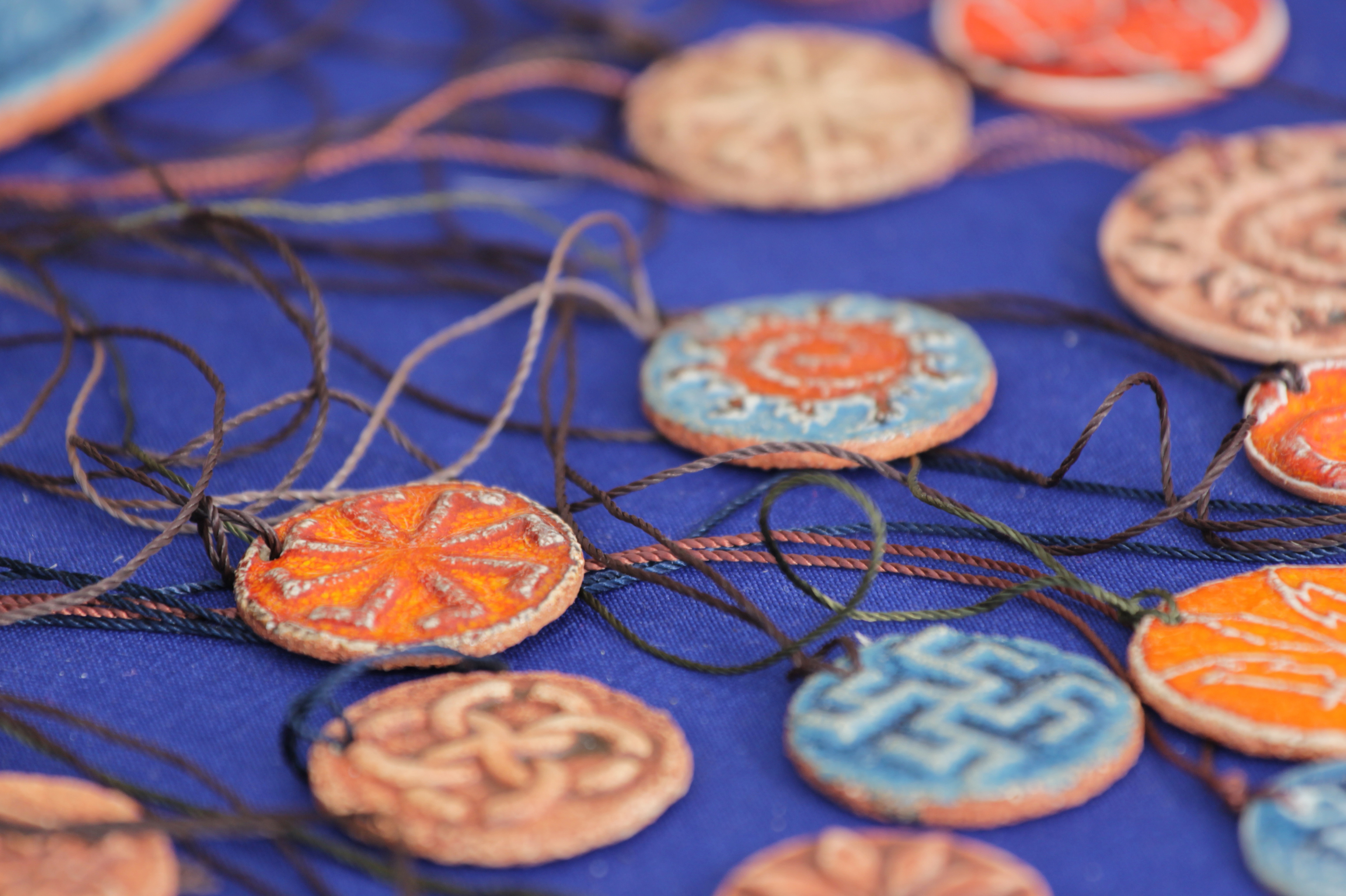
Once again, looking at the famous museum vessels near Kiev, you recall Viktor Petrov , who wrote that in the "ornamental art of Tripoli, the art of Ukraine reached the highest level." That is, in five or all six millennia, up to the middle of the twentieth century, nothing better appeared in the Ukrainian space. He notices this during his own bitter parting with the idea of the existence of cultural and historical progress. The 1946 is coming, the Second World War has just ended. Petrov is in Munich, where he left Ukraine in view of the advancing Soviet troops. He is 47 years old, he is a large Ukrainian scientist and prose writer-neo-Lassik. He is the number one among compatriots-emigrants, before the war-the director of the Institute of Archeology in Kyiv, in the war-the lieutenant of the German army.
What just does not happen in the world! In the midst of the war, in the summer of 1943, in the German-occupied, almost lifeless Kharkov, a meeting of the Satisfaction (cell) of the Ukrainian intelligentsia is arranged in German form, and there, in German form, he makes a report “On Modern Ukrainian Poetry”, and after it the word is given to the civilian German Professor for the report “On Modern German Poetry”. What does our scum do in Kharkov? The devil knows him, but, among other things, edits the Ukrainian magazine published by the Germans, and is polished at night a love novel, which prints in this journal. Yes, a novel about love, and platonic, that is, especially sharp in the thankers who have known women and especially men. Yes, in 1943, in the Prostnemetsky Kharkov. In his report, he analyzes the verses of Ukrainian poets in newspapers and magazines of occupied territories, notes dignity and disadvantages, highlights such a plus as the fact that they are striving in Europe - good, very good and simply beautiful verses that could not be printed under the Soviet regime.
After a quarter of a century, the archaeologist and ethnographer Petrov, known in the narrowest scientific circles, will be buried in Kyiv with military honors, which relied on ranks not lower than the colonel. So it turns out that he was so and that, and also by a Soviet intelligence officer. In everything that was written to them under the Germans, if you throw one duty-gluing mention of Goebbels, he did not sin either against conscience or against the measures of scientific. Moreover, with his position under the Germans, he took advantage of to write the first work on Ukrainian writers destroyed by Stalinism in the twentieth century. In the collection of Kharkov poets in 1943, the names of some of them were first sounded. Yes, a novel about love, a study on the Stalinist terror, a report on Ukrainian poetry, intelligence in Moscow (most likely about Ukrainian nationalists) - everything is written simultaneously, under the thunder of the war, one person in the form of a German officer.
So, about the Tripoli ornament. Or him? No, it’s so easy for me not to get rid of him. Petrov wrote about the ornamental art of Tripoli almost exactly 70 years ago, that is, at the beginning of the first post -war and, fortunately, the last hunger in Ukraine. My eyes are still facing the swollen faces of classmates. Was the Tripolsky Skulls then ... I’m not saying: to us, the children of the war, and even the most competent of our teachers? Another thing is today. Looking at these things once again, you are convinced that nothing equivalent has appeared for the decade after the Petrine article, although the plexus of incredibly and oddities continues. A far from science, almost childish, comes to mind, the thought: Ukraine has not ended yet, it, in fact, is just beginning-and suddenly something like this is still like that?! In the end, it is no coincidence that the main thing in this ornament is the idea of movement, eternal circulation. Another effort - and it begins to reach you that a flood is a reality, and not just a word or ornament. In the continuity of the rotation, all our hopes and pledges, if we cannot do without them.