
Translated material
The DPRK conducted tests of the most powerful atomic bomb in its history
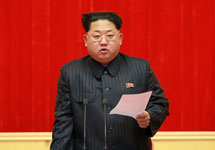
The DPRK conducted another nuclear test. The corresponding message was widespread by the North Korean news agency TSAC. "The DPRK will continue to take measures to strengthen national nuclear forces in quantitative and qualitative terms in order to ensure the dignity and the right to exist in the conditions of an increasing nuclear threat from the United States," the report says.
The note emphasizes that the nuclear warhead can be installed on ballistic missiles, and "the DPRK has reached a higher level of technology."
Earlier, the Ministry of Defense of South Korea estimated the power of an explosion of about 10 kilotons. "For comparison, the power of the bomb tested in January 2016 amounted to 6 kilotons," the document says. It also notes that the current explosion has become the most powerful in the history of North Korean nuclear tests.
According to the US Geological Service, at night in North Korea an artificial earthquake was recorded, the magnitude of which was 5.3.
The explosion was recorded by the Russian special control system. As a source familiar with the situation told Interfax, "the power of the undermined nuclear explosive device was about 10 kilotons in the TNT equivalent."
The epicenter of fixed shocks is located near the village of 20 kilometers from the Pangiri training ground for testing nuclear weapons.
As expected, the UN Security Council on Friday will hold an extraordinary meeting on the DPRK. South Korea, Japan and the United States turned to the UN.
The fourth, the fourth nuclear tests of the DPRK conducted in January, previously tested were carried out in 2006, 2009 and 2013. In response, the UN Security Council imposed various sanctions against Pyongyan. Over the past two years, the republic has not conducted nuclear tests, limiting itself to the launch of ballistic missiles in response to large -scale military maneuvers of South Korea and the USA.