
Translated material
Yamal ulcers
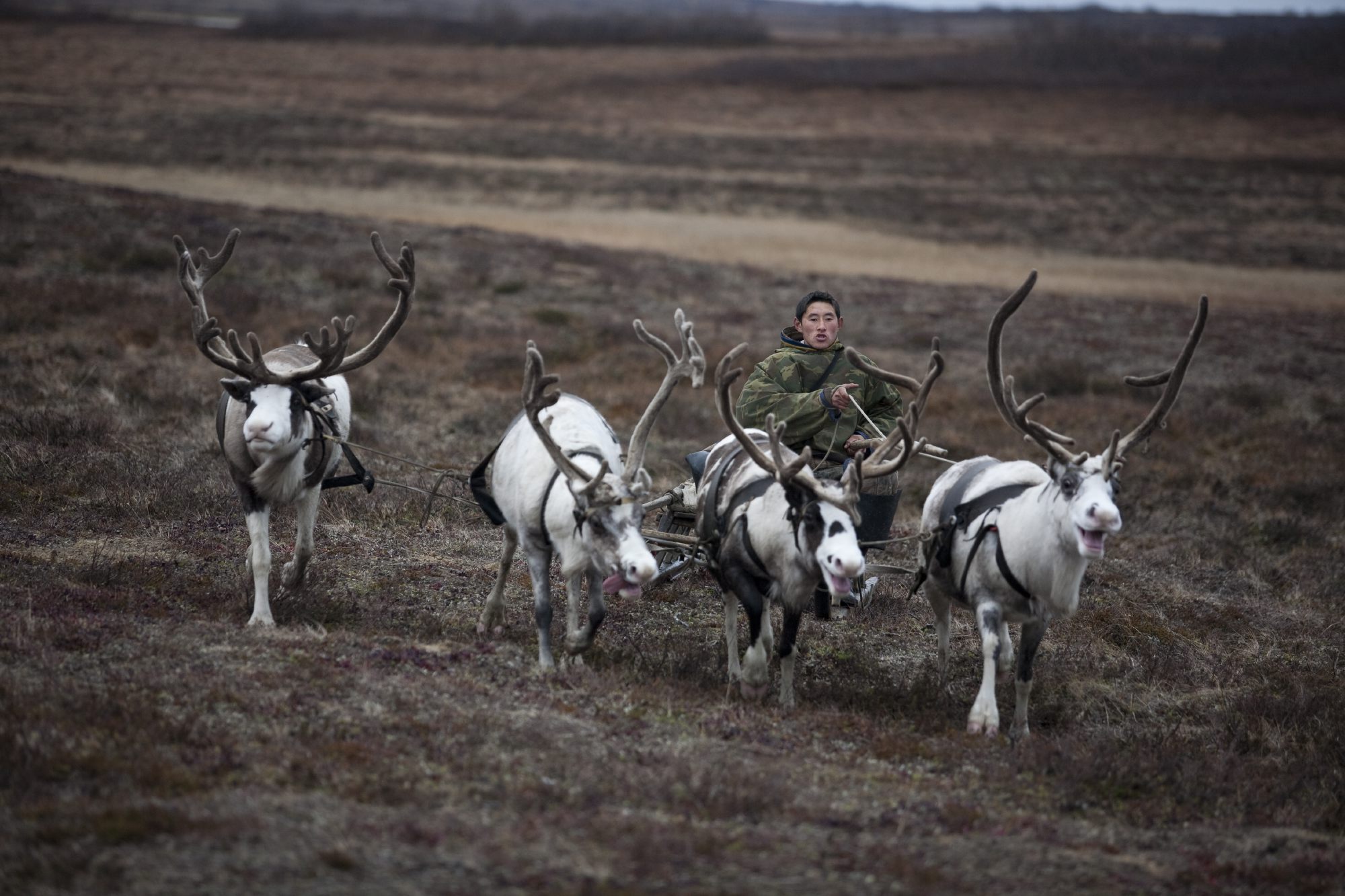
The abnormal heat on the peninsula Yamal led to a flash of anthrax: this summer, the disputes of a terrible disease were released from eternal permafrost. The Siberian claimed the lives of one boy and two thousand deer. The Greenpeace team of Russia went to Yamal to ask the indigenous Nenets about what happened, but faced serious opposition
“You will feed the deer, you will go away - and it falls dead, in a day it swells like a ball, to such an end that it seems to be bursting. We thought the deer had boiled in our heat - they had not yet been cast, they were in the winter “fur coats”. Then the neighbor came to us on foot, he says that he also had 50 deer. Then three people went to Salekhard, to reach large offices. ”
We are sitting in the apartment of Alexei Nenang, Nenza-Tundrovik from Yamal. This apartment, which is not very different from the placement from the plague, he received the roof with a huge family of his brother under the program for providing tundroviks with housing. Alexey and his relatives ended up at the epicenter of a Siberian ulcer, the outbreak of which occurred on the peninsula this year. The whole family was evacuated, women and children were put to the hospital for the prevention of antibiotics, plague (traditional Nenets huts) together with all the utensils burned, sledges (sleds, which the Nenets are used for movement) were treated with a special solution. Alexey watched his life burning.
“The soldiers came, ordered everyone to sit in helicopters, in case of disobedience they used force,” the reindeer herders say. - People, of course, did not want to leave, leave their plague. If the site is infected, then the soldiers burned everything there. Plags burned, sledges, corpses of animals ... "
If the site was infected, then the soldiers burned everything there. Plags burned, sledges, animal corpsesOn July 25, quarantine was announced in the Yamal district of the Yamalo -Nenets Autonomous Okrug. At this moment, 389 people were in the alleged emergency zone, all of them were evacuated from the infected tundra, almost 100 people were hospitalized, 25 of them were confirmed by the diagnosis of Siberian ulcer. The 12-year-old boy died from the ulcer, from which his grandmother died, it was not possible to establish. Troops of the radiation, chemical and biological protection of the Ministry of Defense of the Russian Federation, as well as the Ministry of Emergencies and doctors, were sent to eliminate the epidemic.
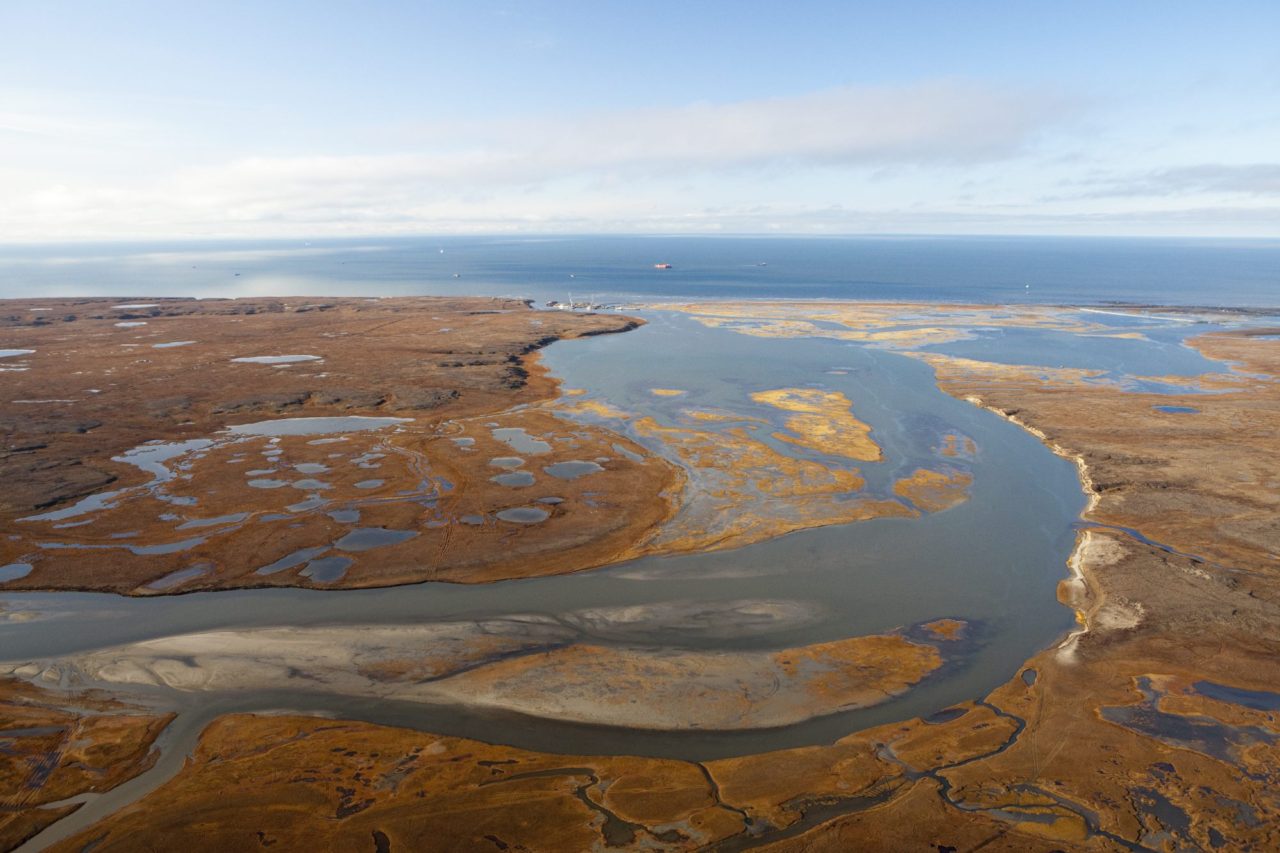 Peninsula Yamal from the helicopter window photo: Steve Morgan/Greenpeace
They relocated the Nenets to the “clean tundra”, to temporary tents. Clothes, utensils, sledges, deer skins - they had to leave all their property in the hearth of the Siberian. After some time, 90 million rubles were allocated from the budget of the Autonomous Okrug and new plagues were built to the victims. The Yamalians, who sacrificed their clothes and homemade utensils to people who lost everything in an infected tundra, provided great assistance. In addition, 10 thousand rubles were allocated for each victim of the region. However, the main issue is now the restoration of the number of deer - after all, the preservation of the traditional way of life and the whole culture of the Nenets depends on them. But this question is still open. The Nenets themselves do not believe in the help of the state, but for 10 thousand, according to them, you can buy exactly one and a half deer, while many of them lost dozens.
It is very difficult for a city resident to understand this tragedy. Can you imagine that your whole life depends on a pair of hundreds of deer and a couple of dozens of poles from which the plague is built? A deer in the tundra is your present and future. Every child knows this. Tatyana Rocheva works in a boarding school, in which the children of the tundroviks study. She tells how one day the “first -grader” asked her:
- And how many deer do you have?
- I have no deer.
- How not? So you are completely poor?
At the end of the school year, the boy begged for his family to give Tatyana at least one deer, because you can’t live without them. A deer is life.
Children of nomadic Nenets study in boarding schools. From the camp to the camp are dozens, or even hundreds of kilometers, it is impossible to organize a school in the tundra. Therefore, in early September, the helicopter flies around the camp and takes the children to school. Tatyana Rocheva works as a cook at the boarding school and talks about her professional pain: at first it is very difficult to feed children of indigenous Nenets-they bring raw meat from home, and when it ends, they eat only bread and tea. They sleep without undressing and not straightening the bed, like at home. And for one student I had to free ... The cabinet in which she was sitting for hours - the closed space reminded the girl of her native plague.
What to hide them
The last epidemic "Siberks" on Yamal happened in 1941. Where the corpses of the fallen deer were buried - no one knows, the maps with the marked burial grounds are classified. The leadership of the Yamal district even confidently states that there are no burial grounds in these territories, although experts (including the All-Russian Research Institute of Veterinary Veterinary Veterinary and Microbiology of the Rosseloscademia) are reported by the media about dozens of burials. However, this is a matter of terminology: the authorities of the Yamalo -Nenets Autonomous Okrug, and the boundaries of such zones are blurred, so that the disputes of the Siberian ulcer may be anywhere else. Moreover, in 2007, the leadership of the Yamalo -Nenets Autonomous Okrug very improvisingly cancel the annual vaccination of deer from a Siberian ulcer.
The leadership of the Yamal district states that there are no burial grounds in these territories, although experts report dozens of burials“We never saw cards with burial grounds,” says Alexei. - Young people do not know about the old cattlecards. Now in the tundra, in the area of the hearth, they put signs: do not go here, they say. But in winter, it will still be necessary to go through this hearth, this is our route of Kalania [Nomading - TD]. And in the summer we will bypass. ”
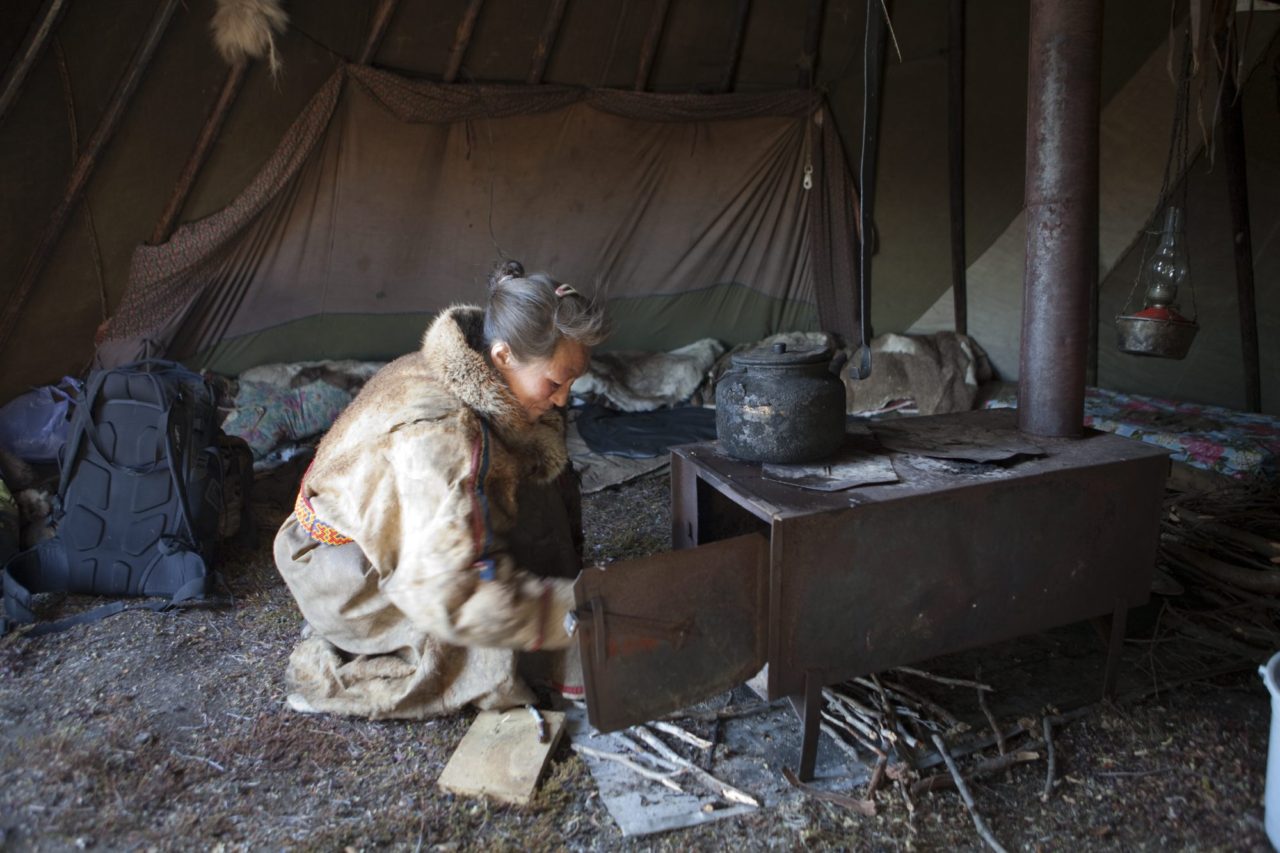 Nenka makes fire in the plague to boil tea photo: Steve Morgan/Greenpeace
We leave Aleksey’s apartment on the streets of the village of Yar-Sale-the district center of the Yamal district of the Yamalo-Nenets Autonomous Okrug. Another same village is unlikely to be in the world. Yar-Sale is located in the border zone, anyone is not allowed here: foreigners, for example, need to submit an application for a pass to the FSB and wait for two months humbly. On the 59th day after filing the application, our foreign photographer refused to see Yar-Sale without explanation. Sorry. I think this village would have struck him: flowers are blooming here right on the eternal permafrost, cheerful music plays on the street through the loudspeakers, the announcements of the local culture house sound, the buildings are built from colored bricks, and city services are shifting tiles on the central streets, which does not want to lie on the swampy soil of the tundra. Externally, the village creates a feeling of an Arctic oasis.
The security of the oasis is appropriate: upon arrival, four police officers meet me and my colleague from Greenpeace, two of them carefully photograph our passports and ask about the purpose of arrival. From this moment, people in civilian clothes begin to follow us.
We settled in a private hotel and agree on a meeting with the veterinarian-spell of terrible events in the tundra. He must come to our number and bring photos, does not want to discuss anything on the phone. Under our window, the UAZ is on duty, which “led” us from the very arrival in the city. The Nenets say that this is the car of the head of the criminal investigation department Yar-Sale. We treat such “protection” with respect, not yet suspecting how it will end. The veterinarian Alexander approaches the gates of the hotel and calls me, but the connection suddenly breaks off. After three minutes I get SMS:
“I was taken right from your hotel.”
- In what section are you? Demand explaining the grounds for detention.
- I am in the department of psychonarkology.
Thus began our adventures in the Yar-Salya, as local residents call the village. Later, with the help of journalistic requests, the duty unit managed to find out that Alexander was taken to an inspection to a narcologist and released after three to four hours. However, the connection with him was completely interrupted, he stopped answering calls. The correspondent of Novaya Gazeta, who managed to meet with Alexander a couple of weeks ago, handed us photos of the veterinarian. On them, deer, which began to die from Siberks on July 7. A detachment of veterinarians arrived in the tundra only on the 16th, and the evacuation of the Nenets began on July 25. Alexander was one of the first to notice that something was wrong, and tried to call doctors to the tundra, but in the administration they waved his hand at him. But the fact that the first deer fell on July 7, and the quarantine was introduced only on July 25 is known to everyone. The date of the first case is reflected in the report of scientists. It would seem what to hide?
Deer began to die from Siberks on July 7. The detachment of veterinarians arrived in the tundra only on the 16th, and the evacuation of the Nenets began on July 25The next day, we are trying to leave Yar-Sale to the tundra in order to chat with reindeer herders, find out about ulcer, melting permafrost in the tundra and other changes in the ecosystem of the peninsula. But suddenly, in our hotel room, the chairman of the board of the local public organization appears, who asks us why we tried to meet with the veterinarian, and offers to tell about everything that happened. In between, she also reports that the exit from Yar-Sale is closed, and we can’t leave without a special permission from the village. Meanwhile, Nenets, who volunteered to help us with the boat, receives calls with threats and more specific questions like: "Where did you climb, b ***?"
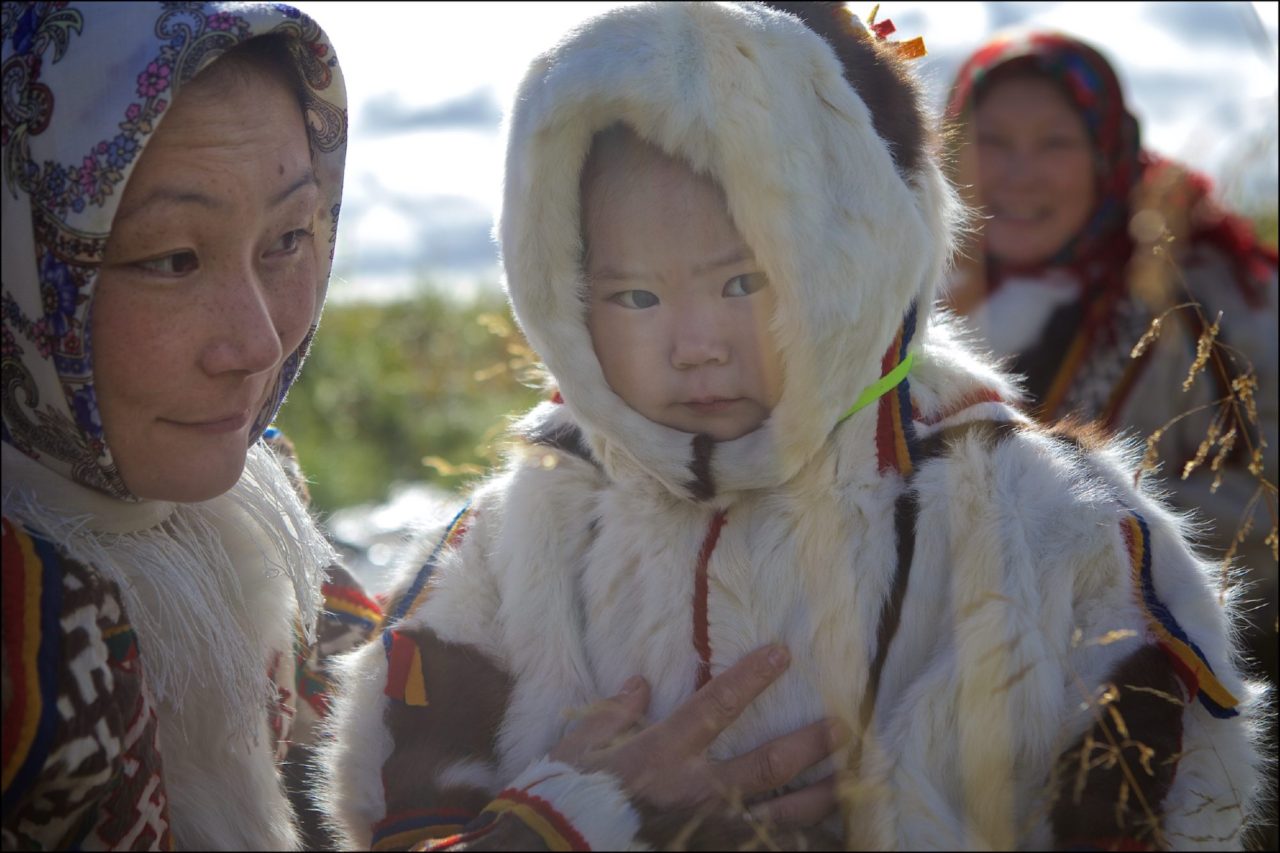 Nenets women sew national clothes with their own hands from deer skins photo: STEPHEN NUGent/Greenpeace
We go to the local administration and politely ask to show decisions that prohibit leaving the village. The quarantine was declared by order of the Governor of the Yamal -Nenets Autonomous Okrug Kobylkin, but the corresponding order in open sources did not appear. The decree that the lawyers of the Russian Greenpeace managed did not contain the most important - applications for which restrictive measures and the boundaries of the quarantine zone were determined. We ask us to inform us of these borders and ask for the administration.
After that, the representative of the administration goes to the corridor to call and returns with good news: "Your question has been resolved, but I will have to go with you." Joyful music on the streets of Yar-Sale sounds sad for me.
Tea and oil
According to the tributary of the Ob, we get to the picturesque hill, on which two plagues are whitewashed. We are met by Vitaly Serotetto, good -natured elderly Nenet. We go into the plague, tea boils inside at the stake - things are not done without tea, and there are no conversations. Strong, fragrant tea in the tundra is an attribute of comfort and a sign of hospitality, serious conversations begin after the second cup.
The herd of Vitaly from the Siberian ulcer was not injured - it grazed far from the hearth. But Nenets also want to tell us about another ulcer on the peninsula - oil and gas development.
“Novoportovskaya Square [area with. The new port, Yanao, where the Nenets also live] occupied the deposit, there are no transitions for deer. And the gas pipeline on the stone cape from the new port is built so that the deer will not pass under the piles. The people there seriously squeezed. ”
Gazprom Neft began oil production at the Novoportovskoye field in 2012. According to Greenpeace, the first oil spills can begin after 10 years - it is during this period that oil pipelines are obsolete, which companies always save, so pipes begin to rust and flow. The Republic of Komi, Khanty -Mansi Autonomous Okrug and the southern regions of the same Yamalo -Nenets Autonomous Okrug passed. Due to “oil puddles”, social tension arises-conflicts between oil workers and reindeer herders. This misfortune has not yet reached the Yamalsky district of the Yamalo-Nenets Autonomous Okrug, but they are already waiting for it: “Previously, they have gotten along with gas workers, but now it will affect one plague, then the other.” Greenpeace of Russia by the Government of the Russian Federation to oblige the companies to replace by 2022 all oil pipelines over 25 years old with new ones.
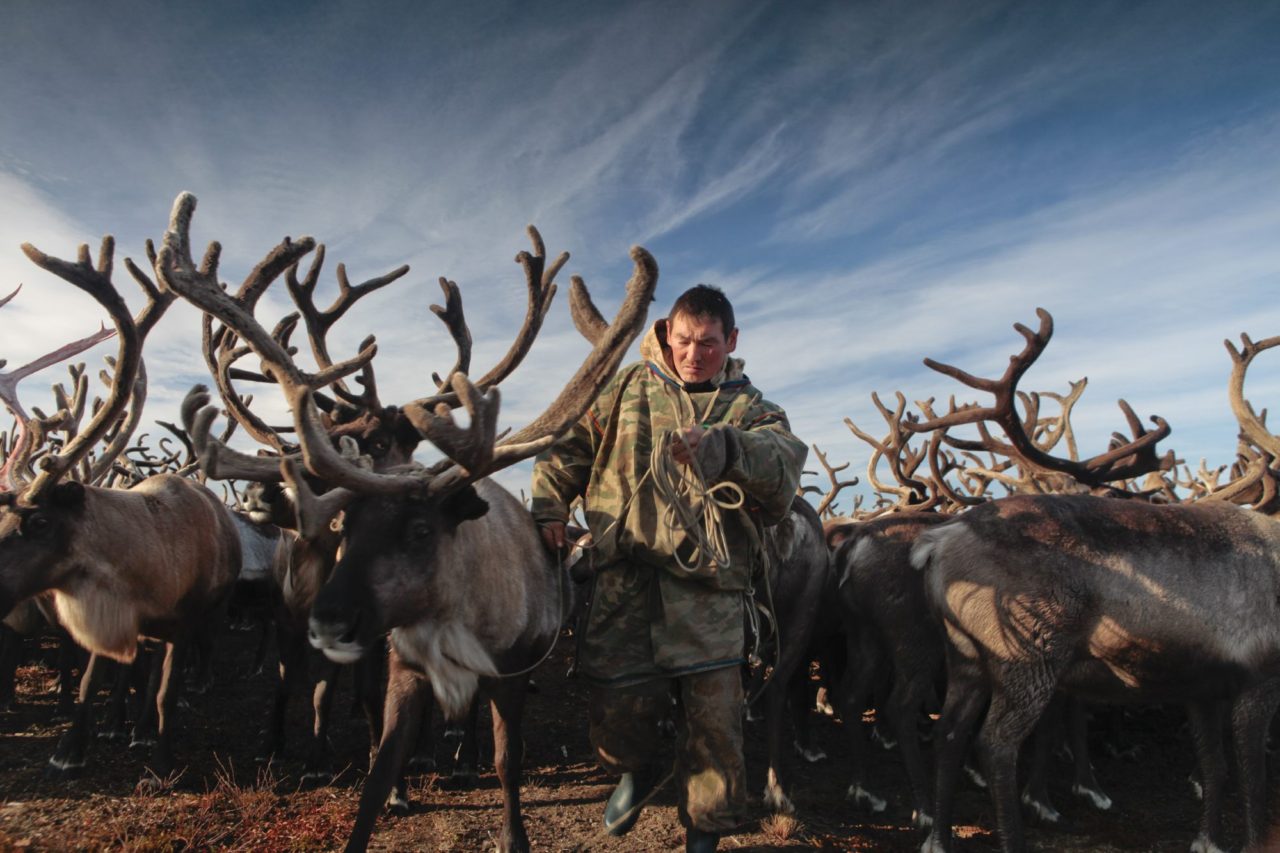 A deer for a radical resident is food, clothing, transport and money photo: Steve Morgan/Greenpeace
“In some year it was: the fishermen pull out the grid, and there-fuel oil. Somewhere, maybe the pipe broke. Soon, the deer will not graze there at all. From nature you can take exactly as much as you need, you do not need to take excess. Our ancestors had such a law, but now these laws are not respected on our land at all, ”Vitaly complains, escorting us to the boat. - Maybe they want to hide us like Indians, to free the territories for Gazprom? Just think, several families of reindeer herders will die, the state will only benefit from this. ”
We, as Indians, want to be hidden, and the territories are free for GazpromOn a motor boat, we drive up to other plague, where we have to stop for the night. It is already getting dark, and a huge full moon hangs in the sky. We are met by the owner Peter Laket, then his wife Lyudmila comes out to meet. In the traditional culture of the Nenets, women are very modest and caring fairies. We go into the plague where the “in black” boils the kettle: some Nenets boil tea on an open fire right in the hut. Smoke from the habit crushes his eyes. We sit on deer skins scattered on the floor, and treat ourselves with raw fish.
“In the summer I went to the Novoportovskoye field, I didn’t like it at all, I didn’t like it at all,” says Peter, drinking tea from the saucer. - Landfills, construction garbage near the roads. On TV, the field is shown to us - cleanly. But in our army, it was also like this: before the general arrives, we do the order, where the order is - we show there. And here, on Yamal, we also have. ”
The same mischievous and good -natured dogs run from the street to the plague with the children, one of them turns out to be neighboring and quickly led out. The owners offer us more fish, a glass with vodka is passed in a circle - each 100 grams, only to warm up. Nenets are people of a very wide soul. In their simplicity, there is both strength and naivety. Perhaps that is why somehow in a special way to listen to the sakely how nature around them dies, and to feel the helplessness that they feel in front of the inexorably advancing pasture by the industrialization of Yamal. Industrialization, which at the same time brought apartments and snowmobiles, the ability to treat and teach children, sell deer.
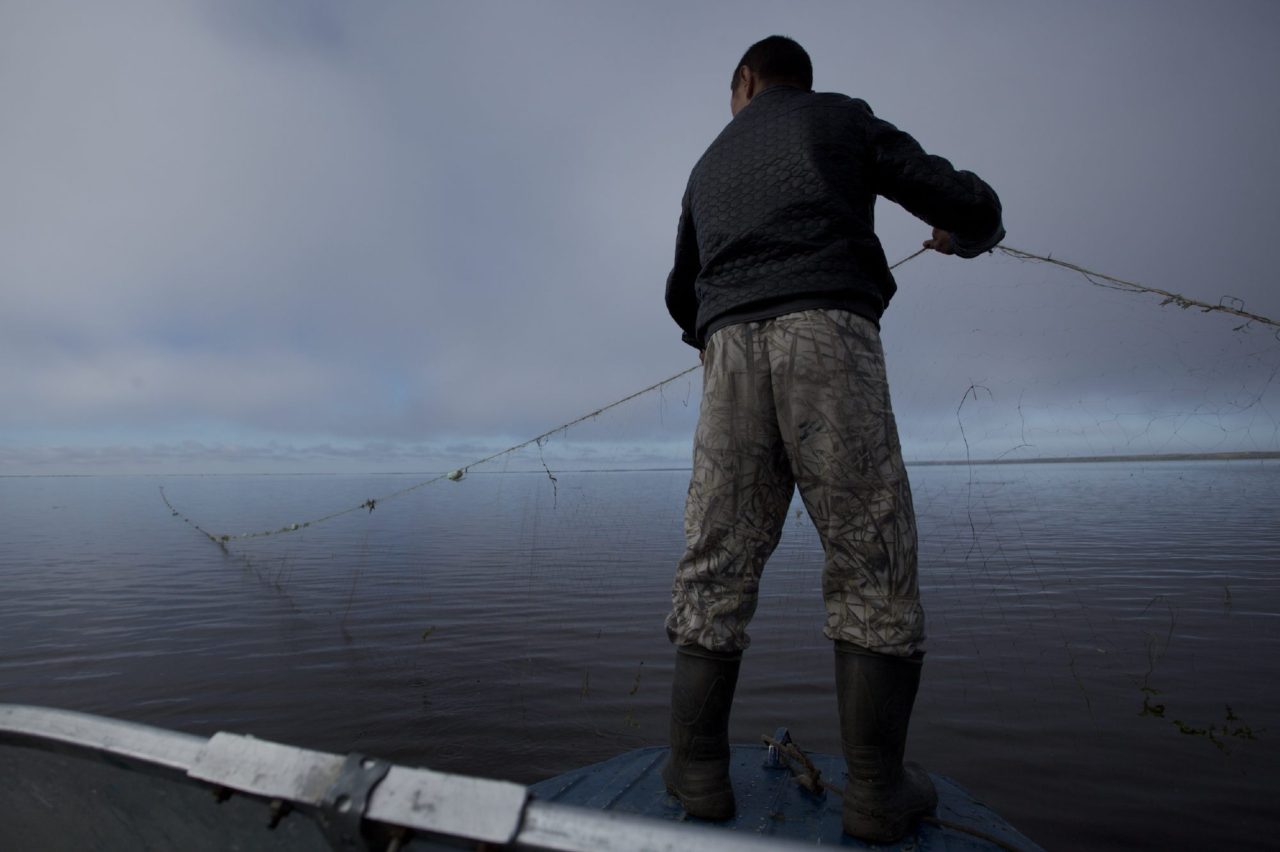 The condition of rivers and the number of fish are very important for Nenets living due to fishing photos: Tatiana Vasilieva/Greenpeace
 “From the new port, the road goes to the field, there they used to collect the berry. There I have mother -in -law and father -in -law live - they say that now you have to go very far from the berry. And Yagel became weaker. Everywhere roads, everything turned upside down. Three rivers damaged from these drilling grounds, they fall into the Ob ... Oil pipelines are also on these rivers of their [oilmen]. ”
Yagel, or deer moss, is a beautiful white lichen, which deer eat in winter. Such a pasture is restored slowly, so the Nenets need large clean territories, unexplored by industrial objects, through which you can move with a herd, wandering.
We are put to sleep on an honorary place for guests - to the right of the hosts. Behind us, along the perimeter of the plague, children sleep under deer skins. Before going to bed, we share with Peter our plans to go to the new port and Cape Kamenny in order to see violations that the indigenous residents say so much with our own eyes, to document and write official complaints to Rosprirodnadzor, the prosecutor's office and Gazprom. We bought tickets for a helicopter on this route a week ago. Peter with enthusiasm approves of our plan and helps to find a guide on the spot, but alas - alas - is not destined to come true.
We had a prison
Our boat approaches the pier in Yar-Sal, on the pier we are already waiting for a familiar UAZ and a police car. Our wires-none people are sure that this is behind them, and prefer to quickly land us and hide on the boat back to the tundra. In the village, everyone already knows that friendship with Greenpeace is brutally punished: after communicating with ecologists, each nenets in Yar-Sal received a “bell of happiness” with threats. The last thing our guides asks us about is to find a good lawyer in Yar-Sal. “We had a prison in Yar-Salya. They are holding just a person who is fighting for his land and tries to defend his rights at least somehow. Now they can “close” for a long time, and no one will know about this - neither in Salekhard nor in Moscow, ”says Andrey Vanuyoto reindeer herder.
We honestly answer that we do not know independent defenders here: the only lawyer familiar to us after a meeting with us had a conversation with representatives of the law enforcement agencies, during which he was explained that the organization of Greenpeace, “which brings the death of Russia with terrorist methods,” it is better not to cooperate. Conspirology and all kinds of conspiracy theories here are generally very popular. The spy paranoia is another Yamal ulcer that develops into an epidemic.
With a heavy heart, we begin to prepare for a trip to a new port, so that after a day to fly to Cape Kamenny after a day. Both of these villages are under the control of Gazprom oil industry: in the first - Novoportovskoye field, in the second - the oil -oil terminal of the Arctic Gate, which was recently opened by President Putin. Both of these projects, the pride of the Arctic development program, are proud of them almost like a “premissive”.
Oilmen, special services, administration - here, in the north, they are all connected and protect each other's interestsA day before the flight, our source in Yar-Sal reports that they will not let us fly to the new port, they will stop in any way. Oil workers, special services, the administration - here, in the north, they are all connected and protect each other's interests. Here you have another ulcer.
Мы перебираем все возможные способы остановить нас перед посадкой в вертолет: проблемы с командировочными удостоверениями, перевес багажа, нелетная погода, даже подброшенные наркотики (такое уже было), но почему-то не думаем о самом простом — отсутствии билетов. Конечно, ведь они у нас есть, купленные неделю назад в кассе аэропорта Салехарда.
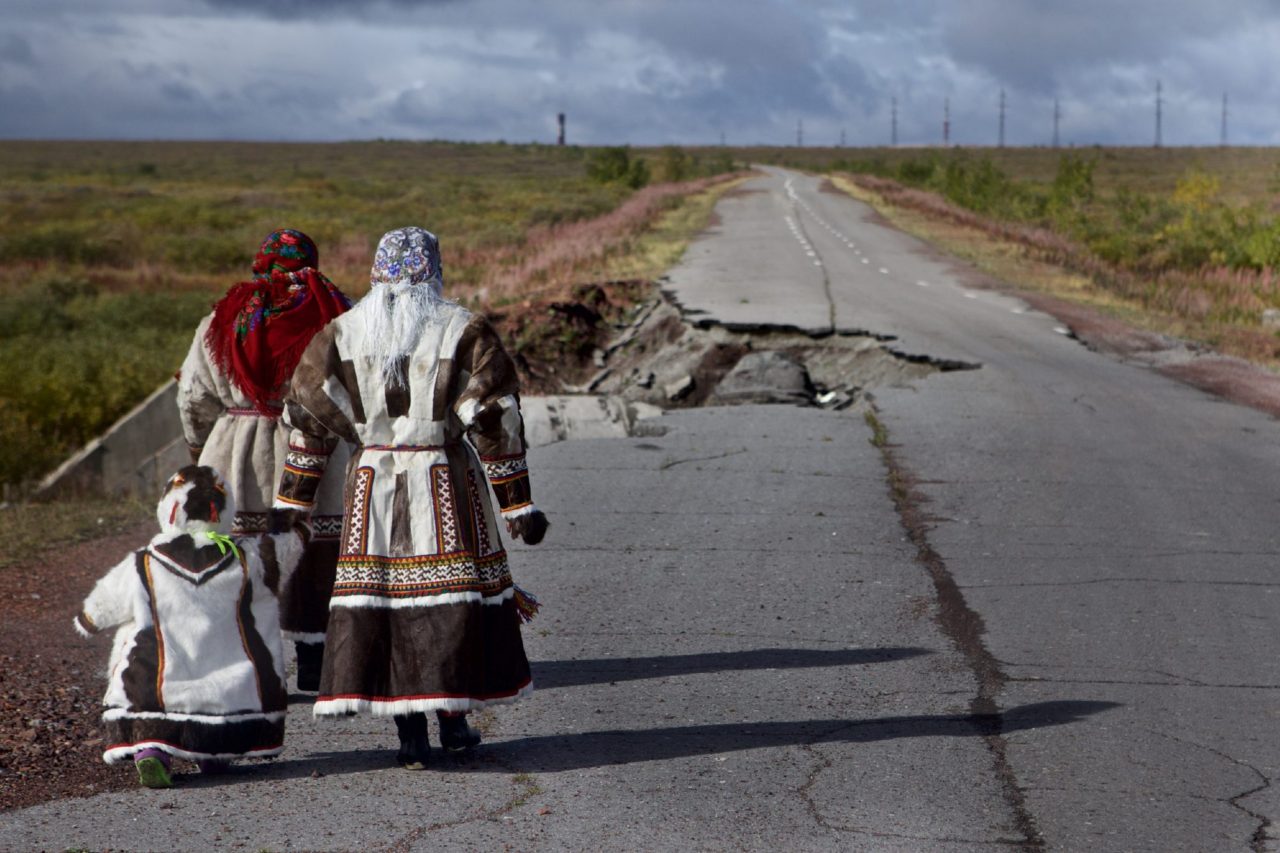 Ненецкая семья на разбитой дороге Фото: Stephen Nugent/Greenpeace
Но как бы не так: на следующий день в аэропорту Яр-Сале мы узнаем, что все билеты руководителя экспедиции — эксперта Гринпис России Владимира Чупрова — на составной маршрут Яр-Сале — Новый порт — Мыс Каменный — Салехард недействительны. Аннулированы все три из-за «технической ошибки в системе». Других билетов, естественно, нет — проданы давным-давно. Я звоню в кассы Салехарда, кассир паникует и не может понять, что произошло: «Я не понимаю, такого раньше никогда не случалось, здесь какая-то ошибка…» Перестроить спланированный маршрут уже невозможно: вертолеты летают не каждый день, билеты раскупаются мгновенно, рейсы частенько отменяются из-за погодных условий, наступает сентябрь — пора непогод… Так что — приехали.
Не добравшись до главной части экспедиционного маршрута, мы прощаемся с оленеводами.
«У многих людей здесь нет образования, кроме как ловить рыбу и пасти оленей, — мы взаимосвязаны именно вот с этой природой, — говорит нам на последней встрече Андрей Вануйто. — Мне кажется, мы, люди, которые живут на этой земле, должны отстаивать свои права, хоть и есть давление со стороны органов. Мы не должны уже останавливаться, потому что мы этой землей живем, нам это надо. Я думаю, народ должен объединиться — это для наших будущих детей. Вы уедете, а мы со своими проблемами так и останемся, до конца».
Мы уезжаем в Москву с язвой в сердце.
*** Имена действующих лиц изменены во избежание их дальнейшего преследования.
Greenpeace Ecology