Journalist Marina Bocharova for reasons unknown even for herself went on a trip to Pamir, a mountain system in China, Afghanistan, Tajikistan and India. Here is the first part of its full pains of travel notes: the kingdom of taxi drivers, the border point in the mountains goes to the Customs Union, a meteorite lake is visible only through the leaps and bounds of the village toilet, as well as a visit to the Tajik hospital in the mountains.
When, smiling, I went to my father with a backpack and news about my journey to Central Asia, he laid hunting rifles in the trunk of a car. - How, you say, is called the city, where are you flying? He asked amiably, fastening the gun cover. “Osh,” I say.
He turns. His face acquires a shade of ripe cherries.
-Osh, you get! - He blurts out anxiously and bursts out with a stream of obscene compliments addressed to my companion Ilya, who came up with such a gift. The abuse is replaced by threats about the Taliban and ends with the wishes at least not to get into the Turkish stash . We say goodbye, as the last time. He sniffs and, still a little cherry, goes into the porch. I go to Domodedovo.
I.
Kyrgyz passport control is similar to the Kyrgyz bazaar. On a small patch at the window, a man of thirty crowded. Galdage, noise. At a distance, the guy frankly bargains with the lieutenant, gives him a couple of bills and leaves. Around the small airport they curl and shout, like Turkish seagulls, Osh taxi drivers. A strangled whisper is heard from everywhere: Chench Mani, SIM card Megaku. We sit in the old "Lada" . Drivers here consider their duty to go along the oncoming lane, until a few meters remain before the collision. In general, Central Asia is the legitimate land of taxi drivers , the Earth of a promised man with a bagel, where he is a king and God. It is they who know at what rate to change money, where there is pilaf and how to cross the border without permission. Our taxi driver Ildar turned out to be very entrepreneurial: he started his wives in Osh, Moscow and Istanbul. He feeds everyone in turn.
Osh is an ugly city. Absolute dominance of Soviet five -story buildings and, accordingly, carpets. Because of this, the apartments become soft, and the streets become dull. The main attraction of Osh is and that miraculous: the semi-kilometer Mountain of Suleiman-Too ("Throne of Solomon"), on the top of which the Kyrgyz flag and a small mosque are erected. There are several large stones on the crown, just healthy blocks. One of them is sloping, not at all high, in the shape of a hill, and brings happiness. People with extremely concentrated faces roll from the stone, so the stone became polished like the noses of bronze dogs at the station of the Revolution Square. Under the mountain cemetery. The throne of Solomon is surrounded by signs, the main of which is that climbing the top becomes a test for incorrect wives. Not a single wrong one will come to the end. There were no excesses on the mountain.
The second (and last) attraction is the Osh bazaar, which has been in one place for two thousand years and is similar to the Kyrgyz passport control. In Osh, a lot is in one place: transport infrastructure, sewage system, electrification. Often, water is turned off all day throughout the city. The main population of the city is the Kyrgyz and Uzbeks. Kyrgyz dislike the Uzbeks, and the Uzbeks - the Kyrgyz. So they live.
Soviet memo for a tourist
The next day we run from carpets to the mountains. Punctuality here is something shameful and unacceptable, like the rules of the road and freedom of choice for women. Therefore, the driver with whom we agreed simply locked the backpacks in the car and left. First for other passengers, then dinner, and then visit. Shared Taxi is a popular transport in these parts: eight people climb into a small jeep and go together from an hour to twenty -four at an average speed of fifty kilometers per hour and listen to the best music in the world. For four hours we hid under a large almond tree, where local taxi drivers who came to an abandoned parking lot periodically sat on the courts. Our driver returned by four o’clock in the afternoon, and, squeezing into the back seat of the old jeep, we went to Pamir.
II.
Soft green hills and dried riverbeds. The car crawls so that you can’t even call it speed. The tape recorder tears the soul to the unforgettable "Kolchik, ticked me a dome." Here they are, the mountains - around, by thousands of kilometers, but you can’t get it with your hand. In the car, the space is perceived in a completely different way. The guys from South Korea rise upstairs. And we are sitting, locked in this spacesuit, as if from the north. We enter the Pamir Track. The time has come in the car: “To throw, grandmothers, scarves, September is cold in the yard, and in camps without fuss .... What autumn in the camps! Throw leaves for the ban. And I scream, scream shnryam ... ". So we drove thirteen hours.
Outside the window is a camel. Probably fought off the caravan three thousand years ago. Here are calm donkeys - always stand exactly in the middle of the road. In the mountains, the Kyrgyz live in yurts and in ship boxes. We are approaching a cafe where we are waiting for a juicy hazury shurpa. We got to the border late at night. The Tajik side looks like a prison yard: two -story buildings made of gray brick, plastic barracks. At the entrance are two large metal barrels - border guards live in them.
First, our driver with passports enters one of the barrels. After a couple of minutes, he is already seeding back to the car and asks if we have permission to visit the Pamir. - Of course, no! - We answer offended, and now Ilya is going to the barrel along with the driver.
Inside is as cold as outside. A window is cut in the end, a lamp sticks out from the “ceiling”. Border guards are in earflaps, sloppy and plague. They smoke right inside and throw bulls under the feet. At first, Ilya plays “under the fool” and says that he did not know about any pass. For several minutes they tell him what exactly had to be done in order to enter the mountain-Badakhshansky autonomous region (GBAO) normally, and then a discussion of things, much more abstract: begins: “Putin is coming to us here soon,” the customs officer proudly says with the appearance that Putin is going precisely in the barrel in which the customs officer is now standing. - Well, cool, keep here. - And you don’t know, we, Tajikov, will soon accept in the Customs Union? He asks hopefully. - Yes, I heard that soon. He will come to you, and they will accept for sure, ”Ilya answers after a small pause.
The border with a smile stamps the passport and passes them to Ilya with the words: "Well, now it's your turn." He holds him several bills with a total amount of rubles for nine hundred and wishes good luck in the Customs Union.
III.
After some time, Shurpa rebelled in the stomach. It was the most delicious ram I tried. And he took revenge. Revenge overtook us immediately after the border and lasted three days. At first, we were desperately eager. The car stopped on the side of the road, near the village of Karakul. At an altitude of almost five kilometers, the body began to behave extremely dishonestly. In addition to Lake Karakul, which was formed after the fall of the meteorite, there is almost nothing. Of course, I saw Karakul mainly through the gaps in the wooden door of the stone closet. But even beyond - only high -altitude prairie, with rickety stones and the only shabby inscription "Home Stay". In the dark, it resembles a sign at the entrance to Silent Hill. The wind howls, puts his ears. For kilometers forward - a cold mountain desert.
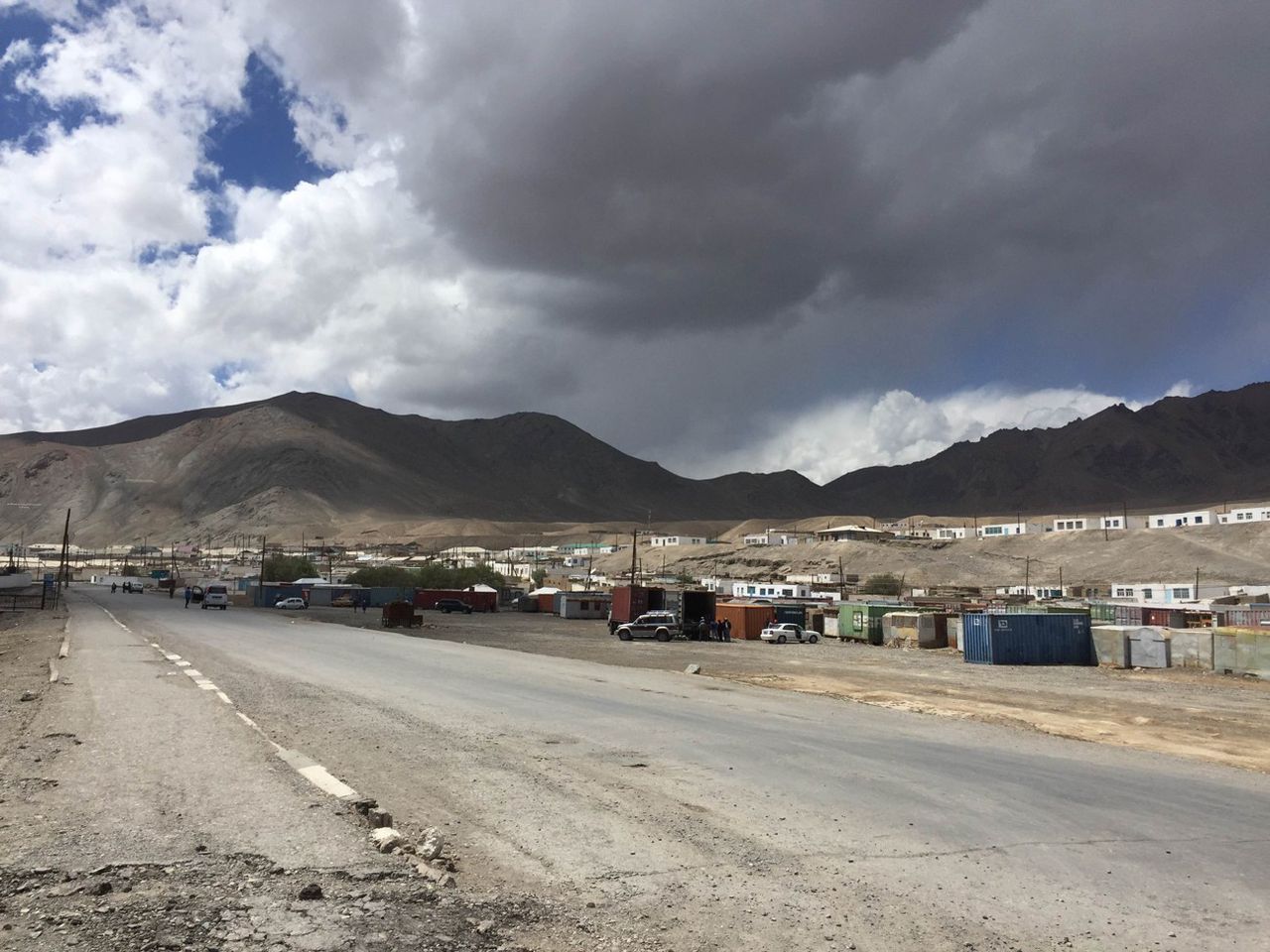
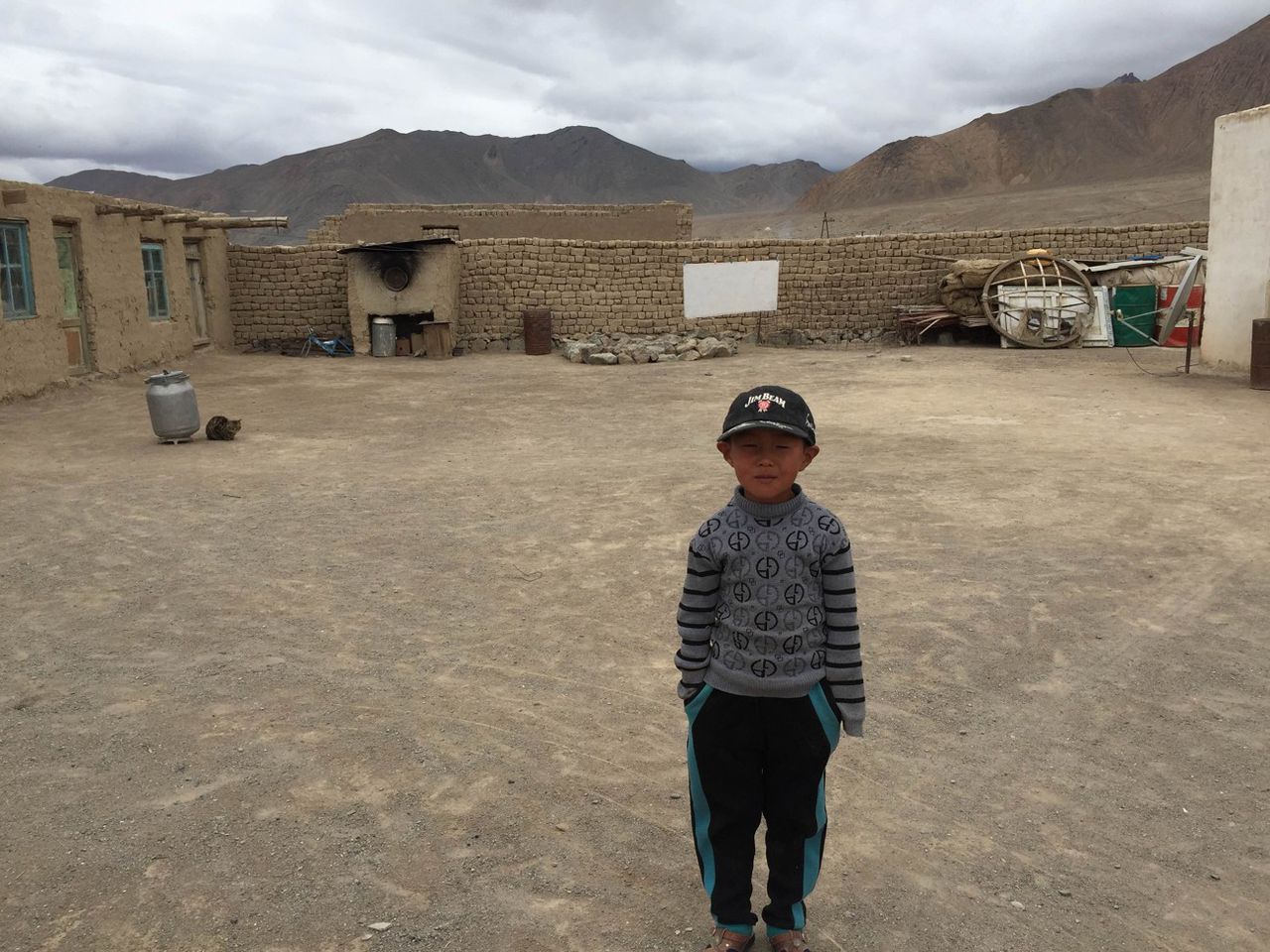
In Murgab, a village, which for some reason is called the city, arrived in the morning. The USB flash drive was overwhelmed by that time, and the last hundred kilometers was spinning about youth (approximate text: “Youth, youth, golden time, gold, gold -aaiaaya”). A random fellow traveler Bakir, who let us spend the night at home, works as a guide on the Pamir tract. The wife is spent day, children go to a local school. We went into a stone hut: the whole room is forced by suitcases, cups, toilet paper rolls and mattresses. We were laid on the floor, the body continued to behave dishonestly. The first thing I saw in the morning was to grimace muzzle. The muzzle stuck through the door, looked around and hid back. There were five such muzzles in the house. Another prehistoric granny with parchment skin and mother - in leggings, a dressing gown, a scarf and ballet shoes "Chanel" of the surface of woolen socks. The only thing that I perceived the played E. coli is boiling water. It was necessary to wait for two hours, and then it was not always possible to get it - electricity in Tajikistan is a fan: first it turns on for a couple of hours in one village, then switches to others. Murgab is at an altitude of more than three thousand meters, and without acclimatization, and also with poisoning, it is not easy there. The highlands compresses whiskey with low pressure and sparse air. The head is spinning, and because of this, the feeling of some kind of nebula, as if you were looking at everything through a neutral light filter.
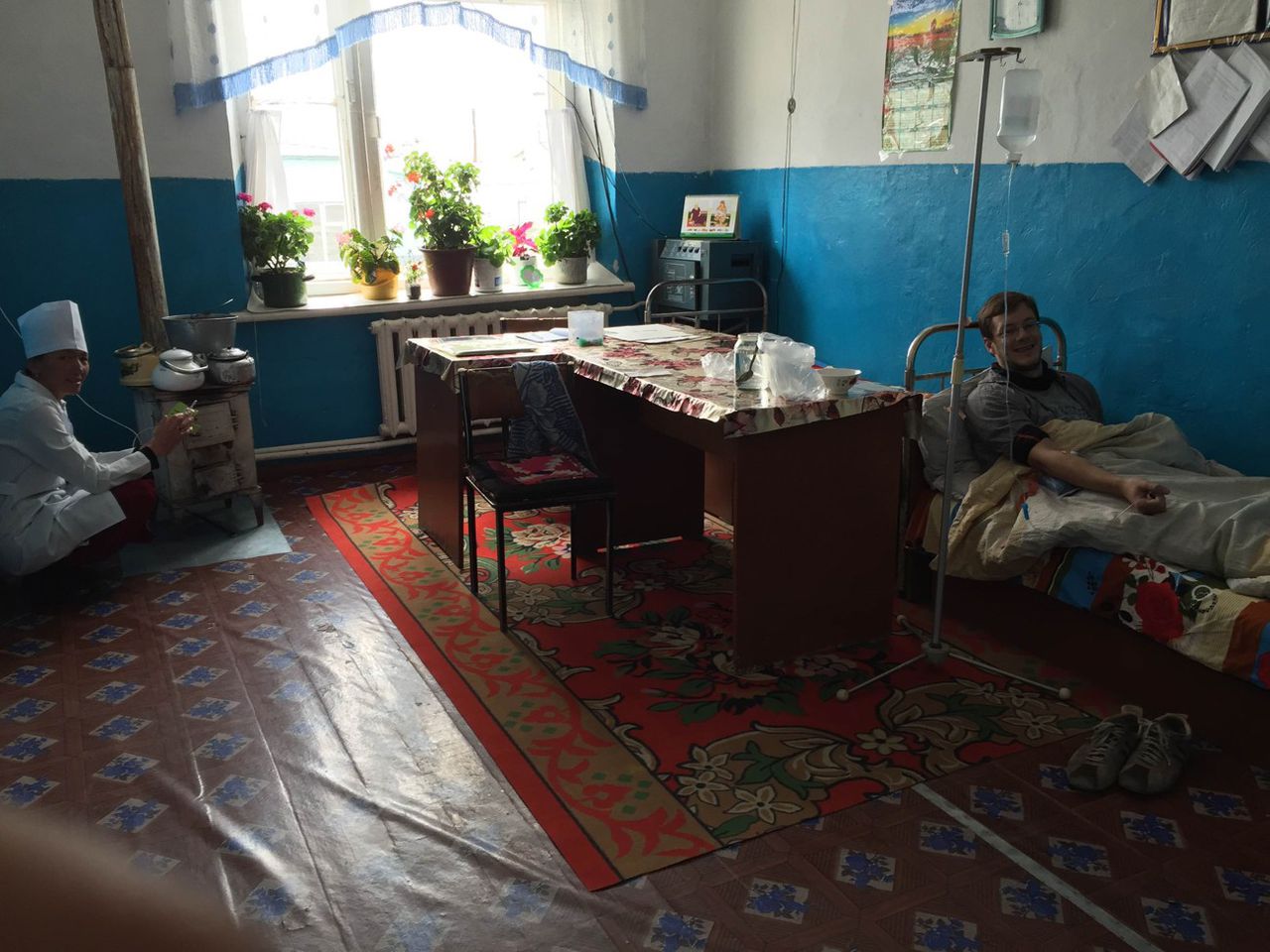
When Ilya was green, I dragged him to the pharmacy. There are only strong antibiotics in the pharmacy, they do not bring other drugs, because the locals do not have money. At the pharmacy, everyone was scared and sent us to the hospital - to the dropper. The walls of the infectious department are crookedly painted white and blue. The clock ticks very loudly. The handles of the old shabby doors are wrapped in a bandage that constantly moistens one of the nurses - this is how chlorination is carried out in Murgab, and sanitary norms are observed. In the room where the dropper, there are two more beds, a table with a tablecloth in a flower, and a furnace on which teapots are basking.
We walked the second day in the desert. We turned up peacefully - already on the cold floor, in sleeping bags. The blankets and boiling water were taken, soundlessly hinting that it was time for us to get out. Or maybe it only seemed so, but in any case it was time to get out of there.
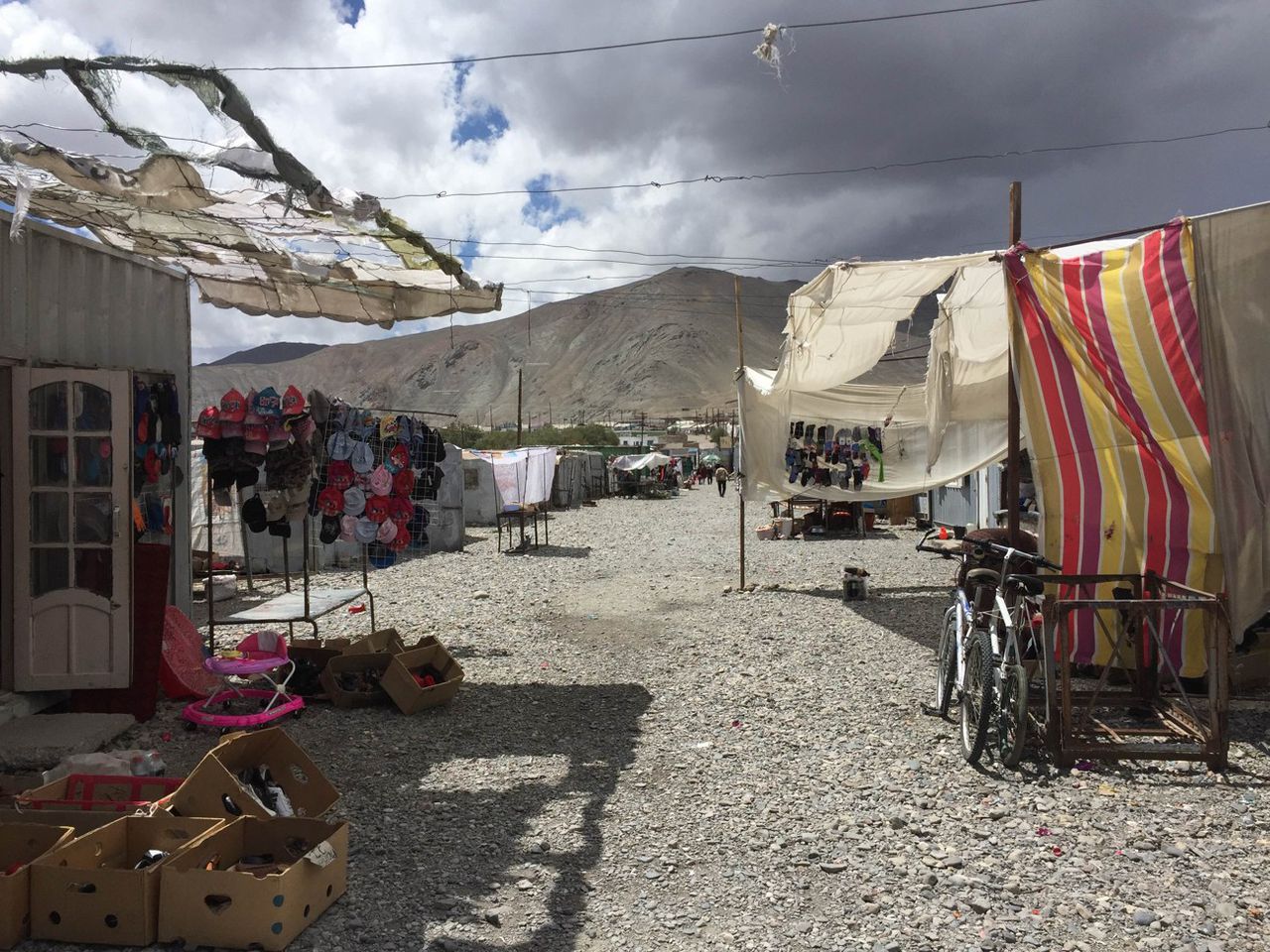
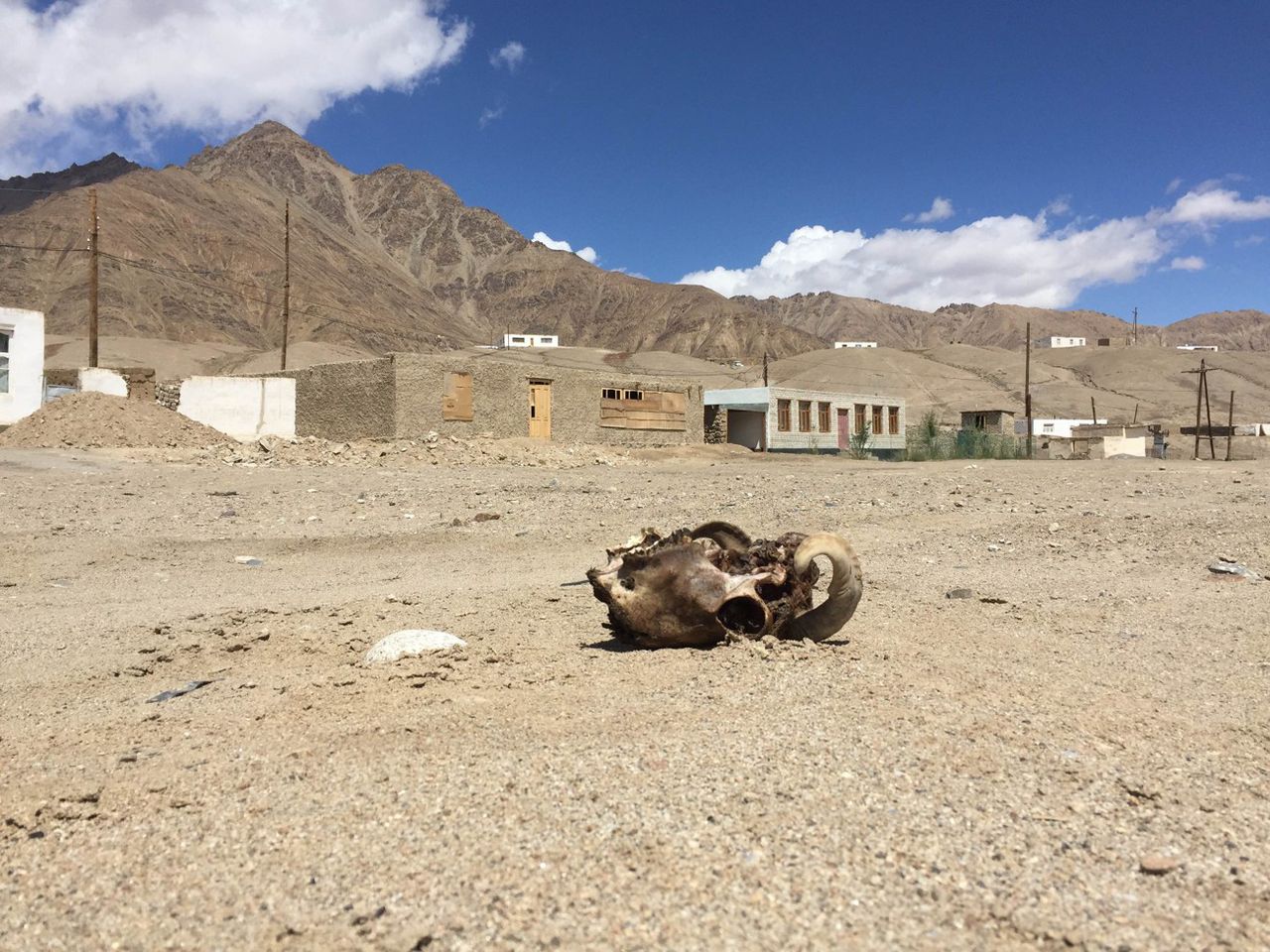
The first sortie was a local bazaar. In the bazaar, Alyonka sweets, robes and toilet paper “777”, resembling sandpaper were discovered. The bazaar itself looks like an abandoned ship: rusty ship boxes, many flies, local sellers - a copy of the Black Pearl team. Flies are everywhere: on Alyonka, on the rolls "777", on faces. To get out of Murghab, it was necessary to eat, but any food still looked very ominous. On the way to the only cafe lay a gnawed lamb head. Inside is stuffy, full of locals in skullcaps, prepare the Uzbek pilaf. We were invited at the table by two young guys: one lawyer, another border guard. Inquire, sympathize. We are talking about Moscow and about how to leave here. There are two types of transport in these parts: Chinese trucks and Shared Taxi, the same one we got to Murgab. We decided to stop Chinese trucks, and the guys brought us to the nearest post. - Here they will help you! - They nodded towards the border guard and fell back on the rattling Lada.
Border guards are friendly, trying to feed us eggs. We refuse and wait - there are no cars for a long time. Then on the horizon shows a caravan of trucks with Chinese numbers. The border guards stop everyone and nod in our direction: drivers spit, shake their heads and leave. One turned out to be very arrogant and decided to drive without registration, that is, without recording from the border guards and a small bribe. He was stopped and instructed. - We shoot such people. Completely insolent! - Either in a joke, or seriously says the border guard.
About an hour later, one smiling is caught among the string of gloomy Chinese. He agrees to toss to Khorog, and we throw backpacks into a huge white truck.

 Text and photographs Marina Bocharova Moscow
  Text Ilya Kizirov