Date
Author
Борис Парамонов; Татьяна Вольтская
Source

Preserved copy
Translated material
The desire to be a Dutchman
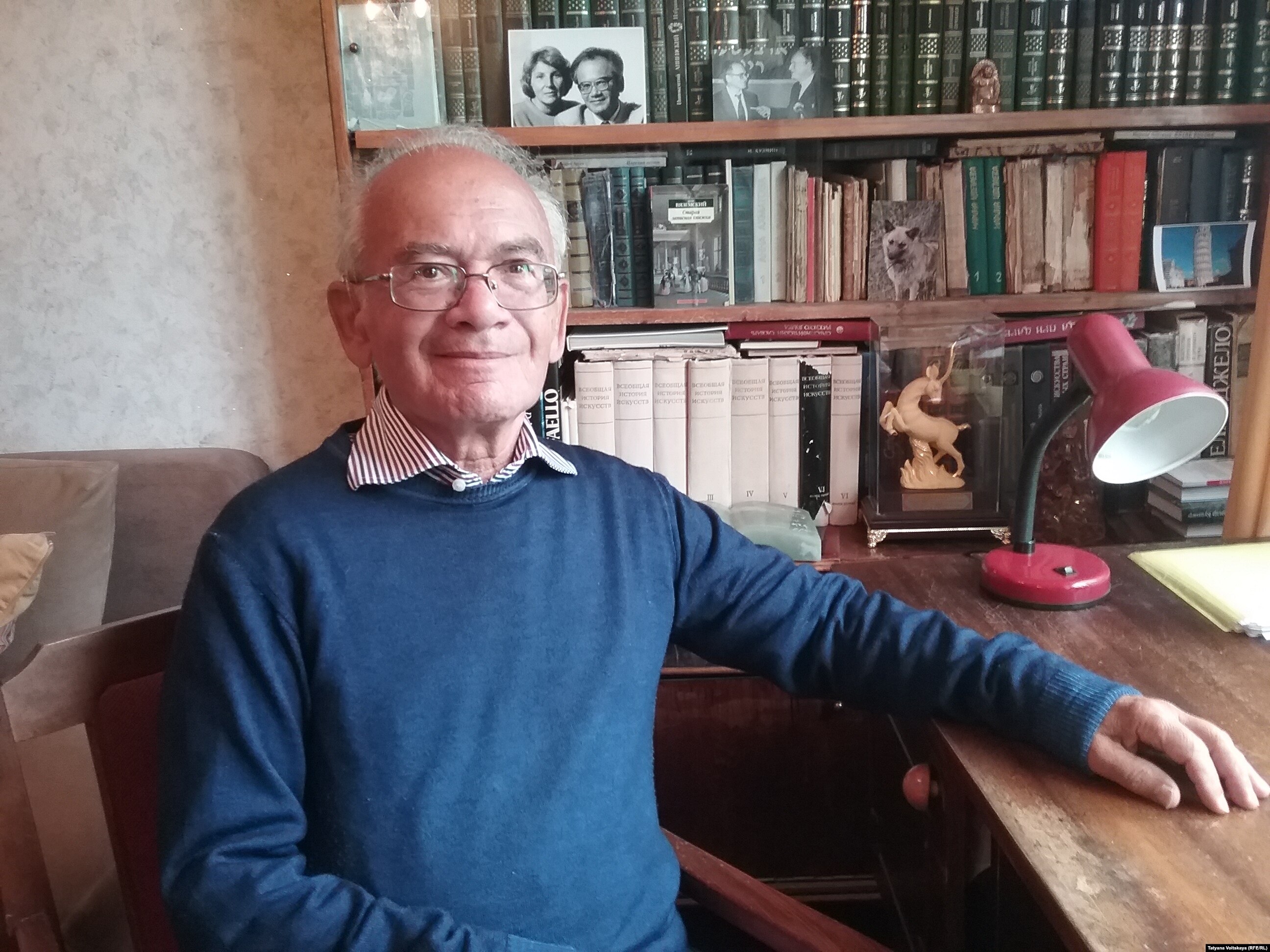
Monumental anniversary of Alexander Kushner - 80 years! - joyful to all connoisseurs of poetry, all cultural Russian people - and especially Petersburgers.
The St. Petersburg component is extremely important, dominant in Kushner’s poetry, in all its cultural appearance. Kushner’s poetry at the height of St. Petersburg is this original bearer of domestic Europeanism. And looking at Kushner, reading his poems, one cannot but rejoice at that for many the sad circumstance that Petersburg has ceased to be the Russian capital. There is no need for imperial greatness, imperial claims, imperial breakdowns. Petersburg retained the best of the Petrine Empire-his architecture, the spiritual beauty of the Petrovsko-Pushkin city landscapes. Sometimes I want to say that, living in St. Petersburg, one cannot but become a poet. This, of course, is an exaggeration; But he, of course, contributes to the culture, culture of his inhabitants - there would be a desire. A person who is accustomed to walk along the Nevsky embankment cannot be a barbarian. Every Petersburger by definition is a European. He cannot be seduced by a wild scope of domestic fields. And Kushner writes a loan of the Petersburg European:
Surprised by the gallop
Nomadic herds,
Buried Europe,
The love of wings for her.
How many times they buried
Glory to the horse become,
The horse's neck is in soap.
And they bury it again.
But the flags rinse
On ships in crowded,
And Copenhagen trembles,
Reflected in the water
And shine in Amsterdam
Workshop houses,
Like painting in a frame
Or eternity itself.
Okay, on the pedals
Slowly pressing
To the town on the channel
Enter, pressed to heart
Not continuous, philosophical,
But the usual sunset,
Pale yellow, slightly hard,
The golden facade.
However, we do not need
Go nowhere,
Out of the summer garden
Water will be pink
And at the stone stairs,
Above Petrovskaya Neva,
You look, European,
For the sunset gold.
It is not necessary, however, to think that Kushner does not go to the bars of the summer garden. He is a real local historian, knows his city in all his everyday details, not only the majestic Neva, but also all the big and small nurses, all these Zhdanovka, Smolenka and Moika with Fontanka. And recently there was a funny story with one of these rivers - Duderhofka: a bridge called Kadyrovsky’s superiors was built above it, but smart Petersburgers immediately renamed it to Akhmatovsky. We can say that this Kushner renamed him, his poetry, which made his hometown truly his own, truly home, family property.
Kushner has no less than Pasternak, bushes, bumblebees, roots, paths, leaves
We cannot, repeat, connect Kushner with the ceremonial apartments of St. Petersburg, generally exclusively with the city. He is not only a St. Petersburg citizen, but also a summer resident - in that high sense of the word that was given to him Posternacian Posternak. And his dacha recognizable by all St. Petersburg - Zasitsa, the SIVERSKAYA station, Nabokov places. It is important not that the poet has a summer house, but that he can and loves poetic topics to take on a reduced scale, to reduce them to everyday life, which acquires the quality of the original being in verses. Kushner has no less than Pasternak, these bushes, bumblebees, roots, paths, leaves. These details, these cute little things emphasize the important property of Kushner’s poetry and poetics: he is a master of minimalist. A jeweler who knows how to work with small objects, giving them the quality of antique value. It is not for nothing that critics who want to criticize, not admire, compare Kushner’s poems with Faberge products. But Kushner's products are verbal, that is, spiritual. You can’t swallow Faberge and you can’t implant into the brain - and Kushner’s poems, once, and even better many times read, remain in the soul as already, the reader learned wealth, as an internal value.
This "miniature", the intimate homeland of Kushner in no case is a testimony of its "fineness", as it happened, wrote Zoils. Behind this quality of his poems is a powerful tradition. Teachers and favorite poets of Kushner - Fet, Baratynsky, Tyutchev, Annensky. In ancient aesthetics there were the concept of “small poems” and “secondary poets”. These are very obsolete terms - you just have to remember that Tyutchev was considered such a “secondary poet”. Kushner has repeatedly explained this gravity to poetic miniatures. He says that with the advent of great Russian prose, the need to give a “story” in the verses, to write what was called in Pushkin’s times a story in verses. In another way: the need for a poem disappeared as in a large genre. And this observation over the evolution of poetic genres is strongly strengthened by the fact that the poem was almost completely buried by the poetics of acmeism. And Kushner, of course, grows out of here, he is an acmeist at the very origins of his poem. In his first book of 1962 there were poems called “Capherine”, “Cup”, “Ready”, “Tape recorder”, etc. Official critic was taken up just on these verses, accusing the young poet of Melkoye, on the sidelines of the Soviet literary process with his trumpet marches and drum fractions. But just attention to such subject topics was evidence of an outstanding choice and their path. In this attention to the property objects of the property world and fruited the acmeistic root of Kushner; He himself lovingly fell to this root.
Hence the absence of large genres in Kushner, his abandonment of poems. He has a fairly large poem, which is called - "Refusal of the poem." He himself does not write them, and does not approve of others. So, in a memoir fragment of Akhmatova about her "poem without a hero" he speaks out with a cool. Here you do not need to look for the information of any accounts: this is organic at Kushner-an acmeist and a miniaturist.
He does not love and is afraid of big topics and loud voices. There is no longer poetics, but just ethics. Kushner is attentive to a person, especially to a small, weak. It is amazing his poem, in which they see a description of the young Brodsky:
He got up in a Leningrad apartment,
Having straightened it among the silence
Six wings, of which there are four,
I know he does not need.
Suddenly it became empty and loudly
As if we had a departure of the hall.
- Look, you will wake the child! -
I said to the wonderful guest.
Now, if light nights
The fun, health of children ...
But it seems there is no prophecy
Such frivolous articles.
And recalling Shakespeare's tragedy, he regrets not only Hamlet and his father, but also Polonia with Laert.
In art there were large phenomena, large schools, the masters of which were loving the genre of miniature or just a small canvas, which also interprets not academically compulsory mythology, but what is called a landscape and genre. In painting, these are primarily small Dutch. Here is the niche of Alexander Kushner. He is the St. Petersburg Small Dutchman - given that the great Peter built his capital with an eye on the Dutch channels.
Kozma Prutkov has a parody poem "desire to be a Spaniard." Kushner out of all kinds of parodies wanted to become, and became a Dutchman. And as excitedly, he writes about his trips to Holland and about his beloved artist Vermar. He is our Vermer Delft.
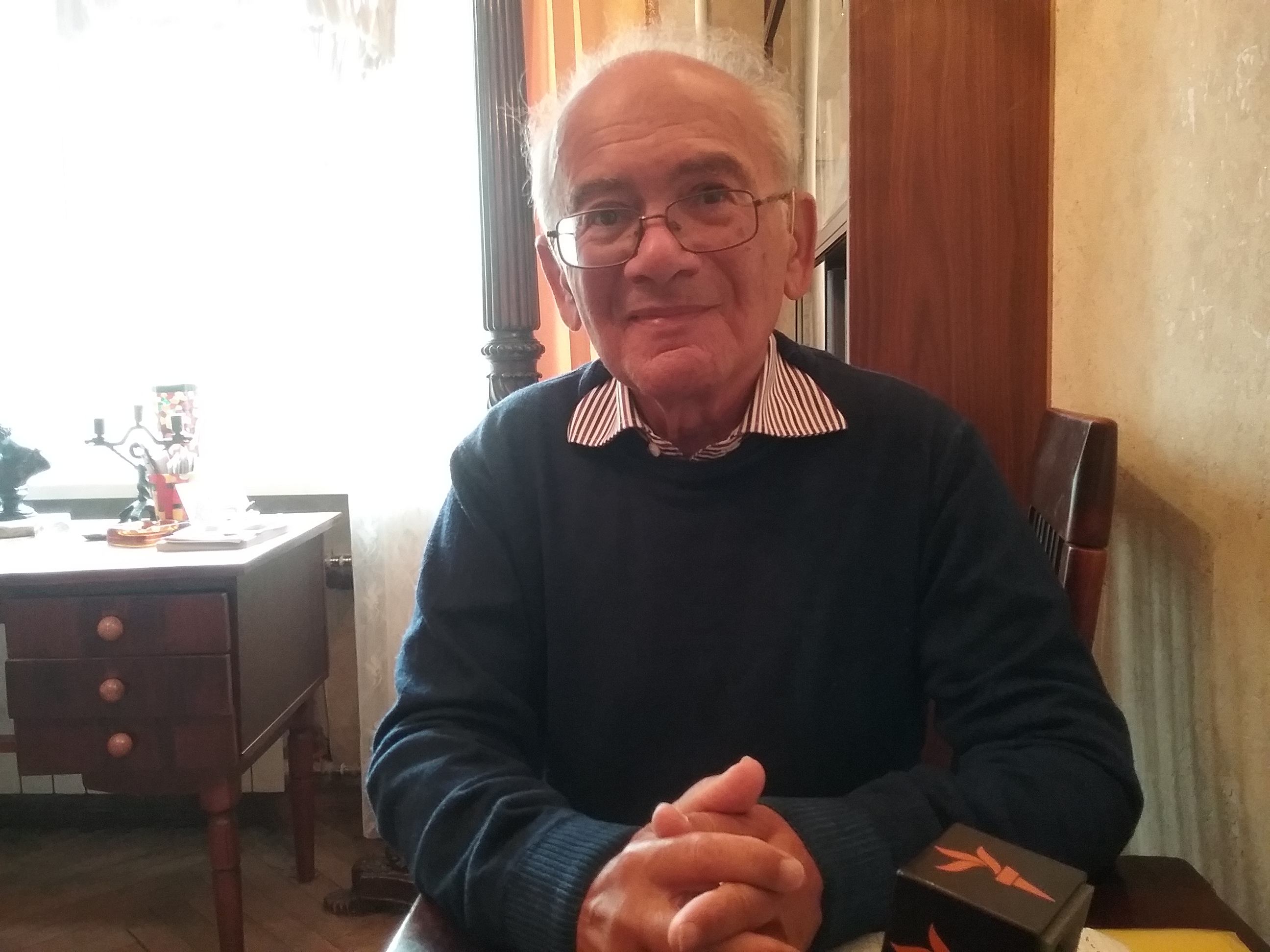
Alexander Kushner answered Radio Liberty questions:
- Alexander Semenovich, many poets write uneven during the course of life, are tormented by long periods of silence, nonsense - do you happily avoid this fate, as it turns out?
- Poems for me are a way of life. “I think - therefore I exist” - this is Descartes, and I write poetry - therefore I exist. The poets are arranged in different ways, Pushkin did not know these very creative crises, wasn't it? What verses he would write, live another 10 years! And there are poets tormenting - such as Khodasevich or Blok, who by the age of 40 wrote more than any other poet, and then suddenly fell silent and was unhappy. And this brought him to the grave, not the Bolsheviks. I would write poetry and endure everything.
- He said that he stopped hearing the music.
-Yes, he complained about it, there was some kind of mental trauma. I was lucky in this sense, and not to me alone - see how Pasternak wrote, but Goethe? Where are we? Yes, such a ticket falls out.
- Many poets, the same Pasternak, begin to dislike their early verses with age, rewrite them - what is your attitude to their early poems?
Each new poem, which contains a small novelty, small profit, is based on all the previous ones made by you
- No, I am well treated to my early poems published in the first books. After all, I am also in them, and in them you can find out my voice, as in the later ones. If we had not changed, we would have bored with both the reader and ourselves. On the other hand, every new poem, which contains a small novelty, small profit, is based on all the previous ones made by you. What is a poet? This is your own poetic voice. This is how a person who we have not heard for 10 years calls us on the phone, and we say - Ah, Petya, is that you? So the poet is the one that can be immediately recognized by any stanza.
- And what, in your opinion, has changed in you from the early times to this day?
- Life is so large, so many things have been seen, understood - and has remained incomprehensible so far. All this affects the verses, and time in them is postponed without our effort. Here compare in the photographs of people of the 20s-how they differ from the people of the 60s, and those from the current ones. And in verses this moment is also. The photographs are understandable-hairstyle, a style of dress, in verses everything is much more complicated, but show me a poem by an unfamiliar poet of the 19th century-and I will say that this is the 19th century or the 20s of the twentieth century. Time is material, it is postponed, lives in verses.
- As you know, there are poets who, during their life, go such a long way that their early verses differ significantly from later. You can’t say this about you, on the contrary, when you read your verses of any period, as if you see the same main driving force - surprise before the world and admiration for them. Is it really so?
The poet looks like a priest - he also consoles his verses
- Yes, that's how. And while this feeling exists in you, it is worth living and transferring everything, even old age. Anyway, it is probably not worth writing poetry in despondency. And I am deeply convinced that when the great Lermontov wrote his own "and boring, and sad, and there was no one to give a hand," he felt joy, otherwise it does not happen.
- Well, probably, there is still a certain conversion of everyday misfortune in the joy of a different kind ...
- Yes, sure. After all, the poet looks like a priest - he also consoles with his verses.
-And yet-how much has changed in your perception of the world and poems built into this world, since childhood, youth, formation?
- Yes, you know, all times are difficult for a person. I was born 80 years ago and found a terrible war. This is the eternal fear for his father at the front, this is evacuation in Syzran with her mother, and her grandmother and sister and little daughter were shot by the Germans. Compared to this nightmare, with Stalinist concentration camps and torture, with a revolution or with German horror, the current life, with all our claims to it, is more or less prosperous. Although, of course, a sense of danger in every sense does not leave. I'm not talking about ISIS and all this world horror, I do not want to philosophize and prophesy - I am not a political scientist. But it’s still scary that bacteriological weapons can become pocket, and the atomic bomb too.
- Let's get back to childhood - how did you come to verses, how and when did the desire to write?
-In my pre-war childhood, when I was three or four years old, everyone read poetry, and a nanny, my mother, and father. Life was verses from the very beginning. The great Chukovsky, and Marshak too. And then Pushkin, whom I just idolized. Then the impressions of life went - my father served in the fleet, we lived near Tallinn in the country, I remember a simple suburban pine forest, lit by the bright sun. I have overwhelmed such happiness, such inspiration, which I do not even feel. And then there were love, nature, and the city. I was born in Leningrad, in the Erisman Hospital on the Petrograd side, and spent my whole life here, and I do not regret it. I had such lines: "The departure seduced us as a horse’s move, but the indecision saved - our power." It’s very difficult for the poet to live away from his native language, and Brodsky made simply an incredible feat, managing to write poetry there, because we know how the emigrants of that first, post -revolutionary call were tormented.
-Do you remember any of your children's poems?
-No, I remember, of course, some miserable helpless lines, but I do not want to betray my childhood.
- You stopped at Pushkin - what other poets were important to you?
- Well, these were constant discoveries. You remember on your own what Lermontov is in childhood for us. And then it turned out that there are still poets - Baratynsky, for example, which is no worse, and the block that I admired in my youth, and now I am faithful to his memory, Akhmatova, Kuzmin. We had a librarian at our school, a very sweet woman, she noticed that I love poetry, saw that I took the 1934 Pasternak book from the shelf - and no one took her before me, and she gave it to me, can you imagine? I am grateful to her for life, thanks to her I read Pasternak at the age of 16-17 and was delighted with the "sister of my life."
- That is, she abused her official position.
- Yes, of course, and how wonderful it is that a person is sometimes decided on this.
-And yet to find out Pasternak at 16-17 years old is not so early ...
The real lyrics of the party oku is not available
“But Pasternak is a very unusual poet, he has such strange changes in meaning, strange associations.” Go figure out what it means - "And the forelock touched a wonderful bangs, and lips - violets!" What violets? - I realized - eyes! And he has a lot of such things, and all the more interesting. So when he moved to "unheard of simplicity", I began to like it a little less. It was a very strong impression of youth.
- Alexander Semenovich, you never wrote anything at the direction of the “governing bodies”, however, your fate has developed, in general, successfully - how did it happen?
By any line of the poet, you can understand how he relates to tyranny
- I think this is due to the fact that the real lyrics of the party ook is inaccessible. And the secret is that it is not at all necessary to write journalistic verses - but on any line of the poet you can understand how he relates to tyranny. I do not need Mandelstam to write "we live, under us without sensing a country" - it would be better to live longer and would write a hundred more poems. And he did not lay Akhmatov, her son and other people to whom he read these verses. I would fall right in front of him: Osip Emilievich, they wrote - and put in the table. Indeed, on any of its lines - “I returned to my city, familiar to tears”, or “in St. Petersburg we will meet again”, or “golden honey streamed from the bottle” - you can understand everything on any line, as if not related to the so -called reality, crushing. The topicality passes quickly. In the 60s, some poets read poetry in Luzhniki, the success was incredible, but I remember how Akhmatova told me about this-"some kind of Coliseum!" And she was right. Such poems quickly fade.
- And how did you meet Akhmatova?
- I was brought to her by Lidia Ginzburg. Who is Akhmatova, I knew - my father wrote out the Leningrad magazine, and I read her poems to a ten -year -old boy there, which I still remember. I understood little, but I really liked them with my sound, magical charm. So when the decree happened 46 years, I did not believe him, that is, I thought, well, yes, the teacher is probably right, but the poems are good! When Lydia Ginzburg brought me to her, I read poetry, and she said - "You have a poetic imagination." I believed that I failed-I expected great praise. But Lidia Yakovlevna said - that you, Sasha, because Akhmatova says that when young poets come to her, she feels like a doctor who should say: "cancer, cancer, cancer." And then I had Akhmatova already 4 times on my own. I trembled in front of her, and she, I must say, held on very royal. Too royal. I think it would be easier with Mandelstam or Pasternak. Meetings with her were important to me, but it was somewhat difficult - it was necessary, for example, to praise a “poet without a hero”, but I still love her first books more, especially “White Pack”. And this could not be said.
- Lydia Ginzburg, probably, was for you an equally important interlocutor?
- Acquaintance with her is a great luck in my life. Few people understood this! Anyway, clever person. She left beautiful notes about her time, notebooks on the manner of Vyazemsky, which she was engaged in her youth, published them, wrote comments to them. She understood everything. And then she was a restrained man. I devoted such lines to her:
These frantic passions
And excited gestures -
Something like a white pasta
Squeezed out of tin.
This visibility of the manners
And the lack of calculation -
Something, in general, like checkers
Smoke at the plane.
And for a word, two tones
Taken above - a stench of deception,
As for the dragon's tie,
The fog letting the fog.
That is, there is no
Lower it easily along the body,
No, crumbling in flour
They raise every now and then.
That is, amenities for the sake of
Reasoning to strong passion,
In this smoke, in this stench
They catch us and tear us to pieces.
Lydia Yakovlevna liked my anti -romantic position. There is no poet opposing the crowd, and indeed there is no poet - there is a person who writes poetry. She considered this a very modern position, and not only she - and Boris Bukhtub, her friend, who remarkably heard poetry, who very subtly understood them and wrote beautiful articles about Feta and Mandelstam. И Дмитрий Евгеньевич Максимов, лекции которого я слушал, литературный кружок в педагогическом институте посещал, а потом просто приходил читать ему стихи в писательский дом на улице Ленина. Да, огромное везение. И эти люди для меня больше значили, чем мои сверстники. Как будто благодаря им удалось перекинуть мост к эпохе акмеизма, к этой точности, словесной и образной. Вообще людям свойственно тянуться не к своим, а через поколение, к дедам. Это не отменяет любви к родителям, но в поэтическом отношении – да, не твои предшественники, а более ранние тебе интересны.
– Тогда еще такой вопрос. Вот мы говорим – круг Пушкина, круг поэтов Серебряного века, круг Бродского. А вот круга Кушнера, кажется, нет – разве что ученики, правда?
– Друзья были, я очень дружил с Андреем Битовым, и вообще, мне нравились прозаики больше, чем поэты. И с Валерием Поповым мы дружили, и с Довлатовым у нас были отношения, потом они прекращались, возникали снова. А из поэтов – Глеб Семенов, ЛИТО которого в Горном институте я посещал, очень помог мне – просто в практическом плане. И еще мне повезло, что у меня был редактор Игорь Кузьмичев в "Советском писателе", человек доброжелательный и порядочный. Тут никаких секретов нет – вот он хотел выпустить мою книгу, и он этого добивался.
– 60–70-е годы – это время большой вашей популярности, пусть не стадионной, но все-таки большой. Сейчас, понятно, интерес к поэзии весьма сник – а может, принял правдивые очертания, если взглянуть иначе. Как вы это воспринимаете – как потерю или как нечто должное, неизбежное?
надо писать не просто хорошие – прекрасные стихи, и тогда пробьешься, будешь услышан
– Да, конечно, по сравнению с 60-ми годами интерес к поэзии упал, но, знаете, он ведь падал все время – и в 70-е, и в 80-е. Может быть, это даже не так плохо – ведь эти стотысячные тиражи – разве можно в них верить? Что понимали, что искали в стихах – они были заменой публицистики. Казалось, вот Евтушенко напишет стихотворение, а завтра у нас будет смена правительства. Полный абсурд. А стихи обращены к каждому человеку в отдельности. И прикладывает их к сердцу только тот, кто по-настоящему их любит. Поэтому, может быть, унывать не надо. А потом, у нас же есть опыт Тютчева, жившего в Мюнхене и вообще лишенного читательского интереса, да и когда в Россию вернулся, было то же самое. Баратынский умер, и о нем все забыли, а Белинский его выругал в своей безобразной статье. Фет, замученный критиками, десять лет не писал стихов и тоже был никому не нужен. А Иннокентий Анненский – ведь "Кипарисовый ларец" – посмертная книга. Нужно себя как-то утешать, хотя, конечно, я глубоко сочувствую молодому поэту сегодня, да и любому поэту. Как быть услышанным? It is incomprehensible. Думаю все-таки, надо писать не просто хорошие – прекрасные стихи, и тогда пробьешься, будешь услышан. Ведь всегда существует полпроцента людей, любящих стихи и способных их оценить.
– Мне-то кажется, сейчас очень много замечательных поэтов, но они существуют в таком узком кругу, что узнаешь о существовании многих только из "Фейсбука".
– Зато разрешено все, пиши и публикуй любую дрянь, верлибры, не имеющие смысла, без рифмы и ритма, назовись авангардистом, завяжи узелок на затылке – и все в порядке, ты поэт. Может быть, мы страдаем как раз по вине графоманов: их так много, что читателю надоело это все, ему не разобраться. Вполне вероятно, что в каком-нибудь Торжке молодой человек пишет очень хорошие стихи, и во Владимире есть Дмитрий Кантов, который мне нравится, и в Омске Олег Клишин, но судьба у поэтов нелегкая, что говорить. В советское время мы ненавидели цензуру, и она правда отвратительна. Но редактор нужен – не партийный, а с художественным вкусом, который бы сказал: дорогой человек, что ты тут написал? Это же сплошная неграмотность и глупость, имей совесть! Но этого нет – и вот результат.
– Недостатки и изъяны мы видим, а что бы вы хотели сегодня от литературы и от жизни?
– Чтобы пенсионеры жили получше, получали побольше денег, вот и все. Жизнь в принципе нелегка, и каждый рождается под своей звездой, один под счастливой, другой под несчастной. Сколько я знаю рано умерших, мучающихся – хотелось бы, чтобы всем было легче. О себе мне трудно говорить – мне так много лет, но скажу, как говорил Пастернак, обращаясь к Нему: "Ты больше, чем просят, даешь". Когда я сказал это Бродскому, он мне ответил: "Меньше". Видите, тут важна установка, у него была такая, у меня другая.
– Мне кажется, настрой ваших ранних стихов – более атеистический, чем сегодня.
для стихов плодотворно сомнение, неуверенность. Такой неуверенностью обладал и Пушкин
– Это очень интимный разговор, я скажу так – пусть это прозвучит несколько цинично: для стихов плодотворно сомнение, неуверенность. Такой неуверенностью обладал и Пушкин, судя по его стихам, и молодым, и поздним, смотрите, ведь душа "в заветной лире" только "мой прах переживет". И у Лермонтова это есть, и у Баратынского, который сказал, что "оправдается всевышний Пред нашим сердцем и умом". Это не значит, что они не верили – было и то, и другое. И мне такое мироощущение наиболее понятно. У меня нет ответа на этот вопрос – я не могу не верить в Бога и в то же время не могу понять, как мог произойти Освенцим.
– Александр Семенович, вы считаете, что вы под счастливой звездой родились?
– Да, конечно, грех жаловаться. Я же знаю, сколько вокруг мук и страданий, да и у меня они были. Но нельзя жаловаться, это Булгаков, кажется, говорил: не проси, не жалуйся. Он абсолютно прав.