
Translated material
Those who have not burned out
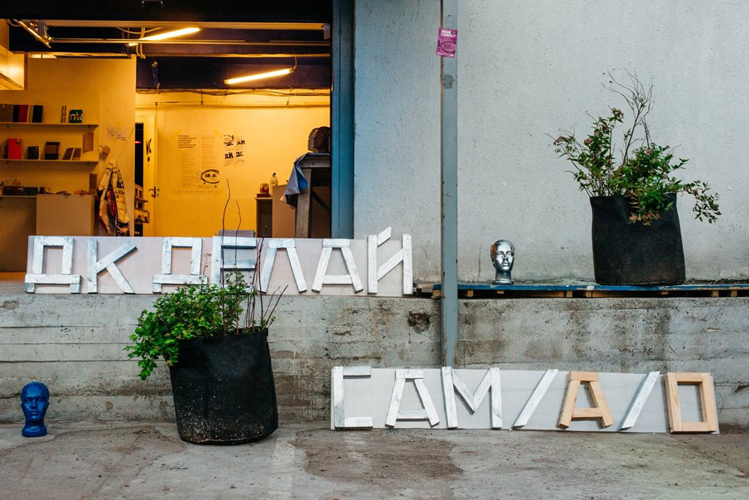
Three months in Moscow, the House of Culture “Do Sam/A” works in the territory of the city culture Center “Pravda”: a non -profit platform that gives young initiatives and projects a place for development. One of the curators of the project Mariyka Semenenko told Natalia Zotova how the place of gathering activists can change society and why Moscow improvement is a form without content.
-“Do the Sam/A” began in 2010: then in the world and in Russia they started talking about the lower urbanism, then the “arrow” launched ... There was such an action from the climate organization 350. Org -a single day of action, when you see some kind of imperfection in the city, you go and change it on your own. And due to these attempts, whole movements and projects are born. Then it was cool in trend: in the parks they began to promote separate collection of garbage, the “Partizaning” movement appeared. Then there was a movement of 2011-2012, when everyone suddenly felt like citizens. On a single day of action, everyone could join their action, and after it there was a party where you could share their experience. And soon it became clear that this party is the most important, because activists from different spheres and areas meet and get acquainted on it. Then the organizers began to create a “make a summit”: an informal conference dedicated to the lower initiatives.
- And how did the permanent platform grow from the Summit?
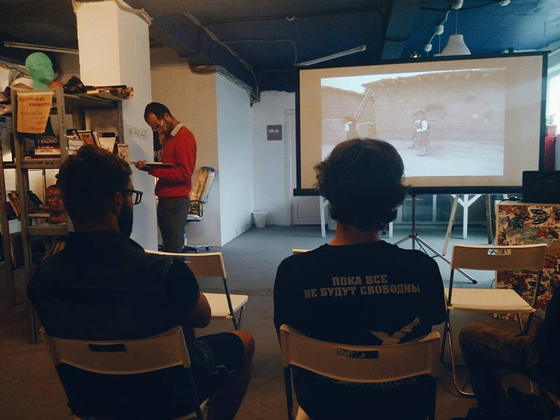
- We always had a problem with the physical space in the city to hold our meetings or events. If we go to a commercial platform of the “bottle” type, we need to pay rent there. If on state venues-something can be done on the basis of libraries, exhibition halls, but there is any of your initiative of the Svic. And we suggested that there are a bunch of people with the same problem. When people do not have physical space in a city where you can realize something, meet like-minded people, they quickly burn out and abandon their idea. One person from our team said that we are all batteries, and DK is a charger. And we made a space where the initiative is not punished, and it is strange, but great people.
When people have no space in a city where you can realize something, they quickly burn out. One person from our team said that we are all batteries, and DK is a charger.
- How did you find yourself at Pravda?
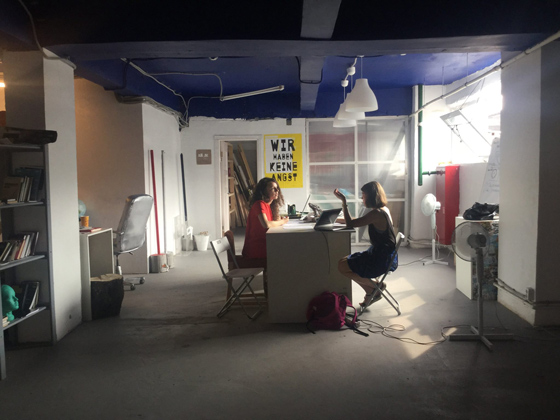
- First, we searched in Moscow with the possibilities on preferential lease or get an undeveloped room for free, we would have made repairs there ourselves (we made it here). In theory, we should understand the "truth" and contribute to us. We came here precisely because they announced that they were making a center for the development of urban culture. From the former coffee warehouse we made a public platform, we master the space, bring people here, show a completely different way to use the territory. It is customary in Europe as follows: first they give the place for free, artists, so that they master it, and after a few years banks and other firms are already coming there, because they are funny to sit where the artists painted and pay commercial rental. And we have a statements at our expense: we are already asking for a commercial lease, so that then banks are even more expensive for banks. So we make non -profit space in a commercial environment, we replace what the state or business should do.
 © "Do Sam/A"
- Are there any artists here too?
- We are the only tenants here who are about urban culture. The rest is some kind of event story. Festivals of street art, for example. But the festival passed, the wall was painted - and everything, apparently, is believed that urban culture has already happened. Previously, the artists were acting at the factory: they called themselves "truthfuls." But they were kicked out.
- You are non -profit space: that is, you let you go for free?
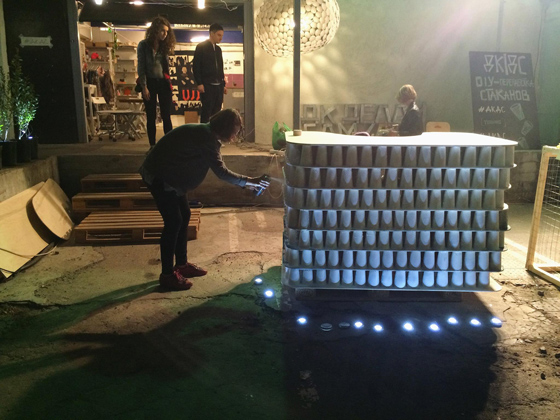
- Yes. Everyone can hold their event here if it is in the concept of a lower initiative: free, the mission is non -profit. And without St. George ribbons (laughs) . If people gather more than once a month, we ask five thousand for rent. It is important that they not only consume this opportunity - we are not a fund, not a philanthropist, we ourselves survive, all the time we are looking for ways to swim.
Moscow now is the city of Ostrovkov. A closed party is jumping from the “arrow” to the “horizons”, in some Barchik, in these places you will not meet “wrong people”. The main thing is not to sit in the subway.
- Everything free can attract freebies.
-I noticed that if they do not call themselves activists, but they have a desire to do something-whether a concert, a party of vegan food-then they understand that the site for them is a cool resource. And there are formed parties in which the guys call themselves activists, anarchists and the like - we often saw a consumer attitude from them, although they, like no one, should understand what it means to share. We want to create a community, not a party, not a closed history for our own, but an open system with a set of principles.
- There are just a lot of activist parties in Moscow. It turns out that you see the shortcomings of these communities?
- Here are our neighbors here, on Pravda, - the horizons space, there are very fashionable parties. People who go there say: “It's like Berlin” - and also: “You will not meet wrong people there.” Moscow now is the city of Ostrovkov. A closed party is jumping from the “arrow” to the “horizons”, in some Barchik, to the apartment to someone on the Smolenskaya embankment, and yes, in these places you will not meet “wrong people”. The main thing is not to sit in the subway. This is the city culture that is. And we are the city culture that we want to see. We do not have the fact that all vegans or everyone drinks craft beer and listen to certain music. Someone eats meat, someone is not, someone rides a bicycle, someone protects safety on the Internet ... And we want society to be this: everyone has their own identity, and those around him respect, do not try to break it.
 © "Do Sam/A"
- Who are these people who come to you?
- We formulate this: DC - a platform for the formation of an alternative urban culture. We have everything here, from rappers to film screes in support of political prisoners. The guys come to us: they want to hold a party with their music, because they are not cool enough to get into closed parties, and they do not pass the hard Moscow face control in clubs. They arrange another party, the way they want to see in the city. This, as we say, are unconscious activists. Other unconscious activists came from the offices at Pravda. They say: "We are engaged in hydroponic, the basil of the house is growing, can we spend an evening of food exchange with you?" Once they conducted, soon the second is planned - so they become activists, and a community is being formed around them. If there are more people who are not burned out and did not abandon their business, who take responsibility and show the initiative without fear, master the city differently, we will live in absolutely different conditions.
- And how can you master the city now?
- Now it is almost impossible to show initiative in public spaces. You can’t agree on anything, because you are afraid of everything, but do it without approval - there will be problems or everything will be demolished on the second day. Previously, the authorities somehow went towards. In 2011-2012, there was a wave when city activists went to work for the Moscow government, seeing this as an opportunity to change the system from the inside. Someone worked in the Department of Culture, I worked for the Moscow Urban Forum, it is overseas the Department of Urban Policy. We did some important things, but then we realized that everything was a ceiling. And to make a form without content - this is not interesting to us.
The authorities expropriated the activist dictionary - “Initiative”, “Community”.
- And what the city is doing now is a form without content?
- All these holidays of ice cream and jam - of course, is meaningless. Recently, we went to one exhibition in the Mayakovskaya area. We walked past people on a swing who swayed and rejoiced: "Hurray, Moscow is changing!" We walked further along the street, and around there were clear contours of the houses, clear contours of the sky, and it was also necessary to breathe clearly, rhythmically. And you cannot right or left ... There is no person in this.
- They put the swing, the sidewalks were expanded, the bicycle paths laid out what was wrong with that?
- We were faced with the fact that the authorities expropriately our activist dictionary - “initiative”, “community”, our instruments like bicycle paths and festivals. Festivals became festivals of ice cream, and the flag of United Russia hangs on bicycles. And they say: "And what you do not like, how beautiful it became in the city!" And I remember the times when people were sitting on the lawn in the Alexander Garden. Now they can be taken to the police department for this. Street musicians are delayed. As soon as a person wants to show himself in public space, they stop it - and in return they give a swing.
 © "Do Sam/A"
- And now the city authorities with whom you were friends are not ready to help your project?
-Due to the fact that the political situation has changed, we suddenly moved to some dangerous political field, although our principles and ideas remained the same.
-How can you be dangerous?
- When you create urban culture, people begin to walk where it is not necessary, draw where it is not necessary, show the initiative where - oh my god! The more separate garbage collection in the yards, the more conscious citizens, and there you look - you already live in another country, and no longer needs to breathe clearly, and everyone can breathe as they want. But so far we are at the first link of this chain.
On September 17, on the day of silence before the elections, the “Do Sam/A” team will hold “24 hours of truth” - excursions, lectures, film scuses and performances dedicated to rethinking the word “Pravda”.