
Translated material
"We have reached the bottom"
Interview with Patti Smith about memoirs, elections and death
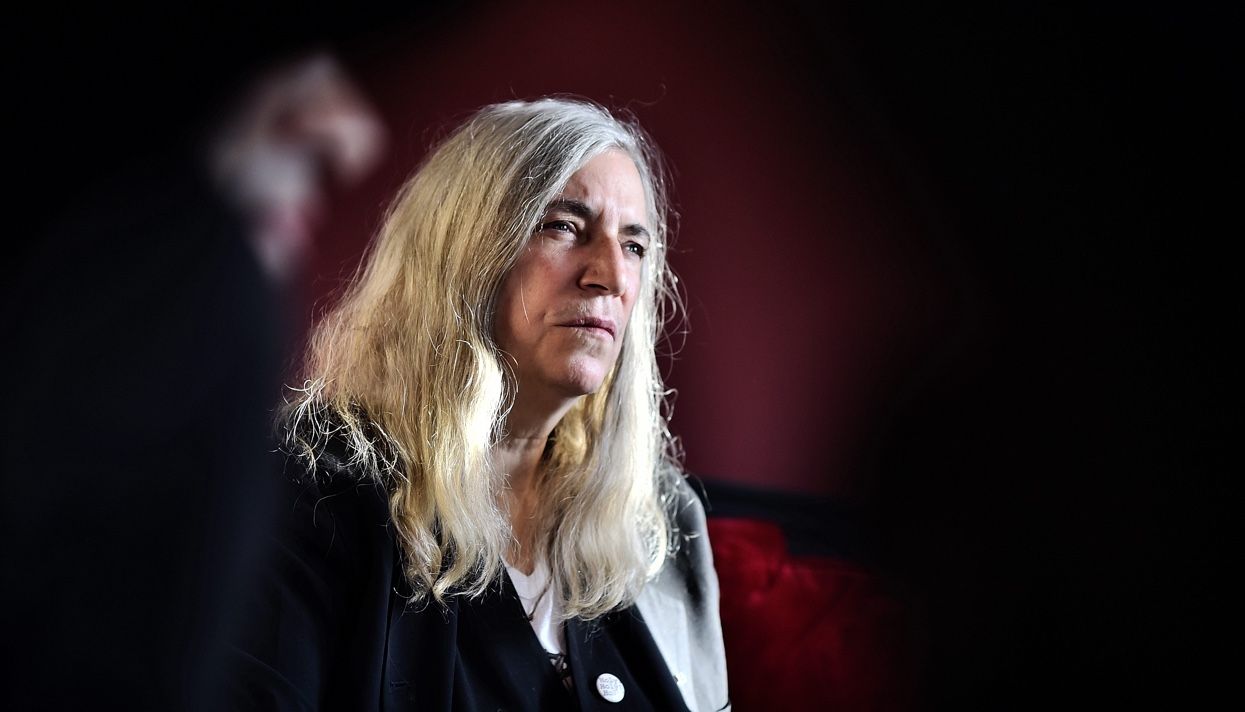
The book “Train M”, the second prose collection of Patti Smith, a set of surrealist poetic essays about memory, travels and culture, in which memories are difficult to distinguish from fiction, was published in Russian Publishing House in Russian. Smith is better known as a poet and musician, her group in the 1970s became the direct forerunner of the punk revolution, but recently she has been engaged in literature more: a book of memories that came out a few years ago about her relationship with the great photographer Robert Mappletorp “Simply Children” became a bestseller, including in Russia. The editor of the Medusa Special Room Department Alexander Gorbachev called Smith in New York to talk about a new edition.
- You have released several dozen books in your life - mostly poetic. What prompted you to start writing prose, especially since memoirs?
- After all, I kept diaries all my life, recorded my first -person impressions, so this was not a new genre for me. Another thing is that when I think about memoirs, Patrick Modiano or Jean to Zhena, in which real memories are mixed with artistic prose, come to my mind. I would like to do something like that. And what encouraged ... I did not plan anything - in fact, and “just children” I probably would never have written if Robert Mappletorp did not ask me about this the day before his death. We both understood that he was about to die, and I asked him: how can I be useful to you, what can I do for you when you are no longer? To which he answered - Patti, write our story. It took me 20 years to understand how to do it in such a way as not to lie in order to accurately transfer all the feelings and to pay tribute to Robert. I wrote this book because I promised, and I absolutely did not understand how people would react to it. As a result, it became my greatest success - around the world, it seems, a million copies of “just children” were sold.
- And now the publishers asked you to continue.
- I do not think, to be honest that the “train m” is memoirs. Just publishers and sellers always ask - what kind of book is this, in which genre? I don't know. And in which genre of Nadia Andre Breton? Yes, in no. This is just a book. Or the wife - “The Mother of God of Flowers”, “The Diary of the Thief” - there seems to be a lot of himself, but all this is inextricably linked with fiction and poetry.
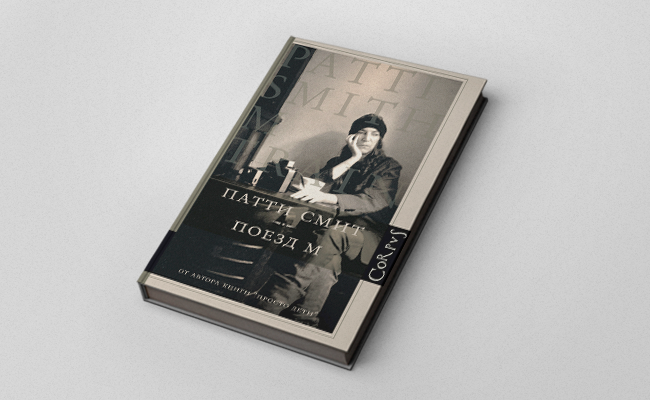
- “Train M” is also a very poetic book. In some places it seems that these are almost poems in prose. Is this difference in general - poetry, prose?
- Poetry, in my opinion, is the most difficult type of writing. But I wrote poetry all my life - from an early youth, then they were not very good, of course. And this greatly influenced my lyrics and my prose. Because I write it with the same effort, spending a lot of time looking for a perfect word, a perfect construct of a phrase. You know, I would say that poetry is such a cipher. You have a poem on 22 lines - and there were five hundred lines in the poet’s head, he simply compressed his big thought in this small form. Therefore, sometimes poems can be difficult to understand - you need to turn off the expectations, turn off the logic and just accept them as a certain separate world. The same kind of things happen to my prose. To be honest, I sometimes worry that because of this it turns out to be too mannered, unnatural, and trying to strain it. But I am very glad that you noticed it.
- I also noticed that the “train m” is very subject. The memories that you write about are almost always associated with some specific things and objects: stone, coffee machine, toothbrush. Does this mean that the past is financially for you?
- You know, I grew up in a poor family, and things from childhood had special importance for me - precisely because there were few of them. My books were especially precious-they seemed to me something magical, because whole worlds were hidden in them outside my own. As they grew up, other objects appeared-a stone from some secret place, the key received from a familiar boy, then-art: a small statue of Brancus, crucifixion, icons ... I find in things and in the memoirs that are hidden in them, beauty; I feel them. Some items are completely part of you. Like the coat that I lost ( mentioned in the book “Train M” - approx. “Medusa” ). Well, it would seem ridiculous - so sad about a holey coat. But I was really attached to him - because I felt in it.
- It sounds like your house could become a material for a good exhibition.
- Ha, no! I have a complete mess. Books are lying everywhere. And my things are very different - some matter only for me. There is, for example, Tamburin, who made me Robert Meppletorp, when we were twenty years old. There is a favorite coffee cup of my father. This is something very personal, intimate. But I also have a letter written by Emily Dikinson, a photograph that Brankuzi personally printed. In any case, the museum is completely different - there is too much chaos.
-Even from your books it seems that you almost always perceive life in the optics of some kind of cultural experience. What is happening to you, you constantly compare with situations from books, films, series. Is it possible to say that for you reality is always mediated by culture?
- Partly, perhaps. You see, I'm almost 70 years old, I live alone. When I was younger, when my husband was alive, when my children lived with us, I looked at the world a little differently. And now, of course, art takes much most of my life - I just have more time to reflect on it. But yes, I was always inclined to this. I say - from childhood books were my way of knowing the world. I lived in books - because where I really lived, there were not so many interesting things: rural areas, no galleries or cinemas. Therefore, books remained me - it was from there that I learned about other cultures and religions. Then, already in the 60s, cinema-Godar, Tarkovsky added to them.
I also spent a lot of time in temples - despite the fact that I am not at all religious, I do not need religion. But I like the churches. I remember when I came to Russia, I always spent a lot of time there. For some reason, it is in Russia and in Serbia in temples that the mystical side of religion is really felt. They do not press you with dogmatism, and you better feel spirituality. In Moscow, I went to the church where Pushkin was married, and watched how people pray - quietly, standing, sometimes leaning towards the icons. There was some very beautiful deep humility in this. So, among other things, culture provides you with many doors into reality - it can be a movie, and maybe faith.
- And there may be criminal series. Honestly, I did not expect that you love them so much, but in the book they are mentioned every now and then.
- Yes, I love! ( Laughs. ) I always adored Sherlock Holmes. I am not interested in the crimes themselves - but it is interesting how investigators work, how their head is arranged, how they solve riddles. Accordingly, the series I also love about detectives. For example, Granucher -he is about a young alcoholic priest who is investigating crimes. " Tunnel ". " Indevor ." His main character, inspector Morse, is one of my favorite investigators. He loves the opera, Maria Callas - like me.
-Another important character in both books is the city of New York. True, he is not at all the same as in fact. It is much more comfortable and at the same time dangerous unpredictable, much less expensive. What do you think of the current New York? Has the city changed?
“Yes, of course,” and I don’t love him as before. In my youth, it was a poor, but a free city where it was possible to work for years a seller in a bookstore and rent a small apartment for this money. I did so. The energy was appropriate - less materialistic; There were more creative people. Old architecture, old cafes ... Now everything is different. The city is prosperous, all credit card, everyone goes shopping, a bunch of tourists, where you will not go, they sell something; It is as if this is a huge shopping center. And architecture ...
You know, yesterday for the first time in a long time I ended up at the church of St. Patrick. Previously, she was the queen of the fifth Avenue, and now next to her stands a monstrous skyscraper of glass and steel, and the building of the cathedral completely lost its power, it looks a dwarf compared to this giant. Of course, I know that New York is still a great city. There is an endless variety of cultures, here no one sleeps at night, here the environment itself stimulates you to do something. But I almost stopped loving him. I have the feeling that the New York has lost most of his personal unique nature-he becomes another global metropolis. Well, yes, terribly expensive.
- What do you think about changes in America as a whole? When we met , this was also on the eve of the presidential election, in 2008, and then you looked optimistic into the future, really hoped at Obama. Honestly, even a little scary to ask how you feel about the current presidential campaign.
- Oh, what can I say. We have reached the bottom. We need radical changes - our people are divided, and I do not know what should happen so that we are united again. Funny: two presidential candidates represent completely different people, but the majority supports either one or the other. It is clear that in recent years, Obama was very difficult to do, given the republican majority in Congress. And note that now it is almost completely focused on one problem - a global climate change, ecology. He is trying to convey to people that this is a truly important question. Because this is the main thing that is now what is happening in the world. And I do not like our current candidates not only for a thousand other reasons, but also because none of them mean this. The whole campaign is some kind of intermedia, a secondary television show about celebrities. Candidates constantly talk about each other's crimes and the fight against terrorism, but there is more serious terrorism - environmental, and the terrorist in this sense is our biological species. This is the worst crimes on the planet, killing it. And presidential candidates do not seem to be interested. All this drives depression. You know, I look at all this and ask the question-what do they think about us in the world? Are they surprised what we are doing here?
- Not without it! In Russia, there is also a rather regrettable political situation, but from America you still expect something more adequate.
- We are no better than others. We are just a young country formed on certain principles. But this year, these principles are actively shaken - because we have a candidate Donald Trump, who absolutely does not have a qualification to become the president, and he has almost equal indicators with Hillary Clinton. Which, too ... no, she, of course, is a very smart and ambitious woman, but it is completely impossible to understand what is actually in her head. And with the advent of Trump, the whole campaign generally turns into a circus.
It would be great if a new political force, a certain blood, people who ask tough questions appear, change the rules that have outlived their century. We need a third party-but people should create it, which we can truly respect. People who sympathize with others are not only in America, but all over the world. You know, when I was young, there was a cold war-but it seemed to me that all this was complete nonsense, some kind of game of two governments among themselves. I loved Russian literature, poetry, architecture, cinema, and it seemed to me that if people in Russia and America would simply be themselves, everything would be cool. I refuse to consider any countries with my enemies. There are bad people, bad rulers, bad corporations, but not entire nations and cultures. Yes ... I'm sorry, I went to the side somewhere, but our political situation provokes this. In any case, the rest of the world this year has something to have fun, thanks to our elections.
-And yet-where will this third force come from?
-It seems to me that young people are very angry because of everything that is happening. Those who supported the campaign of Bernie Sanders and worked for it should not give up - and should spend the next four years, gaining strength using their ambitions and technologies to build a third batch. I think this is possible. Maybe it will be a party of green. It's time already.
I really hope that a global disaster will not be needed so that people understand that the matter is really bad. This is what Obama is talking about-disasters are already happening: somewhere problems with drinking water, somewhere earthquakes, somewhere new viruses like Ziki; All this is due to the fact that we close our eyes to our attitude to the planet. People should wake up. I hope that the youth will begin some global movement-as in the 60s we had a global youth movement for pacifism.
- In your book, you write a lot about people who are no longer there. You yourself have already talked about your age. Do your relationship with death change as you become older?
- This is a very interesting question. It seems that the further, the easier it will be. But in fact ... you know, I will be seventy in December, I lived a good life, my children are fine, I can still work actively. But over the years, I miss my husband more and more ( Fred Smith, the husband of Patti and the guitarist of the MC5 group, died in 1994-approx. Medusa ). I thought it would pass, but sometimes the pain is like he died a month ago. Mother and father is also very missing for me.
It is interesting that you asked about it, in fact. Just the day before yesterday, I could not fall asleep, clicked a remote control from the TV and got to the film “The Games of the Mind”. And the character of Russell Crowe in him terribly reminds me of her husband-there is something in him and externally, and this sadness in his eyes, and some sincerity .... In general, I still watched, I thought about Fred and so roared as it had not cried for the past few years. If I came to something, this is that death is part of life. My sister and I often recall our late brother-sometimes we laugh very much when some joyful stories come up, sometimes we cry a little, because we miss. And this is normal. This is part of us. There is such a phrase, time heals all the wounds - in fact, it is not necessary. You know, in the Parsifal opera there is a knight wounded by a spear of Christ - and this wound never heals. This is a good metaphor for sorrow. You just need to learn how to live with this wound.
Alexander Gorbachev
Moscow