
Translated material
Ants on porcelain
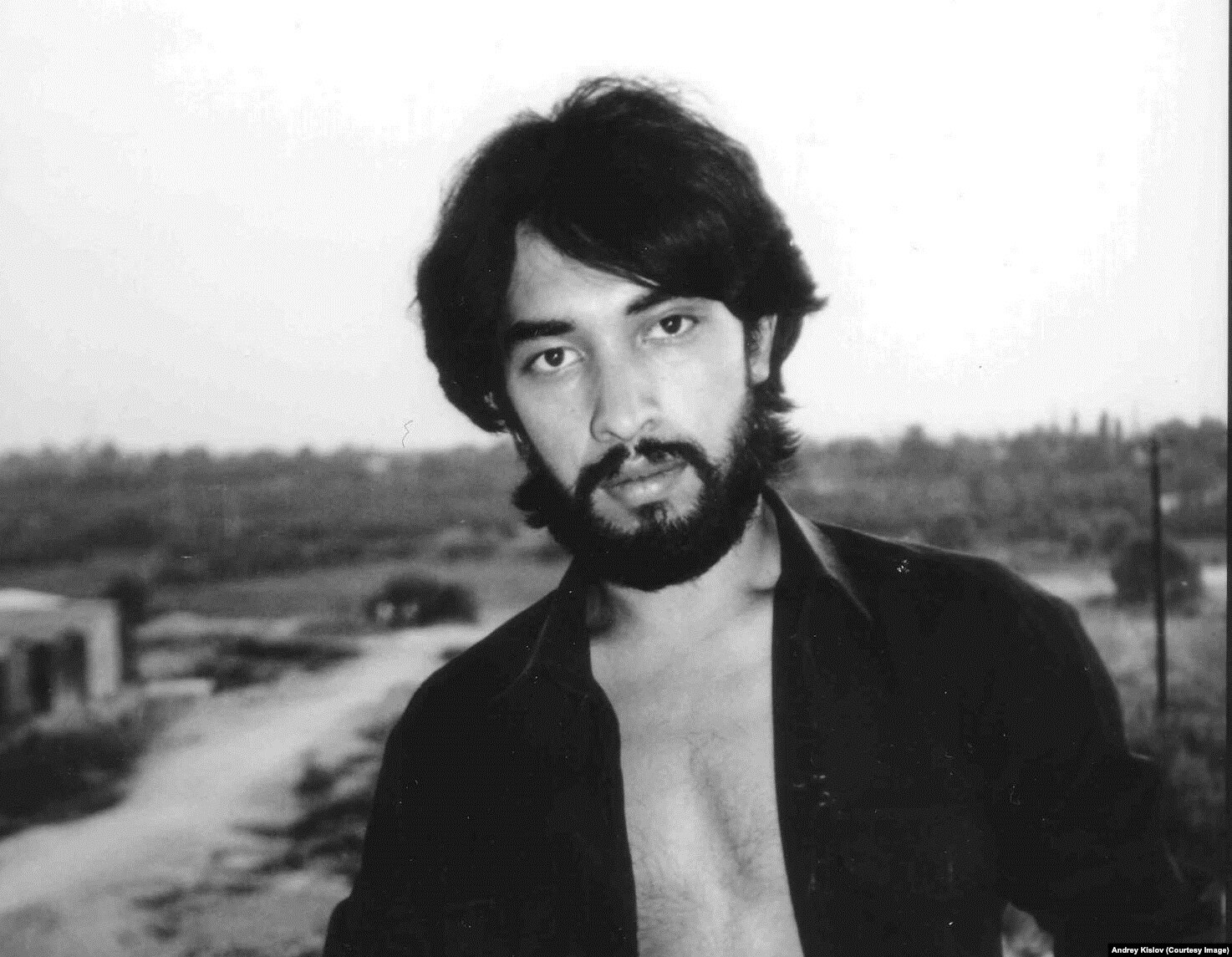
In the late 1980s, editors of underground typewritten magazines in Moscow and St. Petersburg began to receive unusual manuscripts from Uzbekistan. On the outskirts of the Soviet Empire, in Ferghana, a group of avant-garde poets arose, who wrote a free verse, who despised Soviet literature and idolized Pazolini, Henri Misho and Ezra Pound. The leader of the group was Shamshad Abdullaev , who knew excellently European and American literature, and the young poet Khamdam Zakirov became his brightest student. The verses of Shamshad, Hamdam, Daniil Kislov and their comrades began to appear first in Samizdat, and then in the Moscow and St. Petersburg "official" publications, gradually getting rid of the shackles of political and aesthetic censorship.
In 1991, perestroika reached the boring Tashkent magazine "Star of East": the new editor -in -chief of Sabit Madaliev invited Shamshad Abdullaev to head the poetry department, and Daniil Kislov - the prose department. The magazine, to the horror of Uzbek socialist realists, has transformed. Moscow and St. Petersburg vanguard writers began to be published here, and the translations of the works of Henri Misho, Jean Cocteau, Robert Krile and Edward Roditi were adjacent to their texts.
Of course, for a long time in Karimovsky Uzbekistan this could not continue. The story of how the editorial office was defeated can be read on the Ferghana website . The poets of the Ferghana school were forced to emigrate from the country. He left Uzbekistan and Hamdam Zakirov.
I met Hamdam in Helsinki, where he has been living for many years. A conversation with the poet was recorded a few days before his fiftieth anniversary.
- How did you start writing and how did you feel that you are not like those writers who were then considered poets and published in Uzbekistan?
- My poetic career, if you can call it, began quite funny. Before I met in Ferghana and joined the group that later began to be called the "Ferghana school", I studied in Leningrad at the Naval School. And for me, the discovery of poetry began to occur when I began to listen to underground rock bands. Then perestroika began, publications began to appear. I remember that there was a column Yevtushenko in the "Ogok". There I began to discover unusual poetics along with new, "forgotten" names. I already indulged in poems, but it was not serious. After some time, after I returned to Ferghana, I first met Daniil Kislov, then with Shamshad Abdullaev, and the abysses in European and American poetry of the twentieth century began to open for me.
- Is this group of poets already or was it formed before your eyes?
We all dreamed then the renewal
- We can say that it was formed, however, there was already a certain company, Shamshad, Daniil, Grigory Coelet, they were already friends, talked, wrote, showed each other. By and large, we can say that the group has already been. I joined it just at a time when it was formed and formed that later it became already known outside the borders of Ferghana.
- And how was the capture of the editorial office of the Star of the East, which was a completely Soviet magazine and was famous only for the fact that Agatha Christie sometimes published, and so that the beginning of the detective was printed in the December issue, and the continuation in January, and had to subscribe for a whole year to find out who killed the old woman?
- This only confirms that the Uzbeks are good sellers, because it was a wonderful marketing move! And the capture did not even occur at all, not the Ferghana. At some point, it was 1991, Sabit Madaliev became the editor-in-chief, and he began to look for new forms. It was then that he began to communicate with Shamshad for publications, and soon invited him to the post of editor of the poetic department.
- Was it at the behest of the heart or the party ordered to "be rebuilt"?
- I think that at the behest of the heart. Sabit wanted something new, something unusual, some kind of update. We all dreamed of an update then.
- Indeed, the magazine has changed radically, there was a take -off that was so perceived in St. Petersburg and in Moscow, but the Uzbek Soviet writers were extremely unhappy, wrote denunciations, complained about you. And now the "star of the East" exists, but already half -dead.
- A few years ago there was a coup there, the same critics from the Soviet Union of Writers and stood at the helm. Sabit left, or left him.
- Everything goes back - both in big politics and in a small literary magazine. You said that you were guided by European and American poets. Who was your idol then?
- For me, the discovery was Ezra Pound, Eliot, U.K. Williams, Ferlingetti, Cummings. Of the Europeans, sealants, Quasimodo, Montale, Ungaretti influenced me most of all. But Ted Hughes, Rene Shar and Saint-John Persian. The same Kawafis with whom I no longer part. Here I recently read somewhere in VKontakte the post of a certain young lady who wrote that "Kavafis had a significant impact on the poetry of Khamdam Zakirov." Well, let it be so.
- But the Russian poets, then the semi -underground, also influenced you, and you made friends with them, ended up in the circle of the Moscow Poetry Moscow Club and the St. Petersburg group, which was formed around Arkady Dragomoshchenko.
- My closest relationship was with Petersburgers, with Vasily Kondratyev, with Sasha Skidan. Yes, Arkady, of course, influenced - it was also something completely amazing then. Unlike young guys, Skidan and Kondratyev, he was already published and, of course, it was an unforgettable impression, it remained unforgettable.
-The year 1989, probably?
-Yes , 1988-89. I read the first publications in the magazine "Youth". We began to communicate, and in 1994, I saw almost all my correspondence acquaintances at the Festival "Opening of Poetry", which was made by Vasily Kondratyev. By the way, after this festival I did not return to Ferghana, drove to Moscow and stayed there.
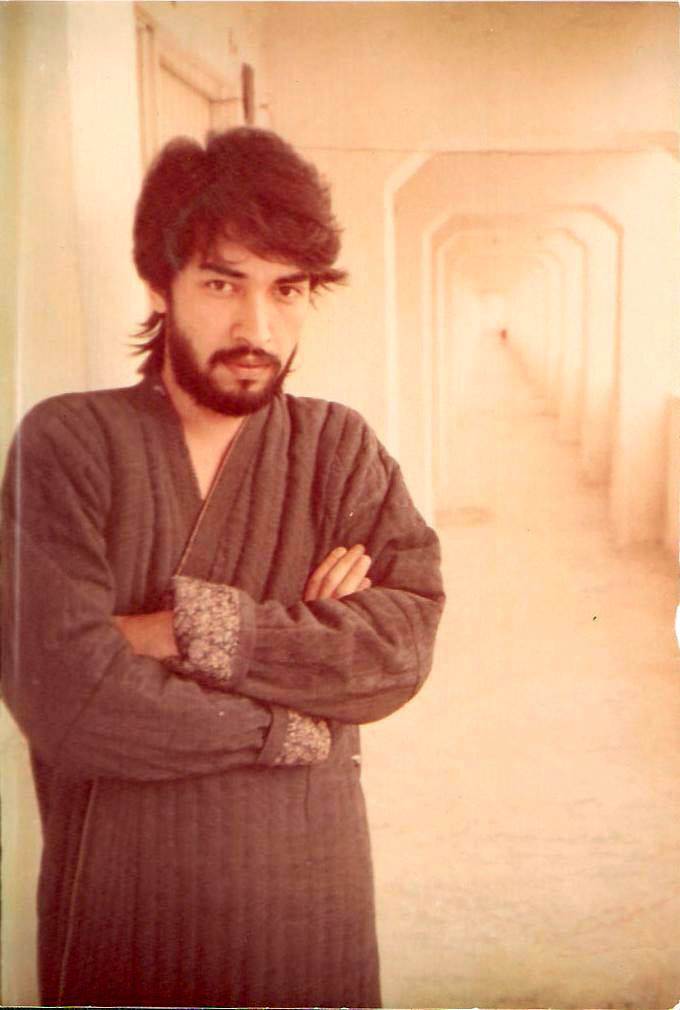
- How did you perceive in Russia? Uzbekistan, even during the Soviet Union, seemed exotic. Have you treated you as a poet or as a poet from Uzbekistan?
- I think, as a poet from Uzbekistan. Then the Ferghana school was already known in certain narrow circles. Probably, I was really perceived so, because for just a poet I looked too exotic.
- Now we need to explain to our listeners what the Ferghana school is.
-I can’t say for sure, but, probably, the term was used by someone in the beginning, or rather, in the mid-90s. Accordingly, Shamshad Abdullaev and a few people at that time were implied, I mean myself, Daniil Kislov, Olga Grebennikov, and people who were somewhat older, for example, Grigory Coelet, who lived then in Israel, and now in Holland. It formed in the mid-80s, I met the guys in 1988, joined a group of good friends who were engaged in poetry and painting.
- How would you determine the main features of your school?
-I think that it was better than the Shamshad once designated this, this cannot be done. It was orientation on poetics associated with hermetism, imagism, other modernist poetic trends of the twentieth century. I was interested in oriental poetry, Chinese, Japanese, Iranian and Central Asian.
“But you always wrote in Russian?”
- Certainly.
-And in Uzbek?
-No , I never wrote in Uzbek. In my poems, there was never even a hint of stylistic poetry, but nevertheless, she was present, somehow helped, probably, to write such a detached, impersonal poetry that we all wrote.
-Why didn't you write in Uzbek?
- The situation was without a choice. For me, the Russian language was native language, I knew it much better than Uzbek. Shamshad has the same situation.
- Is it unusual for Ferghana?
- No, at that time for Uzbekistan and for urban residents it was a natural situation, many Uzbeks knew the Russian language at the level of their own. I poorly know Uzbek, on a conversational, but not at the literary level.
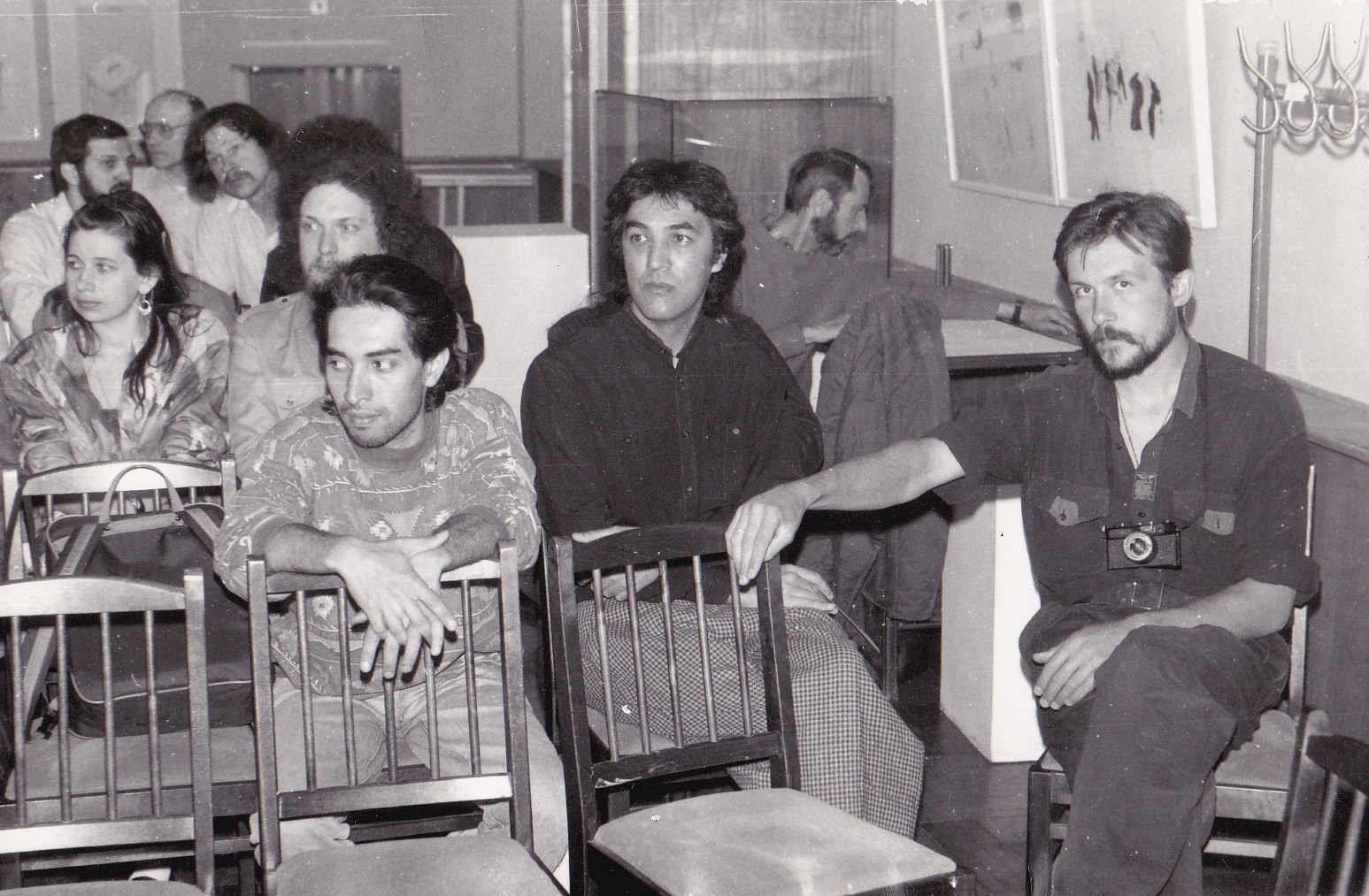
- Daniil Kislov, many know as the founder of the Ferghana agency , this is the main alternative resource of information about what is happening in closed countries of Central Asia. He left Uzbekistan, lives in Russia. What happened to Shamshad Abdullaev, the leader of your school? He also left Ferghana?
- Yes, he now constantly lives in Kazakhstan, however, he regularly arrives regularly to Tashkent and Ferghana.
- And you first left for Moscow, and then to Helsinki. How did your emigration work out and why Finland?
When Putin came to power, I realized - that's all
-In 1994, I ended up in Moscow, lived there for seven years, for the end of the 90s I even had a good financial situation. I met a girl who had Finnish roots, a conversation arose that her sister lives in Finland, you can move. There was just a 1998 crisis, its consequences were very difficult. When Putin came to power, I understood and even told my friends that it’s clear - that’s all.
- They were more perspicable than many.
- May be. Still, I was not the first emigration, I also left Uzbekistan, realizing that everything was already there. And in this sense, the solution was quite easy, because it was possible to leave here and it was clear that it was necessary to go.
- Do you regret it?
- In no case. Still 15 years have passed. The first years were very difficult, but, nevertheless, I like to live here, this is a wonderful country, a wonderful society. The traditions and rules that are here allow you to live.
- A very complex language, nothing to do with those languages that you usually know at least a little. But you are free to speak in Finnish. How did it happen?
- I had several significant advantages. Firstly, I did not know other languages, my "intraities" knowledge of English and German could not help me. There was a completely hopeless and only possible situation - to learn the language as soon as possible in order to live here. It was one of the big advantages, although, nevertheless, as if minus , ignorance of languages. Another big plus was that, except for Russian, I also knew Uzbek and Tajik. As a child, I spoke freely in Tajik, then he left, but, nevertheless, some kind of sound things, verbalization and so on - I knew all that. Accordingly, at the level of the vocal cords, everything was configured to speak Finnish with all its mutations or long consonants. This also helped me, because I recall my comrades in the Finnish language courses, who knew only one language, it was very difficult for them to study another, especially in terms of pronunciation. It was much easier for me. One Finnish friend, laughing, said: of course, you know the Uzbek - this is a Turkic language, and the Turkic language group literally in the neighborhood is with Finno-Ugric. By the way, there is about the same as in the Finno-Ugric group, word formation, in some points it also helped me.
-Did you try to write poetry in Finnish?
- Yes, I tried to write when I studied the language, tried to speak on it - it was in the early years. Sometimes, when I tried to repeat to myself, memorize some words, then pronounce whole phrases, porridge from Russian and Finnish formed in my head. Moreover, I understood that I was trying to build some words and phrases, but they probably have wrong, wrong, wrong. At some point, it became funny for me, and I decided to record it, because it turned out to be a kind of verbal substance from languages, clumsy, and curvature.
- So poetry is born.
- Yes, but, unfortunately, I did not save all this, now I regret it. However, when you already recognized the language better, it is impossible to return to such things, but then you could make a funny poetic project out of this.
- We talked about the poets who inspired the Ferghana school. 30 years have passed, who inspires you today? What are the impressions of what is happening in Russian poetry?
- A few years ago, when I ended up in St. Petersburg on those days when the Verlibra festival was held there, I listened to young poets and was amazed that there were a lot of interesting texts. For the past few years, I began to read a lot of young Russian poets, began to find many interesting names. It seems to me that everything is quite good in Russian poetry, although I, nevertheless with 30 years of experience in poetry, seems a lot to one degree or another secondary.
- Is the Ferghana school or remained in the past?
- It would be right to say that it no longer exists. If only because there is a completely independent Shamshad in itself, to which there is absolutely no epithets to apply, he writes and is regularly published. Of all who made up the Ferghana school, he is the only one who is still actively writing the author. We can say this about me, but I write completely irregularly, little, especially recently, they occupy me and begin to occupy other things, poetry remains aloof.
- Is other things music?
- Yes.
- Are you a DJ?
- Yes, I try myself in the role of DJ. I plan to soon open a vinyl store.
- It’s not easy to become a DJ, especially for a person over twenty.
- I have been a music lover all my life. About four years ago, the player and the first records suddenly appeared again, I became a collector of records, carried away by a fan, jazz-fank and other things. For the past couple of years, I have become interested in Russian music, different hits.
“Do you transform them?”
-The funny thing is that so far all my DJs, which have been and planned in the next two months, they are just from a variety of Russian music.
- Group "Brilliant"? Joseph Kobzon?
-I put music, starting with Bernes and Utesov, then I found some early Pugacheva songs, for example. By the way, Kobzona put "And in our yard", such a funny song. You sometimes put some things just for additional trash. For example, the song of VIA "Gems" "My address of the Soviet Union", which immediately goes into the song "WWW" of the Leningrad group.
- Are these clubs for the Russian -speaking public?
-In the spring there was a festival called the “party-rock”, it is organized in Helsinki for the 17th time - this is a festival, which are invited to both Finnish musicians and musicians from the countries of the former Soviet Union, Ukrainian, Russian, Baltic. In early November, I will speak at some kind of near-liter event.
- That is, these are not dance clubs?
- I am not a dance. I wanted to play Funk, but it turned out that it was in demand precisely the program that is connected with Russian music. It's funny.
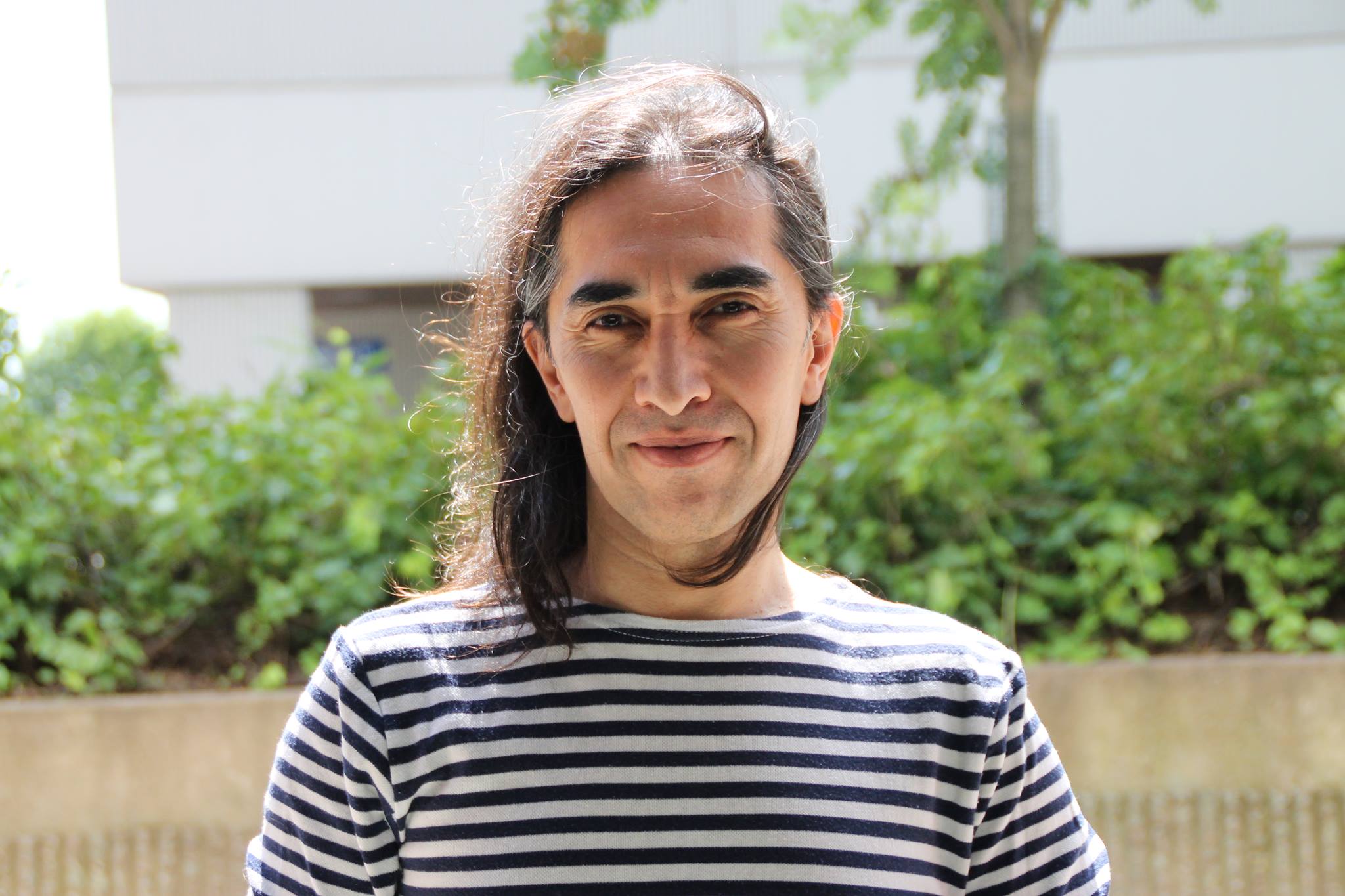
- And your poetry is in demand here, you are transferred to Finnish, published? Someone is wondering that a person from Uzbekistan lives here who writes in Russian Verlibr?
- Yes, they publish, are interested. In this sense, the very great merit of my friend of the translator Yukka Mallinen, he translated me, helped me with publications. In the spring of this year, my book was published in translations into Finnish. There is interest in her.
- Referred?
- Even in our main newspaper Helsingin Sanomat there was a review. Then I came across people who also said: yes, we read. This is a significant thing in Finland, when a review in this "main" newspaper of the country.
- It is good to live in a small country where a book of poems can become an event.
- Last year a book in Estonia was published, interest also arose there.
- Is it more difficult to publish in Russian?
- We are now preparing a book in Russian. I was quite indifferent to the fact that this should be done, I live here, free or involuntarily, I did everything to be forgotten, so I was calm, no and no, my life does not change. Nevertheless, several of my friends reminded me that it would be nice to do. Now, you can say, they made me. One of them, Sergei Zavyalov, took up editing and preparing texts, we are now preparing a book with him.
- In Uzbekistan, change. Do you have a feeling that this is a country that will change in the near future and which you will be ready to return?
-There is no such sensation, it was not and could not be, because it is absolutely clear that in any case there will be some kind of change of power, which would not want to, it is simply impossible, because there are hardware games. And the unpreparedness of society to this. Therefore, I did not wait for anything, the question was only in the change of names.
- Don't go there now?
- I go very rarely. The last time was a year and a half ago and in the near future I am not going to.
- Did not appear in Uzbekistan a new generation of Russian -speaking poets, the successors of your work ?
- I did not meet anyone at all. But once there was such a funny thing, I talked with a man who was sitting in the United Arab Emirates at work, and he asks if you were the most Hamdam Zakirov? It was funny. But I have not met the authors of the young. I know people who are also difficult to call young people who live in Moscow, who else who write in Russian and comes from Uzbekistan. But I can't say anything about the new generation.
- In Uzbek literature, among critics, readers, over the years, a cult arose around the Ferghana school, as, say, for Russian literature around the Silver Age, or is it all forgotten? Did you cast your names in bronze?
- I'm afraid not. Хотя кто его знает, может быть, через десятилетия эти имена всплывут в учебниках литературы. Но все-таки надо помнить, что мы писали на русском языке и больше имели отношение к литературе русской, нежели к узбекской, поэтому было бы странно, если бы вдруг нас стали рассматривать там именно так. Для этого нужно, чтобы нас отлили в бронзе, наверное, где-нибудь в Стокгольме и Осло. После этого, безусловно, узбеки начнут говорить: да, они же наши земляки, смотрите, это наши, узбеки!
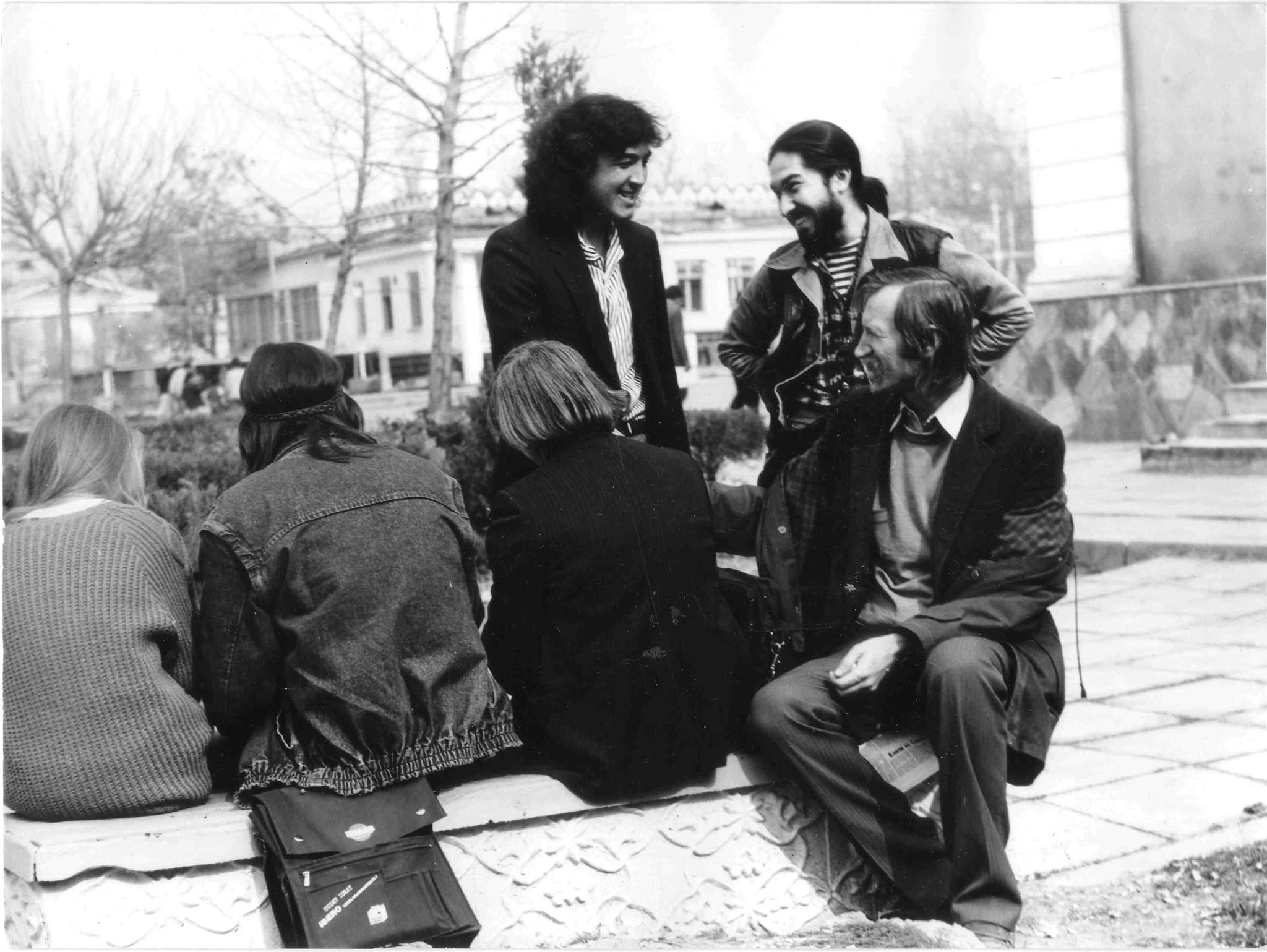
Стихотворения Хамдама Закирова из новой книги:
СЕКРЕТЫ КОВРОТКАЧЕСТВА
Не знаю, как это бывает у вас, но я должен себя полностью измотать,
чтоб где-то уже в середине ночи кубики слов начали вываливаться изо рта.
Иногда они как живые игральные кости катятся по столу, весело падают,
подскакивают на ковре и замирают возле какого-нибудь узора –
фигуры всадника, розы, оленя, листка – и я говорю "ах!" And
"так вот какое ты, слово!".
Летние слова скачут быстрее и дальше.
Осенние – попадают под дерево, где какая-то скучная желтая опаль.
Или порой одной своей гранью впиваются в горный хребет.
Весенние кубики звонко цокают, как бильярдные шары при прямом попадании.
Зимние слова глухо катятся в пустоте. И даже не падают со стола.
Они не имеют значения, полые. Словно бы книги, в которых вырезана середина,
но секретная вещь в них так и не вложена…
Слова разбиваются о CD, как хрустальные туфли
о педали старых церковных органов.
Или становятся вязкими, как нагревшийся пластилин,
если коснутся домашнего кинотеатра. For example,
некое слово как-то, задев DVD с Тинто Брассом,
вдруг обернулось вибратором бирюзового цвета…
А на улице кубики не получались – всё больше камушки да сухие листья.
Или ягоды земляники. Я знаю, тебе они нравились. Да и мне, пожалуй.
ФАНТАЗИЯ НА ТЕМУ ЧЕРНОГО И БЕЛОГО
Недавно в сети увидел эти чудесные фото:
белый китайский фарфор и на нем муравьи,
тщательно прорисованные немецкой художницей Эвелин Браклоу.
Скромное обаяние правильных нежных линий,
тонкие носики, изящные ручки, непременные золотые каёмочки,
еле заметная патина, словно покрывшая (а может и в самом деле покрывшая)
идеальный белый, заключенный в идеальных линиях
едва ль не эльфийских идеальных пропорций и форм.
И на этом прекрасном белом – цепочки муравьев,
и солнце поблескивает на их хитиновых тельцах.
У сахарниц и чайников они облепили краешек горлышка,
словно бы норовя, безрезультатно, подлезть под крышку.
Блюдца цепочки муравьев пересекают деловито и тихо,
либо облепляют единственную, нарисованную в центре клубничку.
У молочника они слизывают остатки молока на носике,
в сухарнице — подбирают последние крошки на дне...
Всё это можно купить в интернете – от 160 долларов штука.
А мне весь этот фарфор представился в старом белом буфете
с трещинками по вздувшейся местами краске,
стеклянные дверцы которого узорчато разделены
на ромбики и треугольники тонкими рейками.
И стоит этот белый буфет на просторной кухне,
либо на террасе белого дома с видом на море,
и ветер треплет белые занавеси, и хлопает сохнущее на дворе белье,
делая вслед за порывами замысловатые движения,
почти повторяя знак бесконечности,
и по небу плывут кучевые неспешные облака.
И, конечно, белый блестящий песок – вниз, от двора и до моря.
Местом может быть Крым, к примеру.
И море может быть черным. С маленькой буквы.
И уже вовсе не день, а вечер, и справа красный закат
изливается кровью в темные волны. В сгустившемся мраке
не видно уже муравьев на посуде – словно бы даже они, нарисованные,
ушли таки в свой муравейник. А слева,
над изломанным горизонтом Внутренней гряды Крымских гор,
видны далекие алые всполохи, и вдруг чувствуешь себя – здесь, посредине –
маленьким и беззащитным.
Наверху, в ярких вспышках – развалины крепости.
То ли это Мангуп, то ли Тепе-Кермен, то ли и вовсе – Кирит-Унгол,
и ты зовешь – среди шорохов, шепотков и поскрипываний –
негромко и осторожно: "Смеагол? Ты где? Смеагол!"
Потому что и звать больше некого: лишь муравьи, пауки, шорохи и поскрипывания.
(Жаль, нет ни одного хоббита, чтоб как-нибудь скрасить сцену,
ни Эвелин Браклоу, чтоб рисовала нам тут муравьев-альбиносов,
ни мирмеколога, который расставил бы всё по местам.)