
Translated material
Immortal hut
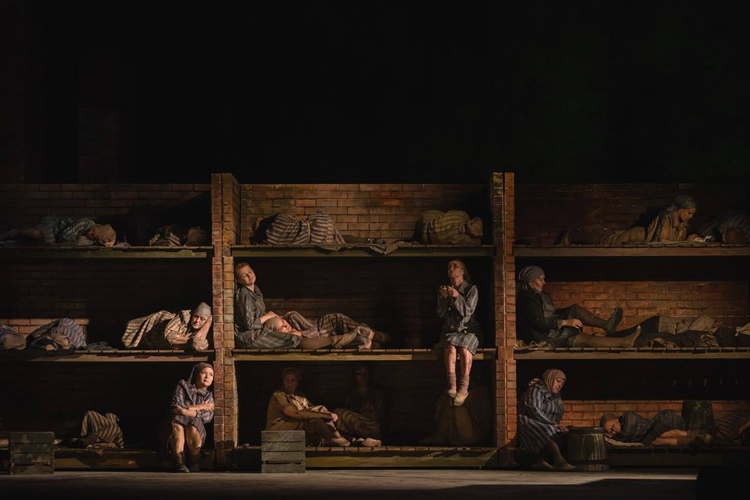
Mecherslav (aka Moses) Weinberg died in 1996 by an almost unknown composer. More precisely, the follower of Shostakovich in the composer shop (at that moment it was somehow not at all in the leg), but beyond it, known only as the author of movie music, in particular, to Winnie the Pouhu and the Cranes fly. In 2006, the forces of the Stanislavsky and Nemirovich-Danchenko Theater (Wolf Gorelik) on the stage of the Music House for the first time took place (with a little directing), the performance of the passenger opera, written back in 1968, along with Librettist Alexander Medvedev, according to the novel by the Polish writer Zofia thought. It was a shock.
The famous British director David Pauntney, who at that time, led the opera festival in Bragens learned about the opera. The world premiere took place there in 2010, put Poundtney, conducted Cuentsis. After that, a wave of performances of the passenger-Warsaw, London, Madrid, Karlsruhe, Houston, New York, Chicago, Frankfurt went around the world. In general, there was a great interest in this composer and his vast creativity (in addition to music for theater and cinema - 22 symphones, 7 operas, 4 operettas, 3 ballets, 17 string quartets, 5 instrumental concerts, a large number of chamber works).
And so this wave has reached Russia. Even, one might say, with some overlap. As if competing with each other for a new trend (the centenary of the composer is approaching in 2019), for six months Winberg’s opera set four Russian theater! Mariinka was the first to be the first - in July, an idiot (conductor Thomas Zanderling, director Alexei Stepanyuk) was hastily released there. Mariinka was ahead of the Bolshoi Theater, where the same opera was promised in February (conductor Mikhal Claus, director Eugene Arya). The Moscow “New Opera” recently unexpectedly reported on the upcoming production of “passenger”, scheduled for January 27-the day of memory of the victims of the Holocaust (conductor Jan Latam-Kenig, director Sergei Shirokov). The Russian premiere of this opera recently passed in Yekaterinburg.
 © Sergey Gutnik
The Yekaterinburg Theater approached the matter thoroughly. Almost immediately after the “Satyagrahi” appeared two years ago, Philip Glass announced the next repertoire sensation with the participation of the same staged team. The production of the “passenger” resulted in a whole hyperpoproject, which includes international conferences, meetings with the public, creating a site , establishing ties with the Polish Institute of Adam Mitskevich, a trip to Warsaw to the 92-year-old Zofier Pind and Auschwitz.
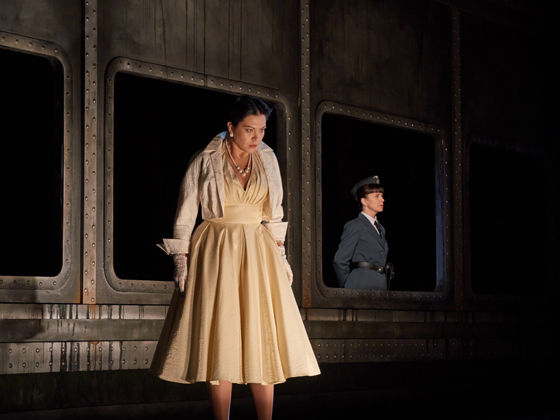
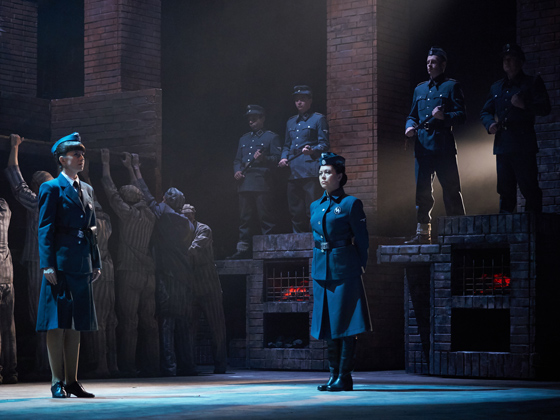
Auschwitz 1943-1944 is one of the two places of action of the opera. The second is a fashionable transatlantic liner floating in Brazil 15 years later. Lisa Franz located on it (this most difficult party in Yekaterinburg was honored by Nadezhda Babintsev), the happy wife of the German diplomat Walter Kretschmer (Vladimir Cheberyak), meets Marta there (Natalya Karlova). 15 years ago, Polka Marta was the prisoner of Auschwitz, and the German Lisa was her overseer. From the memories of the female hut you can’t hide anywhere.
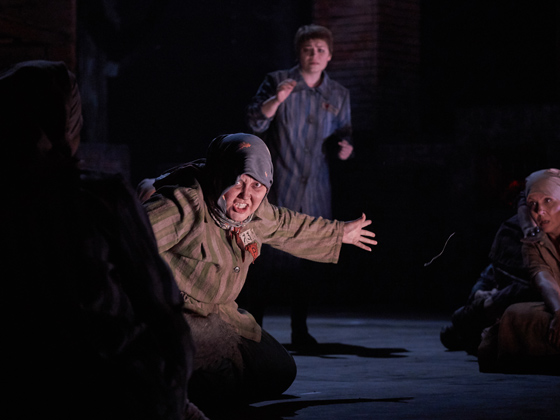
"Passenger" is a very difficult test. This is not quite an opera, although in it, as in an ordinary opera, there is both love and death. But there is much more death. She is present all the time, even when no one dies on stage; Courage with death, reconciliation or non -discretion with it is an important topic of “passenger”. Another is reconciliation or non -discretion with the past. And the third topic is memory. “If the echo of their votes stalls, then we will die” - these words from the field of Elyuar serve as an epigraph to the libretto. The final monologue of Marta, addressed to us, modern viewers, ends with the same thought.
 © Sergey Gutnik
In the Yekaterinburg production, they tried to find at least some exit from the main catastrophe of the twentieth century. The last frame of this very thoroughly twisted film-installation story-Lisa and Marta sit opposite each other, looking at the round windows-mirror. Although the authors of the opera did not allow them to talk during a meeting on the ship, the director of the play (as well as the scenographer and artist) Tadeusz Strazberger still arranged a kind of confrontation.
He did not come up with anything else from himself. Everything is extremely documented, simple and very strongly works. The mountains of clothing remaining on the floor instead of people, the torture spotlights, blinding the hall, terrible smoke from brick pipes-all this is adjacent to the post-war glamor, helpful waiters, grunts and emerging rock and roll. One reality now and then replaces the other mercilessly.
An incredibly voluminous picture is also given in the score itself, masterly and dumbfounding and dumbfounding different styles and cultures. The chief conductor of the theater Oliver von Dokhnanya shows rage, sorrow and the nimble expressiveness of this music. International pathos (among the inhabitants of the female hut - a Jewish, Russian, Frenchwoman, Czech, each has its own musical language) Vainberg crowns with general human values: the bridegroom of Marta, the prisoner violinist Tadeusz (Dmitry Starodubov), instead of the vulgar walnx ordered by the SS people - plays the chapon of Bach - a symbol death. This is the climax of the opera.
 © Sergey Gutnik
Needless to say, the “passenger” always ends with a standing hall and a lump in the throat. So it was in Yekaterinburg. It may seem that everything is too poster. But there is not a gram of falsehood in the production, and the fate of the authors add the feeling of a live certificate: the Polish Jew Vainberg fled in 1939 in the USSR, and his parents and sister remained in Poland died in a concentration camp, he thought the prisoner of Auschivenzim, and survived a miracle. In previous performances of the opera, the writer went to the stage in the final, she did not reach Yekaterinburg, but recorded a video message. In February, they are going to bring the Yekaterinburg “passenger” to Moscow and show as part of the International Conference “Winberg. Return".