
Translated material
Just be magnificent
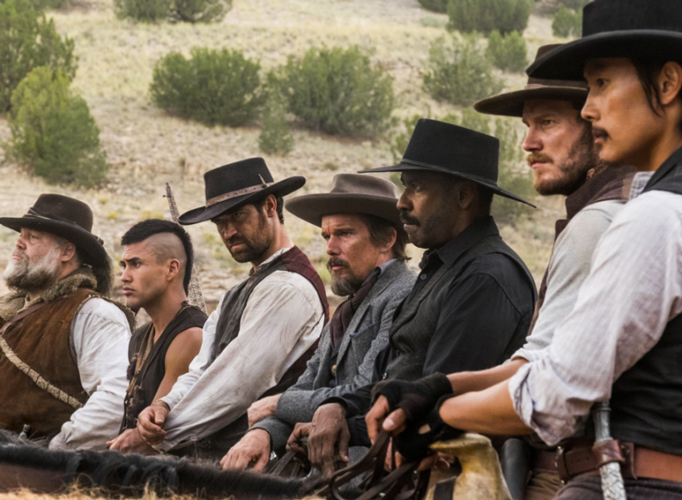
Antoine Fukua’s film is released on September 22, and on September 20, his premiere will be held at Amphest. You can purchase a preferential subscription to the six best films of the festival program, including “The Great Seven” (as well as help COLTA.RU), you can here .
It is said that when Akira Kurosava first watched the American version of his “seven samurai”, he was so unrestrained that he sent the director John Strazes as a sign of admiration for the ceremonial samurai sword. This is all the more significant that in the United States itself the “magnificent seven” was met contradictory, from the very beginning it fell into the category of “strong but not outstanding” paintings. Even in the bins of the Congress library as “culturally, historically or aesthetically significant film” it turned out to be just three years ago (though, simultaneously with the “Nuremberg process”, “forbidden planet” and “criminal reading”). But in the Old World, this movie from the very beginning (and, perhaps, unreasonably) was perceived as the highest achievement and in many ways the personification of the overseas cowboy film as such.
With poorly hidden pleasure, they took from Rodges where they saw their creators of not only the best Italian spaghetti westers (Sergio Leone, Julio Petroni, Ferdinando Baldi), but also Peplumov about gladiatorial uprisings (Alberto de Martino, Bruno Mattea) and costumes of pornography (Joe d'Amata). In France, the film became not only the rental champion, but also a truly popular hit; In “Muriel, or the time of return” Alena Rene advertising the “magnificent seven” flashes on the rights of the obvious symbol of the era, quotes from it can be found in abundance in the best Gallic militants of zero like “Jamakashi” and “Hide Nest”, and the anecdot told about the optimist, which has fallen from the roof, has “everything is all right” He became the detonator of the “beginning of the end” in the thundering “hatred” Mathieu Kasovitsa. The motive-nominated at the Oscar Elmer Bernstein was whistled with a meaning in the cult Czech comedy of the mid-60s “Who wants to kill Jesse”, and a couple of Belgrade gays from the sensational film Sdgozhan Dragoevich “Parade” not only crowned the poster of the “seven” of his family box, but also the relationship of the characters. Maccuine and Yula Brinner interpreted quite in the spirit of the “humpbacked mountain” ...
 © Sony Pictures
But, of course, the “magnificent seven” did not expect the triumph as unprecedented as in the USSR. In the Union, the film was released only two years after the premiere and became the second of the five real American westerns, which reached our screens over forty post -war years. In his monograph “Red Western”, Kinoved Sergey Lavrentiev describes the excitement, accompanying the film’s phenomenon to the wide Soviet viewer: “Tickets for the“ magnificent seven ”could not be reached. Unless the very first sessions. The stadiums and other open areas were used to demonstrate western. They were also clogged to capacity. The fashion for a cowboy gait and a cowboy robe arose instantly, since there was nothing to think about the purchase of jeans, hats and boots in Soviet stores, the boys made costumes from improvised materials ... "
The Seven entered the top ten cash desks of the Soviet rental of all time, leaving behind the Gold of McCens, and “Lemonade Joe”, and Winnet, and even the “White Sun of the Desert” with all three series of “elusive” in addition. Under its direct influence, far from the worst samples of the domestic “Istrana” appeared: “red sands”, “meeting at the old mosque”, “I don’t guarantee personal safety” and one of the unconditional masterpieces of the direction - the “sixth” Samel Gasparov (it was even called “the seventh” at first). This despite the fact that officialdom was configured to the "seven" rather fiercely. It was not to count the defeatous reviews (and they did not print any others), the responsible for the purchase of the film was required to put in appearance with the entry, in the postthepel air smelled of almost ideological sabotage ... In the "seven" they saw not just a super -poular foreign cinema, but a powerful opponent of mythological proportions, which is not easy, if it is not easy, if possible, if possible, if possible, if possible, if possible, if possible, if possible, if possible, oh. at all. The Red Western provides an excerpt amer -fragmented by the intensity of emotions and the wealth of the figurative series from the publication of the Khabarovsk newspaper “Young Far East” for March 1964: “In vain. Everything is in vain. No one will stop the seven of brave men. Shooting the chest and moving the hats, on the stiff legs they walk along the cinema halls and palaces of culture. Like cardboard partitions, all the barriers are breaking through with which the public is trying to protect the heart of an inexperienced viewer. Blood, rusty dust, covering the screen, shots - without trembling eyebrow, are supermen. They die beautifully in order to resurrect again after three and a half hours, having rested and cleaning the ammunition ... "
 © Sony Pictures
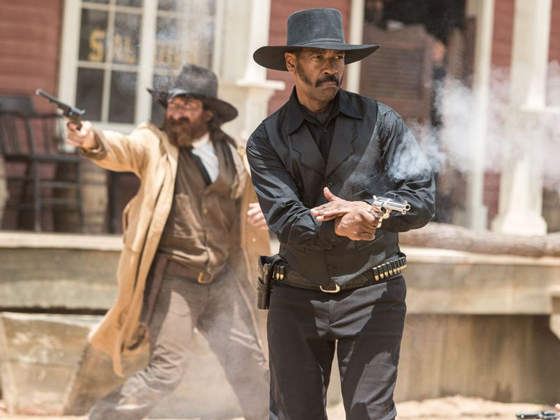
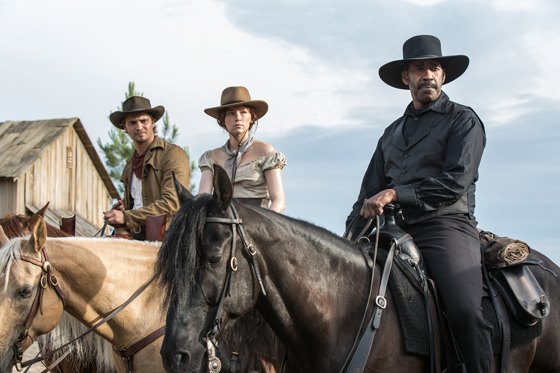
At some point, it turned out that, having “breaking through the barriers” and becoming a favorite film of almost the entire planet, in the “magnificent seven” itself in the Hollywood universe, there is a paradoxically absent way. And the time has come to tell the story in its original form. Despite the seemingly established image (fixed in three direct continuations and television series based on the motives), the “seven” for the past half a century was mainly presented before the venerable audience under a variety of carnival larchs like a cosmic opera (“Battle outside the stars”), a 3D-multfilm with the participation of speaking insects (“Flick adventures”) The extravagant comedy in the style of the Saturday Night Live show (“Three Amigos!”), At worst, the camp version is modernized at that time, where the kalatists were replaced by the karatists (“Kill the Dragon” without Alexander Abdulov, but with Jack Palens). In the current situation, any “new original reading” would only destroy the entire enterprise. Therefore, the honor and praise to the director Antoine Fukua, who, with each frame of his remake, claims: to rethink and understand the “magnificent seven” decisively, and there is no need. As, in essence, in the genre of Western as a whole.
Fukua’s film is equally far from the revisionist “anti -experts” in the spirit of the “non -obscene” and from the Tarantino Sinefilian puzzles, compiled on the principle of “the more a stolen scene, the better”. The nearest analogue of the newly-minted “seven” is the most successful westerns of the mid-80s-early 90s: Silverado, Young Rules, Tumbstone. Then it seemed that even after the epoch -making failure of Michael Chimino, there was a chance to revive the stunned genre, not fundamentally changing anything.
 © Sony Pictures
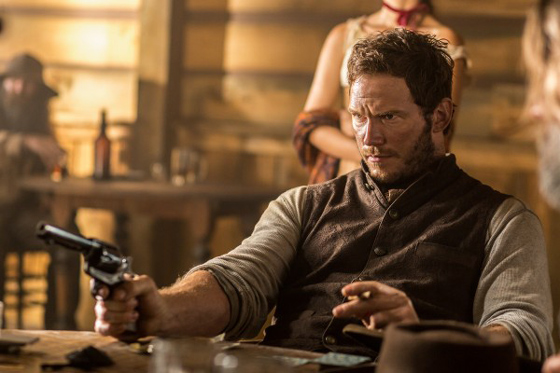
Without exaggeration, the congenial “magnificent seven” of the 2016 model inherits the best of possible traditions. This is a distilled Hollywood product, if capable of annoying, then exclusively with its perfection and an unambiguous application for victory. If John Srydes were alive-God himself would tell him to send Fukua, if not a sword, then the antique Smith-spring at least. The dream of the highest sample. And at the very point the characteristics that were then given out by the first “seven” in the Minsk newspaper “Banner of Youth”, but have not lost their relevance today: “Such films ... are called upon to play the role of sleeping pills that promise a happy dream ... A frank desire to overshadow the consciousness of the audience, take them to the side of the most vindictive issues of time, stun with imaginary truthfulness, and force them to believe in their own Humanity, nobility, disinterestedness, to blind and cause envy of life filled with romantic exotic and adventures. ”