Date
Author
Алексей Цветков; Александр Генис
Source

Preserved copy
Translated material
Trump and Russian America
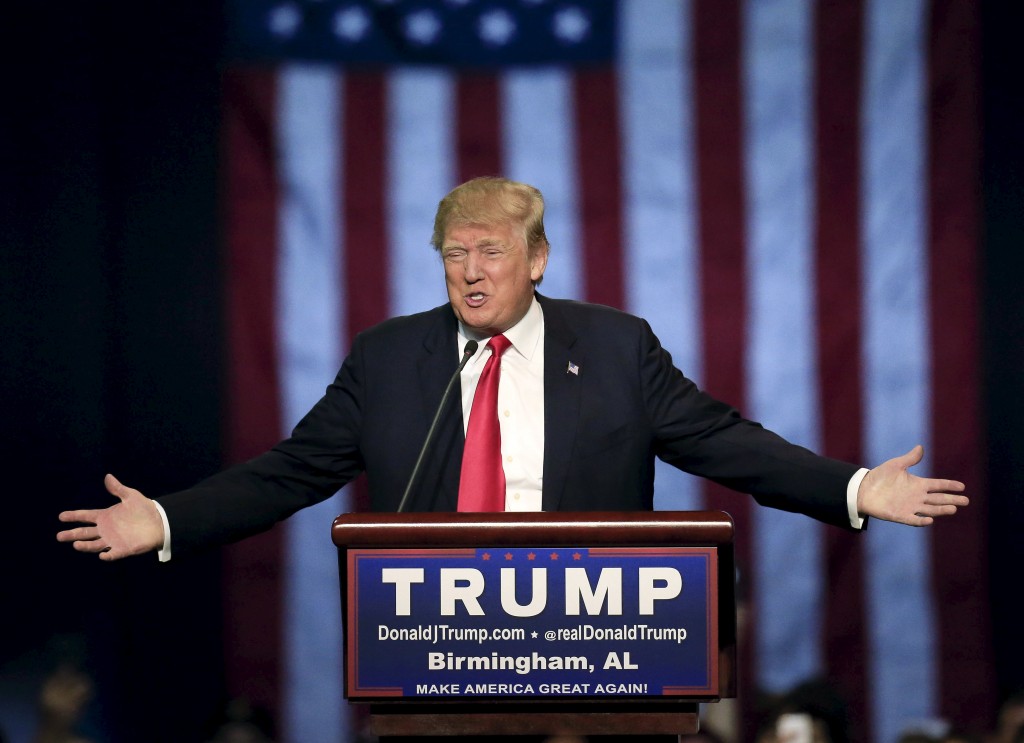
Alexander Genis: Today, the presidential campaign has reached the climax. The debate is the moment of truth, when America, first of all, is that part that has not yet decided, for whom to vote, makes its final choice.
Whatever it may be, these elections will go down in history as the most unusual. This, of course, is the fault or merit of Donald Trump. 20 books have already been written about him, but no one has found a complete explanation of this unique phenomenon. Many believe that the phenomenon of Trump is the reckoning for an irreconcilable struggle in Washington.
“For Trump,” the critics of the current state of affairs believe, “not those who consider it capable of correcting the situation, but those who do not believe that others will cope with this vote.” Already because all the others are politicians.
Indeed, senators, governors, ministers and congressmen are management professionals. And this means that it was they who started the country in Pat. Due to the confrontation between parties in Washington, the authorities of the year in the year are beating, unable to adopt laws.
“Since politics excluded compromises,” Trump supporters argue, “it should be provided by the Office of the Country of Business, which by definition is the art of a transaction.”
And Trump is just such a character. The owner is his own, he does not depend on the party, philanthropists, etiquette, decency, common sense and even the law. In the eyes of the townsfolk, Trump is a fantasy of richer. He plays the role of the king in the joke: whoever passes by, in the face.
“If I kill someone during the day on the fifth Avenue,” he jokes, “then I will not be anything for it.”
Trump billions - indulgence and pledge. Pure, and not divided, as in Washington, the authorities serves as an aphrodisiac for voters.
“If he,” their inner voice whispers, “so rich, despite six bankruptcies, then I can.” That's when America again becomes strong, and not the same as now, when everything that could be mine goes to others, strangers and who came up.
The choir of populism does not sing anything new, but there are voices in it, which personally seem especially piercing to me: this is a party of Russian America. It would seem that in this choir they (we) are definitely superfluous. After all, we ourselves are others, strangers and who came up. Ours are in no way like real, indigenous Americans, full of, as Faulkner said, “whiskey and biblical quotes”. What is in common with well-armed Rednecs with old women with Brighton Beach?
Nothing. But it is in the Russian Enclave of New York that the highest density of Trump fans. First of all, emigrants-pensions vote behind Trump. Having not worked out a single day in America, they are completely dependent on the generosity of the government, which they hate and dream of replacing. What? Such that it does not squandering state money for all but them: if you give others, it will remain less.
“Trump,” they believe, “will restore order, stop ceremony, restore democracy, squeeze the nut and cleanse the country, making it about the way they fled from.”
However, not only the old Brighton, who were slightly wild from Moscow television, vote behind Trump. The vast majority of compatriots are included in the electorate of Trump. And here it is more difficult to find a common denominator, for among his supporters there is anyone. And I know many: Brooklyn teacher, Hollywood actor, Vermont philologist, New Jersian lawyer, California artist - friends, acquaintances, opponents, opponents.
Partly, I think, this is explained by inertia. Ours always voted for the Republicans, believing that they are more strictly behaving with the Communists. The problem is that Trump has nothing to do with the party, which he supposedly represents. He does not have a program except victory, and there is no point of view that would not change. This means that for the first time in America, a contender fights for the highest government, who is not interested in politics as such.
And here ours has experience - after all, we all grew up in a country where no one has ever believed politicians.
And now, in the next issue of our monthly section “Talking with Tsvetkov”, the famous poet and publicist Discussion is the acute question: how does Russian America vote?
(Music)
Alexander Genis: Alexey, I propose today to devote our conversation to the phenomenon, which is difficult to explain. Or maybe because he is difficult to explain, he evokes such strong feelings. I am saying that in the current election race of the sympathy of Russian America, it is undoubtedly on the side of Trump. American observers, who carefully monitor the distribution of votes, estimated that Brighton Beach, where a huge Russian community lives, is the ratio of this: four to one for Trump. It seems that these statistics are accurately responsible for the distribution of the votes of Russian America, which for the most part votes for Donald Trump. This is strange for many reasons. First of all, because Trump is against emigrants, that is, it is, in fact, against us. Nevertheless, I was not able to convince anyone. And you?
Alexey Tsvetkov: No, perhaps no one succeeded. But the fact is that I somehow got the situation, you know, people usually communicate with not very close people at work, I now don’t have the work that I go to, and those people that I see, whom I meet, are either more or less close to my worldview, or, if not close, we are not conducting these conversations with them. And they understand the situation, among them there is some chance, maybe, but they will not dare to mention it in a decent society.
Alexander Genis: So you think that Trump is not said in a decent society?
Alexey Tsvetkov: No, they say. But in the society where I am, maybe I live in some kind of sparse atmosphere, but here they speak mainly with horror.
Alexander Genis: Yes, in the sparse. But I know more about this because of the comments of readers and listeners. Every time I publish something about politics and Trump, I often get completely brutal reviews in response, including from friends and even close people who cannot forgive me for my attitude towards Trump. But I wanted to talk not so much about Trump as about ours. What do you think is the cause of this phenomenon? I propose to start from the very beginning: how did ours seem to be in this camp?
Alexey Tsvetkov: I thought for a long time about this issue, because he is really very interesting, and finally did not come up with anything. Here are some of my thoughts.
I arrived in the United States in the mid-1970s, then it was quite typical that many of us, including educated people, not to mention the mass, looked at the right flank as our own. For what reasons? Firstly, it is free entrepreneurship, and the left was considered socialists. Secondly, and what was very important to us, the Republicans understood, as it seemed to us then, it was much better what the Soviet Union is and what danger it poses for the world. The democratic party was to the left. That is, almost then everything or for some time, but almost everyone went to this right flank. Joseph Brodsky, for example.
Alexander Genis: A very good example is Brodsky. It was only the wall to the right. Because of this, by the way, he had big problems in relations with Susan Umbable, which he managed to convince something. Since the New York intelligentsia is all democratic, Brodsky stood out greatly. I perfectly remember the very moment when the Russians moved to the Republican Party, I saw how it was. The fact is that at that time I worked in the New Russian Word. Its editor Yakov Moiseevich Zvibak, aka Andrei Sedykh, as most of the New York Jews, was a member of the Democratic Party. I was then producing and each time I had to discuss the next number with him. Once I went into the office and saw that his lips were trembling. He was horrified by the photograph that Reuters sent to us. , his lips shake with horror. I say: "What happened, Yakov Moiseevich?" He could not even say: "Look for yourself." And he shows me a photograph in which Carter kisses with Brezhnev. At that very moment, he was picking up the phone, calls the democratic party. He was a fairly prominent politician, in the end, he was the editor of the newspaper and for many years played a noticeable role in the Democratic Party of New York. And right with me, Sedykh refused to take part in her life and immediately signed up for the Republicans. Together with him, all the Russian Jews of that time did it, including my father, who in the Soviet Union never entered into any party. He forbade me even to join the Komsomol, because, he said, these are the first to cut them, so never enter anywhere. But in America, his father joined the Republican Party, believing that the Republicans would fiercely fight the Communists than the Democrats. I'm far from sure that this is so. For example, Kennedy, who put Khrushchev in place, was a democrat.
Alexey Tsvetkov: By the way, I don’t know who put anyone in place.
Alexander Genis: In any case, the resolution of the Caribbean crisis and the withdrawal of missiles from Cuba is the merit of Democrat Kennedy. Or Democrat Clinton, who extended NATO to my beloved Baltic and thus saves her now from Putin's potential aggression. So the Democrats also knew how to fight with communism.
Alexey Tsvetkov: This is a little different, you run too far into the future.
Alexander Genis: But one way or another it is clear why our Republicans were from the very beginning.
Alexey Tsvetkov: You ran too far into the future. When the Soviet Union collapsed, when the communist danger lay down, for some time it seemed that there would be a benevolence of air because Yeltsin came, performed in both chambers of Congress, and everything seemed remarkable.
Alexander Genis: Standing he was applauded there.
Alexey Tsvetkov: So, it seemed that everything had already passed and could not be focused on external factors. Notice such a thing: when an emigrant arrives in the country, he still has his own legacy. We were all politicized, even people who were not politicized also said that they were dissidents and against the Soviet regime, half of Brighton consisted of such fighters. When the need for fighters disappeared, people went to America mainly for material reasons, and I do not condemn them at all.
Alexander Genis: Now, from the height of your experience, you say what you said to us: “sausage emigration” ... Now you are talking about it.
Alexey Tsvetkov: I'm just without any reproach. A person deserves the life he wants to achieve. And if you need to go to America for this - good. But it would seem that stratification, discrepancy should have occurred here. Because what is the point of rushing about the extreme right flank now, you have your congressman, look that what party can bring you. No, ours still went there, because people with authoritarian education look at the side where they call for order. Note that the right flank is not so simple, there are Libertarians, that is, people who are against any power to varying degrees, come to the right, are to the left.
Alexander Genis: Libertarians are radicals who categorically love freedom.
Alexey Tsvetkov: But the Russians are not going there. They go precisely in that part of the right flank, where to keep others in a fiction where others should not be given a lot, because we are not enough.
Alexander Genis: Here you are in a pain point. I understand what you are talking about. It is believed that a democrat is a woman, and the Republican is a man, a harsh father one who holds everything in his hands. Among other things, civilians love people in the runes. From the point of view of the Russian emigrant, the Republican is a man in the runes. But about socialism, this is just quite funny, because older people vote for Trump on Brighton Beach, who live entirely on state benefits. And, I must say, they live very well, of course, I do not envy, but still. For example, my father and mother worked all her life in America, and they received a “medicine” in retirement - this means that they could use medicine in retirement, but not everything is free. But for the poor there is a Medicar program, in which everything is free, including trips to the casino and women's services that cooks borsch for elderly couples. Using all these advantages of “socialist” America, these people just hate Obama socialism, who, they believe, wants to select everything and give “their own”.
Here, it seems to me, we approach the most embarrassing and painful topic - racism. It seems to me that our Russian society is extremely prone to racism and is not afraid of this word, unlike the Americans who have learned for life, in any case, not to speak aloud the shameful and offensive. After all, a racist in America is extremely ashamed. It's like drinking with Zhirinovsky, something that is already outside. I feel good. Because one day I was in the south - it was North Carolina. The woman asked my little son: "Are you from New York?" "Yes". “And then, do you go to the same school with blacks?” I am still scared to even repeat it. In America, it is a rarity. But in Russia there was no vaccine from racism.
Alexey Tsvetkov: Let's get back to our compatriots.
Alexander Genis: We have been shit about them. The lack of immunity led to our racism.
Alexei Tsvetkov: In contrast to what you said now: I recently got into a large Russian company random, these were people in interests, but I met people there usually I do not meet. And when our usual our disputes came to us about everything, in particular, at some point when I heard some remark, I said: “But this is racism.” To which my interlocutor said to me: “Well, yes. And what?". That is, where a line of horror passes for me, there is no for them. We grew up in a country where everyone was happy, there was even a cinema “Circus” about how a woman with a black man escapes from racists. By the way, it was a real boy who returned to the United States in old age.
Alexander Genis: His name is Jim Paterson, he became an officer of the fleet in the Soviet Union and the author of several collections of verses in Russian, of course.
Alexey Tsvetkov: I saw alone.
Alexander Genis: I remember stood in all libraries. This boy became an old pensioner, and when the Soviet government ended, his military-patriotic poems ceased to print, and he returned to America. This is an interesting story, of course.
Alexei Tsvetkov: We read in newspapers how badly living in America, because there is constant racism, how they oppress and linch. But it was the problem of America, not ours, we did not have this. In fact, it was, and even how. First of all, we remember perfectly how the broad masses relate, say, to the inhabitants of the Caucasus, not to mention real blacks from Africa. Because I was in contact with them, those who studied at the university, one way or another they heard conversations on the sidelines.
Alexander Genis: Even in Latvia, three hundred black Latvians, which are called Afrolates, now live in Latvia. Their native language is Latvian, by the way. On TV, I saw how they lead some discussion, such bright interesting people. They speak Latvian much better than I have ever succeeded.
Alexei Tsvetkov: Or the fate of the unfortunate black children in the Soviet Union, which were called the “Bracles of the Festival” or something like that. In short, we were not instilled in anything like that, we were not reproached for calling the Central Asians or Caucasians the way we called them, because all this outrage was racism for America.
Alexander Genis: That is, racism was only in America.
Alexey Tsvetkov: Yes, racism was only in America. But in everything that we spoke bad about America, we believed, only thought it was good.
Alexander Genis: I remember how I saw the unemployed American on the Soviet TV. I noticed that they were all in nylon shirts, which then cost 25 rubles from farmers, that is, about half of my firefighter’s salary.
Alexey Tsvetkov: Have you noticed jeans?
Alexander Genis: Jeans are already clear, but the fact that the unemployed walks in a nylon shirt. Now it is clear why - nylon shirts are cheaper than everyone else. But then I did not know this, and it struck me to the core. Of course, our Soviet propaganda has always been deceiving this or otherwise. I think you are right that we did not have a vaccine from racism. Indeed, in the end, the Americans spent two hundred years of their history on this, the civil war was in America because of this. The racist in America is really scary and difficult and ashamed. If you ask Trump, he will not say that he is a racist. Yes, and no one in America will say that he is a racist, except that Brighton Beach is just for the naive good nature: what is there to hide, the racist is racist.
Alexey, continuing the conversation, I propose to move to Trump's personality, if only because he himself is least like a Republican. To believe that those who love the Republican Party, in my opinion, are ridiculously, Trump do not look like a republican actually. For the first time, all six living presidents, including Republicans of Bush, refused to support his candidacy.
Alexey Tsvetkov: And many Republicans simply left the party defiantly. Moreover, veterans, old intellectuals, such as Daniel Pipe, other right -wing politicians made anti -gram statements. But there is inertia. I heard from one very slowly man of emigrant origin, who said (this was before Trump) that “I will vote for the one whom the Republicans will choose.” That is - on the bent. Значительная часть таких люди даже не имеет понятия о скандале. Но мы говорим сейчас о тех, которые могут поддержать беседу, по крайней мере, на эту тему.
Александр Генис: Я думаю, что люди голосуют голосуют сознательно за Трампа, ибо Трамп прсто нравится нашим. Why? Вот, что хорошо было бы понять.
Алексей Цветков: Давайте на минутку вернемся в Россию. Конечно, я не очень верю всем опросам тамошним общественного мнения, тем не менее, значительной части населения, очевидно, нравится Путин. В те моменты, когда он совершает особенно что-то несусветное, он начинает нравиться еще больше: «Крым наш», Украина, не дай бог, что-то еще случится в этом роде. Я говорил о том, что люди с авторитарным зарядом, полученном от советской культуры, стремятся к авторитарности, а идеология для них на втором месте. Они воспринимают то, что Путин делает в Крыму и в Украине как демонстрацию силы. Хотя на самом деле это не сила — это наглость, это то, как ведет себя...
Александр Генис: Футбольные хулиганы.
Алексей Цветков: Это в лагере, когда человек берет тебя на испуг, чтобы в этой иерархии ты стал ниже, чем он. То же самое Трамп, он ничего толком не говорит, но говорит нахально. Считают, что он нарушает политкорректность, да он просто нахально говорит гадости, которыми делятся с приятелем на скамейке: “если бы, мол, всех “этих” прижучить или выкинуть к чертовой матери”. А тут же президент говорит такие вещи.
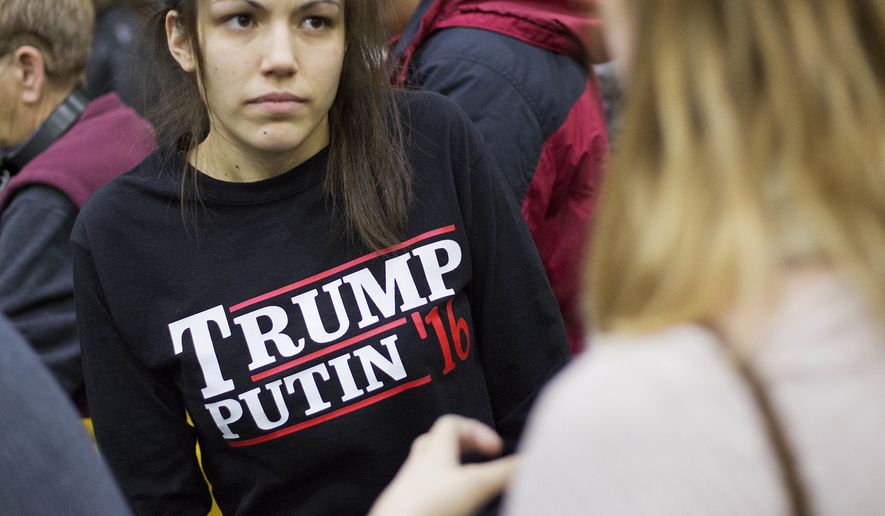
Александр Генис: Он еще не президент, слава богу. Но я прекрасно отдаю себе отчет в том, что происходит. Трамп говорит то, что другим нельзя. Наши соотечественники как раз не приходят от этого в ужас, наоборот им это нравится, потому что он дает индульгенцию так рассуждать: “Если может Трамп, если можно так говорить по телевизору, то тем более это можно говорить нам”. Это - месть политкорректности. Но тут мы переходим к другой теме: насколько Трамп - плод политкорректности? Ведь многие говорят, что Трамп — месть за Обаму.
Алексей Цветков: Я бы так не сказал. Потому что то, что Трамп говорит, за пределами всего. Если я вам скажу, что убивать нельзя, а вы скажете, что можно, тут не в политкорректности дело.
Александр Генис: Если я вас спрошу — кого убивать, то это и будет справедливость по Трампу.
Алексей Цветков: Но это все равно не политкорректность. Трамп затрагивает фундаментальные основы нравственности, но люди, услышав — “взять этих и вышвырнуть, не пускать тех, всех поставить на место”, в теории не разбираются. Хиллари Клинтон и другие политики пытались объяснить, как они добьются того-то и того-то, Трамп ничего подобного никому не объясняет, он говорит: я это сделаю, верьте мне. И они верят.
Александр Генис: Когда-то Муссолини спросили, что такое фашизм. В Италии писали энциклопедию фашизма но никто не мог дать определения, потому что Муссолини сегодня говорил одно, завтра другое. Тогда итальянские профессора пришли к Муссолини и спросили: скажите нам, что такое фашизм? Он сказал: «Фашизм — это я». Так бы и Трамп мог сказать: Трампизм — это я. То же самое мог бы сказать и Путин, потому что он тоже за годы своего правления говорил очень разные вещи. Не будем забывать, что Путин в начале XXI века раздумывал, не вступить ли России в НАТО. И Трамп, конечно, такой же демагог.
Интересно, что те наши соотечественники, кто за Трампа, они ведь и за Путина. Ведь они же странным образом соединяют этих двоих в одном флаконе. Вроде бы эмигранты оставили Россию именно потому, что им там плохо жилось. Они приехали в Америку, чтобы здесь им жилось хорошо, как вы сами сказали. Спрашивается, как же они могут соединить в одной голове Трампа и Путина?
Алексей Цветков: Вы знаете, маленький демографический экскурс. Я, и вы тоже, собственно говоря, следим за одним анклавом, по крайней мере, за Брайтон-Бич уже десятилетия, фактически с его основания как русской колонии. Такие сейчас есть во многих городах Соединенных Штатов и в Европе, в Берлине, например, и еще где-то. Раньше русская Америка была полноценной колонией, там были все поколения. Сейчас молодые, закончив школу, получив какое-то образование, а уж еврейские родители старались дать его деткам, уехали оттуда и ассимилировалось. Но на условном Брайтоне все осталось по-прежнему - никакой подпитки, никакой ассимиляции в этом кругу нет. С другой стороны приехал уже совершенно другой слой людей, не очень даже политизированный, каким была наша волна. У них все спокойно уживается в голове. Они живут с мыслью, что Путин хороший и сильный, авторитет России продвигает.
Александр Генис: Все остальные воруют, а Путин, мол, не дает?
Алексей Цветков: У нас в селе или городке плохо, поеду я в эту Америку, посмотрю, что там. Вот тут тоже замечательный человек получился — Трамп, он им импонирует именно потому, что им импонировал Путин. Только Трамп еще ярче и доходчивее представляет, чем Путин, он ближе к народу, потому что президентской кампании сам Путин не ведет.
Александр Генис: Трамп ближе к народу, потому что он миллиардер? Хорошо еще, что в отличие от Путина он должен вести дебаты. Это, конечно, особенная проблема, какие дебаты он будет вести. Это мы вот-вот узнаем.
Совершенно верно то, что вы говорите о поколениях. В эмиграции нет поколений, в эмиграции есть волны, они так и называется — первая волна, вторая волна, третья волна. Мы знаем, что между ними не было никакого взаимопонимания, потому что каждая волна не оставляет наследства, у нее нет традиций, потому что волна есть волна, она иссякает, и дети эмигрантов становятся уже американцами, немцами, австралийцами.
Алексей Цветков: Маленький прыжок в сторону. Есть сильное отличие от других эмигрантских колоний, от кубинской, допустим, которая близка к русской, потому что она тоже довольно правая.
Александр Генис: Антикоммунистическая.
Алексей Цветков: Польская отличается, в ней есть слои поколенческие. Но в русской молодежный слой, то есть люди, которые выросли здесь, уходит. Сергей Брин, скажем. Он большой филантроп, но он не дает на что-нибудь специально русское. Что ему эта Россия? Nothing. Он ушел и живет в Америке. И так живут почтив все, мы знаем исключения, но их на пальцах можно сосчитать.
Александр Генис: Когда стоял вопрос о том, кого Хиллари Клинтон выберет себе вице-президентом, я подумал: лучше всего Сергея Брина. Хорошо бы иметь такого вице-президента.
Алексей Цветков: У него есть гораздо более интересные занятия.
Александр Генис: Это правда, об этом я тоже, к сожалению, подумал.
Скажите, как вы считаете, какое есть лекарство от авторитарного мышления нашей эмиграции? Можно ее переубедить?
Алексей Цветков: Опыт последних 30 лет показывает, что большинство переубедить нельзя. Но это дело поправимое, потому что молодое поколение уходит, вырастает. К сожалению, это не происходит так, как во многих других эмигрантских культурах, оно не сохраняет своего культурного колорита, оно скорее уходит просто в Америку и остается там.
Александр Генис: Зато есть закон третьего поколения: дети не интересуются родителями, зато внуки интересуются бабушками и дедушками. Культура возвращается не во втором поколении, а в третьем поколении. Я это хорошо знаю по украинцам, многие из которых с огромным интересом относятся к своему прошлому, они уже с трудом говорят по-украински, но очень живо интересуются украинской культурой, поддерживают украинскую церковь, украинские праздники, украинский музей, который таким прекрасным образом работает в Даунтауне Манхеттена. Так что на третье поколение вся надежда. А теперь давайте по традиции закончим нашу сегодняшнюю беседу стихами.
Алексей Цветков: Чисто на американские политические темы у меня нет особых стихов.
Александр Генис: А что, брезгуете политикой?
Алексей Цветков: Нет, не брезгую, я пишу иногда о русской политике, но там обычно смешно и лексика не подходит для эфира. Тем не менее, немножко ностальгическое и для нас, и для брайтонской аудитории может быть. Называется «Сафари».
safari
приспичило секретарю райкома
предначертать чинов начальства в честь
с мотыгами сафари на дракона
а что у нас еще в хозяйстве есть
драконы эти если не соврали
дают на экспорт уникальный мех
ну и пошли а кто такой сафари
не знал пожалуй ни один из всех
начальство чутко ехало на джипе
в пожарных касках с ханкой в багаже
которую глотками небольшими
успело и попробовать уже
бежим в строю штаны мокры от пота
трусцой поодаль мой напарник лю
у нас в селе случается охота
на крыс а на дракона не люблю
он состоял из пламени и эха
огромный как великая стена
хрен из такого понащиплешь меха
из тигра проще или из слона
запас любви к отечеству кончался
уже штаны от мужества черны
он покосился вдруг на джип начальства
и чуть дохнул на высшие чины
по счастью партбилеты уцелели
в музее под стеклом по одному
драконы да в своем искусны деле
а кто такой сафари не пойму
мы сеем сорго с лю и землю пашем
опять на крыс охотимся как встарь
лишь о секретаре всплакнули нашем
хороший был не жадный секретарь