
Translated material
Russian Faust (1996)
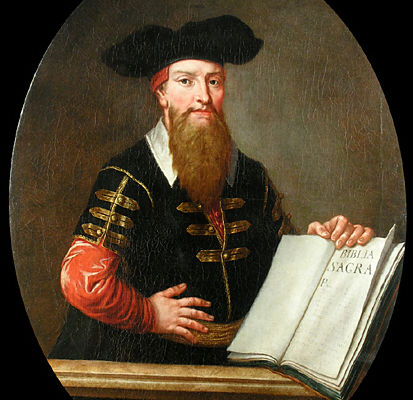
Why did the Russian man sell the soul? Old Russian ideas that the world is an arena of the struggle of the two principles embodied good and evil.
Archival project "Radio Liberty this week 20 years ago." The most interesting and significant from the air of Radio Freedom of twenty years ago. Incomplete story. Still living hopes. Could Russia go the other way?
The transfer of Alexander Panchenko on Satanism and double in the Russian medieval culture for the first time sounded on the air on September 27, 1996. The ancient chants were performed by the Petersburg choir of Rossika under the direction of Valentina Kopylova. The host of the program is Ivan Tolstoy.
Alexander Panchenko : With the entry of Russia to modern times, and the new time is considered from 1648, that is, from the English revolution, very strange and difficult processes began in the Russian religious consciousness. Firstly, along with imposture, which we have never had before, we had agreements with the devil, that is, satanism. Well, for example, there has never been self -will, suddenly it appeared with Grishka Otvyev. We never had Faust in Russia, because the real Faust, the prototype of Faust from the book of Shiprus , you can take this Faust, this is still the 15th century, the era of witch hunt, and so on. We did not have any Faust. That is, no one sold the soul to the devil. And, in general, there was almost no hunt for witches, and they, of course, sell their souls to the devil. There was nothing that Valery Bryusov then described by the devil in his famous novel Fiery Angel described. And then suddenly appears. Well, how can you judge this? Firstly, you should always judge by medium literature. The average literature for the 17th century, when the anonymous is already replaced by the author, before he was only “az, thin, multi-sinful ...”, and so on, and here he is already “I, such and such”-he already claims to teach. And then there remains anonymous, with the author. Well, how should the literature of the 1940-50s be judged? For whom? First of all, according to Babaevsky. Because he was most read, he received prizes most. Now, of course, we rely more on Solzhenitsyn on others, on the Shalamov Varlam. And from anonymous literature, one of the most remarkable works, it is rightfully called the first experience of the novel, because different plot lines are suppressed there, and there are no obligations as in the novel - this is "the story of Savva Grudsina." Of course, it cannot be compared with the current novels in volume, but still quite large. Her hero is the offspring of the famous Moscow merchant family, which was part of the living room of a hundred Grudpsyni -Usovs, and the living room is a hundred merchants (the number of people never reached) who had the right to trade with abroad. He, apparently, was a young man of unsteady rules, “wrap it up”, and in one of the trade trips to which his father sent, he came down with a married lady who was young and married a girl’s widower. And this is what happened next we know only from the story. He rejected her claims (since he was still brought up in piety) on Easter night. She demanded from him what women demand from young men. He refused because it was the greatest sin. Then she cooked a love potion, and now he is boiled in Rus', and he completely lost all his mind, and she rejected him. Here is such revenge, as in the current Mexican series. He went to the crossroads of roads, and this place is always dangerous, there the robber may be, not without reason they say "robber from a high road", and maybe a demon. And he thought, after all, it was enough to think, it is not necessary to call the devil frantically, extravagant and exalted: "But she would have returned to me, I would even sell my soul to demons!" And demon - it is right there. True, there is “about the madness of the youth!”, The author exclaims all the time, that is, “here is, what a fool” is translated into our language. Demon introduced himself as his relative, also of the same age, and led him to the throne of the prince of darkness.

Although, he knows that in the Moscow state there are no other capitals, but here it seems to be some capital. In short, he wrote this famous manuscript. Further, his fate is extremely interesting, because this lady, of course, returned to him, but then this demon, called brother, says: "Come on, Brother Savvo, let's take a walk!". Here - walk! The appearance of a walking person. And he somehow even forgot, and even the author of this story, this rudiment of a novel form, did not pay attention to it. And so they went for a walk. He wins there in the war, everything is fine with him, but then he repents, gets sick, and in the temple of the Kazan Mother of God (which is now restored by the Kremlin wall, where various celebrities served, primarily the protopop Avvakum), he lies relaxed (this is when the members do not act) and repents. And the Mother of God, the All -Master drops this manuscript from above. And the sheet is ironed! That is, there is no text on it! You can say few fiction in the world? Say, Bulgakov’s “Prince of Darkness” under one of his legitimate completely medieval names, under the name Woland, arrives in Moscow in Moscow. People of the pragmatic mindset will object that this was not, and I completely agree with them. Of course, it was not in reality. But what is interesting: dozens of things to sell Satan’s souls have been preserved. This was written by my colleague, our wonderful historian, academician Nikolai Nikolaevich Pokrovsky, his students, and we, please, in the former archive of the Synod, in the famous square, where there was an uprising, or rather, next to her, you can see this. And what comes out? Firstly, it follows that there were terrible punishments. They burned them to Elizabeth Petrovna, darling and darling (because they were female faces). And only when Elizabeth entered the throne and took an oath of abolition of the death penalty, and withstood it (which - the lesson by the whole ruler of all time and peoples), then the punishments softened, although the Metropolitan of Tobolsk and All Siberia Konyaskevich, in 1744, for more than three years, Elizabeth on the throne, still insisted that the two who sold their souls. lifelong imprisonment, although one was even a minor.
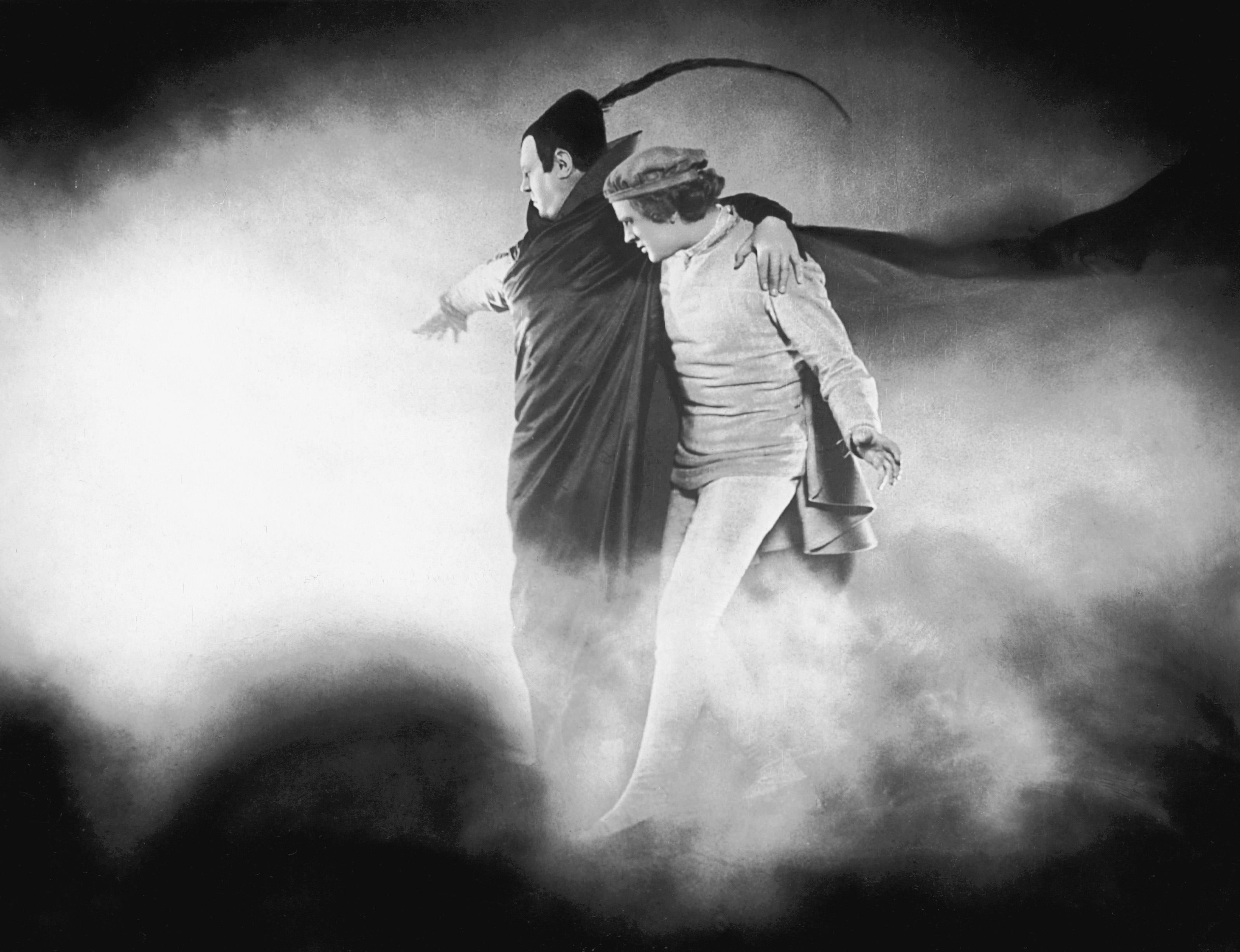
But what is curious here, in these sentences. Why did the Russian man sell the soul to the devil? Faust is clear, he is for omniscience, for power over the world, and so on. We never had anything like it. All these contracts are limited to two points. This is, firstly, so that women love, and the second - so that the authorities love. This is until now. We have such conspiracies when, again, "how to go to the beginning?" As a boss to enter the office, in the least. This is very curious. So that he loves you. What is this talking about? And this suggests that the choice of personal fate, and all this era is the replacement of a common worldly fate, replacing the generic beginning with an individual fate, career, rudely speaking. Here, take the gentlemen. Who is going to church now, they give remembrance. Here you write: behind the rest of the soul of the deceased slaves of God ... Well, parents, of course, grandfather, grandmother, great -grandfather, great -grandmother, on both lines - well, thirty, well, forty names. And it began just in the 17th century. Because the rentes who have survived, who were invested, for example, in the Assumption Cathedral in Moscow, that is, the romeesses of the people of the genealogy (generosity and genealogy are a little different things, but this is not so important) - up to two hundred. Some Pushkin was so served under Tsar Fedor Ioannovich. Moreover, there are legendary figures, there are real ones, because it is dangerous to make a mistake. And here-twenty to thirty, as now. That is, the tribal tree has split, "a twig of a sugar tree broke off." This is what happened to us. And when we look at these anonyms of the 17th century and the beginning of the 18th, we see that this is a rejection of the birth and, at the same time, communal, worldly, earthly, any principle. These are people who make themselves, as Mayakovsky said.
... This is a rejection of the generic and, at the same time, communal, worldly, earthly, any principle. These are people who make themselves, as Mayakovsky said.
The lectures of a wonderful scientist and wonderful person Yuri Mikhailovich Lotman were recently repeated on television. Here he is talking about favoritism. He said that this began with Peter's time. With all my respect, reverence and love for the deceased Yuri Mikhailovich, I must say that this began earlier. When did favoritism begin? With Sophia, of course! Who is the first favorite to us known? This is not Prince Vasily Vasilievich Golitsyn. Okay, after all, the Golitsyn are Gediminovichi, these are famous princes. But her last “Galant” or, as they would say now, “Amant” is Fedor Leontyevich Shaklovy, Fedka Shaklovy, from the Kursk clerks. Nobody, and call him in any way. But through the bed he achieved the second thought rank. The first is the boyar, the highest, the second is the okolnichy. And he was the head of the Streletsky order. You know, when you fly high, it is difficult to fall. Therefore, he was executed quickly. Prince Vasily Vasilyevich was still exiled, and Fedke Shaklito was chopped off his head after the fall of Sophia. And no one regretted him. And this topic of favoritism, that is, through the bed from dirt and to the reality, it is also discussed anonymous literature. Here is the "Tale of Frol Skobeev" , it is about the times of the Sophia, but it is most likely written under Peter. This is also a torn twig, and he will marry the soil daughter of Annushka, the daughter of Nardina -Nashchokin, and this is a good surname, and now “I will be a colonel or deceased,” he says. Here is a personal fate. And these favorites went. I do not want to say that they were all walking through the bed, it is not necessary (Menshikov was a typical favorite), and not all of them were insignificant, for example, the great Potemkin, who came to Tabor through the bed, he was really great, but some insignificant Skavron, Gendrikovs, Efimovsky are relatives of Catherine of the first. Who now knows, who remembers them? Yes, no one! And the columns became. And the latter - Yuri Mikhailovich Lotman, Plato Zubov, mentioned it quite fairly with contempt. Here is the last favorite, the most insignificant. So the choice of personal fate pushed a person to the most inadmissible actions.
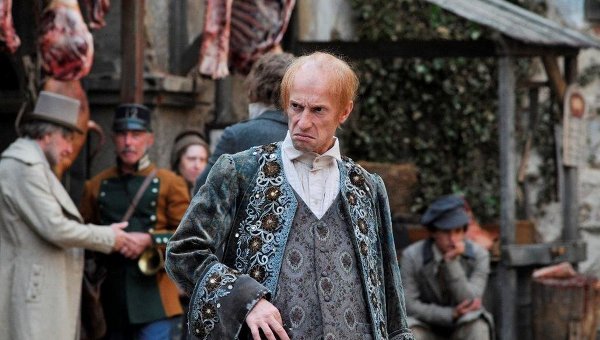
And this sale of the soul to the devil, it is obviously you will get into hell, no matter what you do, and you must do disgusting things, it is still connected with one such wonderful Russian theme, the theme of twin, such a split. We have a duality, this is not the same problem (of course, the problem), but primarily reality.
Our duality is now not what a problem (of course, a problem), but above all reality
Now they say: "scoops" and "new Russians." Again we are bifurcated, but what is it! And even in clothes even. After all, "new Russians" wear other clothes than "scoops". But the term "old Russian" is not even, because those who are replaced, they are always awarded with some kind of derogatory word. “Former”, he is from the “former” - it means that he is one road - with his feet forward. And who changes it? According to the logic of language and any logic - "current" change. And all the time so. I even mean the separation of social or class - white bone and black bone, no, no, that’s not the point. The fact is that we are new, and you are old. And this topic of renunciation is one of the most difficult Russian topics. Of course, the bifurcation concerned not only to Russia, let's recall England - Puritan and royalists. Or France. First, let's recall the Googenots and papists, and then the patriots and royalists. It was all. And with Hitler there was the same separation of nations, it happens everywhere, everywhere it will be, but for Russia, of course, this is the way, as for other countries, this is a tragedy. Because the nation really fell apart, thank God that there was no civil war. I think it will not be, because we are all tired terribly. But here in our former republics, now the CIS is called riots, murders ... Belarus, Armenia, and so on. These are all topics of twinity. How the duality began and how it continued is a very curious topic. The classic of this topic is considered to be Dostoevsky. "Double", the story was written even before he suffered in the case of Petrashevtsev. And the patriarch of this topic is Gogol. This is primarily a "nose". The person is bifurcated, Major Kovalev, there are two of them. And, of course, these are “notes of a madman” when he is Pereshshchin, an ordinary official of St. Petersburg, and he is a Spanish king. And Dostoevsky was generally very engaged in this topic. Dostoevsky was a thinker, and very serious. And when he had already returned from the hard labor, he returned to Petersburg, he wanted to process the "double" in the mid-60s, in the second half. I did not revise, but wrote notes. And very interesting, this Mr. Golyadkin, who is bifurcated, is a rebellious person. Like any favorite. The favorite is a rebellious person. He can tolerate a crushing defeat, like the same Fedor Shaklovy or as the Zubov everything, but he can win. And this Golyadkin, a vetoshka, in the rank of titular adviser, argues: he wants to become Napoleon, Pericl, the leader of the Russian uprising, he composes some project about Russia's prosperity, he is accused of gelibaldi, enters into progressives - everything is interested in oxygen and hydrogen, well, like Bazarov. Everyone thought that everything was from oxygen and hydrogen. This is a big mistake, by the way. But this is reality. And when did it start in Russia? That's what is extremely curious. Everyone attributes this, first of all, the same Dostoevsky, and then Andrei Bely, who was also very engaged in this, by the time of Peter - here the nation baptized here! But in fact, this began much earlier, when Russia entered or approached the new time, when the Moscow kingdom was created, this, of course, is the time of Ivan the Terrible, when the instigator of the Troubles was remembered through the generation, quite fairly. Such was the clerk Ivan Timofeev, he wrote “Temporary”, such an essay after the Time of Troubles, he said that he cut Russia in half. And this is really so, because, for example, an oprichnina and zemstvo. The operator has a special dress, you can’t sue it. He brought foreigners, foreigners-foreigners, first of all, and gave them great benefits. In the guardsmen there were a colossal number of foreigners, and the Russians could not call them for trial, except for two days a year - both Russian and foreign guardsmen - except for the birth of Christ and the day of Peter and Paul. And the oprichnik of the Russian Aboriginal, Zemsky - every day, please call.
Russia ... painfully experiences the transition from worldly consciousness, from this communal principle to individual consciousness, to a private person. And until she overcomes this, and only awareness can overcome, she, of course, will be in a state of self -posterity, doubleness and demon
Then setting the elders on the younger ones. The most classic example of which Kurbsky writes is that he forced his lover, and his lover was sodomit, and Grozny was sodomit, Fedka Basmanov, to kill his father - Alexei Basmanov. These young rotozes. You see, the problem of fathers and children is the problem of renunciation. The problem, which, of course, under Peter, maybe worsened somewhat, then softened somewhat, then all the time aggravated again. This is the problem of this bifurcation. Where do I don’t know, I often talk about this, but still I want to repeat: Lenin is not Lenin, Stalin is not Stalin, Trotsky is not Trotsky, Molotov - not Molotov, Kamenev - not Kamenev, and Gaidar is not a Gaidar. When will it finally end? Here Russia, if we proceed from all this, is very painfully experiencing a transition from worldly consciousness, from this communal principle to individual consciousness, to a private person. And until she overcomes this, and only awareness can overcome, she, of course, will be in a state of self -posterity, duality and demonicity. And I would like to turn to all of us with the help of the voice of the people, the voice of the people is in the "double" - from the lips of cabs and parsley, the servants, when Golyadkin is taken to a crazy house, they say this: "Good people live in honesty, good people live without falsehood and are never two." A person should not seem, but to be, and the nose should be with him, as well as a name, reverence for the ancestors, and everything else, like good people.