
Translated material
Cape Canveral goes under water
The ocean threatens American cosmodromes: Gizmodo
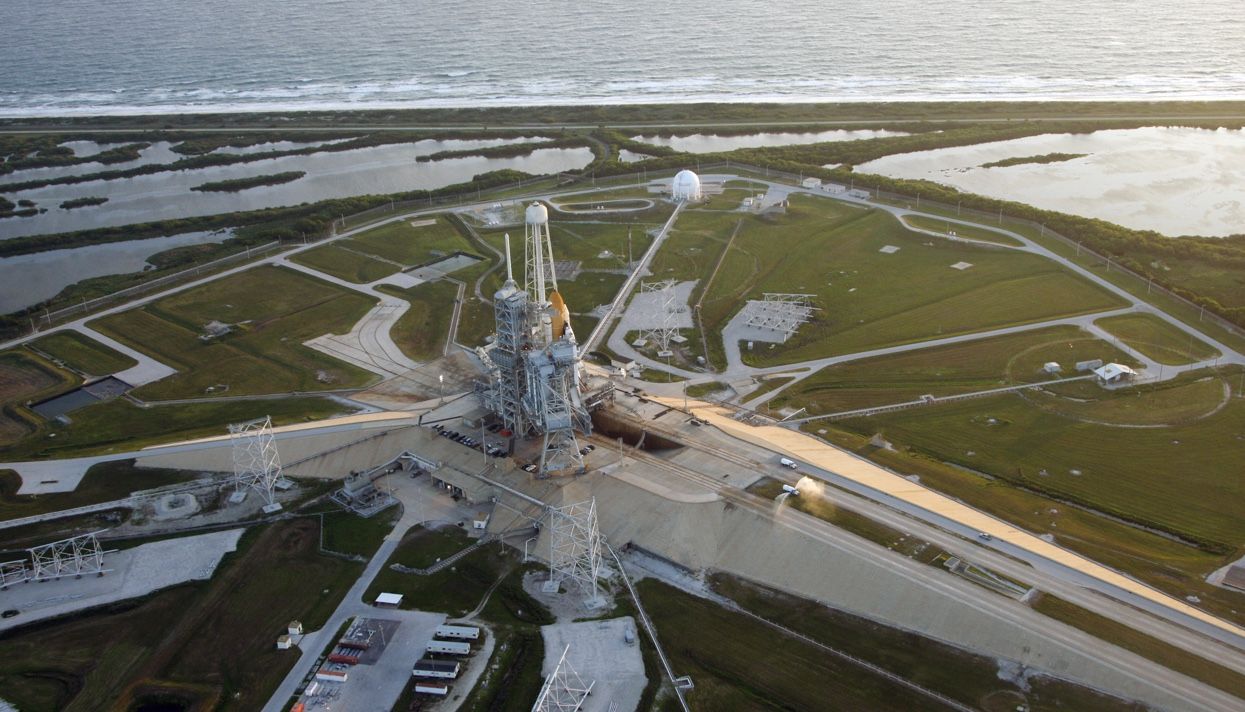
NASA cosmodromes - first of all, the Kennedy Space Center, which is located on the east coast of Florida - is in danger: the ocean occurs on the launch sites and other infrastructure facilities for the year after year. Due to global warming and related natural phenomena, many cosmodromes risk being under water in a couple of decades. So far, NASA is trying to protect the expensive infrastructure, building the embankments, but in the future the launch sites will most likely have to transfer deep into the United States.
Several of the most important NASA objects are located on the banks of the oceans. Along with the Kennedy space center, from where Apollo’s ships and space shuttles flew up, the Johnson’s space center in Houston, the Eimsa Research Center in California, the NASA Research Center and the Wallops testing center in Virginia are on the coast.
All these objects were built on the shore for security reasons - so that in the event of an unsuccessful launch or explosion, the wreckage of missiles fall into the sea, and not in the city. In the case of Kennedy, the location is also conveniently close to the equator (this allows the launched devices to use the speed of the Earth’s rotation), a good climate (allows launches all year round) and the proximity to the US Air Force base at Cape Canaveral (the cost of maintaining the general infrastructure can be divided with the Air Force).
When designing the Kennedy Center and other cosmodromes (most were built in the 1960s), architects understood that proximity to water created a threat to the water: even then experts warned of the rising water level in the oceans, as well as the danger of hurricanes. However, now the speed of lifting the water level has increased significantly-as expected, by 2050, water in the area where the Kennedy center is located will rise by 20 centimeters, and by 2080-by 38.
Moreover, an increase in water level leads to an increase in the number of hurricanes, as well as to an increase in their destructive force. According to Gizmodo, in October 2012, as a result of a multi -day storm caused by a hurricane Sandy, the waves overwhelmed the launch sites in the center of Kennedy, and the ocean got to the beach 30 meters.
Since 2014, NASA began to build an embankment along the coast - dune, which should protect Kennedy’s center from the upcoming ocean. Since sand can be brought from the nearby Cape Canveral, the construction of the dune cost three million dollars. In other centers, where sand has to be taken from afar, the construction of dunes is much more expensive. At the same time, the cost of erecting one trigger is estimated at several billion dollars.
According to Gizmodo, to protect the infrastructure, building embankments, is still economically justified - however, in the future, NASA will be forced to abandon cosmodrome in coastal zones. Including because it will be more difficult to find people who are ready to work at risk.
The future of American rocket science is threatened. And the main danger is not a lack of funding, which so often complain of NASA, but climate change. If people continue to throw harmful gases into the atmosphere, the Kennedy center will not be able to send anyone into space - because it will be under water (English.).