
Translated material
The shadows of the star is wormwood
This year, Colta.ru decided to go to the experiment and invited to temporary curators over the section “Photo projects” of young and talented representatives of leading Russian photocurium. We divided the calendar year between six curators and asked them to select the most interesting samples of modern Russian photography for publication.
Invited curators
Katerina Zueva , center of photography named after Brothers Lumier
Nadezhda Sheremetova , "Femicip"
Sergey Lostev , "House of Metenkov"
Daria Tuminas , Freelance Curator, Amsterdam
Anastasia Bogomolova , The Blog This a Photobook
Svetlana Taylor , British Higher School of Design
Fifth resident: Anastasia Bogomolova. An artist working with photography, installations and performance. The circle of close interests includes topics of the mobile nature of memory and oblivion, the boundaries of the existence of the archive and document, as well as issues of mythology and self -identity. Curator and lecturer; researcher, collector and author of the photo book; Flog editor This is a Photobook. Graduate of educational programs "Photode Department". Participant of Savignano Immagini Festival and Bitume Photofest (Italy), Pingyao International Photography Festival (China), OBSCURA Festival (Malaysia), “Fashion and Style in Photography” (Moscow), “Month of photography in Minsk” (Belarusian). The works were also presented as part of group projects in St. Petersburg, Moscow, Kaliningrad, Rostov-on-Don, Norilsk, Perm, Yekaterinburg, Kazan and other cities. Personal exhibitions were held in Moscow, Yekaterinburg, Nizhny Tagil and Chelyabinsk. Lives and works in the Urals.
Anastasia Bogomolova about the photo book "Shadows of the star of the wormwood"
“The Shadows of the Wallpaper Star” is the second experience of cooperation between the Ukrainian photographer Arthur Bondar , now settled in Moscow, and Russian designer Anton Lepashova . Their last year’s “signatures of war” , marked by foreign experts of the industry, among the best publications of 2015, is a rare example of a successfully established photo-start crowdfunding campaign and, undoubtedly, smart and deep work. Played under a dark cover, in the appearance of a memorial plate, inside this publication was simultaneously a generational monument collected from seventy polarid portraits of veterans of the Second World War, a book of memory and an anti -war message, in -depth of the family history of a photographer, whose grandmother was taken from Ukraine to Germany for forced labor in a peat factory.
The “signatures” showed a perfectionist approach to the material, showing how each element of the publication can be subordinate to the author’s plan - starting with its textured cover, which retains traces of touch and scratches, and ending with the choice of thick paper, which creates the weight of the book necessary for history.
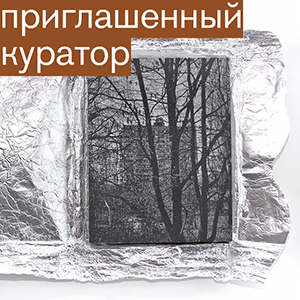
“The shadows of the wormwood star”-the work, of course, is completely different (it was based on the perennial trips of Arthur Bondar to the Chernobyl zone), but, like the previous publication, it is a thoughtful view of the book as an art object, and not a banal album with pictures on a given topic. This becomes clear already at the first glance at the publication, tightly wrapped in a sheet of foil. It would be possible to decide that the use of such material is just a game in the representation of “shadows” in the form of a toxic object, taken out of the territory, which suffered from the catastrophe of thirty years ago. But the newly printed book actually attacks the viewer with an aggressively pungent smell of typographic paint.
This, of course, is not a new effect. So, in 1965, on the twenty years of the Hiroshima bombardment, Japanese photographer Kikuji Kavada released a weighty volume called “ The MAP ” , in which he collected fragments of the charred walls and the preserved dome of the chamber of the city chamber, whose building was at the epicenter of the atomic explosion. The images in the book were printed so strongly that even after decades, a copy of the original edition exhaled a tart ink aroma, turning his acquaintance with work not only into tactile, but also into olfactory experience.
“Shadows of the Wallness Star” are in the same field of creating the first audience impression, but they do it in their manner. The smell of the cover is an important starting point, it sets the desired tone and serves as the key to immersion in the history of the zone, told non -linearly, metaphorically. In essence, this photo book, following the author himself, sends a person encountering her on an endless journey along the tragedy of the tragedy of the places.
We do not immediately understand what territory we were. The name, if you know its origin (“Chornobil” from Ukrainian translated as “wormwood”), serves as an uncertain hint that strengthens the guess only by the end of the first quarter of the publication, when a number of atmospheric shots of the boonder interrupts the reversal with a certificate captured on Earth (apparently, the liquidator of the accident). By the middle of the “shadows”, the gaze finally comes to the map of the zone, but only a small archive insert in the second half of the book brings true understanding.
These four modest sheets of thin gray paper (they listed affected settlements, a copy of the urgent report on the disaster and the editorial of The Times ) make the story of the “shadows of the wormwood of the wormwood” of clear and close. From the moment the viewer is alone with the documents of specific events, elusive photographic images, which seemed previously blurred and lubricated with a quick movement, are focused. Gain sharpness similar to the smell of the cover.
Arthur Bondar about working on his project
The first time I got to Chernobyl in 2007. At that time, I worked for one of the Ukrainian news portals, and I had to remove a report on the deputy’s trip to the zone. I was so absorbed in the atmosphere of this place that, I could say, I almost did not take pictures. A year or two after that, I opened a black and white film for myself, feeling the perfect combination of the material and the place in it, which corresponded to my impression from the zone. I unconsciously traveled around the Chernobyl land and caught its spirit. Often I understood what exactly I shot, after I showed all the films.
We formulated the idea of the book with designer Anton Lepashov from the very beginning. We had an idea to present a journey through the Chernobyl forest, Chernobyl back. I seemed very important to me the eyes of Anton, a man who has never been there. That is why I gave him all the material assembled on trips, archival photographs of people who lived or worked in this territory before, during and immediately after the accident. We talked a lot, tried, added and cleaned in order to preserve the thin and atmospheric thread of the story of the book.
Anton Lepashov about the search for book design solutions
In my practice, the process of designing a book is inextricably linked with research. After communicating with the author, after formulating his plan, I try to recreate the experience that underlies the project in a short time. In the process of this residence, I begin to see the form of the future publication, the approaches to design are determined. In the case of Arthur’s book, I looked at a fairly large amount of material - not only selected by him, but also shooting on a mobile phone, video, notes - what he fixed during operation. In addition, I had in my hands the archive and objects with which the author contacted and which he brought from the zone. This helped create an immersion in the project. Along the way, I made long single travels by car, visited the abandoned structures of the Soviet period, realizing what sensations should be simulated. As a result, we had to get an unfinished waybill, as if many times traveling with a photographer to the zone and through and through it soaked in its sensations.
The materials from which the book is made are extremely environmentally friendly, they are as clean as the Chernobyl territory itself before the accident. But the dye for a silk -trained print, used on a cover covering the main block, has a sharp contrasting shade and smell. And this is a kind of metaphor for disaster. He impregnates all the images of the book, turning it into a toxic object stained with a zone.