
Translated material
"Fear is a key human mechanism"
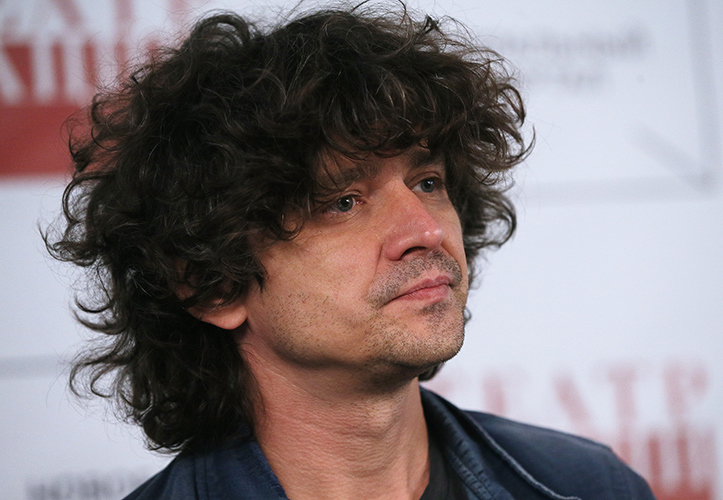
The Theater of Nations prepares the first premiere in the new season on the big stage - the outstanding Polish director Grzegozh Yazhin debuts in Russia with the production of Ivonna , Princess Burgundy Vitold Gombrovich. Christina Matvienko spoke with one of the leading theater directors of modern Europe, and one of the leading theatrical directors of modern Europe, specially for Colta.ru.
- You have already addressed Ivonne - almost twenty years ago, in the Krakow Old Theater. Since then, you put Sarah Kane, Shakespeare, Pazolini, Dorota Maslovsk, Rasin and Cassavetis - almost every of these performances invariably became an important event of the Polish and European scene. What do you want to talk about in the theater today?
- In Poland, I would not return to Gombrovich - today there are more interesting texts that I have not yet put. In general, I am very excited in that we are happening today: the country is covered by stress, people have mastered the desire to divide everyone on the right and wrong. Not that such a problem existed only in Poland - of course, this is the consequence of the pan -European crisis - but the idea of solidarity, which thirty years ago prevailed and led the country to independence, gradually comes to naught. Since the end of World War II, we are afraid that emigrants will destroy our culture and then we will lose our identity and our leadership position. Fear of another, before that differs from a certain norm, is camouflaged by national and patriotic slogans. As a result, instead of opening to the world, we are closing. In addition to everything at some point, public relations were destroyed-not under the pressure of the ideological cargo, but in the circumstances of economic freedom. Everyone was promised, everyone went to receive and consume and, becoming rich, instantly broke off the connections-with neighbors, colleagues, in the village, in the city and among intellectuals. It is these connections that are very characteristic of the former Poland that we are now especially lacking - we have exchanged them for European individualism. This, of course, is terrible - instead of developing, we are moving back. Poland in general can serve as a good example of how, with the economic, as it seems to us, the development market is growing, and human relations stand still or even go back. A strange thing: when our basic needs are finally satisfied and we will recover spirituality, we find it in thoughtlessly going to the church and listening to sermons, which are actually all without exception - about politics. So the main topic for me is now the restoration of tribal, generic relations and the revival of trust between people.
- The Russian theater over the past decade is also more and more responding to changes in the sociocultural agenda. You spent quite a lot of time in Moscow, often went to theaters - what, in your opinion, is the degree of our theatrical life today?
- Here people of the theater definitely have to deal with strict restrictions, there is no such degree of freedom that we can afford in Poland. The theater can influence what is happening around - but to the known limits. There are topics that, as I managed to understand, is better not to touch - politics, issues of morality and morality.
I need an artist at the junction of intuition and emotions.
- You watched the “Müller car” Kirill Serebrennikov - What are the restrictions in this performance?
- This is a bold performance, like "(m) student." In the Gogol Center, it seemed to me that in Russia an artist could talk about everything-but then I realized that this was a delusion. Perhaps Cyril paid a great price for this. Perhaps you have as in China: relations between people are taken into account, including purely human relations with the authorities. If you have a good relationship or there is a “roof”, you can afford to break the barriers. This is not in Poland. Even now, when the right ones came to power and the rules are tightened, this is not related to courage. They just say here: from such a day, such and such a director does not work anymore.
- Tr Warszawa is funded by the state?
- This is the city theater, the volume of the budget depends on who occupies the chair of the mayor of Warsaw - now it is liberal, so everything is fine. But two years ago, the mayor did not like us, said that we were too artistic theater, but we need to earn more and spend less. Now we are in opposition to the right - the theater in Poland will always criticize power, and the point is not only about a particular agenda: we are, in principle, we are interested in how the power acts on the development of society, and it is not so important, we are talking about red or whites.
- In Poland, two civilian institutes were historically very strong - the church and the theater. Does the theater affect society today as much as before?
- In Poland, the theater really has a great influence on the formation of public discourse - discussions in the press can go for several months after the premiere. The scene quickly reacts to the changes in society and always responds - this is an independent voice, a good opponent of politics. The church and the theater did not fight each other before the fall of communism. Now everything is a little different.
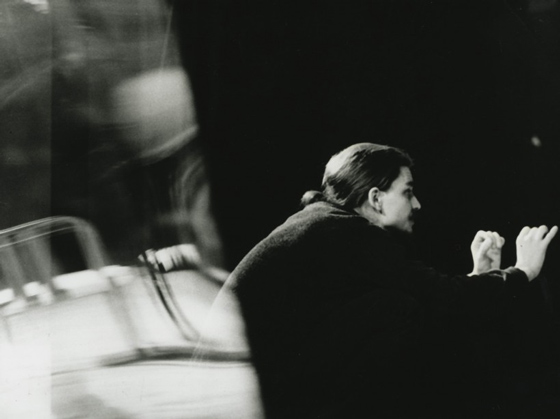 © katarzyna zajda gzhegozh Yazhin at the rehearsal “Ivonna, Princess Burgundy” in the Krakow Old Theater, 1997
- You said that you would not again put the “Ivonna” in Poland. How does this play Gombrovich sound in Russia?
- You have a question of a system that suppresses individuality, is a hot topic. Arriving in Moscow, you think that you can afford a lot, if not all: night clubs and the like. But at the same time, you understand well that the boundaries of this freedom are clearly defined and if you step over them, you will already be outlawed.
- How will your Moscow Ivonna be different from Krakow?
- Nineteen years ago I was young, so that performance was more romantic, about tragic love ... Today I am more interested in the disposition between the presence of a stranger and power; It generally seems to me that fear is a key human mechanism. We love the one who looks like us. And a person with a different skin color is not able to cause even delight - we are afraid of him. In us is the primitive nature, experiencing fear of animals. Instead of saying: so, calmly, we are already safe, we will not attack the neighbors, and they do not attack us - we ourselves make this terror of fear.
- Is it possible today to speak on such topics in the State Theater with its bourgeois public? Is the dialogue in the theater even today?
- I, unlike Grotovsky, believe that the theater does not exist without dialogue - this is its basis. If a bourgeois audience comes to the theater, capable of somehow influencing politics, the theme of the system and power is for it, for those who can change something. What they will think during and after the performance is very important to me. The play by Gombrovich-including about the court life, so here we build something like a mirror.
- “Ivonna” is your first work in Russia. What are the impressions?
- The system always creates obstacles to work - bureaucracy, for example. But if we talk about the pluses, it is felt that for the actors and for everyone with whom I communicate, the theater is the matter of all life. Therefore, the conversation goes on a fundamentally different level.
- The beginning of rehearsals was preceded by a long casting. What actors did you look for?
- It is very important for me who I work with: whether the actors will understand me, whether a biochemical reaction will occur in the process of rehearsals. I need an artist at the junction of intuition and emotions. Roughly speaking, the theater is a trance game, and I am looking for a trance actor.
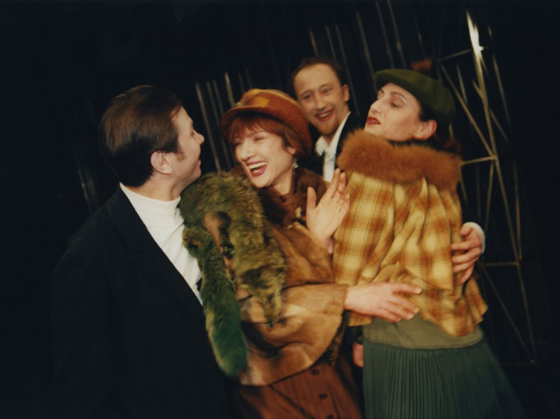 © Tomasz żurek “Ivonna, Princess Burgundy” in the Krakow Old Theater, 1997
- How do you work with them?
- We are engaged in both theory and exercises, we improvise a lot and have not yet fixed anything. For me, the main question is what they play, who they are, what the situation we build on stage. I would like not to control their body, but, so to speak, so that they smell everything with a gut. This is an ideal.
- What is inaccessible to a very well -learned and, as a rule, to a selfless Russian actor?
- Perhaps frankness - when we are in the theater and can afford everything that is not allowed in ordinary life. To get everything without fear. Then I stumble upon shame or a deeply sitting barrier - we still have to overcome it.
- Remarus of Gombrovich himself indicates that "the most strange scenes should be played realistically."
- Author's explanations regarding how he sees his work on stage, they never work. I do not read these remarks, it’s rather interesting to me what Gombrovich had in my head at the time of the essay “Ivonna” - and what he wanted to tell her.
- And what was in his head?
- This is very interesting: “Ivonna” is his first work for the theater. She actually has two sources: on the one hand, Shakespeare, from where the whole structure of the characters, relationships and a strong classical structure, are almost Hollywood. On the other hand, there are many purely personal plots: if you read the works and diaries of Gombrovich, it becomes obvious that the queen is his mother, the king is the father, and Ivonna is his bride, about whom he said that they are, but with whom he had no erotic contact, only in his head. Then it turned out that it was a homosexual or bisexual nature, he was afraid of women.
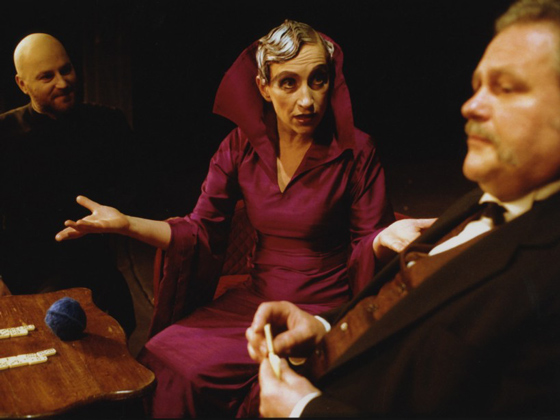 © Tomasz żurek “Ivonna, Princess Burgundy” in the Krakow Old Theater, 1997
- The Russian text "Yvonna" rewritten or shortened? When you read the play today, there is a feeling that it is written in some artificial language.
- Schepan Orlovsky and I made an adaptation in which we slightly rearranged the emphasis. The translation of "Ivonna" is by no means bad, the problem is that Gombrovich is in principle difficult to translate. His speech always grows into another, possessing its unique, associative logic. This mechanism is very important among Gombrovich-talking about something, each of his heroes actually thinks about his own.
- In your performances, the visual side is always important - how do you decide "Ivonnu" in this sense?
- Peter Lakoma has minimalistic, functional scenography. But the costumes of Anna Vesikovskaya will realize the concept of reduction of external masks that hide our true nature. A shirt or dress is understood as a mask that we cover the shame of our bodily. In ordinary life, we expose the face, hands - and nothing more. In our performance, costumes will be transformed in our performance, the process of developing characters will be reflected. In the music of Andrei Borisov - minimalism, at first almost without sound, and in the end - almost a baroque work.
- Is it possible to say that you are most interested in hidden in a person - and this desire for frankness is grafted by your teacher Christian Lupa ?
- Of course, this is the main topic. But before I met Christian, I traveled a lot around the world, I was in different tribes. It is interesting that in Mongolia, in Papua - New Guinea, among the natives you can find contact with people everywhere, even in the most strange system. If you do not attack her, but see an individual person, then you will always be able to build a relationship, including rather strong ones. So, a person really needs this internal communication. And everything else is how we look, how we live - this is a system and conditions that we have fallen into and must accept in order to survive. In Papua - New Guinea, the natives cut down a jungle section and a village with a stick in the middle is built inside this circle - this is their axis of the world. Then they do not go, then - snakes and danger. If you respect this principle, you will not be touched and even accept as your own. You need to wait, without violating the boundaries, while you are looking at you - because you are white, they are afraid of you. Then give a signal of respect - cigarettes, for example, to send, it is better to immediately the leader. They will give you water, but they will not let you go. And so, through the exchange, which is the basis of communication, and through gestures, they let you in: you can stay there, in the village, now you are one of them.
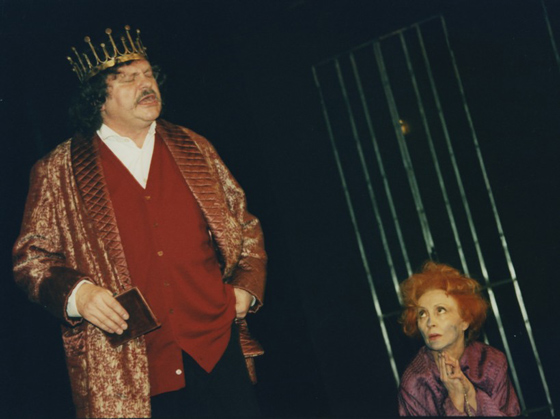 © Tomasz żurek “Ivonna, Princess Burgundy” in the Krakow Old Theater, 1997
- But the idea of multiculturalism is experiencing a crisis today, isn't it?
- Multifoldure is an erroneous formulation, there is only one culture - human culture. In the history of civilization, it was Europeans who did the most evil. We are very proud of ourselves, but only we imposed our own orders and sought to dominate other peoples. This is in other nations, but only among Europeans this is so terrifying.
- How do you see the future? How do you feel the present?
- I have been living with the new Polish power for a year. I remember communism when we knew how to function and how to negotiate - let it in the circumstances of a closed barrier. And now there is a new ideology, and there is no discussion about it: a system of dismissal, propaganda, and the education of a new society in the right -Patriotic and Catholic vein is thought out. In order for the changes to concern everything from elementary school to the appointment of the head of the gas industry - this was not the case before.
- Didn't the audience grow up to a completely different order of things in Poland over the years in Poland and which is difficult to re -educate?
- The Ministry of Culture believes that in the performances of our theater there are porn content and discussions about religion - which automatically cuts us off from the subsidies of the Ministry of Culture. We are the shame of Poland. I hope this will change. Maybe this is just a topic that needs to be worked out? Democracy existed too much in our country to finally settle in the minds of the Poles.