
Translated material
Lies for the election

"In our century, it is impossible to be" out of politics. "All problems are political problems, and politics itself is a lot of lies, dodges, recklessness, hatred and schizophrenia."
So George Orwell wrote in 1946, seeing a direct connection between the lodge of politics and the "damage to the language". This spoilage - already almost in the witching sense of the word - is clearly visible in the speech of Donald Trump, when he speaks not from the written. “Well, believe me,” he conjures the audience, promising her to "make America Great again."
"I know about ISIS ( forbidden organization. - RS ) more than generals, believe me."
"I will break up with immigrants-anglers a few hours after I take office. Believe me."
He will solve all America's problems "so fast that your head will be spinning."
It would seem that the Americans have long been accustomed to election chapcock. And yet Trump's promises are successful. He lies with rapture even when no one pulls his tongue, and catching him on a lie is not difficult. He tiredly repeats that he was always against the war in Iraq, although there is an audio recording of the radio interview in which he supports the war. He argued that the Muslims of New Jersey publicly rejoiced after the attacks of September 11, although there is not a single evidence of this. He often lies without any need, simply because his tongue is so arranged. He says in an interview that the share of the United States in the NATO budget is "hundreds of billions" of dollars. "Hundreds of billions?" - the journalist doubts. “Billions,” Trump easily agrees. But when he performs from the rostrum, there are no doubts, and no one prevents him from speaking any nonsense.
It was especially successful in what in America it is called the "negative campaign" - the insing of rivals. He calls the Clintons Foundation "the most corrupt project in history", and the candidate of democrats - only "crooking Hillary". “Now it is more than obvious that the Clintons started their business in order to benefit from the civil service,” he reports to voters. “They sold access to the Secretary of State and committed certain actions, as I suppose, for large amounts of money. What specific crimes they committed with this enterprise? There are too many of them to tell about them in this speech.”
The situation with the fund is ugly, but it is still far from criminal charges bordering on state treason, which Trump broadcasts about.
Black PR is an expression of Russian origin, but the birthplace of the phenomenon itself is America. In the XIX century, especially in his first half, newspapers who did not play objectivity did dirty work, but frankly speaking for one of the candidates. There is no such vain that the newspapers of that time would not be built to the candidate of the opposite side.
The First President of the United States had no competitors, and he did not conduct any election campaign for the first or the second time. But as soon as he retired to rest, black PR showed himself in all its glory. In 1796, John Adams and Thomas Jefferson fought for the presidency. Supporters of Adams, taking advantage of Gallomania Jefferson (he was an ambassador to Paris and brought with him French habits and a French cook), glued to him the label of an atheist, a dangerous radical and a French puppet who sleeps and sees how to introduce a guillotine in America and arrange a revolutionary terror. Jefferson's fans claimed that Adams was going to act exactly the opposite: to cancel the constitution and proclaim himself as the king, and his sons - hereditary princes.
Adams became the president, and four years later everything was repeated.
In a sense, the accusation of crown princes was confirmed: in 1828, the son of the second president of the United States, John Quincy Adams, became a presidential candidate. He was accused of almost all mortal sins, including pimps: the paper -like paper, which was hostile to Adams, claimed that, when he was an ambassador to St. Petersburg, he contributed to Emperor Alexander Pavlovich in the seduction of his maid, young American.
There was no seduction, of course. The maid and part-time nanny of the son of Adams named Marta Godfrey heard from someone a gossip about the ampers of the emperor and retold her in a letter home to Boston. At the Petersburg post office, the letter, as usual, was opened, read and delivered to Alexander. For the sake of fun, he showed a letter to his wife, and both wanted to look at the author. Empress Elizabeth asked her older sister to Princess Amalia Baden, who lived in the Winter Palace, to invite the son of the Messenger of Charles Francis with a nanny to her. During this visit, the Emperor and the Empress entered the apartment of Princess Amalia and spoke with Marta for several minutes.
These are the facts, but in 1828 they did not interest anyone.
Offective nicknames intended to some presidents tightly glued. John Tyler, instead of “Your Excellence”, “Your Accidentence” (Your Excidency), was nicknamed for his eyes, because he, in 1841, as vice president, for the first time in American history took the post of head of state due to the sudden death of President Willie Harrison. Rutherford Hais received the nickname "Your Fraudulence) - he lost the 1876 election in the number of voters and became president after the grueling dispute and political transaction of parties. Bill Clinton was awarded the name "slippery Willie", originally related to the famous banks robber William Francis Satton, successfully slipping away from the clutches of the police.
Alas, politicians lie. Here is a brief anthology of the most serious cases from the history of the United States.
When James regiment became the eleventh president in 1845, the issue of joining Texas to the United States was resolved. Since the history of this accession is often used by the "Crimeanaries" as an analogy to the capture of Crimea, it makes sense to clarify the details.
Until 1821, Texas was a Spanish colony, and when Mexico became independent, he became part of it. By this time, the American colonists were there a majority there - they settled in Texas legally, with the permission of the Spanish authorities, and then independent Mexico, which did not have resources for the development of these territories. In 1834, General Antonio Lopez de Santa Anna, who established the regime of a military dictatorship, came to power in Mexico. The Texans did not agree with the new order and two years later proclaimed Texas by an independent republic (this was precisely a radical difference from Crimea: the inhabitants of the peninsula of such an option as independence did not have in a referendum). Santa Anna answered a military campaign during which he shot hundreds of civilians, but in the end he suffered a cruel defeat, was captured and was forced to sign an agreement on the withdrawal of troops. The Republic of Texas recognized and established diplomatic relations with her the largest European powers (which again was not in the Crimean case). In 1845, a referendum was held in Texas, the majority of whose participants spoke for joining the United States.
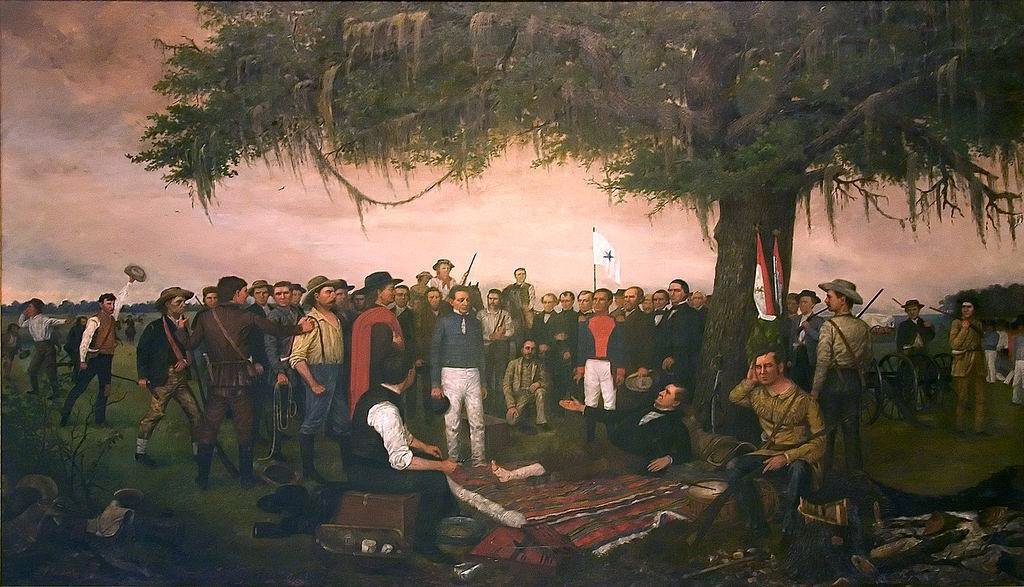
President John Tyler signed the law on the accession of Texas to the United States before his resignation, providing a regiment to solve the issue of his successor. The president of the regiment did not want to fight. But the border line remained the problem. Mexico believed that she was walking along the Nueses River, the USA-which is much south, along Rio Grande. The regiment sent the mission of John Slizid to Mexico with a proposal to agree to the border along the Rio Grand in exchange to write off debts. Slidel also had instructions to offer $ 30 million for New Mexico and California. At the same time, the regiment ordered the troops of General Zari Taylor (also the future president of the United States) to occupy a disputed strip of 150 miles wide. During the stay of Slizida in Mexico, a revolution occurred there: the moderate government of Jose Herrera was replaced by ardent nationalist Mariano Paredes. Both Herrera and Paderes refused to meet with Slidela. The Mexican army began the concentration of forces on the right bank of the Rio Grande near Matamoros. On April 25, 1846, Mexican troops attacked the American patrol. The United States lost 16 people killed and wounded.
The President of the Regiment turned to Congress with an appeal to declare war on Mexico. In his message, he said:
The Mexican government not only refused to accept him (special envoy of the Skiyda. - V.A.) or to listen to his proposals, but even after a long series of threats, he eventually invaded our territory and shed the blood of our fellow citizens on our own land.
The strip between the Nueses and Rio Grande rivers remained at that time a controversial territory. Nevertheless, the war was declared.
President Abraham Lincoln is rightfully considered the liberator of slaves. However, he was far from always an uncompromising opponent of slavery. In 1858, he led the campaign for the election to the Senate from Illinois. His rival was the popular senator Stephen Douglas. African Americans did not have the right to vote. The voters were only white. In public debate with Douglas, Lincoln said :
I do not pursue the goal directly or indirectly interfering with the Institute of Slavery in those states where it exists. I believe that I do not have legal law for this, and I am not going to do it. I have no goal to establish political and public equality between white and black races. There are physical differences between them, which, in my opinion, may never allow them to live together on the basis of complete equality, and I, like Judge Douglas, prefer that the race to which I belong to occupy a dominant position.
In August 1862, in the midst of the Civil War, the famous publicist and publisher of Horace Grille, who supported Lincoln in the 1860 presidential election, addressed him with an open letter on the pages of his newspaper New York Tribune. The convinced abolitionist Grilli believed that the president evades his historical mission of the liberation of slaves and called his actions in this direction "strange and destructively lethargic." Lincoln answered him with the same open letter a few days later:
My primary task in this struggle is the preservation of the union, and not the preservation or destruction of slavery. If I could save the alliance without freeing a single slave, I would have done this, and if I needed to free all the slaves to preserve it, I would have done it too, and if to preserve the union it was necessary to free a number of slaves, and the rest should be left as they are, I would have done it. All that I do regarding slavery and color race, I do insofar as I think that this helps to preserve the union and refrain from certain actions, because I do not believe that they will help maintain the alliance.
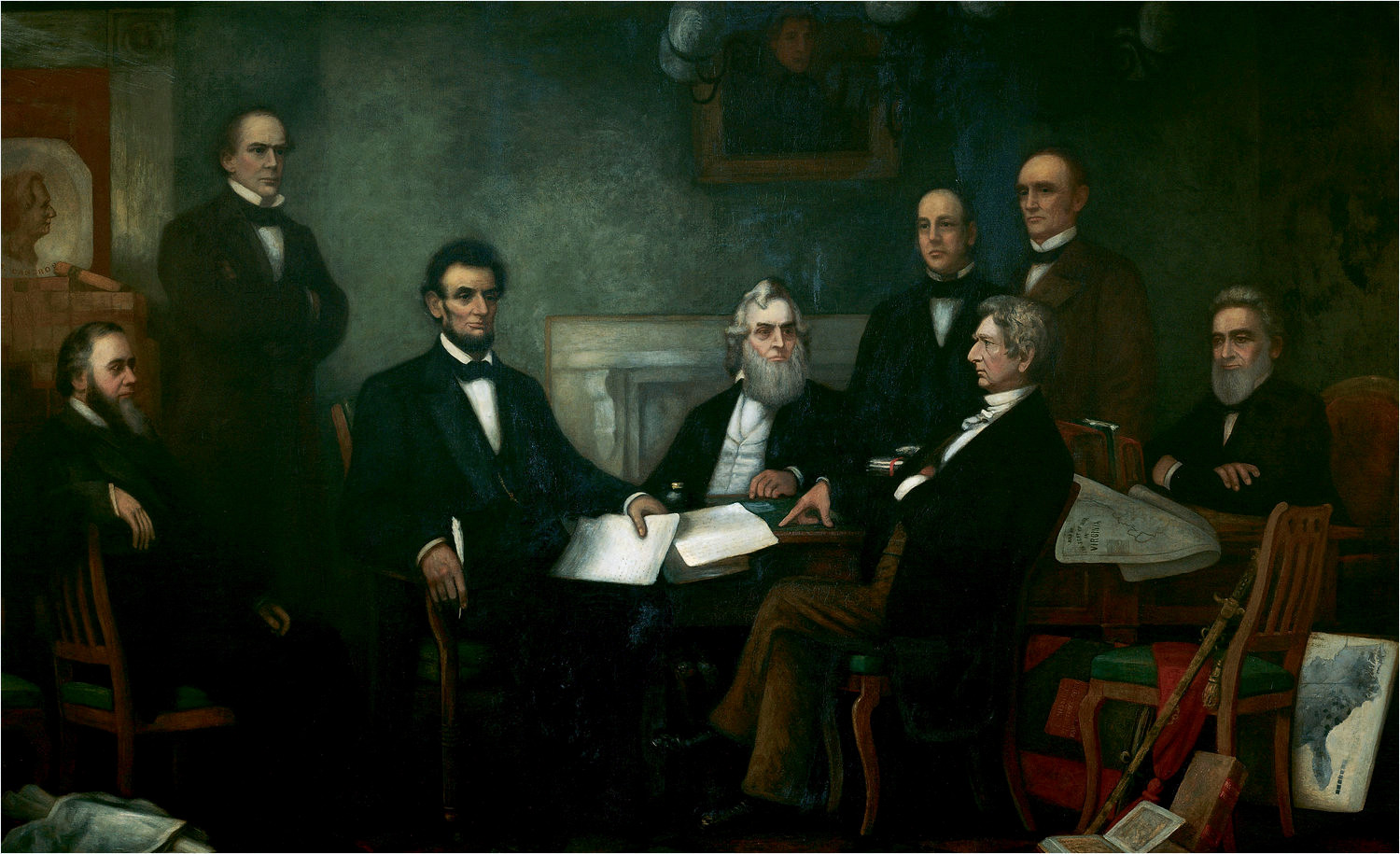
In this famous message, Lincoln defiantly flaunts his pragmatism. By this time, he had already ripened the idea of proclaiming about liberation. He signed it in September 1862, after a bloody battle of Entem, a drawing in a draw. The document was conditional: if the southerners went to negotiations, the proclamation would be withdrawn. However, the Confederation of the Southern States ignored the threat. And then Lincoln gave the proclamation the power of the law. Historian Joseph Stevens says :
I suppose he pursued a double goal. Firstly, it was to cause military damage to the south. There were four million slaves. They produced food. They were used in the construction of fortifications and other works to free the white southerners for military service. But an even more important goal was to change the political dynamics of war. Confederation President Jefferson Davis and his associates claimed that they were fighting for their rights, that this is the second American revolution. And Lincoln felt that he was losing the war of ideas. Having put the liberation of slaves at the forefront, he was able to say that the North is fighting not only for the preservation of the union, but also for freedom.
Commenting on the evolution of Lincoln's views on slavery, American authors often quote McCovelli's teaching:
It is unnecessary to say how boasted in the sovereign to this word, straightforwardness and steady honesty. However, we know from experience that in our time great deeds were a success only to those who did not try to restrain this word and knew how to circle around the finger; Such sovereigns ultimately succeeded much more than those who put on honesty.
In 1895, an uprising against the Spanish colonial authorities broke out in Cuba - the Cuban War for Independence. The goals of the rebels met the US political and economic interests, but the president’s government William McKinli did not want a war and tried to resolve the conflict with diplomatic funds. In January 1898, the battleship Maine was sent to Cuba to protect American citizens. On February 15, the ship standing in the port of Havana exploded and sank. 266 sailors were victims of the explosion.
The causes of the explosion were unclear. According to the experts of the US naval forces, the gunpowder on board Maine detonated as a result of an external explosion-most likely a floating mines. In his message to Congress, President McKinli assigned his responsibility for sabotage to the Spanish authorities.
The American yellow press, which just then reached the pinnacle of its power, demanded an armed response to the tragic incident from the government. The owner of one of the two newspaper empires, William Randolf Hurst, attributes the phrase that the anti -Spanish hysteria said in the midst of anti -Spanish. The artist Frederick Remington, sent to Cuba to cover the war, telegraphed to the editor: "Everything is quiet here, there is no war." And he asked for permission to return. Hurst replied: "Please stay. You provide pictures, and I will provide war." This is a legend, but the legend is characteristic.
On April 19, Congress recognized the independence of Cuba, demanded the withdrawal of the Spanish troops from the island of the Spanish and authorized the president to take military measures if necessary to carry out this resolution. The resolution was adopted by the adjustment of Senator Henry Teler, who stated that the United States would not strive for the annexation of Cuba. When two days later the US Navy began the blockade of the island, Spain declared war on America, which she lost.
The investigation of the explosion of the battleship "Maine" at different times was engaged in several commissions. Currently, the most likely cause of the disaster is the fire in the coal cellar, which spread to the powder cellar. Thus, the war provoked, most likely, a false excuse. However, it is necessary to distinguish between the preposition for the war and its reasons. If there are no reasons, then no prepositions will act.
In 1940, the most important issue of the presidential campaign was the question of the US entering the European War. The opponent of President Franklin Roosevelt was isolationist Wendell Wilki, who claimed that America was not ready for war and that instead of getting involved in hostilities somewhere beyond the ocean, the country should strengthen its defense capability of the house. This point of view was widely popular.
Before the elections, on October 30, in speech to voters in Boston, Roosevelt solemnly promised:
I said this before, but I have to repeat it again and again: your guys will not send any foreign war.
And he really repeated this on the days remaining before the elections again and again.
Roosevelt won the elections largely thanks to this promise. However, the attack of Japan on Pearl Harbor left him no choice. The day after the attack, December 8, 1941, Roosevelt called on Congress to declare the war on Japan.
In 1972, Richard Nixon was elected for a second term. The Watergate’s shadow has already loomed over him, but there were other accusations - in particular, in financial abuses and that he underpayed taxes. Nixon was elected with a huge advantage, and after the election answered the accusations:
I want to say this before the television audience: I made mistakes, but for all my years in public politics I have never gotten out in my public service - I earned every center. For all these years, I have never interfered with justice. And I welcome such a check, because people have the right to know whether their president is a fraudster or not. I'm not a fraudster. I earned everything I have.
The phrase "I'm not a fraudster" has become one of the memes of American politics. The president did not lie regarding his finances. He turned out to be a fraudster in a different sense-on his team an attempt was made to secretly penetrate the headquarters of the National Committee of the Democratic Party with the aim of installing eavesdropping devices there. And he, of course, prevented justice in the investigation of this case.
In 1988, Vice President George Bush Sr. became a candidate of Republicans. Speaking at the congress that approved his candidacy, he said:
Listen to me carefully: no new taxes.
He, however, did not fulfill this promise when he became president. Four years later, the headquarters of his opponent Bill Clinton released a pre -election video, which reminded the voters that the president could not restrain his word.
The idiom "Follow my lips" turned into a synonym for unrealizable election promises.
Nowadays, journalists are closely monitoring every word of the candidate. A special genre has appeared, which reveals free or involuntary mistakes of rivals-fact-glass (for some reason they are always mistaken in their favor). But no check can keep candidates from exaggeration and distortion. Scientists believe that this is a professional deformation. Психологи, впрочем, различают little white lies – безобидное вранье по мелочам, которым грешим все мы, и преднамеренный корыстный обман.
Герой романа Достоевского "Подросток" Версилов учит своего сына:
Друг мой, дай всегда немного соврать человеку – это невинно. Даже много дай соврать. Во-первых, это покажет твою деликатность, а во-вторых, за это тебе тоже дадут соврать – две огромных выгоды – разом.
Для такой лжи придумано немало оправдательных выражений: "ложь во спасение", "святая ложь", "художественная ложь"... Достоевский написал даже эссе"Нечто о вранье" , в котором риторически вопрошал: "Отчего у нас все лгут, все до единого?" И давал удивительный ответ: "У нас, в огромном большинстве, лгут из гостеприимства".
Морис Швейцер из Пенсильванского университета называет такую ложь "ложью из вежливости". Профессор психологии Массачусетского университета Роберт Фелдман считает, что такая ложь нам необходима. "Говорить правду всегда и при любых обстоятельствах нехорошо, за это приходится платить, – говорит он. – Люди не любят правдолюбов". А психолог и политолог Стэнли Реншон называет такую ложь "смазкой отношений": какой вред от того, что вы скажете супруге, что она совсем не толстая?
Но так ли уж безобидна ложь политиков? И почему им верят?
"Их ложь приемлема постольку, поскольку они говорят то, что мы хотим слышать", – объясняет Роберт Фелдман.
"Люди хотят, чтобы политики лгали им", – полагает профессор Университета Дьюка Дэн Ариэли.
В конечном счете, говорят эксперты, политики убеждают самих себя в том, что цель оправдывает средства. Ложь заразительна, добавляют они. В этом избирательном цикле главным лгуном оказался совсем не Трамп. В рейтинге , составленном по итогам факт-чекинга, первое место уверенно занимает нейрохирург Бен Карсон: всего четыре процента его публичных заявлений оказались правдой или "в основном правдой". На втором месте – Дональд Трамп: в его высказываниях правды целых семь процентов, зато больше, чем у кого бы то ни было, вранья категории pants on fire (от детской дразнилки liar, liar pants on fire, которую я рискнул перевести: "вруша, вруша всем подряд, у тебя штаны горят") – химически чистого, беспардонного вранья.
В речах Хиллари Клинтон такой беспримесной лжи всего 28 процентов. Но это не потому, что ее не коснулась профессиональная деформация. Просто природа ее лжи иная. Она гораздо реже, чем Трамп, допускает откровенное искажение или фабрикацию фактов. Но всю ее политическую карьеру ее сопровождает чувство безликости, отсутствия собственной идентичности, пишет аналитик Дэвид Гринберг, "ощущение, что она не та, за кого себя выдает, будь то феминистка, либералка, умеренная или борец за интересы рабочего класса".
Гринберг напоминает острый конфликт между Хиллари Клинтон и колумнистом New York Times, бывшим спичрайтером Никсона Уильямом Сэфайром. Эта занимательная история отлично иллюстрирует отношения между американскими политиками и американской прессой.
В 1996 году Сэфайр опубликовал колонку , в которой назвал Хиллари – в то время первую леди – "прирожденной лжицей". Реакция Белого дома была беспрецедентной. Пресс-секретарь Клинтона Майк Маккари заявил , что, если бы Билл Клинтон не был президентом, он ответил бы Сэфайру ударом в переносицу.
Стоит отметить, что в английском языке смысл слова "прирожденный" можно передать несколькими словами. The word Congenital, who was chosen by William Safair, enjoyed the first lady who stated that it drops a shadow at her parents. При этом она не преминула отметить, что работала в сенатской комиссии по импичменту президента Никсона, на которого, в свою очередь, работал г-н Сэфайр. "Он, как видно, этого не забыл", – заявила Хиллари Клинтон.
"Вот уже 25 лет всякий раз, когда я ловлю политика на неблаговидных поступках, жертва, будь то республиканец или демократ, тотчас начинает кричать: "Ага, видали? Он все это делает, чтобы обелить Никсона!" – ответил на это Сэфайр в ток-шоу Тима Рассерта на телеканале NBC News. – "Конгенитальный" в современном значении – а я подбираю слова очень тщательно – не что иное, как "прирожденный". Это может также означать "хронический" и "закоренелый". Вообще-то это надо уметь – вывернуть выражение "конгенитальная лжица" так, чтобы оно выглядело нападкой на мать первой леди. Разумеется, это вздор. Но именно это всякий раз и происходит".
В конце передачи Тим Рассерт подарил Сэфайру пару боксерских перчаток – для защиты от драчливого президента и в знак журналистской солидарности. В 2006 году Сэфайр был награжден Президентской медалью Свободы. Кличка congenial liar намертво прилипла к Хиллари и вошла в словари.
В 1790 году Николай Карамзин побывал в Англии, наблюдал там выборы и поделился собственными, довольно-таки смелыми по тем временам, умозаключениями о парламентаризме. "Англичанин торжествует в парламенте и на бирже, немец – в ученом кабинете, француз – в театре", – пишет Карамзин, тем самым как бы утверждая, что любовь к публичным дебатам – что-то вроде национальной британской черты. И продолжает: "Англичане просвещены, знают наизусть свои истинные выгоды, и если бы какой-нибудь Питт вздумал явно действовать против общей пользы, то он непременно бы лишился большинства голосов в парламенте, как волшебник своего талисмана".