
Translated material
State and degradation
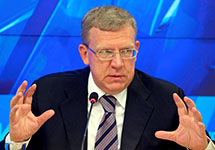
The high share of the public sector in the economy has become one of the main brakes of economic growth. This was stated by the deputy chairman of the Economic Council under the President, ex-Minister of Finance Alexei Kudrin at the Sochi 2016 forum, Interfax reports .
“Today it became clear to everyone that this is a brake of economic growth. They work inefficiently, non -bending, apply an administrative resource, replace the private sector or pushes it. It simply has become one of the most important problems,” the ex -Minister of Finance emphasized.
According to this indicator, Russia is already ahead of China, in which the share of the public sector fell below 50 percent, Kudrin noted. "According to one study, the Chinese economy had such growth rates not only because it had a large share of investment or cheap labor. There was a process of liberalization of the Chinese economy, which opened its new resource, including from the point of view of marketness, flexibility, efficiency," he said. "And it is believed that they have this reserve - a reserve of further liberalization, will give a serious increase in the near years and will maintain the pace and maintain the pace growth, although there are structural risks there. "
On May 21, Kudrin said that the Russian economy would not grow and remain "at the bottom" if the authorities do not begin to decisively carry out structural reforms. “Since the old economy model has been worked out, and the new one has not yet formed, even having passed the“ bottom ”, we will remain on this“ day, ”Kudrin said.
The ex-Minister of Finance emphasized that the Russian economy lacks decisive actions by the authorities. “It seems to me that our economy is not enough definite determination now. We are delaying important reforms. This will be the reason and delaying the beginning of economic growth,” Kudrin believes.
On Thursday, Vedomosti reported a report of the Federal Antimonopoly Service, which claims that Russia has developed state-monopoly capitalism . According to the agency, the state is rapidly increasing presence in the economy. The contribution of the state and state -owned companies to GDP increased from 35 percent in 2005 to 70 percent in 2015. The number of state and municipal unitary enterprises tripled in three years, and they are still created in markets with developed competition, where the use of administrative resources and budget financing is a serious threat. At the same time, the number of regional and municipal unitary enterprises, which are the main enemies of competition in local markets, has grown sharply.
The expansion of the state of the state in the economy strengthens the monopolistic trends and in the still not controlled by the state of the economic space, "the FAS noted. The service also referred to the report of the analytical center under the government, which states that the actions of the authorities are the main reason for reducing the number of competitors. This was announced by 58 percent of the respondents.
According to the authors of the report, the state is reluctant to part with its property. In particular, in 2012, a list of large enterprises to be privatized was expanded. The state was going to reduce their share in them or completely get out of their capital, but subsequently decided to maintain the possibility of influence on the management of these companies.